







Kōdō: Why Samurai Trained Their Minds by Listening to Incense
Several Japanese arts end in the same syllable: 剣道 kendō, and 柔道 jūdō, as martial sports; 華道 kadō, flower arrangement, and 茶道 sadō, the tea ceremony, as refined pastimes. Most people outside Japan have heard of at least one of these.
Fewer have heard of 香道 kōdō, the way of incense. This article sets out what it is, and what it had to do with the samurai.
What Incense Is
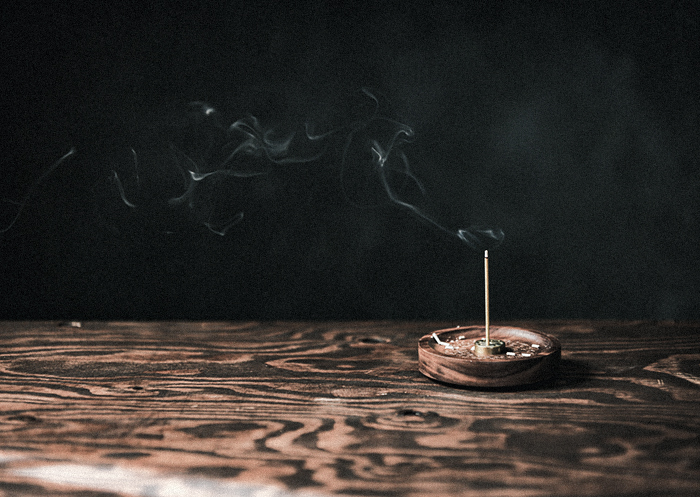
お香 okō, incense, is a Japanese craft made by grinding a base material to powder and binding it into solid form. Its history runs deep enough to appear in the 日本書紀 Nihon Shoki, Japan’s earliest official chronicle.
Three materials do most of the work: 伽羅 kyara, 沈香 jinkō (agarwood), and 白檀 byakudan (sandalwood). Because incense is meant to be heated rather than burned outright, the scent it releases is often described in the vocabulary of a base note.
Incense has long stood close to both Buddhism and the samurai, and in every era it has carried something of the sacred.
What Kōdō Is
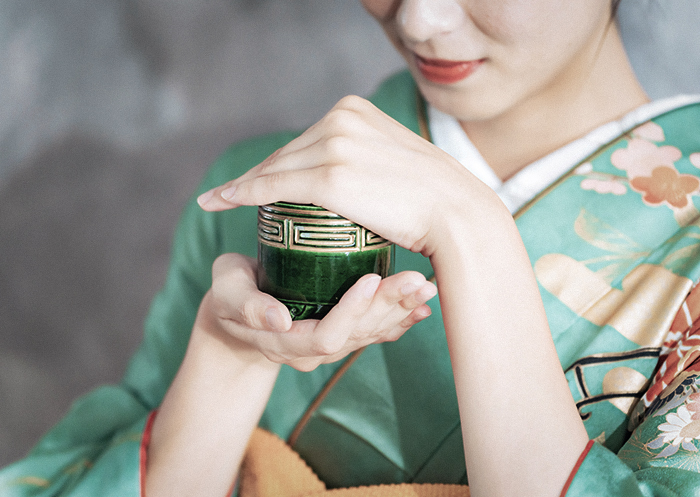
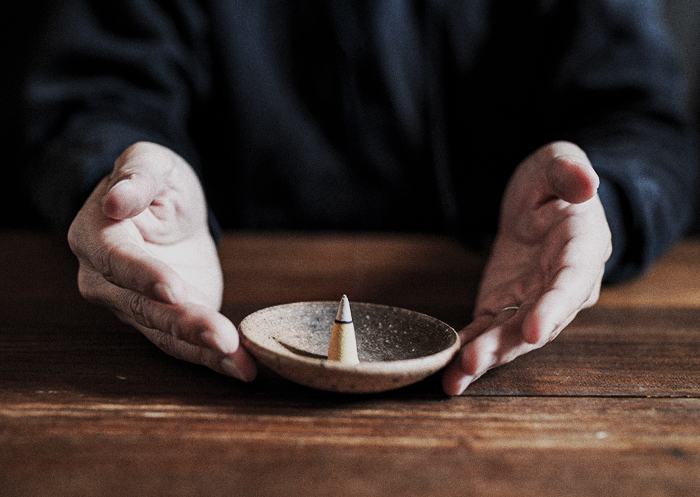
Kōdō is the practice of burning incense wood according to a set etiquette and appreciating the scent it gives off, the mind held still.
The vocabulary is deliberate. A practitioner does not “smell” (嗅ぐ) the incense — the word used is “listen” (聞く). Simply sniffing at a scent was considered a crude way to engage with it. Facing the scent fully, absorbing it with the whole of one’s attention, called for a different verb, and “listening” was the one that stuck.
Monkō: Listening to a Single Scent
The foundational form of kōdō is 聞香 monkō, listening to the scent of a single piece of incense wood with sustained attention — the practice described above, taken on its own terms.
Kumikō: Stories and Seasons Told in Scent
Beyond monkō lies 組香 kumikō, in which several incense woods are burned in sequence and participants try to identify them. Three themes recur most often.
Genjikō (源氏香). Five scents built around the fifty-two chapters of the Genji Monogatari, the Tale of Genji. This is the best known form of kumikō.
Literature. Scents built around a poem or a story.
The Four Seasons. Scents built around Japan’s seasons — a theme that carries the same regard for the natural year found throughout Japanese daily life.
Kumikō is not simply a guessing game. Success depends on cultural knowledge as much as a trained sense of smell.
The Scent of Incense: Rikkoku-Gomi
Incense scents are classified by a system called 六国五味 rikkoku gomi — six countries, five tastes.
Rikkoku, the six countries, sorts incense wood by origin and quality:
Name — Reading — Character
伽羅 — kyara — Refined sweetness with deep bitterness — an elegance recalling the imperial court. Regarded as the finest grade.
羅国 — rakoku — Spicy with a touch of bitterness — a taut, disciplined scent, likened to the samurai.
真南蛮 — manaban — Strongly sweet, with an exotic character. Oily, and handled with care for that reason.
真那伽 — manaka — Slightly sour and mildly sweet, giving a fresh impression.
佐曽羅 — sasora — Faintly sour and bitter, close to sumotara but lighter — the lightness is this wood’s own.
寸聞多羅 — sumotara — A touch of sourness and bitterness in a rich, dense scent — more complex than sasora.
Gomi, the five tastes, describes the same scents through the vocabulary of flavor. Every one of the six countries above is said to carry at least one of these five.
Name — Reading — Character
甘 — sweet — Honey-like, an enveloping sweetness.
苦 — bitter — A deep astringency, likened to Chinese medicine.
辛 — spicy — A stimulating sharpness, likened to clove.
酸 — sour — A clean sourness, close to umeboshi, pickled plum.
鹹 — salty — A taut aftertaste — like a cloth after wiping away sweat.
The Two Schools of Kōdō
Kōdō divides into two schools, distinguished by mood and by the tools each favors.
Oie-ryū (御家流) began among 公家 kuge, the court nobility, and favors the “sweet” register. Its practice is built around waka poetry and courtly elegance, and its incense burners carry ornate 蒔絵 maki-e lacquer work.
Shino-ryū (志野流) began among 武家 buke, 侍 samurai, Japanese warrior households, and favors the “spicy” register. Its tools are plain, its mood rustic and warm, and its pursuit of the scent’s essence has the character of spiritual discipline as much as aesthetic appreciation.
Both schools trace back to a single origin: the Muromachi shogun 足利義政 Ashikaga Yoshimasa. During the flowering of 東山文化, the Higashiyama culture, centered on the 銀閣寺 Ginkaku-ji, the Silver Pavilion, Yoshimasa commissioned the founders of each school to set the etiquette of incense into a fixed form.
What “Dō” Means in Japan
The 道 dō at the end of these words does not mean “road” in the ordinary sense. It names a discipline: learning the natural order of things, facing oneself honestly, and continuing to refine one’s own conduct with humility and courtesy.
The idea sits close to 神道 Shinto, the native religion of Japan. Facing oneself without pretense, living in accordance with conscience — this is a shape that Japanese ideas of virtue take again and again.
Incense and the Samurai

Preparing for Battle with Scent
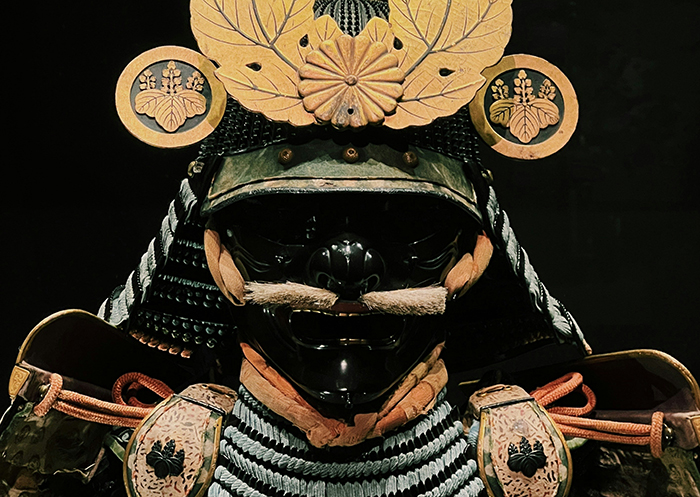
Before going into battle, samurai would burn incense into their own bodies and into their armor. Part of the reason was practical — incense is also said to have repelled insects. But something beyond practicality is visible in the habit: a wish to die beautifully.
One story, involving a samurai who did not survive his battle, makes the point plainly.
Kimura Shigenari and the Scent of Kyara
The 大坂夏の陣 Osaka Natsu no Jin, the summer campaign of 1615, was the last battle of the Sengoku period. It ended with the fall of the Toyotomi house and left the Tokugawa shogunate’s authority unchallenged.
In the fighting, a samurai named 木村重成 Kimura Shigenari was killed by the enemy. He had fought on the side of 茶々 Chacha, a concubine of 豊臣 秀吉 Toyotomi Hideyoshi, and her son 秀頼 Hideyori.
The night before the battle, Shigenari burned kyara — at the time the most prized grade of incense — into the kabuto, the helmet he would wear. The scent rising from his own head must have steadied him.
He did not survive the battle. Tokugawa forces killed him and took his head. When it was examined afterward, the refined scent of kyara still clung to it. 徳川家康 Tokugawa Ieyasu, the enemy commander, is said to have noticed the noble fragrance and been moved by it, despite Shigenari having fought against him.
That his dignity reached the enemy even in death owed something real to the incense he had chosen to wear. Whenever his life might end, however his end might come, Shigenari had prepared not to die without composure — and the story holds that his resolve as a samurai, and his dignity, were carried in the scent of kyara itself.
Incense, Buddhism, and Bushido
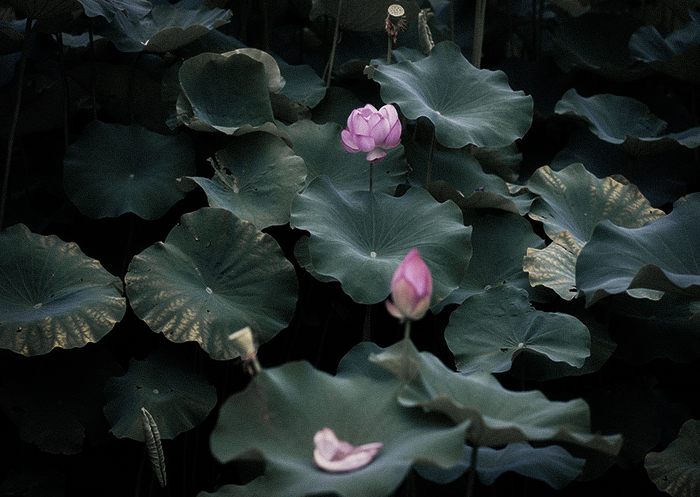
Incense appears to have carried real weight within Buddhism from early on. In Buddhist thought, the smoke of incense was understood as food for the dead, and treated accordingly.
武士道 Bushido and Buddhism are closely entangled. One of Bushido’s central ideas — releasing attachment to life, meeting death without fear, holding to composure — draws on the Buddhist idea of 無常感 mujōkan, the sense that all things are impermanent.
Beyond repelling insects or grooming oneself before battle, this author suspects that wearing incense so bound up with Buddhist practice may also have served samurai as a kind of protective charm carried into war.
A Samurai Style of Mindfulness
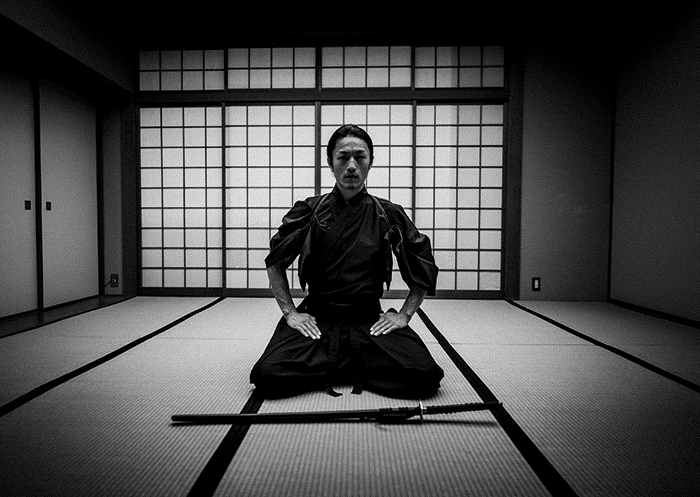
Incense relaxes through scent alone. But monkō, listening to incense, resembles the bearing of a samurai in a deeper way than that.
Listening to a scent asks for a settled mind and sustained attention. Clearing away distraction to meet one thing fully — this looks very much like 無我の境地 muga no kyōchi, the state of selflessness the samurai sought.
The same concentration shows up in swordsmanship training, in a practice called 蝋燭切り rōsokugiri, candle-cutting. Setting aside attachment to life and fear of death, and pouring the whole of one’s effort into a single instant, is muga no kyōchi. Living the present moment fully, with nothing left over for extraneous thought, is a samurai’s version of what would now be called mindfulness.
It follows that Shino-ryū, the school founded among warrior households, carries this same character. Its tools are simple, but its pursuit of the scent’s true nature has the shape of spiritual training — the same stoicism associated with the samurai themselves.
Culture, and Incense as a Mark of Authority
Strength alone did not make a samurai. Cultural refinement mattered too, and knowledge of incense was part of it.
Sengoku-era warlords collected fine incense wood and treated it as a mark of their own authority. The most celebrated of all is 蘭奢待 Ranjatai, kept at the 正倉院 Shosoin repository in Nara under its catalogue name 黄熟香 Ojukuko — a single log of agarwood, 156 centimetres long and 11.6 kilograms in weight. It was never anyone’s property to hand out. What a ruler could obtain, and only by imperial licence, was permission to open the repository and cut a small piece away. The labels still attached to the log record cuttings by 足利義政 Ashikaga Yoshimasa, 織田信長 Oda Nobunaga, and Emperor Meiji.
Nobunaga’s turn came in 1574. He had two pieces cut, presented one to Emperor Ogimachi, and kept the other. Tokugawa Ieyasu’s case is less settled. One record, the 当代記 Todaiki, has him sending officials to the repository in 1602, viewing the wood, and leaving it uncut — the reason given being a belief that whoever cut Ranjatai came to an unhappy end. Another record, the 武徳編年集成 Butoku Hennen Shusei, says he cut it after all, and some reference works follow that version. Which is true has never been settled.
The story that survived, though, is the first one. Perhaps because weighing carefully what one actually needs, even with the most honoured object of its kind within reach, is what people wanted to believe of the man who waited longest.
What Remains
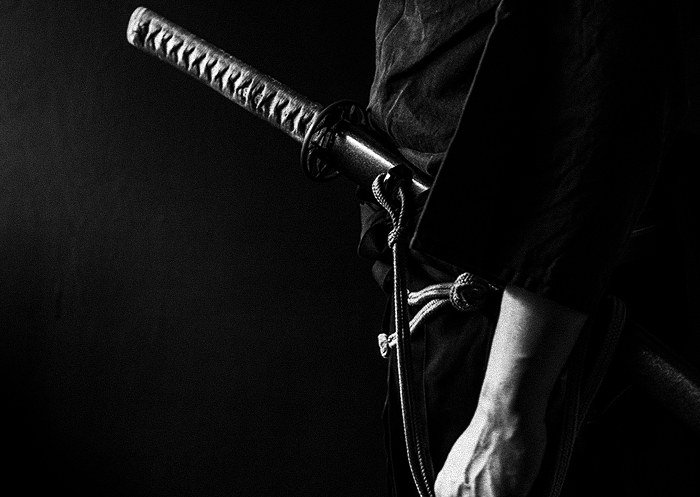
Incense, and kōdō, appear to have been bound up with the samurai more closely than their reputation suggests — a discipline and, perhaps, a form of steadiness to draw on.
Kōdō was never only a pleasure of the senses. It touched a person’s bearing, their conduct, the depth of their learning. A practice of self-discipline and self-confrontation carried through scent — this is a particularly Japanese way of putting fragrance to use.
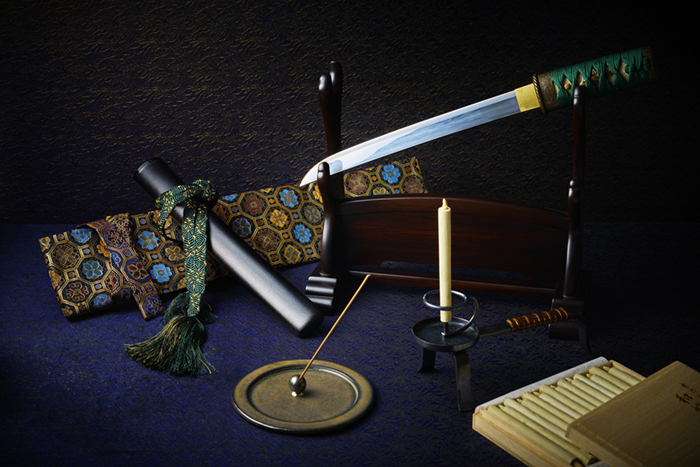
KOTO offers pieces made for those who wish to keep the samurai’s discipline within reach — a Japanese sword and a hand-made candle, produced to order by craftsmen working in traditions two thousand years old. Because each is made individually, no two are ever the same.
- SHARE
-


( craft )