








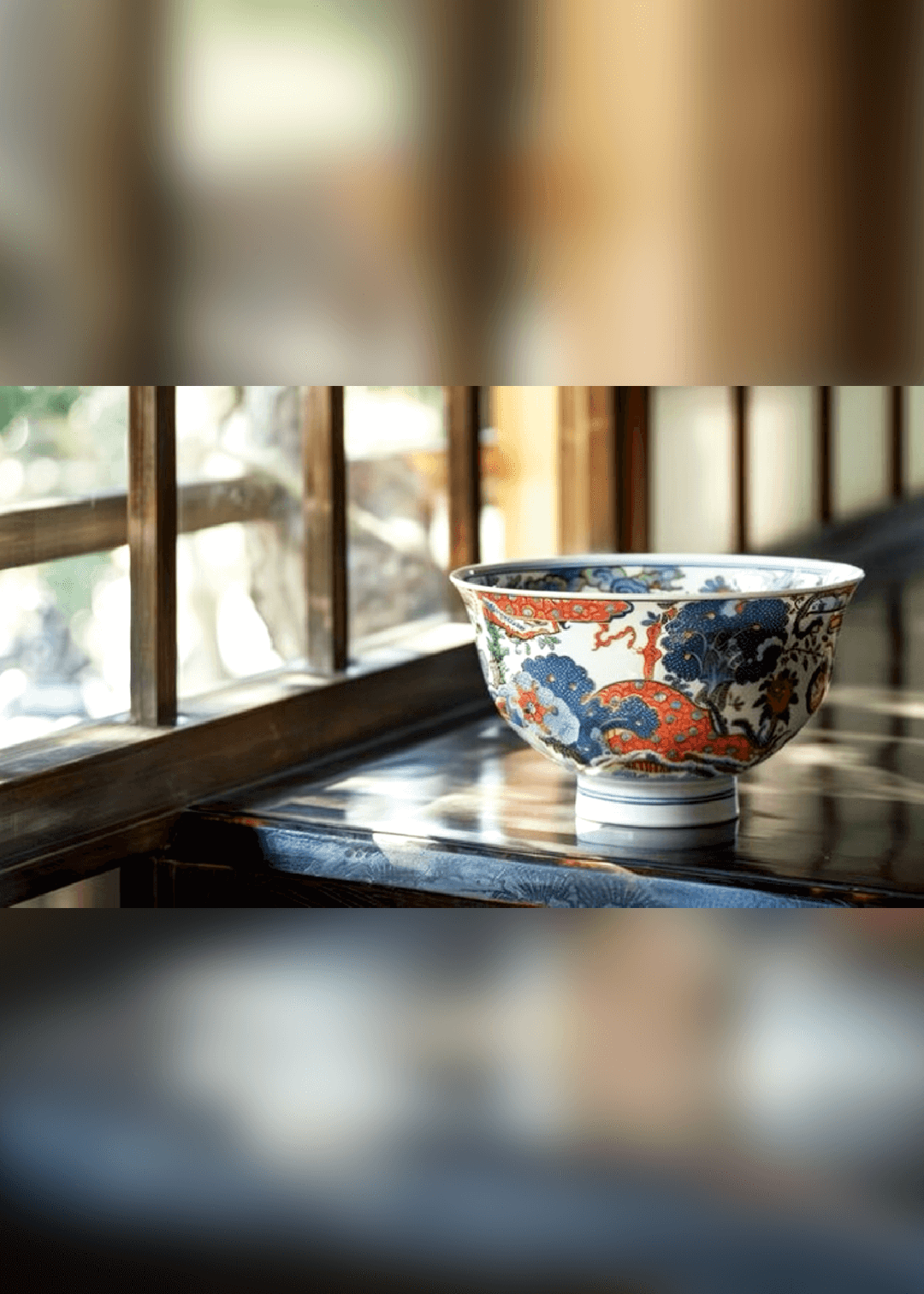
Arita Porcelain and Europe: How Japan’s First Porcelain Crossed the Sea

Before Arita ware became one of the Japanese objects most admired in the West, it first had to become porcelain at all — a material Japan did not yet possess.
磁器 jiki, porcelain, and 陶器 toki, pottery, are not the same thing. Porcelain fires to a glass-smooth, hard, white body that absorbs almost no water, which is what gives it such durability as tableware. Pottery, by contrast, is fired at lower heat and keeps the character of the clay itself. 有田焼 Arita-yaki, Arita ware, made in and around Arita, Saga Prefecture, was Japan’s first porcelain, and it is defined by both halves of that description: a refined white body, and the colorful painted decoration that sits on top of it. That combination of visual beauty and daily usefulness is why Arita ware has been valued equally as an everyday dish, a museum object, and a formal gift.
A Korean Potter’s Discovery at Izumiyama


Arita ware’s origin has a specific author. 李参平 Ri Sanpei — known in Korean as Yi Sam-pyeong — was a potter brought to Japan by the first lord of the Nabeshima domain amid Japan’s invasions of Korea in the 1590s. In the early 1600s, some four hundred years ago, he found 陶石 toseki, porcelain stone, at 泉山 Izumiyama, Mount Izumi in Arita, and used it to fire porcelain for the first time on Japanese soil. Until that moment Japan had pottery but no porcelain; Ri Sanpei’s discovery is the point at which that changed, and it is the true starting point of Arita’s history.
A hard white ware unlike anything made from Japanese clay before it, Arita porcelain caught on almost immediately. From that beginning, the techniques advanced quickly: first 染付 sometsuke, underglaze painting in a single indigo blue, and then, as the craft matured, the vivid multicolor enamel work that later defined styles such as Ko-Imari and Kakiemon — styles detailed in full in our companion article on Arita’s three defining styles.
Shipped as Imari, Bought by European Courts

Through the Edo period (1603–1868), Arita ware traveled out through the port of Imari, and abroad it became known by the port’s name rather than the kiln town’s — Imari ware, a naming quirk explained more fully elsewhere on this site. By the mid-Edo period, painters had moved beyond single-color underglaze blue to red, blue, and gold enamel worked over the white body, and this more lavish decoration is what reached Europe.
That crossing had a specific carrier: the Dutch East India Company, known by its Dutch abbreviation VOC, which shipped Arita porcelain to Europe and built its international reputation there. In this period, pieces made in Arita were used as tableware by European nobility and royalty — a striking position for a ceramic tradition barely a few decades old.
From the Bakumatsu Era to the Meiji Era: Export in Earnest
As Japan moved from the 幕末 bakumatsu, the final years of shogunate rule, into the Meiji era (1868–1912), export to Western markets intensified and Arita ware developed further still. Designs began to absorb Western taste, and kilns produced more pieces built specifically for the export trade — large decorative works and Western-style tableware among them. Arita porcelain shown at international expositions, including the Paris Exposition, was praised for its beauty and its precision, and did much to establish Japan’s reputation as a maker of fine porcelain. Large decorative pieces and Western-style dinnerware built for the export trade found a ready audience among the wealthy of Europe and America.
Where This Meets Japonisme
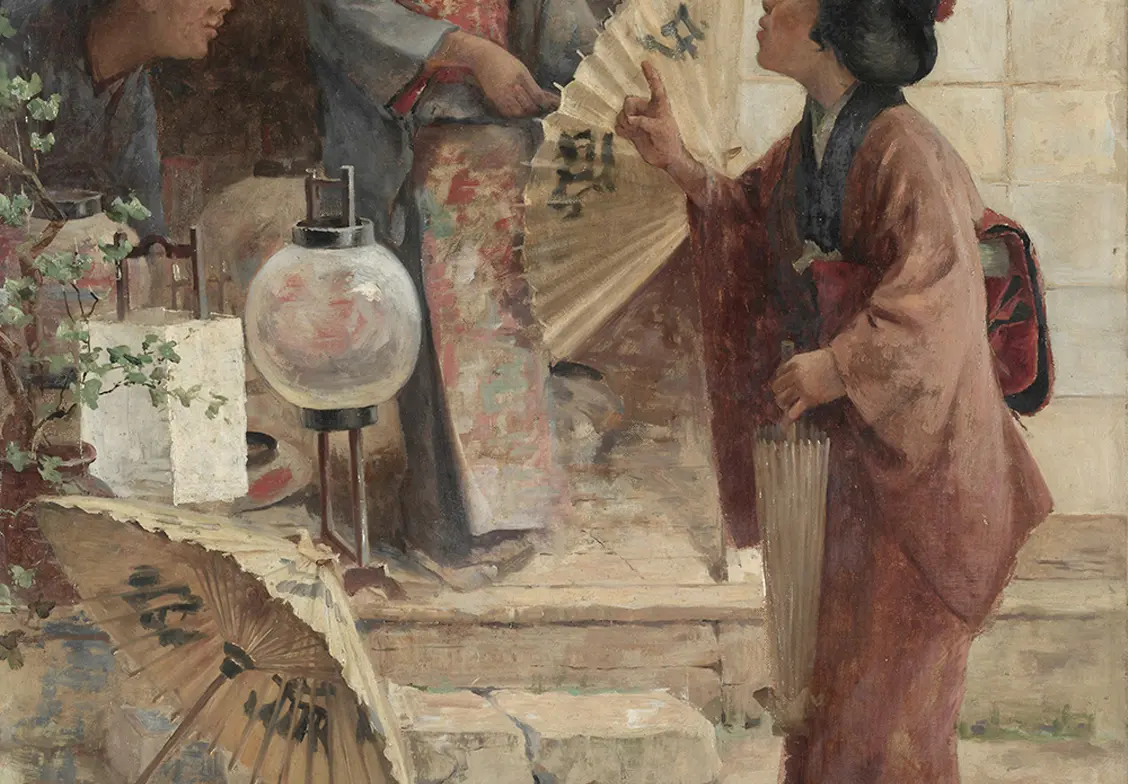
The wave of enthusiasm in the West for Japanese art and design — later named Japonisme — is generally dated to the 1867 Paris Exposition Universelle, where Japan exhibited for the first time. What made Japanese painting and decoration stand out to Western eyes was largely a matter of what it left out and what it centered. Western painting had long placed gods and nobility at the top of a visual hierarchy; Japanese painting instead treated nature itself as the subject, coexisting with rather than dominating the picture, and left generous empty space around it. That aesthetic sensibility read as genuinely new abroad, and it did not travel to Europe in painting alone — Arita porcelain, already established in European homes and courts by the time of the 1867 exposition, was one of the everyday carriers of that same sensibility, moving from table settings and display cabinets into the wider current of taste that Japonisme would come to name.
The three styles that carried this sensibility furthest — 古伊万里 Ko-Imari, 柿右衛門 Kakiemon, and 鍋島 Nabeshima — and where Arita ware stands today are subjects for their own telling.
KOTO is a journal of Japanese craftsmanship, culture, and the aesthetic sense behind them.
- SHARE
-


( craft )