






Nobunaga, Hideyoshi, Ieyasu: The Three Bushi Who Unified Japan
For roughly a century and a half, Japan had no single ruler. The country was broken into competing domains, each held by a warlord willing to fight for it, in the era historians call the 戦国時代 Sengoku jidai — the age of the country at war. The prize everyone wanted was 天下統一 tenka toitsu: unification of the realm, one authority over all of Japan, and with it, an end to the fighting.
Many warlords believed they were the one meant to achieve it. Three of them actually got close enough to matter, one after the other, and between them they took Japan from open civil war into two and a half centuries of peace. Their personalities could hardly have been more different, and the difference is the reason people in Japan still talk about them.
Oda Nobunaga: The Fool Who Saw Further
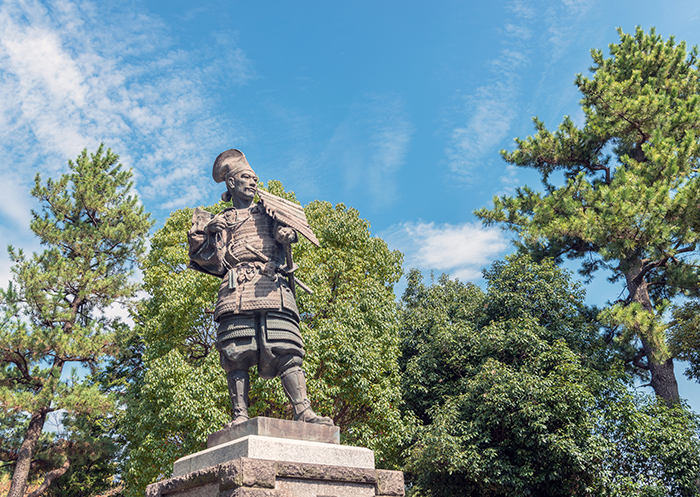
織田信長 Oda Nobunaga began as the ruler of a minor domain, Owari province — the western part of what is now Aichi prefecture. What changed his position was the Battle of Okehazama in 1560, where he defeated Imagawa Yoshimoto, at the time one of the most powerful warlords in the country. That single victory put him on the map.
From there his influence spread. Warlords in distant parts of Japan — the Date clan in the northeast, the Shimazu clan in Kyushu, the Chosokabe clan in Shikoku — began signaling their willingness to fall in line behind him. At the Battle of Nagashino in 1575, he broke the cavalry of the Takeda clan, then considered the strongest fighting force in Japan. Part of his advantage was tactical: he was an early and serious adopter of the matchlock gun, the most advanced weapon of the period.
Nobunaga’s ambitions were not only military. He designed and built Azuchi Castle, and he introduced 楽市楽座 rakuichi rakuza — open markets and free guilds — a policy that dismantled trade monopolies and let commerce move more freely. Both projects served the motto he adopted for his rule: 天下布武 Tenka Fubu, “the realm subdued by force.” He wanted Japan unified, and he intended to do it by the sword.
He never finished the job. In 1582 one of his own generals, Akechi Mitsuhide, turned on him at Honnoji temple in Kyoto — the incident known as the 本能寺の変 Honnoji Incident — and Nobunaga died there, by his own hand, as the temple burned around him.
The Fool of Owari
Before any of this, Nobunaga had a reputation as 尾張のうつけ者 Owari no utsuke, “the fool of Owari.” As a young man he dressed in ways nobody expected of someone of his rank — he was known, among other things, to wear a summer robe with the sleeves torn off. At his own father’s funeral, he is said to have thrown a handful of ceremonial incense at the memorial tablet instead of offering it properly. He ran with a rough crowd around town. In modern terms, he behaved like a delinquent.
Opinion on that behavior split even at the time. Some saw exactly what it looked like. Others read it as something else — a kind of foresight, a refusal to be bound by convention — and said openly that this was a man who would one day take the realm. Nobunaga’s character was severe by any account, but the same intensity that made him formidable is also what still draws people to him today.
A Family Bound by Marriage
Nobunaga, Hideyoshi, and Ieyasu were not just three men who happened to chase the same goal in sequence — they were relatives by marriage, and the connective tissue between all three households was a set of three sisters: the 浅井三姉妹 Azai sisters, daughters of Nobunaga’s younger sister, Oichi, and her husband Azai Nagamasa, one of Nobunaga’s own vassals.
The eldest, Chacha — better known by her later title, 淀殿 Yodo-dono — became a consort of Hideyoshi and bore his son and heir, Hideyori. She died alongside her son during the Summer Siege of Osaka.
The second, Hatsu — later known as Jokoin — married Kyogoku Takatsugu, whose own sister Ryuko was herself a consort of Hideyoshi. After her husband’s death, Hatsu took Buddhist vows and lived on as Jokoin.
The youngest, Go — known as Oeyo — became the principal wife of Tokugawa Hidetada, the second Tokugawa shogun, and the mother of the third shogun, Iemitsu. Before that marriage, she had already been married once, to Hideyoshi’s nephew Toyotomi Hidekatsu, who died young.
Their parents’ story ran the other way. Azai Nagamasa had once been allied with Nobunaga, but the alliance broke down, and Nobunaga crushed the Azai clan at the Battle of Odani Castle. Their mother, Oichi, later remarried Shibata Katsuie — a rival of Hideyoshi’s — and when Katsuie’s fortunes finally collapsed, she chose to die alongside him rather than survive him.
Toyotomi Hideyoshi: The Peasant Who Out-Maneuvered Everyone
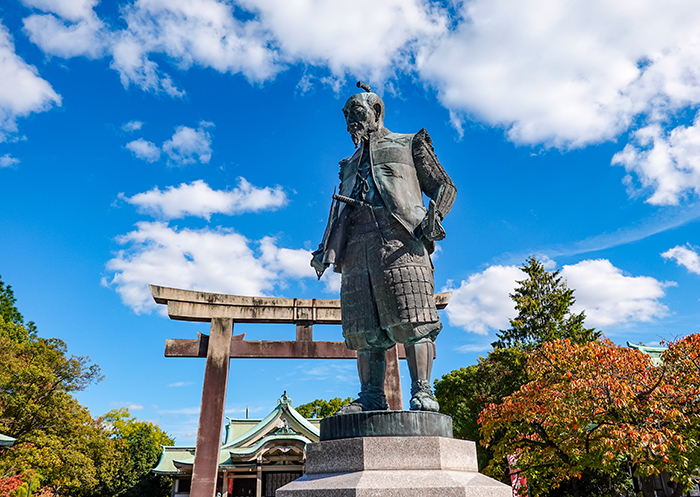
豊臣秀吉 Toyotomi Hideyoshi was born Kinoshita Tokichiro, to a peasant family — about as far from the warrior aristocracy as it was possible to start. He rose through sheer ability and personal charm after attaching himself to Oda Nobunaga’s service. Nobunaga nicknamed him “Saru” — monkey — but the nickname came with genuine respect for his competence.
When Nobunaga died at Honnoji, Hideyoshi moved fast, and he moved on people as much as on armies — his tools were negotiation and persuasion as often as force. By 1590, with the defeat of the Hojo clan, he had brought nearly the entire country under his authority.
Once in power, he built the administrative foundation that early modern Japan would run on: the 太閤検地 Taiko Kenchi, a nationwide land survey, and the 刀狩 katanagari, the sword hunt that disarmed everyone outside the samurai class. Both policies outlasted him by centuries.
The Warmed Sandals
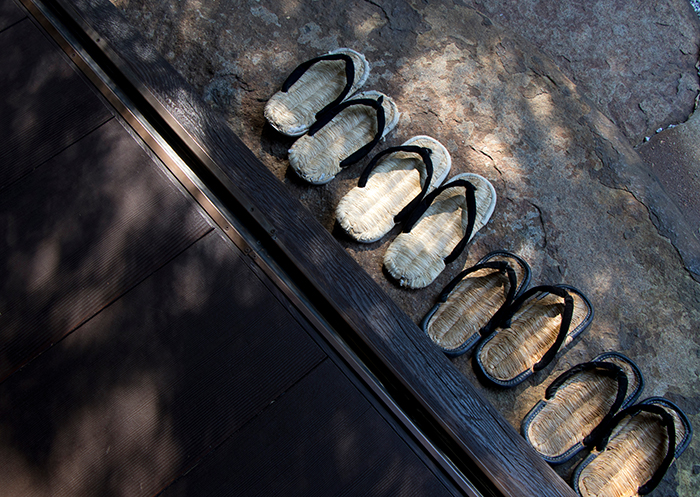
One story from his years serving Nobunaga is still told as an example of the instinct that carried him so far. On a freezing, snowy day, the young Tokichiro is said to have kept Nobunaga’s sandals tucked inside his own robes before handing them over, so his lord’s feet would meet warm leather rather than cold. Nobunaga, the story goes, was moved by the gesture, and it marked the beginning of his favor toward the young retainer who would eventually inherit his ambitions.
Why He Never Became Shogun
Hideyoshi came close enough to a full unification of Japan that the question naturally arises: why did he never open a shogunate of his own, the way Ieyasu later would?
The office of 征夷大将軍 Sei-i Taishogun — shogun — could only be granted by the imperial court, and one of the conditions for receiving it was pedigree: an appropriate warrior lineage. Hideyoshi’s origin as a peasant closed that door regardless of what he had accomplished.
So he aimed at a different target. The office of 関白 kampaku — imperial regent, governing in the emperor’s stead — had lost much of its former authority by Hideyoshi’s time, which made it available in a way the shogunate was not. He took it, and used it to become, in practical terms, the ruler of Japan under a different title. It was not the position he might have preferred. It was the position that was open to a man determined to become as much of himself as circumstances would allow.
Tokugawa Ieyasu: The One Who Waited
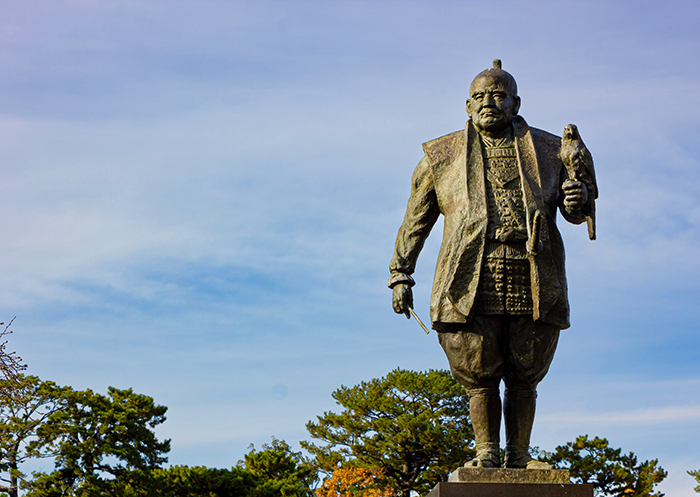
徳川家康 Tokugawa Ieyasu started from an even smaller base than the other two — a minor warlord’s domain in Mikawa province, roughly the eastern part of present-day Aichi prefecture. As a boy he was held hostage by both the Oda and Imagawa clans. At Okehazama in 1560, he fought on the Imagawa side, the losing one; when Imagawa Yoshimoto fell, Ieyasu broke from that alliance and eventually allied himself with the very man who had killed his former lord, Nobunaga.
His path was not smooth. Under suspicion of treason, he lost his principal wife and his eldest son and heir. After Honnoji, he found himself competing with Hideyoshi for the succession to Nobunaga’s position, judged the odds, and submitted to Hideyoshi’s authority rather than fight a war he could not win.
He got his opening after Hideyoshi’s death, when he turned against Hideyoshi’s heir, Hideyori, and Hideyori’s mother, Yodo-dono. The Battle of Sekigahara and the Winter and Summer Sieges of Osaka finished the job Nobunaga had started and Hideyoshi had nearly completed. Ieyasu founded the Edo shogunate, and the peace that followed lasted fifteen generations of Tokugawa rule.
A Name That Meant Submission
Most Edo-era shoguns carried the character 家 (ie) in their names — Ieyasu himself, Iemitsu, and so on down the line. Only four of the fifteen shoguns did not, and the second shogun, Hidetada, was one of them.
As a boy, before his coming-of-age ceremony, Hidetada was sent as a hostage to Hideyoshi’s court, and it was there that he received his name — built from one of the characters in Hideyoshi’s own name. The character 忠 (chu, in Hidetada) carries the meaning of serving one’s lord with wholehearted loyalty. Given to a boy from a family that was, at the time, still subordinate to Hideyoshi, the choice reads less like a coincidence and more like a message: submit, and mean it.
The marriage ties only tightened the knot. Hidetada’s wife was Oeyo, the youngest of the Azai sisters and the younger sister of Yodo-dono — Hideyori’s own mother. Hidetada and Oeyo’s eldest daughter, Senhime, was in turn married to Hideyori himself. Whatever else the Tokugawa and Toyotomi houses were to each other, hostile is only half the story; by marriage, they were also family.
The Old Badger

家康 Ieyasu picked up the nickname たぬき親父 tanuki oyaji — roughly, “the old raccoon dog,” an animal associated in Japanese folklore with shrewdness and disguise. Part of it was his rounder, older appearance. The larger part was the way he actually won.
Consider the arithmetic of his patience. The average life expectancy for a warrior in the Sengoku period was around forty. Hideyoshi died at 62, itself considered a long life by the standards of the age. Ieyasu did not complete the unification of Japan until he was 73 — decades past what most of his peers could expect to see, still pursuing a goal he had held since he was young enough to be someone else’s hostage.
That patience also gave him an advantage that had nothing to do with tactics. When he moved against Hideyori after Hideyoshi’s death, Hideyori was a man in his twenties, with none of the battlefield seasoning his father had earned the hard way. Ieyasu, in his seventies, had already survived decades of exactly the kind of crises Hideyori had never faced. He used that gap deliberately.
A Grudge Built on Two Characters
The clearest example is the 方広寺鐘銘事件 Hoko-ji Bell Inscription Incident. Hoko-ji, a temple in what is now Higashiyama, Kyoto, had been built in 1595 on Hideyoshi’s order to house a great statue of the Buddha. That first statue was destroyed the following year in the 1596 Keicho-Fushimi earthquake, and after Hideyoshi’s death a second attempt at rebuilding was planned. A great bell, to be dedicated as part of that project, carried an inscription with two phrases: 国家安康 and 君臣豊楽. Read plainly, the phrases wished for a peaceful state and a lord and subjects who lived in prosperity and joy together.
Ieyasu read them differently, and reacted with fury. His own name, 家康 (Ieyasu), appeared split apart inside the first phrase, with a different character wedged between the two. The second phrase paired 豊 — the first character of Toyotomi — with 楽, prosperity. There is no indication the temple or the Toyotomi household intended any insult to Hideyoshi or to Ieyasu. But a temple tied to Hideyoshi’s memory, backed by the standing of the Buddhist establishment, was exactly the kind of rival authority that could complicate Ieyasu’s own claim to the realm — and that is likely closer to what actually provoked him.
The Toyotomi retainers involved in the project — Katagiri Katsumoto, Ono Harunaga, and the monk Seikan, who had composed the inscription — were summoned before Ieyasu to explain themselves. He gave their explanations no weight. Around the same time, Yodo-dono’s wet nurse, Okurakyo no Tsubone — who was also Ono Harunaga’s own mother — was received by Ieyasu without difficulty, in a cordial audience where the bell inscription never came up.
Ieyasu then set his terms: Hideyori was to travel in attendance to Sunpu and Edo, effectively as a subject in service to Ieyasu; Hideyori was to leave Osaka Castle and relocate to a different domain; and Yodo-dono was to be sent to Edo and held there, in practice as a hostage of the Tokugawa.
Hideyori and Yodo-dono would not accept any of it. Furious, they moved to have Katagiri Katsumoto assassinated. Katsumoto was not the only one under suspicion inside the Toyotomi camp — other retainers had begun to wonder whether he had already thrown in with Ieyasu. Under that pressure, Katsumoto left Toyotomi service, and some of his fellow retainers followed him out the door.
Modern historians generally do not read this as a deliberate Tokugawa plot to fracture the Toyotomi house from within. But a manufactured grievance produced the same result a plot would have: the Toyotomi camp split against itself, and the house did not survive what came after.
What the Waiting Cost Him
Looking at what Ieyasu did to Hideyori — provoking a fight over two characters in a bell inscription, then using it to hollow out his rival’s own camp from the inside, against an opponent decades younger and with none of his experience — it is not, on its face, a flattering picture of the man, and it sits uneasily next to the samurai code he was nominally upholding.
But it is worth setting against the life that preceded it. Ieyasu was born into a small domain, taken hostage as a child, and forced for years into the service of stronger men — first the Oda, then, after Okehazama, effectively Hideyoshi as well. Along the way he lost territory, his wife, and his eldest son to forces larger than he could resist. He absorbed every one of those losses and kept waiting anyway. Whatever else can be said about how he finally closed the gap, the wish behind it — to end the fighting for good, on terms that would hold — seems to have mattered to him more than how history would judge the way he got there.
Three Personalities, One Bird
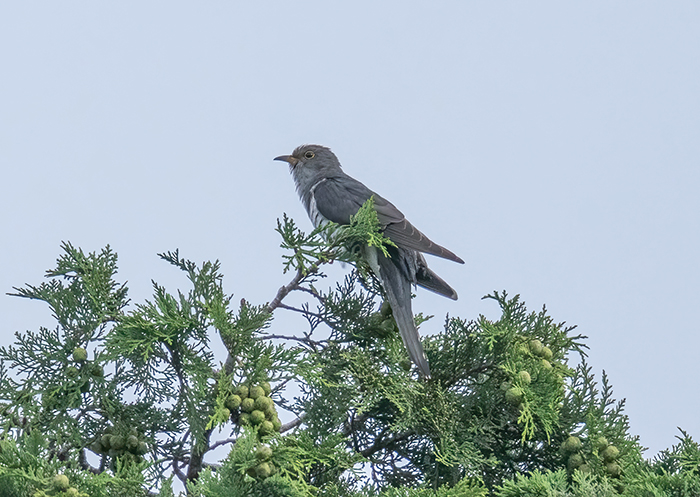
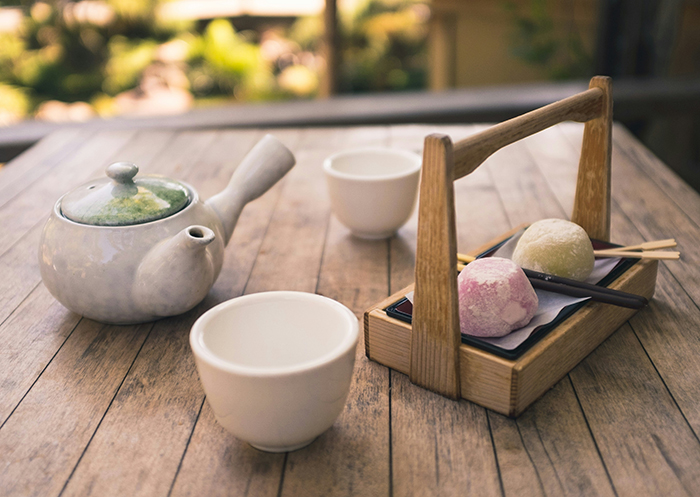
Japanese tradition sums up the three men in a single senryu, built around what each would supposedly do if a 時鳥 hototogisu — a migratory cuckoo whose call, along with the uguisu (bush warbler), is one of the traditional signs that summer has arrived — refused to sing:
Nakanunara, koroshite shimae, hototogisu — “If it won’t sing, kill it,” attributed to Nobunaga. Blunt, and true to how he handled resistance.
Nakanunara, nakasete miyou, hototogisu — “If it won’t sing, find a way to make it sing,” attributed to Hideyoshi. It is a fair summary of a man who got what he wanted through persuasion and maneuver more often than the sword.
Nakanunara, naku made matou, hototogisu — “If it won’t sing, wait until it does,” attributed to Ieyasu. Unhurried, and willing to let time do the work that force could not.
A second verse makes a similar point about the unification itself, using each man’s family name as a play on the making of mochi:
Oda ga tsuki, Hashiba ga koneta, tenka mochi, suwarishi mama ni kuu wa Tokugawa — “Oda pounded it, Hashiba kneaded it, and Tokugawa, sitting the whole time, is the one who ate it.” (Hashiba was the surname Hideyoshi used before he rose high enough to take another.) Nobunaga did the heavy work of breaking the country open; Hideyoshi shaped what Nobunaga had started into something close to a finished unification; Ieyasu, having done neither, ended up the one who actually got to keep it. The joke is gentle, and it lands exactly on the reputation that has followed him ever since.
What Stayed Behind
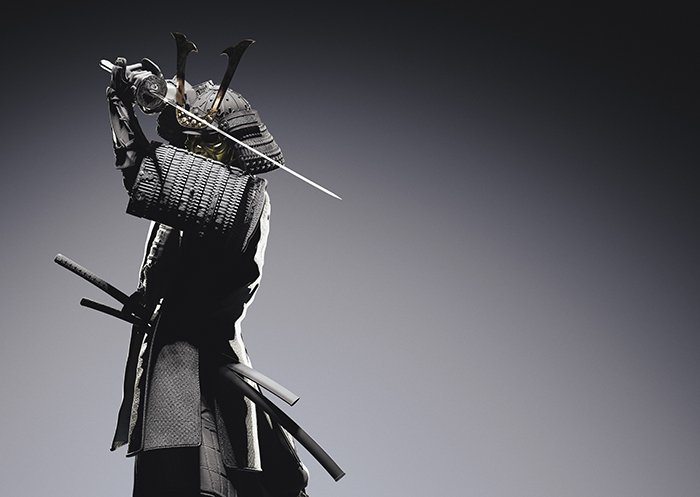
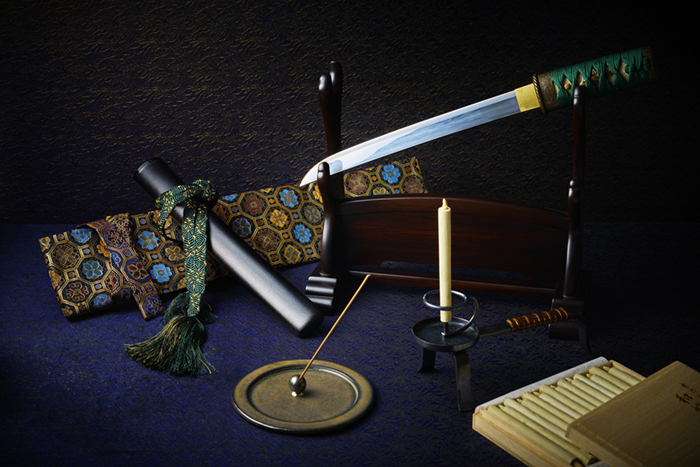
The three men who between them ended Japan’s civil war could hardly have approached the same goal more differently, and the difference is a large part of why all three are still remembered so distinctly centuries later. Nobunaga’s severity, Hideyoshi’s resourcefulness, and Ieyasu’s patience each carried him only so far on their own — and each still reads, today, as a recognizable way of getting through a difficult situation.
They were far from the only warlords who lived and fought by that code during the Sengoku period. There are more of their contemporaries worth knowing, and their stories belong elsewhere.
KOTO is a journal of Japanese craftsmanship, culture, and the aesthetic sense behind them.
- SHARE
-


( tales )