






What Is Shinto? Japan’s Native Belief and the Daily Practice of Facing Yourself
Shinto 神道 is often introduced to outsiders as “the religion of Japan.” The description does not quite fit. Shinto has no founder, no fixed scripture, and no single doctrine — and yet it has shaped how people in Japan relate to nature, to their ancestors, and to themselves for longer than written history can confirm.
This article sets out what Shinto is, the kami 神 that populate its worldview, and how something so structurally unlike a religion still organizes a striking amount of everyday Japanese life.
What Is Shinto?
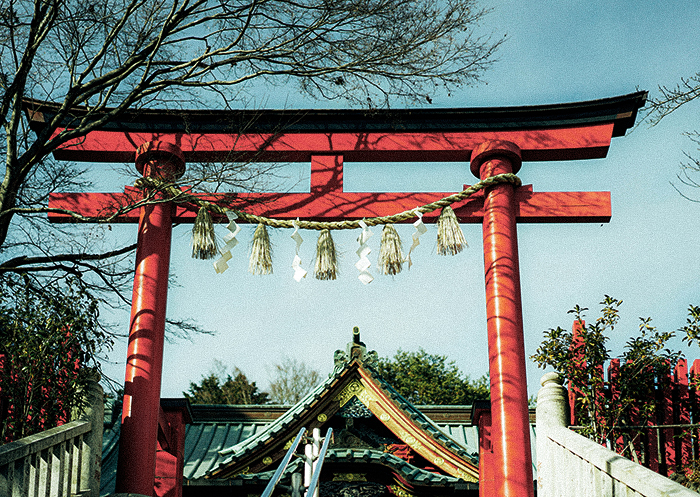
Shinto is Japan’s native folk belief — a way of understanding the world that grew up inside Japan itself rather than arriving from elsewhere. Its basic premise is that kami inhabit not only living beings but mountains, rivers, rocks, and the rest of the natural world. The phrase most often used to capture this is 八百万の神 yaoyorozu no kami — “eight million kami” — a figure not meant literally but as shorthand for a multitude too large to count.
The name “Shinto” itself came comparatively late. It was coined to distinguish this native belief system after Buddhism arrived in Japan and a term became necessary to mark the difference.
The Foundational Ideas
At the root of Shinto sits the worship of nature and the seasons — a posture that combines awe at nature’s power with gratitude for what it provides. That pairing, reverence alongside thanks, has been carried forward largely unbroken since antiquity. Several more specific ideas build on it.
Reverence for Kami and Ancestors — 敬神崇祖 keishin sūso
Shinto is not only about venerating the countless kami of the natural world. Gratitude toward the ancestors who carried life down to the present is treated as equally essential. This is known as 祖先崇拝 sosen sūhai, ancestor worship, and it sits close to the center of Shinto practice.
The Principle of Wa — 和
The idea that “Japanese people value harmony within their community” or “help their neighbors when trouble comes” is often treated simply as a cultural trait. Behind it is a more specific principle: 和 wa, harmony.
Wa describes people who share the same land protecting that community together, and taking care with one another to avoid conflict. Local festivals, 祭り matsuri, grew out of this principle: they express gratitude to the kami while also reinforcing a community’s sense of belonging to one another.
The line most often cited on this point comes not from Shinto scripture but from a political document. 厩戸王 Umayado no Ou, better known as Prince Shotoku (574–622), a regent credited with shaping the earliest framework of Japanese governance, wrote in the Seventeen-Article Constitution (Jushichijo Kenpo, 604) that “harmony is to be valued above all” — 和を以て貴しとなす.
Purity and a Sincere Heart
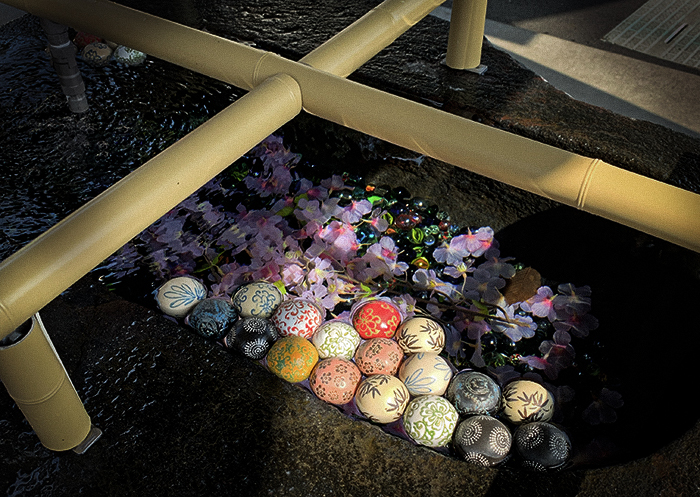
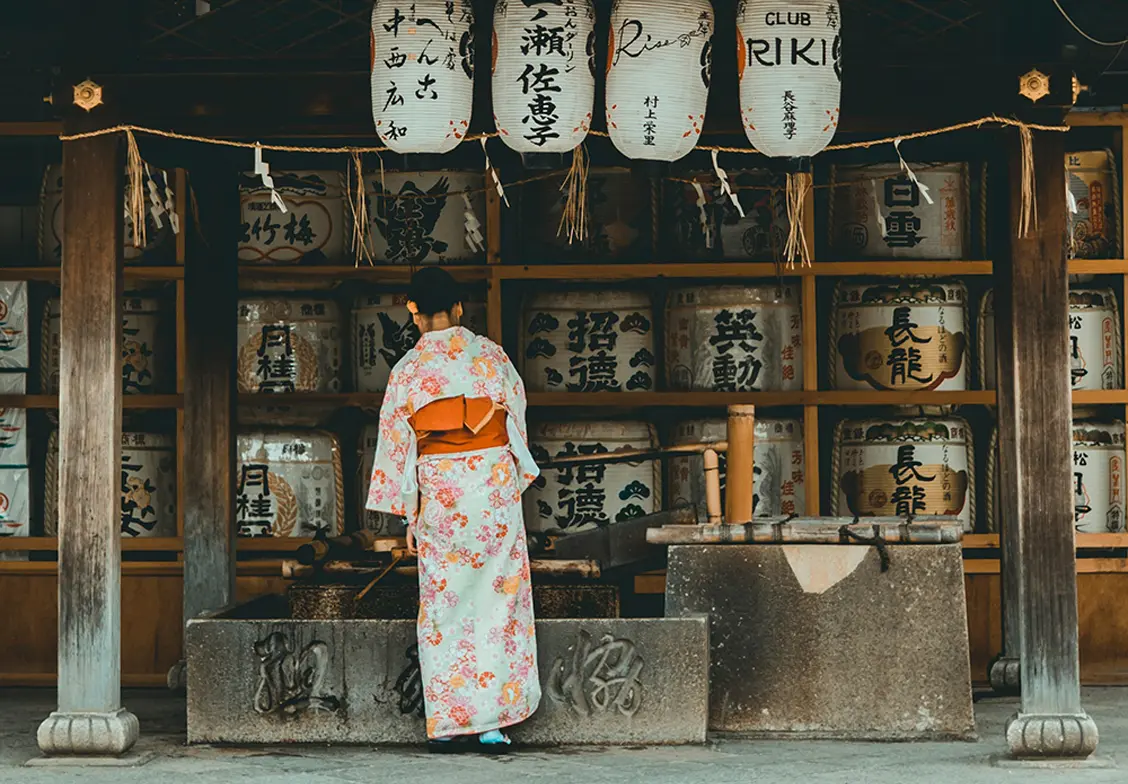
Purifying the body and mind, and performing 禊 misogi — ritual purification — when defilement (穢れ kegare) has occurred, is treated as essential. The 手水 temizu, the water basin found at the entrance to a shrine, exists for exactly this purpose: to cleanse visitors of impurity before they pass through.
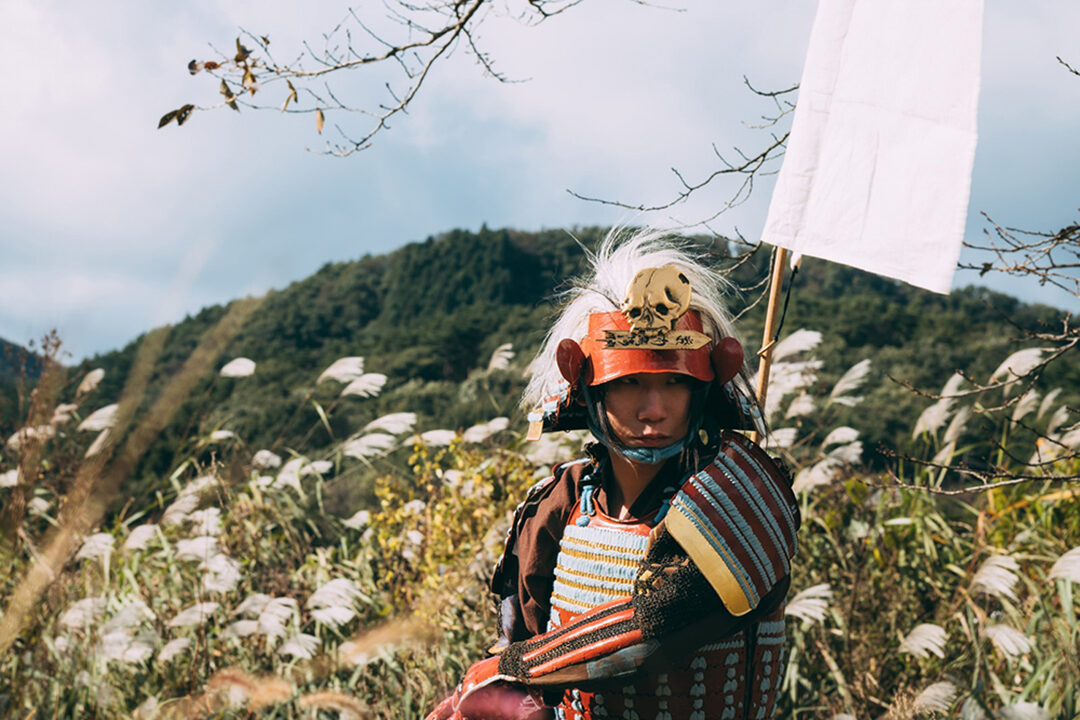
Impurity, in this framework, is not only a matter of appearance. Shinto asks that people examine themselves daily for dishonest or corrupted thoughts within. Living without falsehood, in a state of pure sincerity, is known as 誠の心 makoto no kokoro — a sincere, true heart — and it was carried forward as one of the central teachings of Bushido 武士道, the samurai code that developed from the medieval period onward.
Why It Isn’t Written “Shinto-kyo”
Japanese religions are typically named with the suffix 教 -kyo: 仏教 Buddhism, キリスト教 Christianity, イスラム教 Islam. Shinto carries no such suffix, and the reason usually given is that whether Shinto qualifies as a religion at all remains an open question.
A religion, in the conventional sense, comes paired with a founder and a scripture. Shinto has neither in any settled form — though some hold that texts such as the Kojiki (712) and the Nihon Shoki (720), Japan’s oldest surviving chronicles, function as something close to scripture.
Modern Japanese life offers a visible symptom of this looseness. New Year’s, Halloween, and Christmas — observances drawn from entirely different religious traditions — are all woven into ordinary life without apparent contradiction. That comfort with plurality is generally attributed to Shinto’s lack of fixed doctrine, combined with a worldview already built around countless kami rather than one.
Shinto and “The Way”
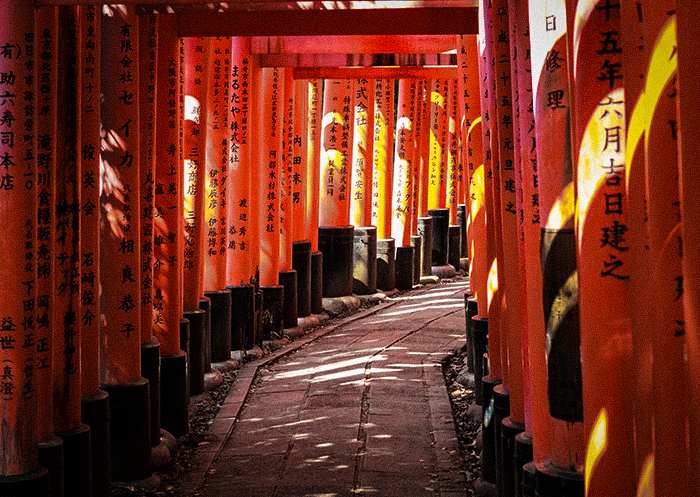
Where 教 would normally go, Shinto instead takes 道 do — “the Way.” This 道 does not mean a route connecting two points. It refers to 神の道 kami no michi, the way of the kami: living in accordance with the teachings of the kami, natural law, and the kami’s workings in the world.
Concretely, this includes practices such as giving thanks for the four seasons and nature’s blessings, and joining with others who share the same land to hold festivals honoring the local land deity.
The same logic explains why other Japanese arts carry the same suffix — 剣道 kendo, swordsmanship, and 茶道 sado, the tea ceremony, among others. Each is understood not as technical skill for its own sake but as learning the laws and harmony of nature and the cosmos, in order to refine one’s character. The aim, in Shinto as in these disciplines, has never been belief or technique alone. It is facing oneself, living in harmony with nature, and acting according to conscience.
The Kami of Shinto
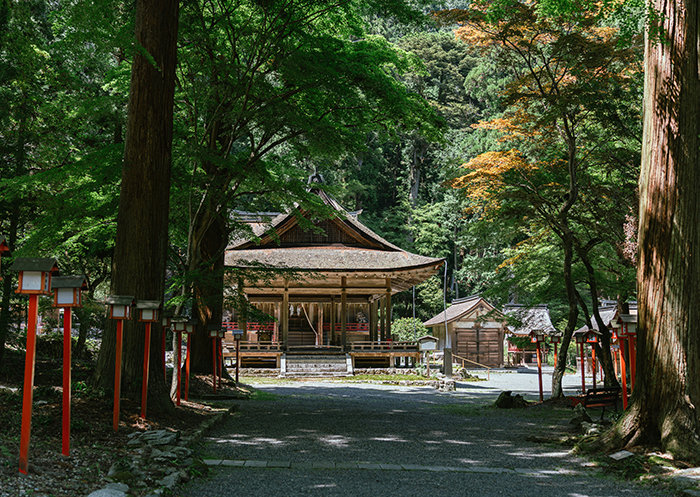
Given how central the yaoyorozu no kami are to the belief system, it is worth setting out roughly what kinds of kami populate it.
Nature Deities — 自然神
Kami who dwell in celestial bodies, weather, and terrain — occasionally in animals such as snakes. Representative examples include the sun god, the moon god, the wind god and thunder god (風神雷神 Fujin and Raijin), the mountain god, and the sea god.
Deities of Occupation and Daily Life — 生業・生活の神
Kami tied to particular activities and circumstances, which break down further into two groups.
Deities protecting social groups, from a single household up to an entire regional clan — including 屋敷神 yashikigami, household guardian deities; 氏神 ujigami, clan deities; and 産土神 ubusunagami, deities tied to one’s birthplace.
Deities tied to specific occupations and scenes of daily life — among them the rice-paddy god, deities of fishing, the god of war, the god of plague, and 竈神 kamado-gami, the hearth god.
Deified Humans — 人神 hitogami
Figures who were once living people and were enshrined as kami after death. A handful of patterns recur.
Some are venerated for achievements meant to be remembered by later generations — Tokugawa Ieyasu (1543–1616), founder of the Tokugawa shogunate, and Toyotomi Hideyoshi (1537–1598), who unified Japan under his rule, are both examples.
Some gave their lives or fortunes to plead on behalf of the common people, as the Edo-period figure 佐倉惣五郎 Sakura Sogoro is said to have done.
Some led rebellions against the state that brought on war, as with 平将門 Taira no Masakado (d. 940), a Heian-period warrior whose revolt against the imperial court made him one of the most storied figures later enshrined as a kami.
And some lived out unhappy final years and were believed, after death, to have become vengeful spirits — the case of 菅原道真 Sugawara no Michizane (845–903), the Heian-period scholar exiled from the capital and later venerated as Tenjin, deity of scholarship.
The pattern behind all four is a specific Shinto conviction: that a person may become a kami after death, and that kami live alongside people without any fixed wall separating the two.
Mythological Deities — 神話神
Kami who appear in Japan’s mythology. The most prominent among them is 天照大神 Amaterasu Omikami, the sun goddess, regarded as the ancestor of Japan’s imperial line down to the present. Alongside her stand 月読命 Tsukuyomi no Mikoto, the moon deity, and スサノオノミコト Susanoo no Mikoto, who governs storms and the sea.
Facing Yourself Through Shinto
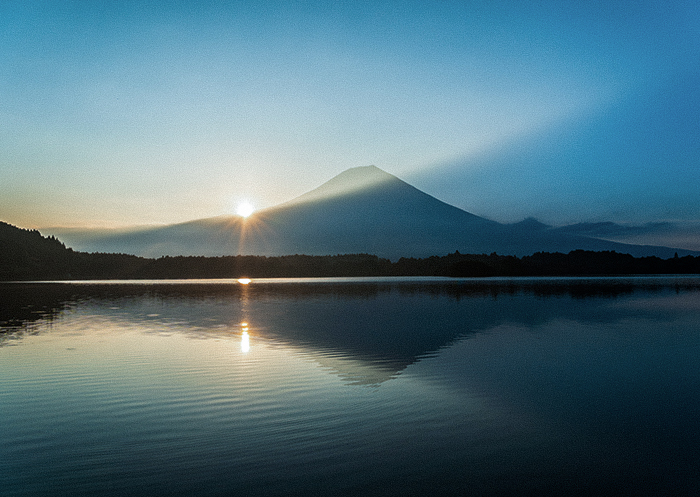
Because Shinto has no fixed doctrine or scripture, it locates the work of self-examination somewhere else entirely: in the texture of daily life itself.
Restoring a Pure, Bright Heart — 清き明き心 kiyoki akaki kokoro
The starting point for facing oneself, in Shinto terms, is restoring 清き明き心 — a heart that is pure, free of falsehood, and without a single cloud across it.
This means declining to let lies, vanity, or fixed assumptions determine how one thinks or behaves, and instead examining one’s own thinking against conscience. Modern life pulls constantly toward deference to unspoken expectations and toward keeping up appearances. Shinto treats the periodic recovery of this unclouded heart as necessary precisely because of that pull.
Four Practices
A handful of concrete practices are associated with this work of self-examination.
Attending to 中今 naka-ima, “this present moment.” Rather than dwelling on the past or the future, attention goes to what is directly in front of a person, met carefully and wholeheartedly. The effect, over time, is to steady one’s own center and reduce the waver in one’s thinking.
Facing oneself in nature. Since Shinto’s worldview rests on nature worship, placing oneself within nature is treated as an unusually good opportunity to step outside daily noise, quiet the mind, and reflect. Awe at nature’s power, paired with gratitude for what it provides, is understood to deepen this reflection.
Holding on to gratitude. A settled habit of gratitude — including for things easy to take for granted — is treated as essential to living well. It guards against arrogance and makes it possible to face oneself with humility rather than self-regard.
Attending to the teaching of the sacred mirror, 神鏡の教え shinkyo no oshie. Shrine visitors will often encounter a mirror. It is not there simply to show a reflection — it is said to reflect the state of one’s heart, one’s conduct, and, above all, one’s soul. The kami, in this teaching, functions as a mirror onto one’s own heart, a reminder to hold to honesty and purity at all times. A shrine visit, understood this way, becomes an occasion to face the self reflected back — a chance at genuine self-examination.
Shinto’s Hand in Shaping Bushido
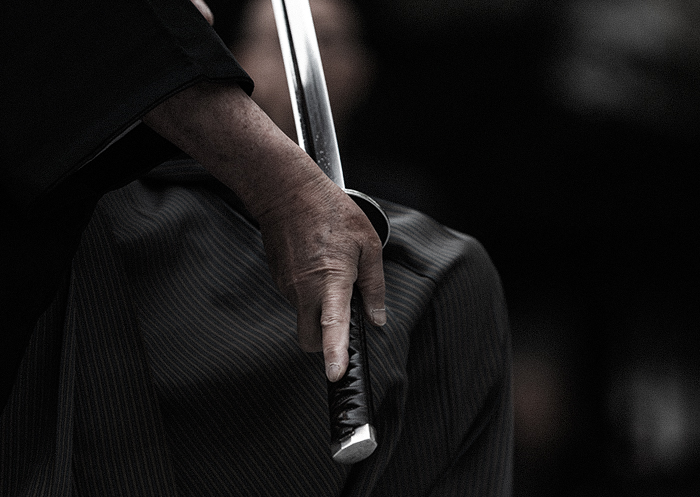
The practice of facing oneself just described bears an obvious resemblance to the thinking behind Bushido, the samurai code — and the resemblance is not treated as coincidence. Shinto is widely held to have shaped Bushido’s development directly.
Buddhism arrived in Japan centuries before the rise of the samurai class, and a great many people built their lives and beliefs around its teachings in the interval. Setting Bushido against Buddhism directly makes the Shinto influence easier to see.
Where Bushido and Buddhism Diverge
Loyalty to one’s lord. Reverence for one’s ancestors and native land. Sincerity and honor. These sit at the foundation of Bushido — and Buddhism, on its own terms, does not supply the ideas that would produce any of them.
The Shinto premise that kami inhabit all things extends to the land itself, not only to people. On that premise, defending one’s territory and defending the kami who dwell within it amount to the same act. Bushido treated loyalty to one’s lord as absolute; Buddhism carries no comparable idea of service to a specific lord. And the demand that a samurai hold to makoto, an undefiled sincerity without falsehood, is a direct extension of the kiyoki akaki kokoro described above. A willingness, at times, to endure shame or take one’s own life rather than lose honor sits in direct tension with Buddhist teaching rather than growing out of it.
The “Way” Shared by Bushido and Shinto
Bushido and Shinto also share the logic of 道 discussed earlier. As with 武道 budo, the martial way, and kendo, the point was never technical skill in isolation — it was how thoroughly nature and person could be brought into harmony.
A Way of Facing Oneself
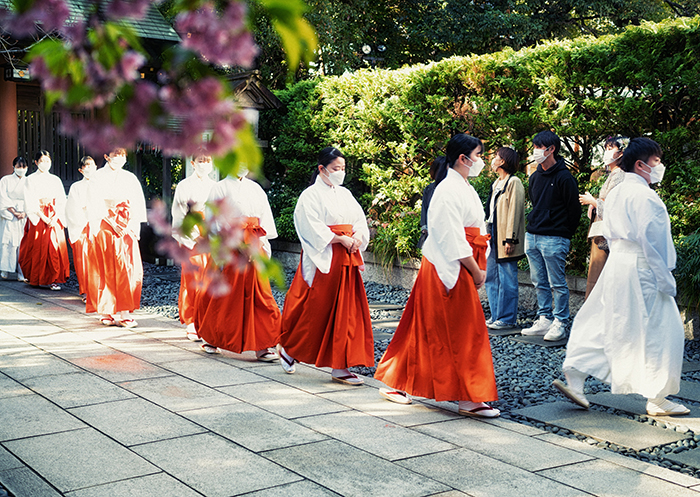
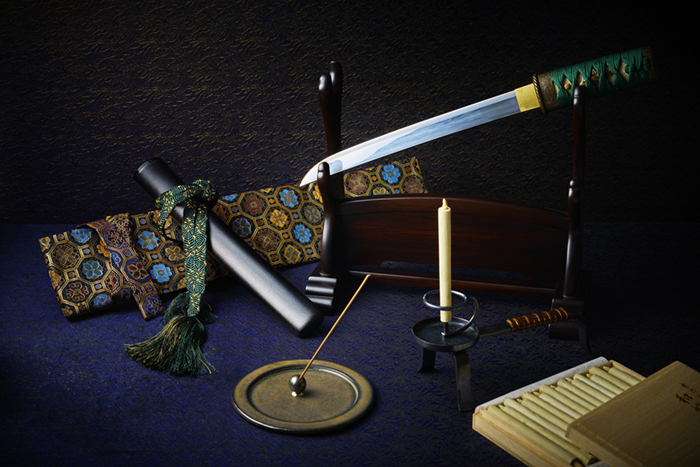
Shinto runs deep through Japanese culture and daily life — sometimes as reverence for nature, sometimes as one of the forces that shaped Bushido and the broader moral order that followed it.
It also functions, still, as a guide for facing oneself and living as a person ought to. Understood this way, Shinto is less a religion in the conventional sense than a standing practice: gratitude toward nature and one’s ancestors, honesty with oneself, and a life brought into accordance with conscience.
KOTO is a journal of Japanese craftsmanship, culture, and the aesthetic sense behind them.
- SHARE
-


( philosophy )