





What Is Japanese Incense? The History and Meaning Behind Kō
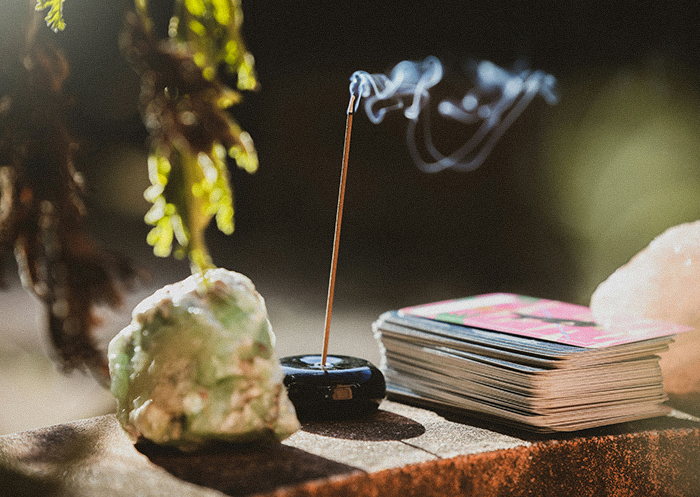
Scent changes a room before anyone says a word, and Japan built an unusually precise culture around that fact. For long stretches of its history, the scent a person kept was read as a mark of taste, discipline, and even character. This article is about the form that discipline took: 香 kō, incense — what it is made of, how it differs from what the West calls aroma, and the surprising range of roles it has played across Japanese history.
What Japanese Incense Is
Incense made in Japan is built almost entirely from natural materials. Three kinds of fragrant wood do most of the work.
伽羅 Kyara. Sweet and rich, with a bitterness and astringency held in a balance found nowhere else. It is often described as woody, and it leaves a noble, elegant impression. Kyara carries all five of the traditional tastes — gomi — by which incense connoisseurs describe scent, and its rarity and market value are reported to keep rising year by year.
沈香 Jinkō (agarwood). A distinctive, richly layered scent that resists a single description. People reach for comparisons: aged wine, thick vanilla, a cooling freshness. Others find in it the smell of a heavily spiced dish, or the sacred air of a temple.
白檀 Byakudan (sandalwood). A refined scent carrying a faint sweetness, a coolness, and real depth. It is the same note sold as “sandalwood” in perfume, so many readers will already know it without realizing it. Regarded as Japan’s representative scent, it appears in a wide range of crafts.
Herbal medicine and spices are sometimes used as a base as well, beyond these three woods.
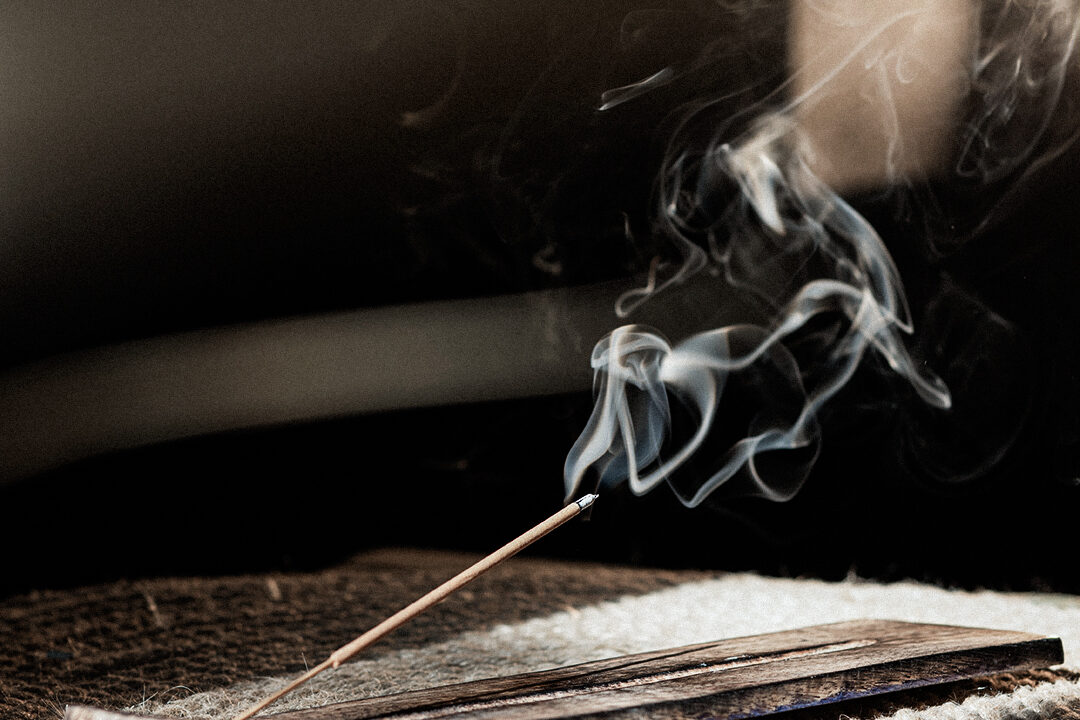
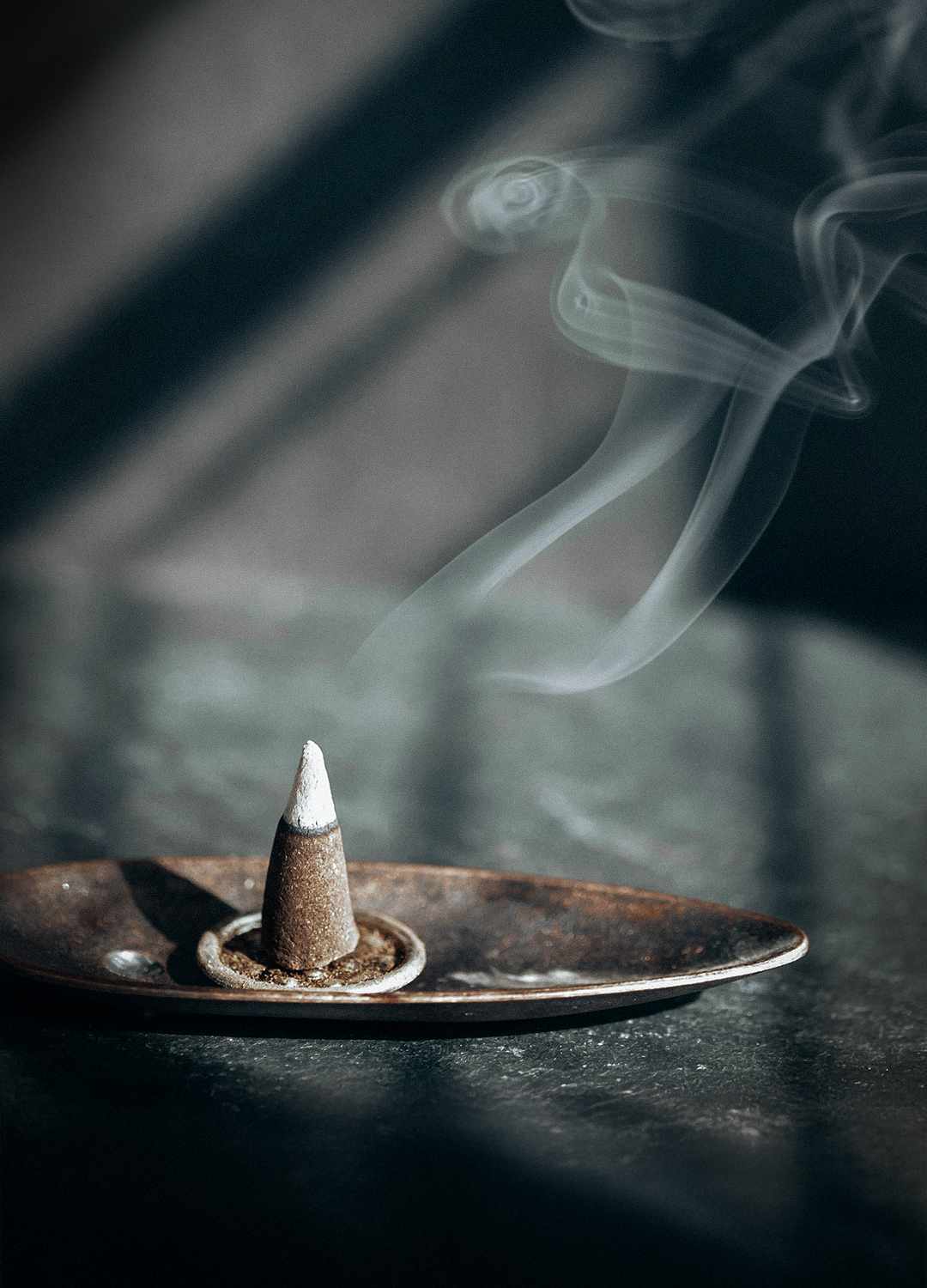
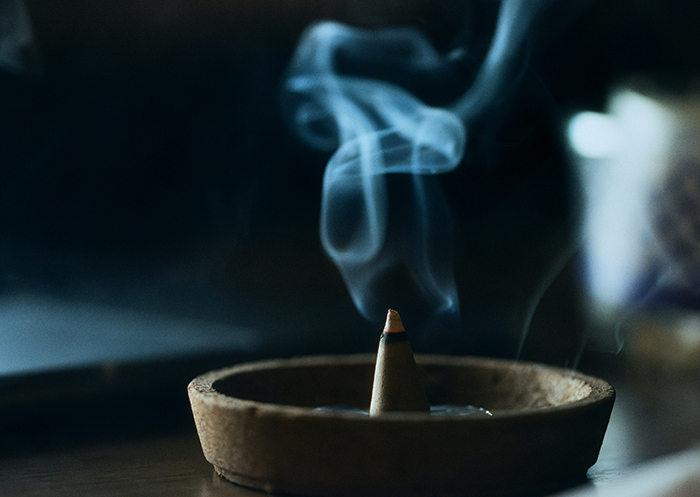
To make incense, the base material is ground to powder and then set into a solid form — usually powder alone, though some types are said to mix in liquid. The shapes range from a thin stick, like a senkō incense stick, to a cone. What defines the category, above all, is that it is heated, and the scent released in its smoke is what is enjoyed.
How Incense Differs From Aroma
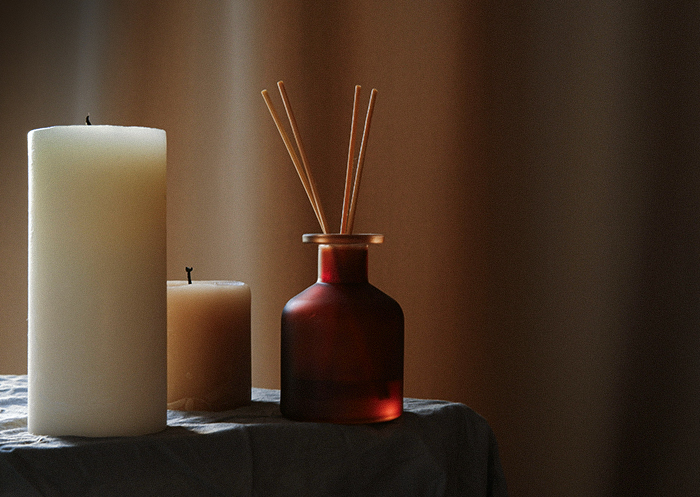
Incense and aroma — what the West would call essential oils — share an obvious premise: both are about the pleasure of scent, and both draw on plants. The differences, though, run deeper than they first appear.
Materials
Incense relies mainly on solid fragrant woods, herbal medicine, and spices. Aroma, by contrast, extracts liquid scent from flowers and other plants — lavender, rose, and geranium are the most common.
Method of Use
Incense is, at its core, something you heat. Smoke is the usual form, though warming a piece of wood directly, or simply carrying it in a small pouch, are both established methods too. Aroma, on the other hand, is generally used at room temperature. Whether heat is involved turns out to be one of the largest differences between the two.
The Shape of a Scent
Perfume is often discussed in terms of top notes, middle notes, and base notes — the vocabulary for how a scent changes as time passes. Aroma follows the same three-part structure: strongest at the top, then settling through the middle note, then the base.
Incense adds a fourth register found nowhere else: the bottom note, heavier than the base note itself. It exists only because incense is heated. Wood with a high fiber content cannot release its true scent without that heat — the bottom note is, in effect, a direct consequence of the heating that defines incense in the first place. If there is one difference between incense and aroma worth remembering, this is it.
Incense and Japanese Culture: A History
The Earliest Record
The first documented mention of incense in Japan appears in the 日本書紀 Nihon Shoki, Japan’s first official history, completed in 720. It records that a piece of agarwood drifted ashore on Awaji Island, in what is now Hyogo Prefecture, and was recognized by 聖徳太子 Shōtoku Taishi, a regent remembered as an early champion of Buddhism in Japan.
As a culture, though, incense is generally traced to the arrival of Buddhism in the Asuka period (593–710), around the sixth century, through the practice of 供香 kuko — burning byakudan and jinkō as an offering.
Kuko and Buddhism
In Buddhist practice, kuko means burning incense to offer a prayer to the Buddha or to the dead — sometimes with incense proper, sometimes with senkō sticks. The act carries several meanings at once.
It is, first, an offering to the Three Treasures — the Buddha, the teachings, and the monks who transmit them — each given a share of the fragrance. It is also a way of delivering 香食 kōjiki to the departed: Buddhist teaching holds that the dead take scent itself as their meal, and burning incense is understood as serving that meal. And it is an act of purification, driving off ill fortune and cleansing a space or a person with a good scent — itself considered necessary groundwork for receiving the Buddha properly.
The Heian Period: Incense as an Art of Refinement
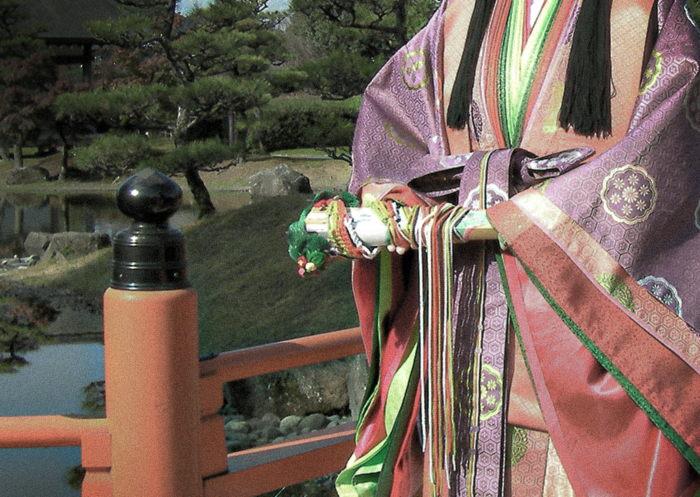
By the Heian period (794–1185), incense had moved well beyond religious use. Scenting one’s clothing, and appreciating the trace it left behind, became a courtly art in its own right. A person’s sense of scent was weighed alongside their skill at waka poetry and the cut of their dress — all three read together as evidence of taste. This period also saw the emergence of 練香 nerikō, a compounded incense that layered several scents into one.
Incense runs through the Genji Monogatari, the Tale of Genji, but nowhere more vividly than in the depiction of two characters: 薫 Kaoru and 匂宮 Niou no Miya. Kaoru is nominally the son of the protagonist, Hikaru Genji — his true father is someone else — and Niou is Genji’s grandson. Raised almost as brothers, Niou nonetheless regarded Kaoru as a rival.
Kaoru’s body carried a natural fragrance from birth, so distinct that people could sense his presence from the scent drifting around him before they saw him. Niou, unable to compete on those terms, burned incense into his own robes instead. The two verbs the language uses mark the difference precisely: 薫 kaoru describes a good scent that drifts naturally; 匂 niou describes a scent produced by deliberate effort. And where kaoru is almost always pleasant, niou can describe an unpleasant scent as easily as a pleasant one. The contrast built quietly into these two characters is often cited as evidence of just how sharp an observer the author, 紫式部 Murasaki Shikibu, really was.
Kamakura and Muromachi: Monkō and the Way of Incense
As the age of the samurai began, a new practice took shape: 聞香 monkō, giving sustained attention to the scent of a piece of incense wood on its own terms. Alongside it came 組香 kumikō, a game built around identifying a sequence of scents tied to literary or poetic themes. Together, these practices grew into 香道 kōdō, the way of incense — an art established alongside 華道 kadō, flower arrangement, and 茶道 sadō, the tea ceremony, with a discipline entirely its own.
The Edo Period: Incense Reaches Everyone
Until the Sengoku period, incense was a luxury item, and simply owning it functioned as a kind of status symbol. Once the Edo period (1603–1868) began, incense spread to ordinary citizens for the first time — and it is this spread that is credited with turning kumikō from a courtly pursuit into a popular pastime.
Incense and the Samurai
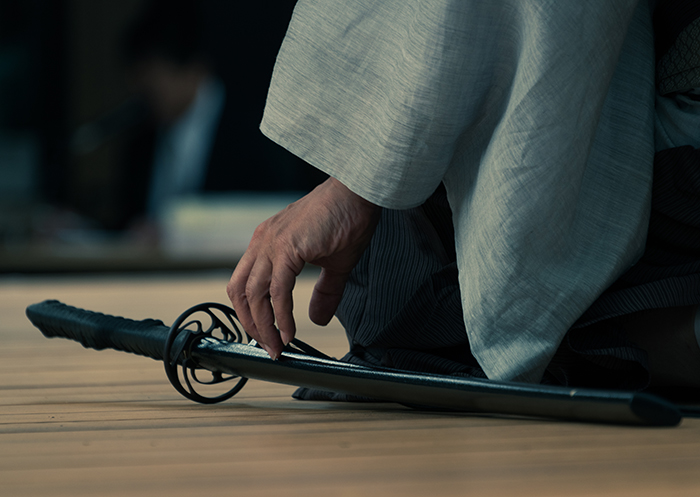
Calming the Mind Before Battle
Incense relaxes, and that plain effect had a specific use before combat: samurai used its scent to settle a mind keyed up with tension, on the reasoning that a calm mind could draw out its full strength. Jinkō appears to have been the wood most often used for this. And because death could come at any moment once fighting began, a samurai who had made his peace with dying would burn incense into his hair and his armor as a final act of grooming before he went into battle.
A Practical Defense: Insects and Mold
Jinkō and byakudan both carry insect-repelling and antibacterial properties, and it is reasonable to think this played some part in why incense was used before battle — protection against insect bites, alongside everything else. The smoke had a second practical use: because incense is alkaline, it can suppress the acidic conditions mold needs to grow. Armor was both a life-protecting object and a costly one, and this author suspects it was maintained with incense for that reason too — perhaps as much an offering of thanks for the Buddha’s protection as a matter of upkeep.
Ranjatai: The Log That Only an Emperor Could Open
蘭奢待 Ranjatai is regarded as the finest incense wood in Japan. It is a single log of agarwood, 156 centimetres long and 11.6 kilograms in weight, held at the 正倉院 Shosoin repository in Nara, where it is catalogued under the plainer name 黄熟香 Ojukuko. The elegant name hides three characters inside it — 東, 大, 寺 — which spell 東大寺 Todai-ji, the temple the repository belongs to.
No one has ever owned it. The doors of the Shosoin open only by imperial licence, and the most a ruler could hope for was permission to have a small piece cut away. Records of such cuttings run from the Muromachi shoguns 足利義満 Ashikaga Yoshimitsu, 足利義教 Ashikaga Yoshinori and 足利義政 Ashikaga Yoshimasa, through 織田信長 Oda Nobunaga in 1574, to Emperor Meiji in 1877. Labels marking three of those cuttings are still attached to the wood. A survey in 1997 counted thirty-eight cut marks on its surface — far more than the written record accounts for.
That the greatest honour the court could extend, to men who already commanded armies and gold, was a few centimetres of scented wood says something about how the culture weighed it.
What Remains
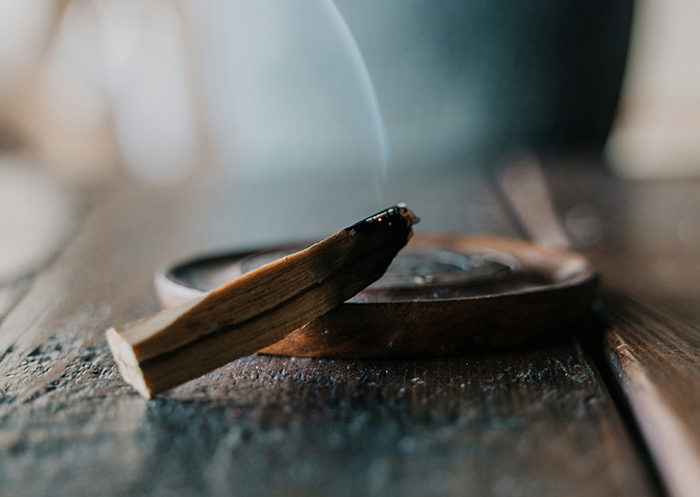
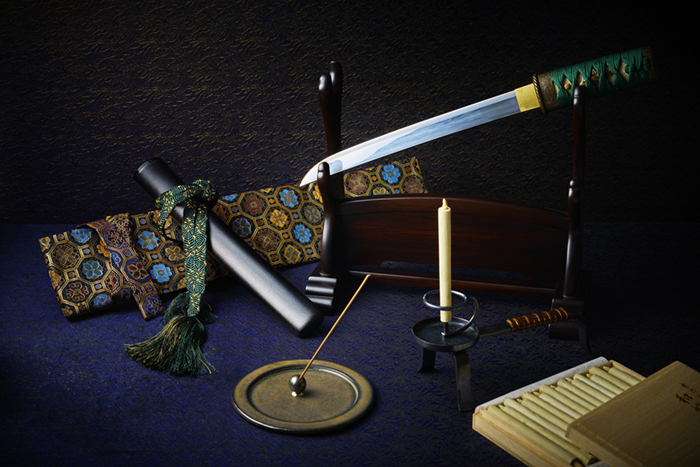
Incense was never only a matter of scent. Across its history it moved through literature, into the preparations a samurai made before battle, and into the short list of honors an emperor could bestow. That range is worth remembering the next time its smoke rises.
KOTO offers pieces made for those who wish to keep the samurai’s discipline within reach — a Japanese sword and a hand-made candle, produced to order by craftsmen working in traditions two thousand years old. Because each is made individually, no two are ever the same.
- SHARE
-


( craft )