






Rice in Japanese History: The Grain That Paid Taxes, Measured Power, and Built a Nation
Ask why Japanese rice has the reputation it does, and most answers start with taste, or with the wave of health-conscious interest that has carried washoku around the world in recent years. Both are true enough. But rice’s relationship with Japan runs older and stranger than either of them. For most of the country’s history, rice was not simply eaten. It was stored as wealth, collected as tax, and used to measure the size of an army.
This is the first of two articles on rice in Japan. Here, the subject is history: how rice came to carry all of that weight, and what it built along the way. Part 2 turns to the present — the rice varieties grown in Japan today, and the dishes, from onigiri to sake, that rice culture produced.
The Jōmon and Yayoi Periods: Rice Arrives, and Villages Follow
Rice cultivation reached Japan during the Jōmon period, dated in this account to somewhere between 6000 and 3000 BCE. Before that, food security rested on hunting and gathering — workable, but never reliable. Rice farming offered something closer to a stable supply.
It began in Kyushu and spread nationwide by the Yayoi period (c. 300 BCE – 300 CE). The earliest fields were not the flooded paddies familiar today; farmers relied instead on 焼畑 yakihata, slash-and-burn cultivation, and on mixed grains, before paddy farming became the norm.
Rice farming did something else, too. It settled people. Where hunter-gatherers moved with the seasons, rice farmers stayed and built villages — and it is in settlement, the record suggests, that Japan’s first inequalities took root.
Why rice farming gave rise to wealth gaps and power struggles
– Because rice could be stored, it functioned as a form of wealth, and a gap opened between those who held it and those who did not.
– Villages began fighting each other over the water and paddies rice farming required. Around the same period, bronze and iron weapons appear, and war between villages followed.
– The need for someone to lead a village through conflict, and to manage its affairs, gave rise to chieftains — local rulers, and Japan’s first holders of power.
These local rulers later became the 豪族 gōzoku, the great clans, who would go on to play a central role in the formation of Japan as a nation.
The Nara Period (710–794): Rice Becomes Tax
Once Japan had taken shape as a state, rice began, in the 8th-century Nara period, to double as a system of taxation. Two mechanisms defined it.
Handen Shūju-hō, the Land Allotment Law
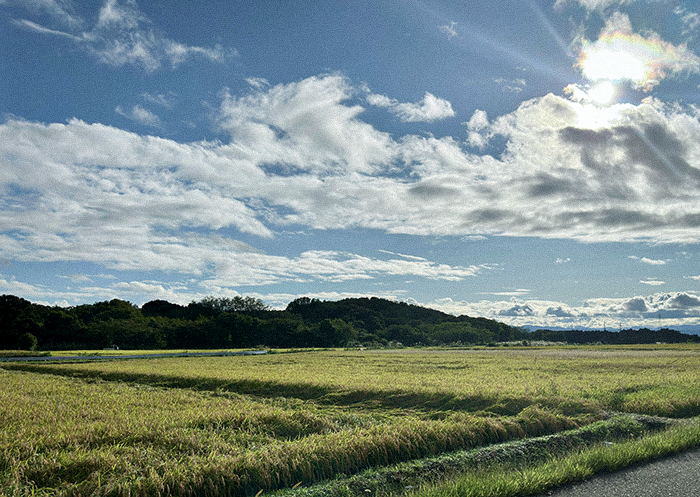
Under this system, the state loaned parcels of land called 区分田 kubunden to every man and woman aged six and older, in exchange for a rice tax owed on the harvest. That tax was called 租 so. It funded regional government and was stored in provincial warehouses — a role not unlike what a local tax plays today.
The state is said to have redrawn its household registers every six years and reissued land accordingly. Ownership was never granted: on the death of the holder, the land reverted to the state. Alongside so, citizens owed two further taxes:
– 租 so — a fixed share of the rice harvested from one’s kubunden
– 調 chō — tribute goods, such as silk, cloth, paper, and seafood, owed to the state, roughly equivalent to a national tax
– 庸 yō — ten days of labor service in the capital, or cloth paid in place of it, also roughly equivalent to a national tax
The burden was heavy enough that many people abandoned their land outright, and as the pool of land available to lend ran low, the system gradually broke down.
Konden Einen Shizai Hō, the Law of Permanent Private Ownership
As Handen Shūju-hō neared collapse, the government began dismantling its own ban on ownership. It first allowed anyone who cleared new land — 開墾 kaikon, land reclamation — to keep it for three generations: themselves, their child, and their grandchild.
Three generations, it turned out, was not incentive enough. The pace of new land clearance slowed. So the government went further, with the 墾田永年私財法 Konden Einen Shizai Hō, the law of permanent private ownership of reclaimed land, under which anyone who cleared new land could keep it forever.
Nobles and temples were best positioned to take advantage. The land they reclaimed became known as 荘園 shōen, private estates, and as those estates multiplied, tax revenue fell and the gap between rich and poor widened further.
Konden Einen Shizai Hō remains a fixture of Japanese junior-high history exams, and something of a byword for a term everyone recognizes and few can spell out correctly — this author included; the opening kanji, 墾, gave a younger self considerable trouble. That shared struggle has, over the years, spawned a small genre of novelty songs and billboard jokes built around the phrase.
The Heian to Muromachi Periods: Nengu, and Better Yields
By the end of the Heian period (794–1185), a tax system called 年貢 nengu had taken hold. Under it, farmers were required to pay rice directly to the lord who owned the shōen they worked. Nengu remained Japan’s basic form of taxation for centuries, until it was abolished in the Meiji era.
Rice yields, meanwhile, improved through the Kamakura period (1185–1333), driven by a handful of new techniques: plowing with oxen and horses, drawing water into paddies with waterwheels, and metal-forged farm tools such as sickles and hoes.
The Sengoku and Edo Periods: Rice Output Becomes National Power
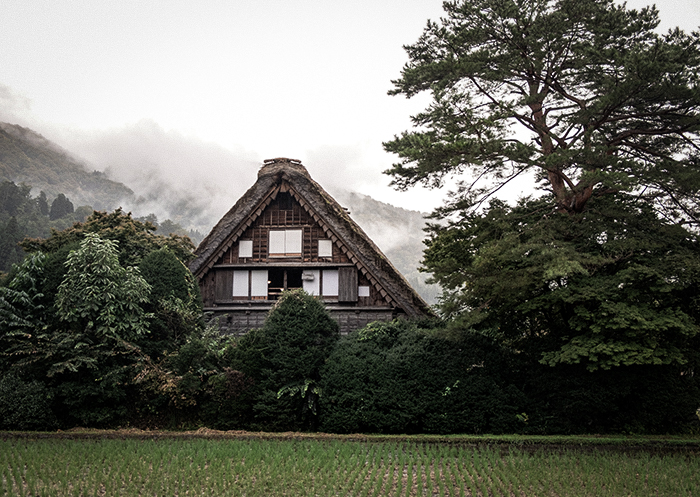
By the time Japan’s long age of civil war gave way to unification, a domain’s rice yield had become a stand-in for its strength. Toyotomi Hideyoshi, having brought the country under his control, introduced a system called the 太閤検地 Taikō Kenchi, the Taikō’s land survey.
What was the Taikō Kenchi?
It converted a piece of land’s productive capacity into a single, comparable rice figure. The unit adopted was 石高 kokudaka, and the amount of rice one adult could eat in a year was defined as 一石 isseki, one koku. The rate of nengu a farmer owed was then set according to that figure.
Taikō, incidentally, refers to Hideyoshi himself — an honorific for someone who has passed the office of 関白 kanpaku, imperial regent, to a successor while retaining power. In Hideyoshi’s case, the successor was not a biological son but his adopted heir, Toyotomi Hidetsugu.
The old shōen system had left land ownership and cultivation rights tangled across multiple claimants, which made it difficult to administer. So, as part of the Taikō Kenchi, Hideyoshi introduced the principle of 一地一作人 icchi issakunin, “one plot, one cultivator,” fixing a single person as both owner and farmer of each parcel. It made nengu collection dependable in a way it had not been before.
Readers curious about the man behind this reform may also want to read this author’s article on the three unifiers of Japan.
Higher Kokudaka, Stronger Domain
Because kokudaka measured how much rice a domain could produce, it also worked as a rough gauge of military strength. That is presumably why, after his victory at the Battle of Sekigahara, Tokugawa Ieyasu suppressed rebellion among his defeated rivals by transferring them to domains with lower kokudaka, or cutting their yields outright — while consolidating the new Edo shogunate by transferring loyal allies to, or raising the kokudaka of, domains that had supported him. (A “domain” here, kuni, corresponds roughly to a present-day prefecture.)
By the Edo period (1603–1868), a samurai’s stipend was paid directly in rice. Rice kept well as food, but it could also be sold to merchants and converted into currency — a valuable trait at a time when the exchange rate of coined money was still unstable. In that sense, rice doubled as wealth itself.
The Meiji Era (1868–1912): Land Tax Reform Ends Rice’s Role as Currency
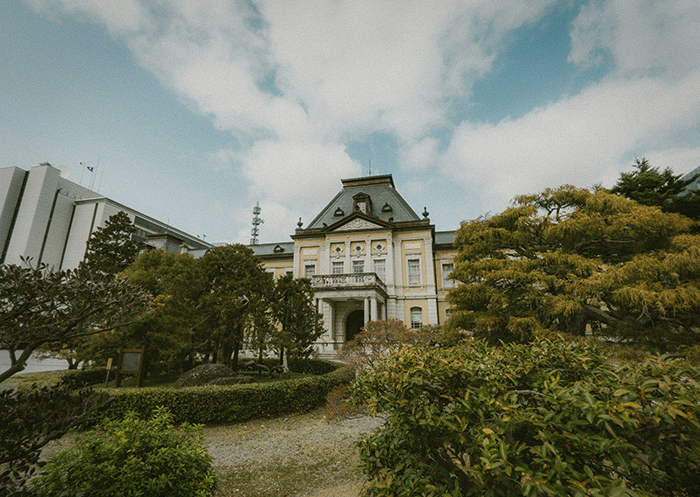
Meiji Japan’s drive to 富国強兵 fukoku kyōhei, “enrich the country, strengthen the military,” required cash on a scale the old system could not supply. The government’s answer was the 地租改正 Chiso Kaisei, the land tax reform, which required citizens to pay tax in cash, assessed against the value of their land. With it, the role rice had played as tax since the Nara period came to an end.
The Chiso Kaisei is covered in more detail in a separate article on this site (currently available in Japanese only).
The Taishō Era (1912–1926): The Rice Riots
In 1918, riots broke out across the country under the name 米騒動 Kome Sōdō, the Rice Riots. The trigger was a sudden, sharp rise in the price of rice, driven by a combination of factors said to have more than doubled prices within a year:
– Inflation tied to the First World War
– Growth of the urban population
– Speculative buying connected to Japan’s Siberian Intervention
– Hoarding and withheld sales by landlords and rice merchants
What began as a protest by fishing-village housewives in Toyama Prefecture demanding cheaper rice spread nationwide and escalated into full-scale riots. More than 25,000 people were arrested in connection with the unrest, and roughly 90,000 troops were mobilized to bring it under control.
Japan’s First Party Cabinet, Born of the Rice Riots
The cabinet in office at the time, under Terauchi Masatake, resigned to take responsibility for the unrest. Its successor, formed under Hara Takashi, became Japan’s first genuine party-based cabinet. Until then, government had been dominated by two groups: men from the Satsuma (present-day Kagoshima) and Chōshū (present-day Yamaguchi) domains, and members of the imperial family and 華族 kazoku, Japan’s peerage. Known as a 藩閥・官僚内閣 hanbatsu kanryō naikaku, a clan-clique and bureaucrat cabinet, this arrangement left a persistent gap between public opinion and the government that claimed to represent it.
The Rice Riots earned Hara Takashi the nickname 平民宰相 Heimin Saishō, the Commoner Prime Minister, and a cabinet built around elected party members was expected, for the first time, to bring the public’s will into government.
The Reiwa Era’s Own Rice Riots
The pattern echoed, in a smaller way, more than a century later. From the autumn of 2024, rice prices in Japan rose sharply enough that the episode was informally dubbed the 令和の米騒動 Reiwa no Kome Sōdō, the Reiwa-era Rice Riots, and the government responded by releasing reserve rice stock onto the private market.
In Closing: A Grain That Once Carried the Weight of a Nation
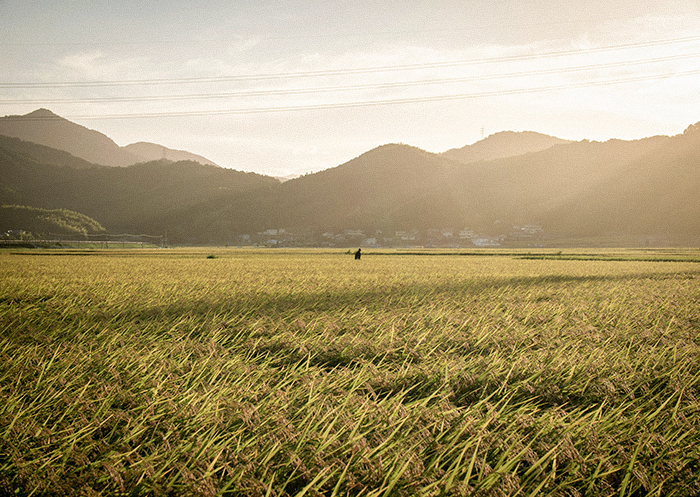
For a large part of its history, rice in Japan was not only food. It functioned as currency and as wealth; the ability to produce it in quantity signaled power, and by extension, military strength; and the land and water needed to grow it were, more than once, worth fighting over. Weighed against how ordinary a bowl of rice looks today, that history is not easy to picture. But it is there, layered under the grain all the same.
Part 2 turns from rice’s history to what it built at the table: the varieties grown in Japan today, and the dishes — from onigiri to sake — that rice culture produced.
KOTO is a journal of Japanese craftsmanship, culture, and the aesthetic sense behind them.
- SHARE
-


( food )