









Kakigori: A Quintessential Summer Tradition Bringing Cool Comfort
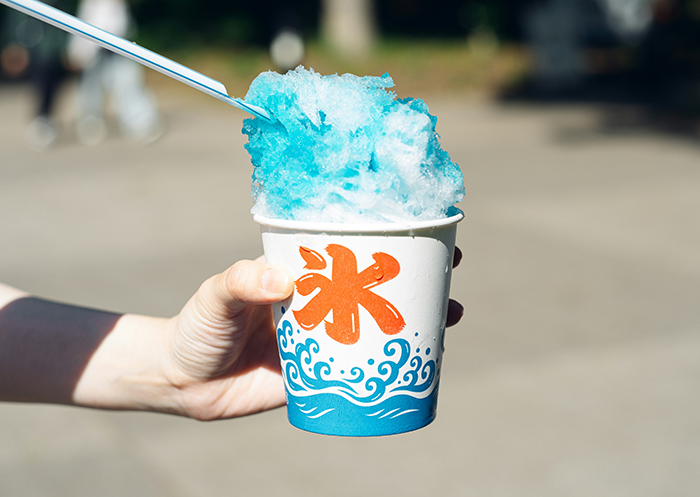
Global temperatures continue to rise year by year, rendering summer heat increasingly severe. Under these environmental conditions, cold confections have garnered significant attention. Among these, かき氷 kakigori, Japanese shaved ice, a dessert made of finely shaved ice crowned with sweet syrup, has become an indispensable seasonal staple in Japanese summers.
In this article, we examine the unique evolution, historical background, and refined flavor profiles of kakigori in Japan.
Historical Roots and the Evolution of Kakigori
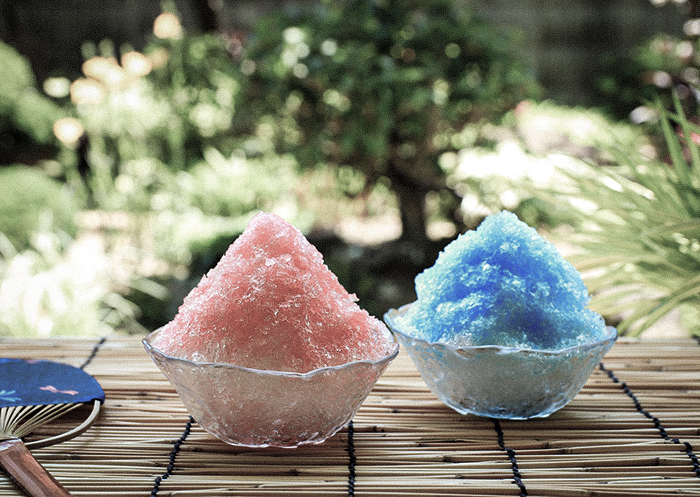
The origins of kakigori in Japan are said to date back to the Heian period (Heian period (794–1185)). In 枕草子 Makura no Soshi, The Pillow Book, a renowned essay collection from that era, the text describes enjoying ice drizzled with a sweet syrup called 甘葛 amazura, a traditional sweetener produced by boiling down plant sap. Because both ice and amazura were precious commodities at the time, this cold delicacy was reserved strictly for the nobility.
Upon reaching the palate, kakigori offers a deeply comforting chill, making it a sublime confection for enduring the intense heat of summer. Today, it remains an exceptionally popular offering at traditional festival stalls.
Characteristics of Kakigori in Japan
You can also enjoy a “cream soda” variation by mixing the syrup with soda water and topping it with ice cream.
1. Colorful Syrups Drizzled Over Shaved Ice
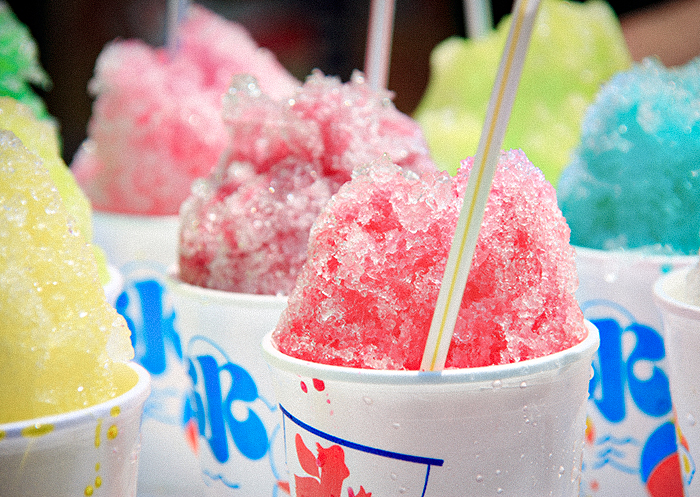
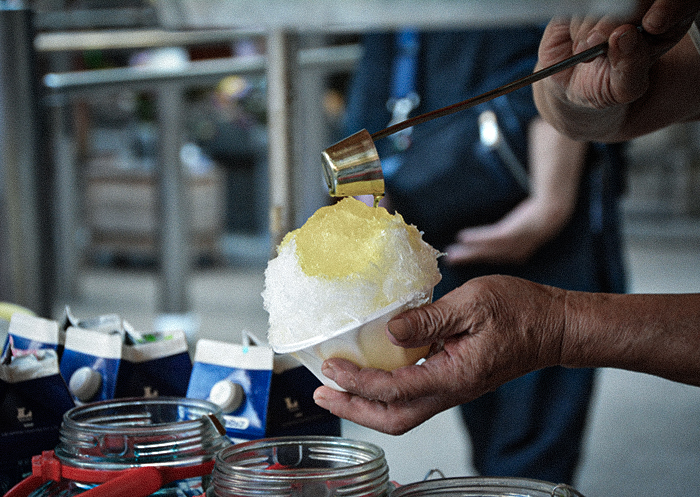
The predominant tradition in Japan involves pouring sweet syrup — known as 氷みつ korimitsu, flavored ice syrup — over kakigori.
Blue Hawaii: A vibrant light-blue syrup featuring a flavor profile resembling ramune soda. In certain regions, it is referred to as “Hawaiian Blue.”
Juice: Unmixed concentrates of cola or fermented milk drinks are occasionally utilized as syrup alternatives. The crisp, finely shaved ice pairs harmoniously with the sweetness of concentrated juices.
Matcha (matcha, Japanese green tea powder): A deep green syrup offering the distinctive flavor of green tea. Formulated with added sugar, it presents a slightly sweeter taste than traditional brewed tea.
Coffee: Concentrated brewed coffee poured directly over the ice. The addition of condensed milk creates a profile akin to a café au lait, providing a refined balance between bitterness and sweetness.
Umeshu (umeshu, Japanese plum liqueur): Sweet plum liqueur repurposed as a syrup. Containing alcohol, this option provides a sophisticated flavor reserved for individuals of legal drinking age.
Beyond these classic selections, several specialized variations have evolved in Japan:
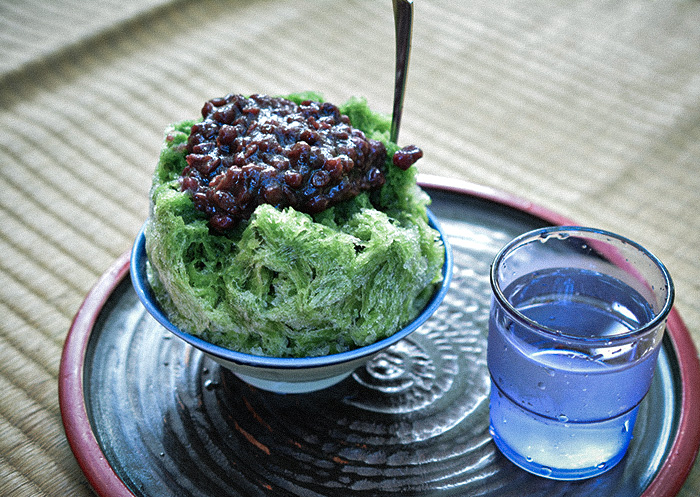
宇治金時 Uji Kintoki, shaved ice topped with green tea syrup and sweet red bean paste:
Shaved ice topped with matcha syrup and anko (anko, sweetened red bean paste). Due to its primary ingredients, it is also called 抹茶小豆 Matcha Azuki (azuki, red beans).
The name Uji originates from 宇治茶 Uji-cha, high-grade green tea cultivated in Kyoto, while 金時 Kintoki refers to the sweetened red bean paste.
みぞれ Mizore, clear sugar syrup shaved ice:
Shaved ice drizzled with a simple syrup of dissolved sugar in water. Its name was inspired by the atmospheric phenomenon of sleet (mizore).
Visually, it presents as a completely transparent and colorless ice dessert.
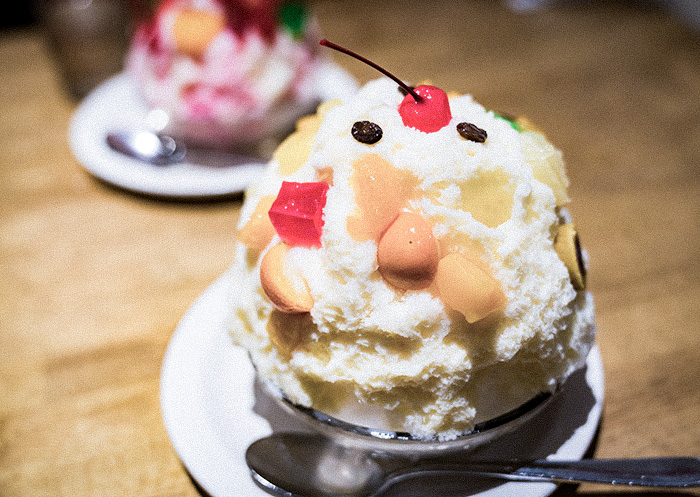
白くま Shirokuma, shaved ice with condensed milk, fruits, and red beans:
A regional specialty originating from Kagoshima Prefecture. It consists of shaved ice drizzled with condensed milk and adorned with assorted fruits and sweet red beans.
The name, which translates to “polar bear,” stems from an illustration of a polar bear originally printed on the condensed milk cans used during its creation.
2. The Legacy of the Korihata
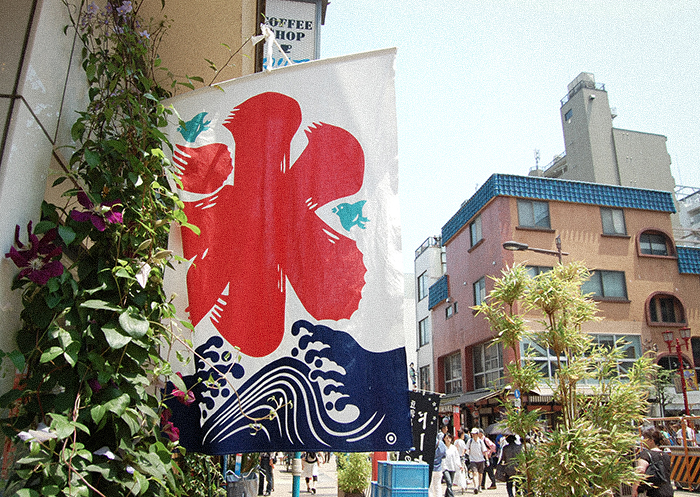
In Japan, kakigori is inextricably linked to the visual presence of the 氷旗 korihata, traditional ice banner —a white flag featuring the kanji character for 氷 kori, ice in bold red lettering.
The origin of the korihata traces back to legal regulations governing the manufacture and sale of ice. Prior to the advent of electric refrigeration, ice was considered a rare luxury, available solely to the privileged classes. Consequently, sampling natural ice of superior quality was a profound aspiration for the general public.
During the Meiji period (1868–1912)), natural ice imported from Boston—known as “Boston Ice”—arrived at the Port of Yokohama. Due to its high cost and rapid rate of melting, domestic production of natural ice commenced within Japan. A notable early success was 函館氷 Hakodate-gori, natural ice harvested in Hakodate, Hokkaido, which attained the distinction of becoming an official supplier to the Imperial Household Agency.
Inspired by this success, natural ice production expanded across Japan. Regrettably, this rapid expansion led to the distribution of unsanitary ice made from compromised water sources. In response, the Meizi government enacted the Regulations for the Control of Ice Manufacturers and Dealers to regulate inferior products. Under these rules, vendors were required to display banners indicating that their ice had passed health inspections, marking the inception of the modern korihata. The wave motif often depicted beneath the red character on these banners serves as a historical nod to the era when ice was transported across the ocean.
3. Artificial Ice and Modern Popularization
In 1883, the production of artificial ice expanded substantially. This milestone paved the way for kakigori to become widely accessible to the general public after 1887. In contemporary Japan, this pure artificial ice—often called 純氷 junhyo, ultra-pure ice is valued for its crystal-clear quality that enhances the delicate flavors and aromas of syrups.
Global Shaved Ice Varieties Inspired by Japan
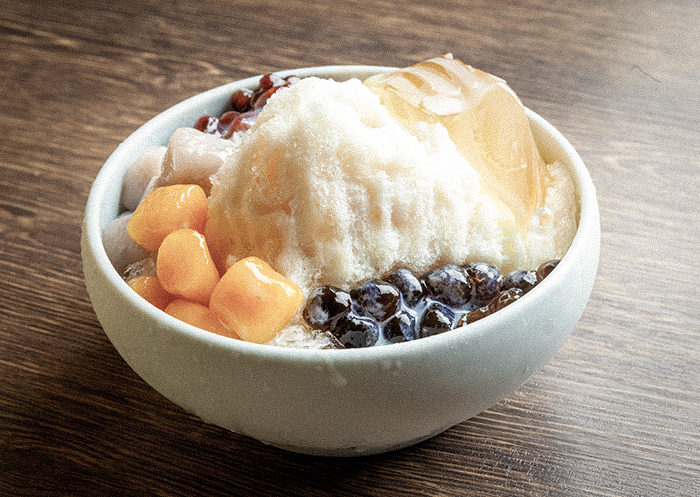
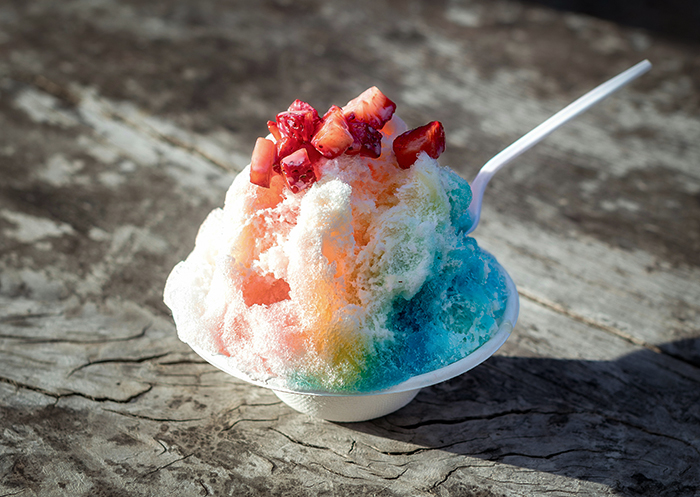
While various cultures have long enjoyed ice-based summer desserts, Japanese kakigori directly influenced the development of distinct variations abroad:
- 刨冰 Baobing, traditional Taiwanese shaved ice:
The origins of baobing date back to the period of Japanese rule in Taiwan (Japanese rule in Taiwan (1895–1945)). Introduced by Japanese settlers, it initially mirrored the Japanese style of syrup poured over shaved ice before evolving to incorporate toppings such as bite-sized mangoes, tapioca pearls, and red beans. In the 1990s, this tradition inspired Xuehua Bing (xuehua bing, snow flake ice), made by shaving frozen blocks of milk or fruit juice to achieve a delicate, melt-in-the-mouth texture. - Shave Ice (Hawaii): Hawaii’s famous shave ice was created in the 1800s by Japanese immigrants, who consumed shaved ice sweetened with sugar or juice during breaks from agricultural labor. Today, Hawaiian shave ice retains the classic style of vibrant syrups, but commonly features multiple syrup combinations on a single serving, creating a signature rainbow-like aesthetic.
kakigori is a quintessential summer treat that has long captivated people and left its mark on them.
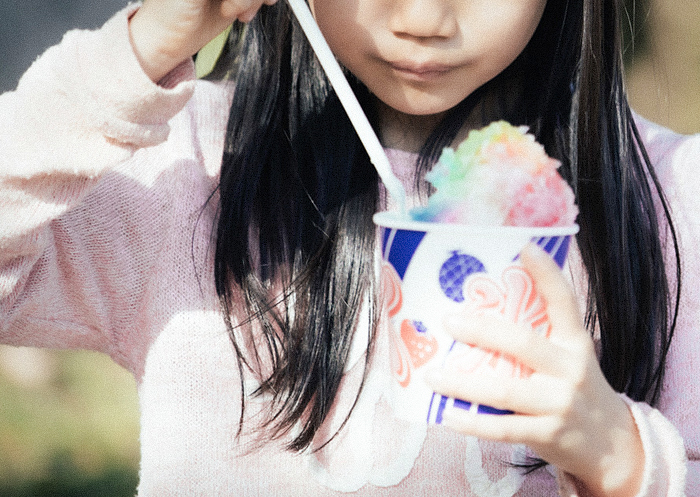
Kakigori has transformed from an exclusive luxury reserved for the elite into a beloved summer tradition cherished by all. This widespread popularity was forged by the dedication of predecessors who sought to make fine ice accessible to everyone. Furthermore, as Japanese immigrants introduced kakigori overseas, local cultures adapted it into their own culinary traditions.
Influenced in turn by these global iterations, contemporary Japanese artisans continue to explore and refine new flavor profiles every day. Enjoying a bowl of kakigori offers both a cool respite from the heat and a taste of Japan’s rich cultural heritage.
KOTO is a journal of Japanese craftsmanship, culture, and the aesthetic sense behind them.
- SHARE
-


( food )