






The Makura No Soushi and the Four Seasons: Sei Shonagon’s “Spring Is Dawn”
“Japan’s summers are hot.” “It’s cooler back home, honestly.”
That was the refrain from foreign visitors on a Japanese television special in the summer of 2025, built around tourists reacting to the country for the first time. This author’s own region had much the same summer — friends and family checking in on each other’s health through weeks of heat that would have been unthinkable twenty years ago, when the same place cooled enough overnight that going without a blanket meant catching a cold. The last several summers have made that shift feel less like nostalgia and more like a warning.
Then autumn arrives, and it is finally real: the scent of 金木犀 kinmokusei — fragrant orange osmanthus (Osmanthus fragrans) — drifting through the neighborhood, the rice harvest underway. Noticing that turn of the seasons brought back something read long ago in a middle-school Japanese class: the passage on the four seasons in 枕草子 Makura no Soshi, The Pillow Book. What follows is that passage, explained, alongside one modern reader’s own comparison.
What Is The Pillow Book?

枕草子 Makura no Soshi — The Pillow Book — is a work of essays (zuihitsu) written in the Heian period (794–1185) by 清少納言 Sei Shonagon. It is Japan’s oldest surviving work of this kind, and together with 方丈記 Hojoki (An Account of My Hut) and 徒然草 Tsurezuregusa (Essays in Idleness), it is counted among the three great essay collections of classical Japanese literature.
The book has three broad kinds of sections:
– 類聚章段 ruiju shodan — list sections. Things grouped by category: things Sei Shonagon found beautiful, things that let her down, and so on.
– 随想章段 zuiso shodan — observation sections, on daily life and the seasons. This is the part the present article is about.
– 回想章段 kaiso shodan — memoir sections, recalling her time serving the Empress 定子 Teishi and life at court.
The tone through most of the book is bright, quick-witted, and often sharply funny. But in the memoir sections a different note appears: a quiet sadness, only half admitted, over the misfortunes that later fell on Teishi and the decline of her family. Those passages are some of the most striking in the book precisely because they are so restrained.
The title itself is said to come from a moment when paper — a rare and valuable good at the time — was delivered to Teishi, and Sei Shonagon proposed, “let me write a makura.” Makura means “pillow,” and there are two competing explanations for what she meant by it.
One is bedding, plain and simple: the Emperor, given paper of his own, said he would write out the Shiki — a reference to the Shiji (Records of the Grand Historian), the great Chinese historical chronicle — and the Emperor’s remark is said to have been echoed as a pun on shikifuton, the mattress laid beneath a futon.
The other reading points to 枕詞 makurakotoba, “pillow words” — the fixed poetic epithets used in classical Japanese verse to introduce a particular word. On this account, the Emperor’s plan to write the Shiki (史記) prompted Sei Shonagon to propose writing something built around 四季 shiki, the four seasons — using “pillow” in the sense of a word that sets up what follows.
What Sets the Book Apart
No discussion of The Pillow Book gets far without the concept of をかし okashi.
Okashi names a stance: light and unforced, but built on close, objective observation and a sharp sensibility. In the Heian period it carried a cluster of positive meanings — “interesting, full of charm,” “beautiful,” “the kind of thing that stirs curiosity.” A rough modern equivalent might be walking into a shop you know well and noticing something new on the shelf: “what’s this — I’ve never seen it before, how interesting.”
Modern Japanese okashii has drifted toward “funny” or “ridiculous” — a shift that began in the Muromachi period and settled into that comic sense by the Edo period. A related term, もののあはれ mono no aware, emerged in the same era and likewise describes being moved by something, but where mono no aware leans toward a quiet, wistful depth of feeling, okashi is lighter and crisper — closer to delight than to melancholy.
Who Was Sei Shonagon?
清少納言 Sei Shonagon served as a lady-in-waiting to 定子 Teishi, consort (中宮 Chugu) of Emperor Ichijo (reigned 986–1011). Neither her birth name nor her exact dates are known. Her name is thought to combine her father’s surname, 清原元輔 Kiyohara no Motosuke, with 小納言 Shonagon, a court post held by a relative.
Heian court women were generally not known by their given names at all. Instead they went by a 女房名 nyobo-na — a “lady-in-waiting name” built from some combination of a male relative (father or son) and that relative’s rank or title.
By all accounts she was open, cheerful, and curious — steeped in Chinese classics and waka poetry from an early age. Teishi trusted her deeply, and her fellow attendants were, by report, an educated and easygoing circle. It reads, this author thinks, like a workplace people might actually have enjoyed showing up to.
A Short Glossary
Term — Reading — Meaning
|—|—|—|
中宮 — Chugu — An Emperor’s consort; also an alternate title for Empress (Kogo)
女房 — Nyobo — A woman in service to nobility — companion, tutor, and attendant, a role that required real cultivation
小納言 — Shonagon — A Heian-era court post: relaying policy to officials, and their reports and opinions back to the Emperor
Sei Shonagon and Murasaki Shikibu, Compared
Sei Shonagon is often set against her contemporary 紫式部 Murasaki Shikibu, author of 源氏物語 The Tale of Genji, and the comparison is worth laying out plainly.
Sei Shonagon — Murasaki Shikibu
|—|—|—|
Best-known work — The Pillow Book — essays — The Tale of Genji — a novel
Sensibility — Okashi — delight, curiosity, expressed brightly and lightly — Mono no aware — quiet, deeply felt, touched with a sense of impermanence
Temperament — Cheerful, easy with colleagues — Literary-minded, proud, and reportedly harder to get close to
Name origin — Father’s surname plus a relative’s court title (the exact source is disputed) — Originally 藤式部 To no Shikibu — her family name plus her father’s title; later generations renamed her after Murasaki no Ue, a character in her own novel
Mistress served — Chugu Teishi — Chugu Shoshi (Akiko)
The Two Mistresses: Teishi and Shoshi
定子 Teishi and 彰子 Shoshi, the women each writer served, were cousins — and both, in time, consorts of the same emperor. Their fathers were political rivals. Teishi held the position of Chugu first; when Shoshi later entered court (入内 judai, the formal term for becoming an imperial consort) and was also made Chugu, Teishi was reclassified as 皇后 Kogo, Empress — producing the unusual situation known as 一帝二后 ittei nikou, “one emperor, two empresses.”
From there, the two households were effectively racing to see whose mistress would produce an heir first, and it is easy to see how their respective ladies-in-waiting, Sei Shonagon and Murasaki Shikibu, came to be measured against each other as well.
Reading both books in modern translation and in graphic adaptations, this author found beauty in each, for different reasons: The Pillow Book’s bright, sharp-eyed observation, and The Tale of Genji’s glittering court life set against Hikaru Genji’s private struggles and the sincerity with which he lives through them. What both books share, and what still reaches a reader today, is how recognizably human the feelings in them are.
The Pillow Book and the Four Seasons
Sei Shonagon’s okashi sensibility runs through the whole book, and nowhere more famously than in its opening lines on the four seasons — “春はあけぼの” Haru wa akebono, “Spring is dawn.” What she saw in each season, and what one contemporary reader sees by comparison, follows below.
A note on the text: the classical Japanese lines quoted here are in the public domain. The English renderings are this author’s own, made directly from the original, and cross-checked against the modern-Japanese reading text and reference translation published by BUNGO-bun GO! (developed by Seikiko Sato, Tohoku Multicultural Academy, formerly of Tohoku University).
Spring: Dawn Is the Beauty of It

春は、あけぼの。やうやうしろくなりゆく山ぎは、すこし明かりて、紫だちたる雲の、細くたなびきたる。
Spring is dawn — when the mountain’s edge, growing gradually paler, catches a little light, and thin purple-tinged clouds trail across the sky.
The famous opening line means, plainly, that spring is at its best at daybreak. Every season’s dawn has its own beauty, but spring’s particular color is hard to mistake for any other. Given that spring is also the season of flowers in full bloom, seen most directly in daylight, it is worth asking why she chose dawn instead — and the purple-tinged clouds and sky seem to be the reason. Purple has been prized in Japan since antiquity as a noble, elegant color, and dawn in spring may be the one moment when that color appears directly in nature. It is plausible she judged that the most beautiful moment spring has to offer.
There may be a second layer here too: opening the book with dawn — literally, “the start of light” — doubles as a quiet announcement that this is also the start of the book itself. It is a very Sei Shonagon kind of touch.
Summer: Night Is the Recommendation

夏は、夜。月のころはさらなり。闇もなほ、蛍の多く飛びちがひたる。また、ただ一つ二つなど、ほのかにうち光りて行くも、をかし。雨など降るも、をかし。
Summer is night. A moonlit night hardly needs saying. Even without the moon, fireflies crossing back and forth in numbers through the dark — and even just one or two, glowing faintly as they go — that too is okashi. Rain falling is okashi as well.
Modern associations with summer tend toward daytime energy — the beach, sunflowers — but Sei Shonagon reaches for night, and a quiet one at that. This is also where the word okashi itself first appears in the passage. The moon recurs constantly across Japanese seasonal culture and appears in waka poetry far more often than the sun does; the mid-autumn moon in particular is an autumn subject, which makes it notable that she raises the moon here, in summer, only to wave it off — “of course the moon is lovely, everyone already knows that” — before moving on to less obvious things. As a piece of writing, that light touch of pacing is worth admiring on its own terms.
Fireflies are harder to find today than they once were, and the way the passage sets their faint light against total darkness carries a calm, restorative quality — the same quiet, deeply-felt stillness associated with Murasaki Shikibu’s mono no aware, showing up here in a very different writer’s hands.
If Sei Shonagon, who found summer’s quiet worth praising, were dropped into a modern “summer means the beach, fireworks, and festivals” atmosphere, it is an open question whether she would call it waroshi — no good — or throw herself into it as okashi.
Autumn: Dusk Is the Thing
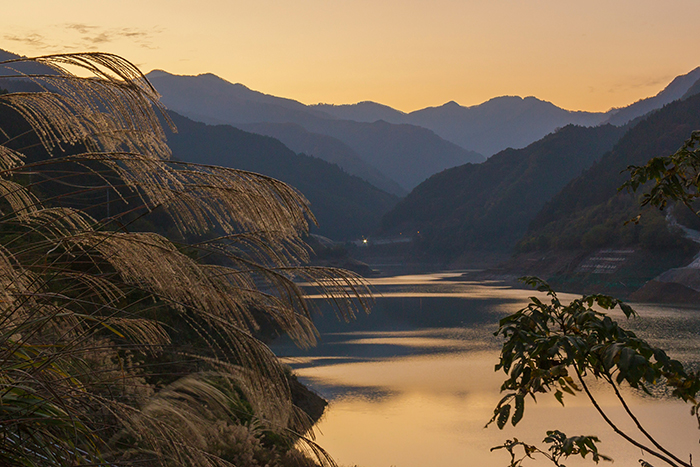

秋は、夕暮れ。夕日のさして、山の端いと近うなりたるに、烏の寝どころへ行くとて、三つ四つ、二つ三つなど、飛びいそぐさへあはれなり。まいて、雁などのつらねたるが、いと小ひさく見ゆるは、いとをかし。日入りはてて、風の音、虫の音など、はた、言ふべきにあらず。
Autumn is dusk — when the setting sun draws close to the mountain’s rim, and crows hurrying to roost in twos, threes, and fours are moving enough to catch at the heart. Geese in formation, shrunk small with distance, are even more okashi. And once the sun is fully down, the sound of the wind and the calls of insects need no comment at all.
The quiet, faintly sorrowful register of mono no aware surfaces here too. Days shorten fast between the summer and winter solstices, fast enough that the phrase 秋の日は釣瓶落とし aki no hi wa tsurube otoshi — “an autumn day falls like a well-bucket” — became proverbial for it. The insects are most likely bell crickets (suzumushi); their calls can still be heard on quiet nights in places with enough greenery left, and this author finds them calming even now. A brother working in the Tokyo area, hearing them once over the phone, remarked wistfully on how nice it must be to live somewhere with that much nature left.
Autumn is also, for many people today, the season of kinmokusei. Its small orange flowers and sweet, faintly nostalgic scent have made it popular enough that hand creams and perfumes built around the fragrance have been sold as autumn-limited goods since roughly the 2020s. Despite that association with Japanese autumn, kinmokusei was in fact brought from China during the Edo period. Only male trees were imported, chosen for their heavier flowering, and the plant has been propagated by cuttings ever since — which is why Japanese kinmokusei never bears fruit. This author still remembers the scent on a dark walk home after class ran late as a student, and catching it again at dusk now brings that memory back — the way scent and memory travel together being part of the flower’s appeal. It would be interesting to know what Sei Shonagon, with her eye for this kind of thing, would have made of it.
Winter: Early Morning Is the Charm
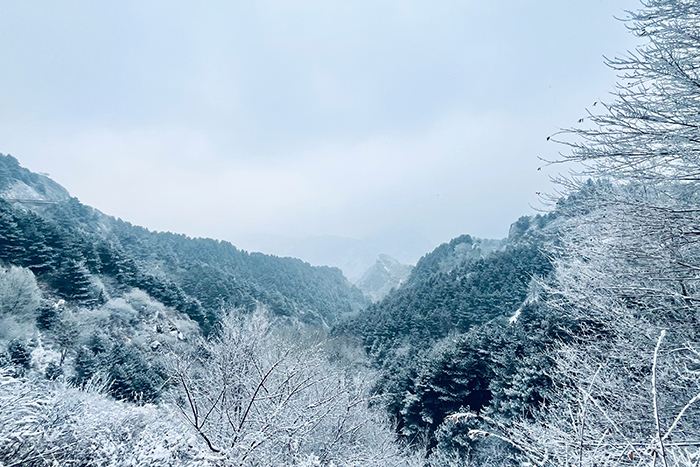
冬は、つとめて。雪の降りたるは、言ふべきにもあらず。霜のいと白きも。またさらでも、いと寒きに、火など急ぎおこして、炭持てわたるも、いとつきづきし。昼になりて、ぬるくゆるびもていけば、火桶の火も、白き灰がちになりて、わろし。
Winter is early morning. Snow having fallen needs no comment. Nor does frost lying pure white on the ground. And even without either, on a bitterly cold morning, hurrying to light a fire and carry the charcoal through — that suits the season exactly. But by midday, once the cold has eased and warmth crept in, the fire in the brazier gone mostly to white ash — that is waroshi, not good.
The choice of “early morning” here is almost contrarian. It is easy, on a cold winter morning, to want nothing more than to stay under the blankets — Sei Shonagon instead savors a view available only at that hour, which is worth taking as a small lesson. It also brings to mind a childhood sense memory many readers will share: walking on freshly fallen snow or frost, the crunch of it, the glitter. Adults tend to remember winter mostly as difficulty — icy roads, cold mornings, scraping frost off a windshield — but the sparkle a child notices is worth holding onto.
What stands out most is that winter is the one season she calls waroshi. A brazier’s fire (火桶 hioke, the era’s version of a heater) turning to pale ash by midday is a scene few people encounter today, and she is unsparing about it. One reading: the bracing cold of early morning is winter’s real charm, and precisely because of that, a fire gone soft and gray by noon looks slack by comparison — an aesthetic judgment rather than a complaint about comfort. Later sections of the book, particularly 「すさまじきもの」 — “Things That Are Disappointing” — return to this same sharpness again and again. Closing the seasons on a note of “not everything is good, and I will say so” makes a pointed contrast with the opening line on spring, and that contrast feels like a deliberate piece of composition.
In Closing: Two Ways of Reading a Season
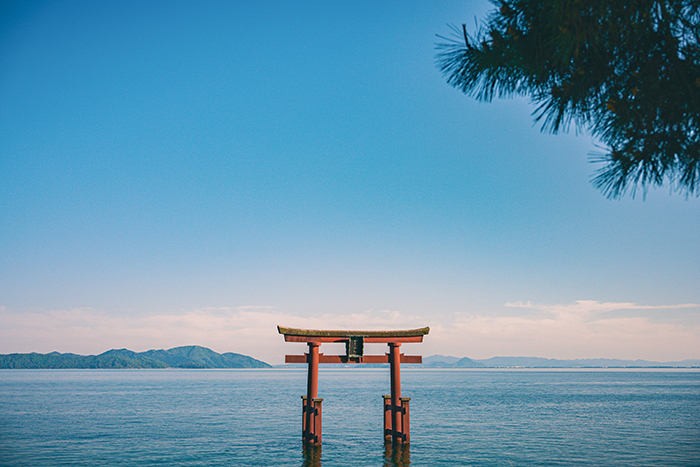
This “Spring is dawn” passage, together with 竹取物語 Taketori Monogatari (The Tale of the Bamboo Cutter), has long served as the standard introduction to classical literature in Japanese middle schools, which is part of why it remains so widely known. Sei Shonagon’s okashi view of the world gives the writing a light, quick rhythm — something closer to talking with a friend than to formal literature.
Reading it and thinking, at different points, “this still makes sense today” and “this is a little different from how we’d put it now,” is a large part of what makes The Pillow Book, and its author, appealing across the distance of a thousand years. Sei Shonagon’s eye — light, quick, and often quite sharp — turns up the same way throughout the rest of the book, applied to everything else she noticed.
What would she make of the present, if she saw it? The summer heat, certainly, would surprise her — as would writing an entire book on a phone or a laptop. But it is a fair bet that, somewhere in all of it, she would still find something worth calling okashi.
KOTO is a journal of Japanese craftsmanship, culture, and the aesthetic sense behind them.
- SHARE
-


( tales )