





Why the Japanese Sword Is Curved: A History of the Katana
Throughout much of Japanese history, the boundary separating the 武士階級 bushi class from commoners was defined by a single object. The distinction lay in whether one possessed the privilege to bear a Japanese sword. Neither farmers nor townspeople were granted this authority; a 侍 samurai, by contrast, was fundamentally defined by it.
The Japanese sword had by then acquired a status no other weapon in Japan ever held — it was described as the warrior’s soul. That description was not poetic invention. It was the result of a specific law, passed for specific political reasons, and it is one of several points where the sword’s history turns on something other than metallurgy.
Where It Began
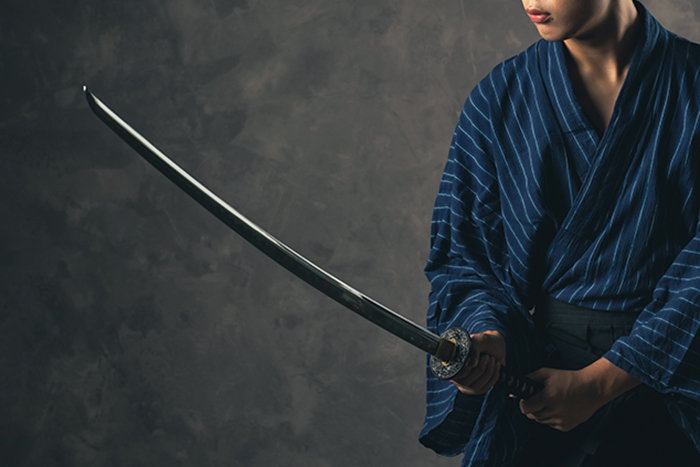
Swords are among the oldest weapons anywhere. What matters here is how Japan’s diverged.
The Straight Sword
Sword-making in Japan goes back to the latter half of the third century, in the Kofun period. Political authority then rested with the ヤマト政権 Yamato polity, headed by chieftains titled 大王 okimi.
Japan had for some time been importing culture and manufacturing technique from the Chinese mainland and the Korean peninsula, and among these were ironworking and the making of iron implements.
The swords produced were 直刀 chokuto — straight-bladed. And they were not primarily for fighting. They served as ritual implements and as grave goods for the powerful.
That is easier to understand once you consider the economics. Iron technology was new and a sword was a treasure. You do not risk a treasure in a fight if the treasure is the point.
The Curve Appears
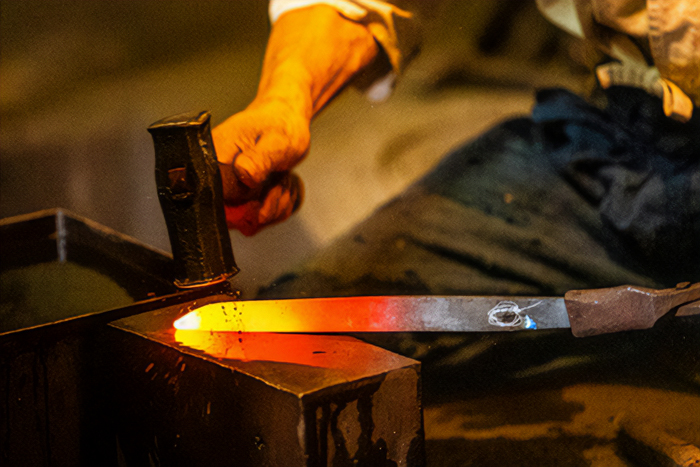
In the Heian period (794–1185), smiths began producing 湾刀 wanto — blades with a curve. This is the shape that a modern reader pictures when they hear “katana.”
The timing is worth noticing. The Heian period is when the samurai emerged as a working class of fighting men, and when the 源氏 Genji and 平家 Heike — the houses that would later hold political power — came into being.
The warrior and the weapon took their recognizable forms in the same era.
One of the oldest surviving Japanese swords, the 小烏丸 Kogarasumaru, is believed to have been made around this time.
Why Curved Won
The curve arrived because the fighting changed.
From the Heian period, samurai increasingly fought from horseback, and a curved blade proved easier to use that way.
A curved sword can be drawn faster from horseback, and brought down on an opponent more quickly once drawn. The curve also allows for defense and for continuous, flowing movement in a way a straight blade does not.
By the late Heian period the dominant form was the 太刀 tachi — a long blade with a pronounced curve, made for a mounted man.
From Tachi to Uchigatana
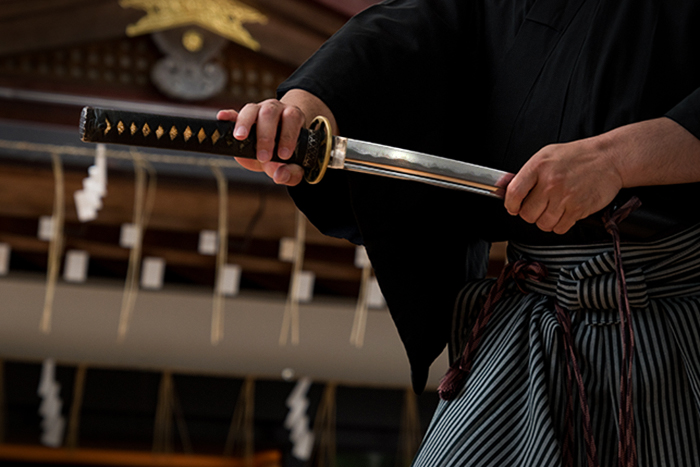
By the middle of the Muromachi period (1336–1573), infantry engagements and individual duels were becoming common again. The weapon that suited them was the 打刀 uchigatana, and it became standard.
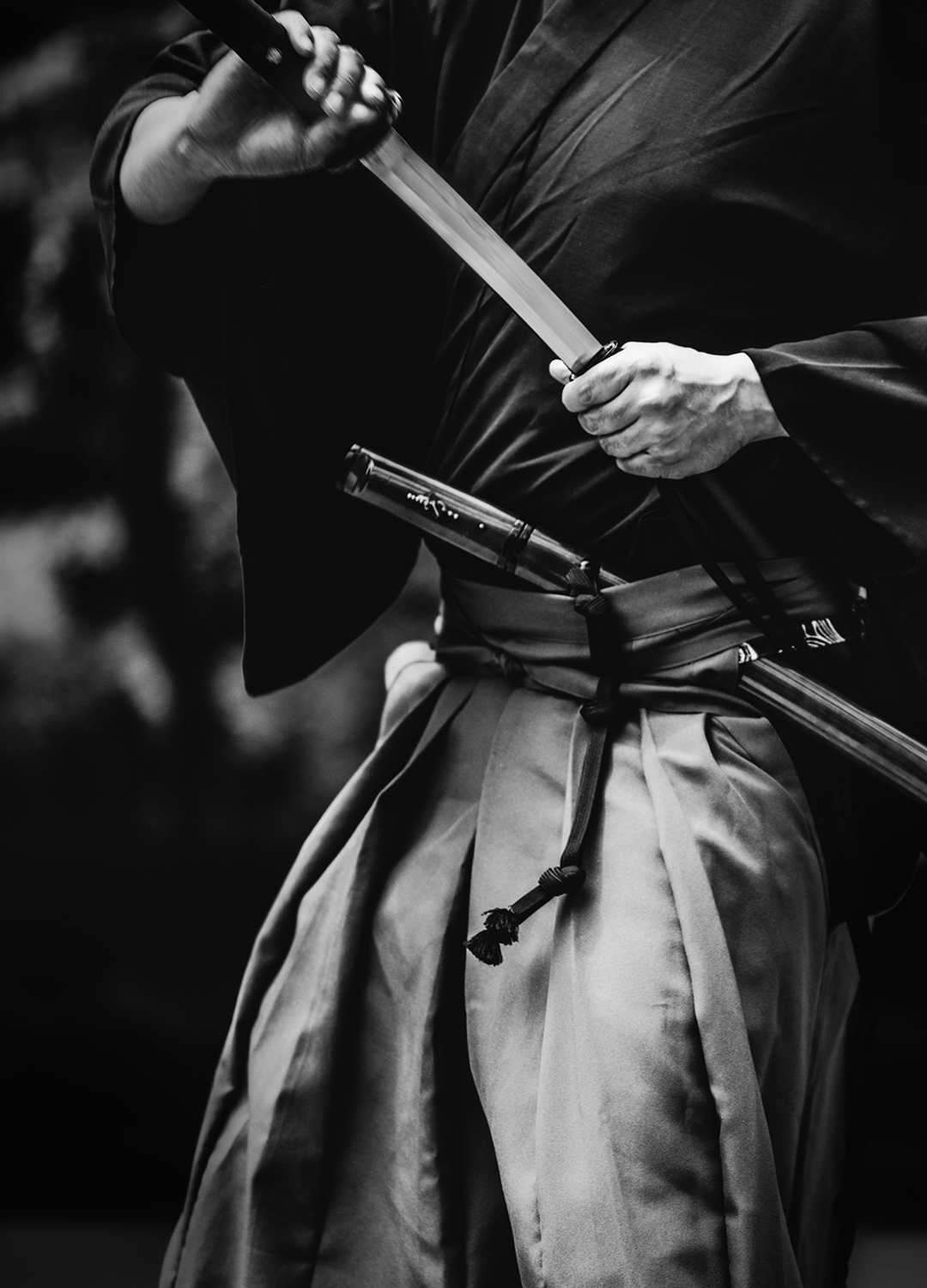
The uchigatana has a shallower curve than the tachi, closer to straight. The blade runs about 2 shaku, roughly 60 centimeters, and it was worn thrust through the sash with the edge facing upward.
The tachi had been worn the other way — edge down, suspended from the waist by cords.
That detail repays attention. Changing how the sword sits on the body changes which draw is fastest, and the warriors changed it deliberately to match how they were now fighting. Edge-up allows the draw and the cut to become a single motion.
The Law That Made It a Symbol
In the later Sengoku period, 豊臣秀吉 Toyotomi Hideyoshi consolidated power over a nearly unified Japan. Having taken the office of 関白 kampaku — regent, governing in the Emperor’s stead — he issued to farmers, townspeople and monks across the country the order known as 刀狩 katanagari, the sword hunt.
Its stated purpose was public order: confiscate swords, spears and other weapons from everyone outside the warrior class, and the country becomes governable.
Its unstated purpose is generally understood to have been Hideyoshi’s own position.
Hideyoshi had risen to supreme power from peasant origins. A man who has personally demonstrated that the class boundary can be crossed has an obvious interest in making sure no one crosses it after him.
Whatever the intent, the effect was durable. After the sword hunt, only samurai were permitted to wear a sword — and it was from this point that the sword came to be regarded as the warrior’s soul. The symbolism followed the monopoly.
Two Swords
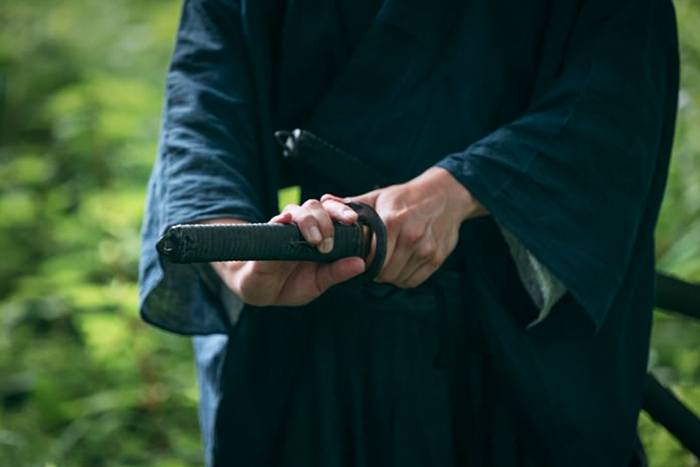
In the Edo period (1603–1868), samurai were required to carry, alongside the uchigatana, a shorter blade of 30 to 60 centimeters called a 脇差 wakizashi. Wearing the pair was known as 大小二本差し daisho nihonzashi, the two swords, large and small.
The wakizashi functioned as a reserve for when the longer sword could not be used. But carrying the matched pair was itself the mark of a samurai, and was treated as a matter of pride rather than logistics.
The wakizashi alone was another matter. Under the 武家諸法度 Buke Shohatto, the laws governing the warrior houses, townspeople were permitted to own one, and they became widespread.
The Ban
When the age of the samurai ended in the Meiji era, the new government issued the 廃刀令 Haitorei, prohibiting the wearing of swords.
It has been called the second sword hunt. Many samurai opposed it. The government carried it through regardless.
With that, the Japanese sword’s role — as a weapon, and as the soul of a class that no longer legally existed — came to an end.
What followed was a second life. The sword became a 工芸品 kogeihin, a work of craft, and a 文化財 bunkazai, a cultural property: a primary source for reading Japanese history. It stopped being a weapon and did not stop being important.
A practical note. Private ownership of a Japanese sword is legal in Japan today, but it requires formal registration. Possessing one without that registration is an offense under the Firearms and Swords Control Law. Anyone buying a sword in Japan should complete the paperwork at the time of purchase.
The Sword Was Not the Main Weapon
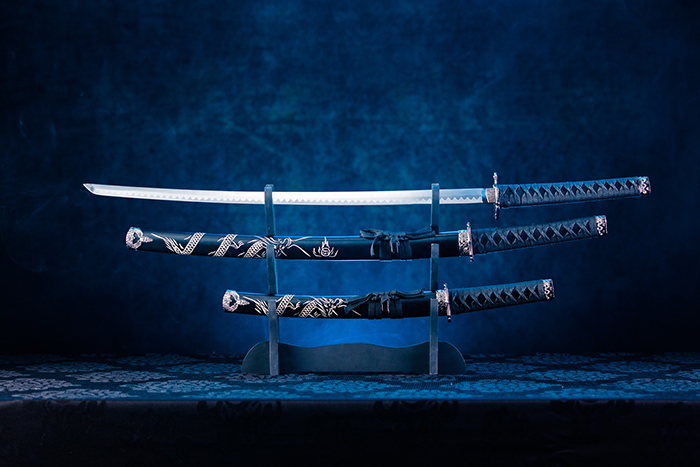
Here is the part that surprises most people.
The image of a samurai fighting with a sword is, for most of the period, wrong. Until the 幕末 Bakumatsu — the closing years of the Edo period — the principal weapons of Japanese warfare were the spear, the bow, and the gun.
“Samurai equals swordsman” became fixed only in the Bakumatsu. And that era happens to coincide with the figures and factions that later became the most popular in Japanese historical memory: the 新撰組 Shinsengumi, 西郷隆盛 Saigo Takamori.
Their exploits, and the stories written about them afterward, are what welded the samurai to the sword in the public mind. The association is real, but it is roughly two and a half centuries younger than the class it describes.
Masters of the Blade
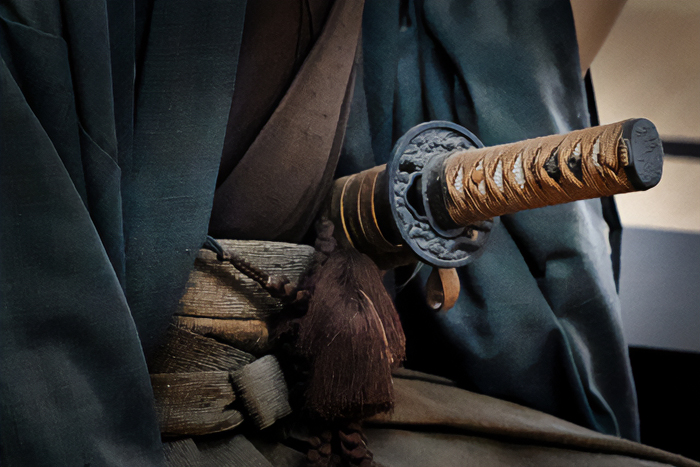
Japanese has two words for skilled swordsmen. A 剣豪 kengo is a master known throughout the country. A 剣客 kenkaku is a capable swordsman whose name has not traveled as far.
宮本武蔵 Miyamoto Musashi and 佐々木小次郎 Sasaki Kojiro are the canonical kengo. Both became subjects of historical fiction, which did as much for the sword’s reputation as anything they did in life.
Readers of manga will recognize the second category: Himura Kenshin, the protagonist of Rurouni Kenshin, is described within the story as a kenkaku.
Touken Ranbu
In 2015 a browser game called 刀剣乱舞 Touken Ranbu was released, with a stage musical following the same year.
Its premise is that historical Japanese swords appear as human characters. It became enormously popular, particularly among young women, and by 2016 had expanded into a smartphone app and a television anime.
The consequence was not confined to the screen. Interest turned toward the actual blades, and museums began mounting exhibitions built around them. When a famous sword goes on display the crowds are large enough that the queue itself makes the news.
A weapon banned in the nineteenth century is now drawing lines around a museum in the twenty-first, and it got there through a video game.
Still Being Looked At
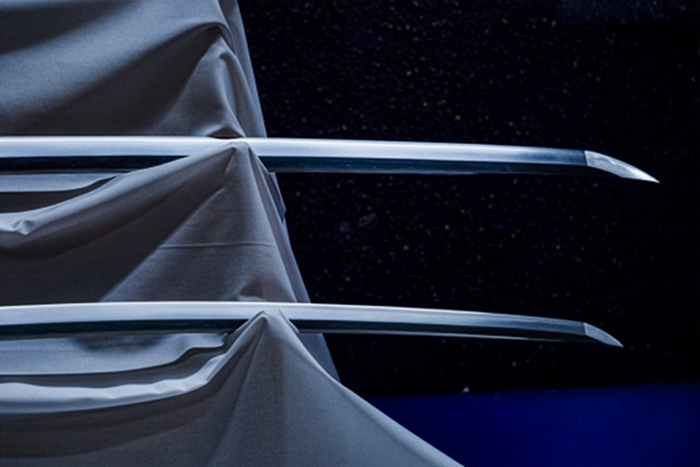
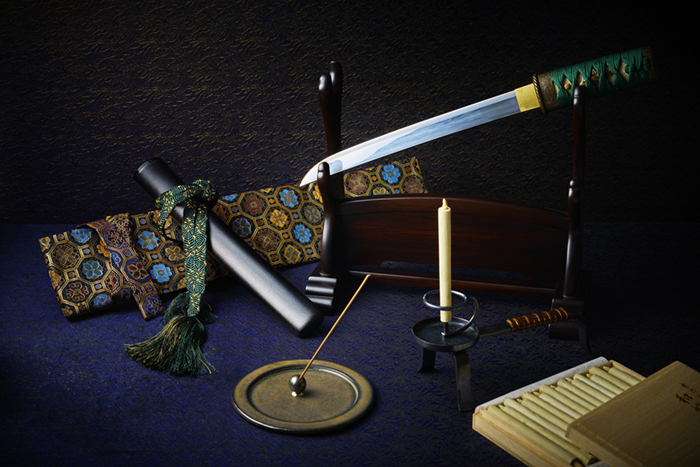
The Japanese sword was once a weapon. It is now a craft object and a cultural property, and a way into the history it came from.
That it continues to hold attention after its function has been removed says something about what people are actually responding to. The appeal of the warrior is bound up in the object.
Swords also differ markedly according to the smith who made them — enough that the subject deserves an article of its own.
KOTO offers pieces made for those who wish to keep the samurai’s discipline within reach — a Japanese sword and a hand-made candle, produced to order by craftsmen working in traditions two thousand years old. Because each is made individually, no two are ever the same.
- SHARE
-


( craft )