







Ohanami: The History and Etiquette of Japanese Cherry Blossom Viewing
Every March, Japan watches the weather forecasts for a single line: the predicted opening date of the cherry blossoms. In 2026, Tokyo’s bloom was declared on Thursday, March 19 — a little earlier than the long-term average.
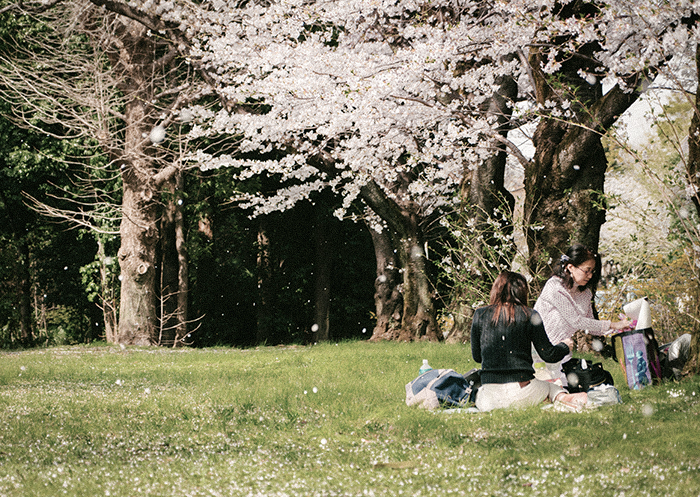
The custom that follows the blossoms is お花見 ohanami, cherry blossom viewing: people gather under flowering cherry trees with food and drink, in the manner of a picnic, and spend the afternoon beneath the blossoms. This article traces where the custom came from and sets out the etiquette expected of anyone taking part today.
The History of Ohanami
The Nara Period (710–794): The Original Form of Ohanami
The earliest form of hanami appeared in the Nara period, when aristocrats gathered to admire flowers and compose waka poems about them. At the time, however, the flower in question was not the cherry but the 梅 ume, plum. Plum trees had arrived from mainland China and were treated as a rare and valuable import, which is part of why they were prized enough to gather around.
The Heian Period (794–1185): From Plum to Cherry
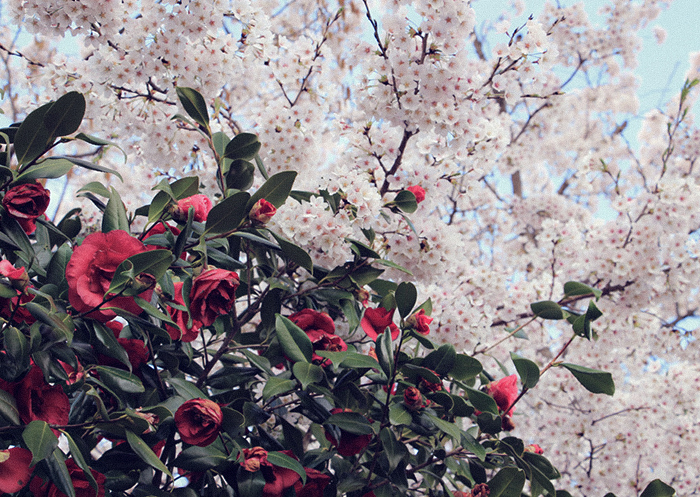
In the Heian period, the object of ohanami shifted from plum to cherry. The shift is generally credited to the rise of 国風文化 kokufu bunka, a “national culture” — a homegrown Japanese aesthetic that developed as the country’s dependence on continental models weakened.
Before the Heian period, Japan had absorbed much of its technology and culture from mainland China and the Korean peninsula. That changed when the 遣唐使 kentoshi, the official missions sent to Tang-dynasty China, were discontinued in response to instability on the continent. The end of the missions is credited to the courtier Sugawara no Michizane — who, notably, was himself known as a devoted admirer of the plum blossom he was about to displace as Japan’s flower of choice.
As part of this native turn, hanami itself moved toward the cherry, a variety distinctly Japanese in character. In 812, Emperor Saga convened a cherry-blossom banquet known as the 桜宴の節 ōka no sechi. The same banquet appears in 源氏物語 genji-monogatari, The Tale of Genji, the eleventh-century novel by Murasaki Shikibu, in its eighth chapter, titled 花宴 Hana no En — “The Banquet of the Cherry Blossoms” — where it frames one of the story’s most elegant scenes around Hikaru Genji.
The Kamakura to Sengoku Periods: Ohanami Becomes a Samurai Occasion
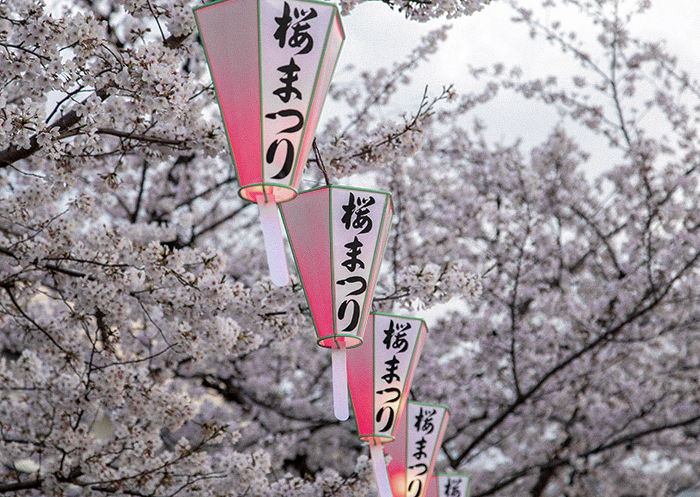
Once the samurai class took political power in the Kamakura period (1185–1333), banqueting beneath the cherry trees spread as a warrior custom. By the Sengoku period, the reunifier 豊臣秀吉 Toyotomi Hideyoshi staged two hanami events remembered for their scale: the Yoshino hanami and the Daigo hanami.
– 吉野の花見 The hanami in Yoshino drew roughly 5,000 attendees, among them major warlords including Date Masamune and Tokugawa Ieyasu.
– 醍醐の花見 The hanami in Daigo involved transplanting 700 cherry trees for the occasion, and the women present — including Hideyoshi’s wife, Kitanomandokoro, and his consort Yodo-dono — changed into lavish new dress multiple times over the course of the day.
The Edo Period (1603–1868): The Custom Takes Its Modern Shape
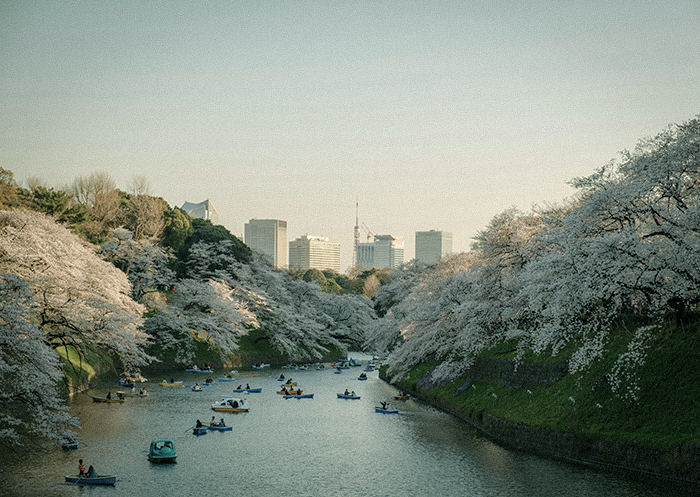
Several developments in the Edo period gave hanami the form it still largely holds today.
Ohanami becomes accessible to commoners. The eighth Tokugawa shogun, Yoshimune, had cherry trees planted along the Sumida River and at Asukayama in Edo, today’s Tokyo. The planting is credited with opening hanami to ordinary townspeople rather than leaving it a court and samurai occasion. A Meiji-era song titled 花 Hana, still performed today, opens by naming the Sumida River in springtime — a measure of how firmly the river and the season had become linked in the popular imagination.
The Someiyoshino is born. The cherry variety most people now picture when they think of Japan, ソメイヨシノ Someiyoshino, was developed in the Edo period by crossing two other varieties, 江戸彼岸 Edohigan and 大島桜 Oshimazakura. Prized for how freely it flowers and how quickly it grows, it was propagated across the country by grafting and cutting rather than by seed — which means that, in the strict sense, every Someiyoshino tree in Japan is a genetic clone of the original. That is also why, allowing for regional variation, Someiyoshino trees tend to bloom on such a tightly synchronized schedule: they are, genetically, the same tree.
The Showa Era (1926–1989): A Refuge in Hard Times
The Showa era included the Second World War, and even through it, cherry blossoms and ohanami remained something the country turned to. One episode captures the mood: 花見酒 hanamizake, “hanami sake.” Daytime drinking was officially prohibited during the war years, but an exception was quietly tolerated for sake drunk at hanami.
After the war, as the disorder of the immediate postwar years settled, ohanami parties grew large again. ohanami held in Late-Showa could draw entire companies, whole neighborhoods, and several families at once into a single boisterous gathering — lively enough that portable karaoke machines, then newly fashionable, were sometimes carried in, with the drinking and singing running late into the evening. For all the noise, ohanami in this period served a real function: it was one of the customs that held a company or a neighborhood together.
The Style of Ohanami in Modern Times
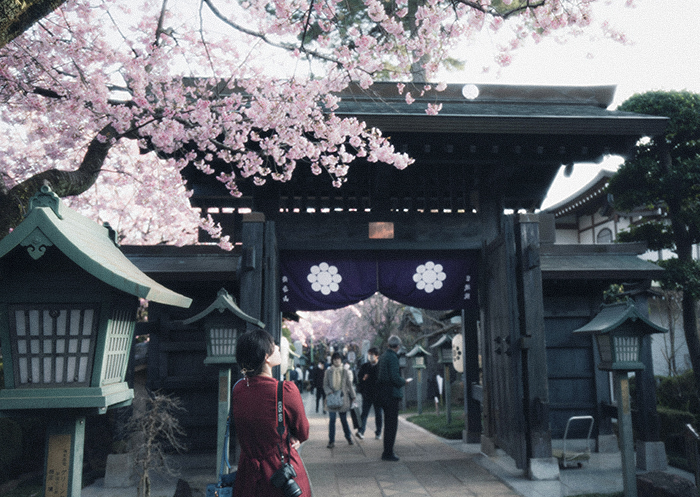
By the Heisei era (1989–2019), the large late-Showa parties had largely disappeared, for two reasons: complaints about manners, and a broader shift in social preference. All-night parties with heavy drinking had become associated with noise complaints and litter, and people increasingly preferred to gather in small, familiar groups rather than in a crowd. Hanami accordingly shifted in character — from a loud outdoor 宴会 enkai, banquet, toward a quieter, picnic-style appreciation of the blossoms themselves.
The Covid-19 pandemic, which spread worldwide from 2020, curtailed hanami sharply for several years. Necessary as the restrictions were for public health, many people felt the loss of an occasion they had counted on every spring. It was, for many, the moment it became clear that gathering under the cherry blossoms with people they cared about had never been something to take for granted. As of 2026, the custom is gradually returning to its earlier scale.
Dumplings Over Flowers: What People Eat at Ohanami
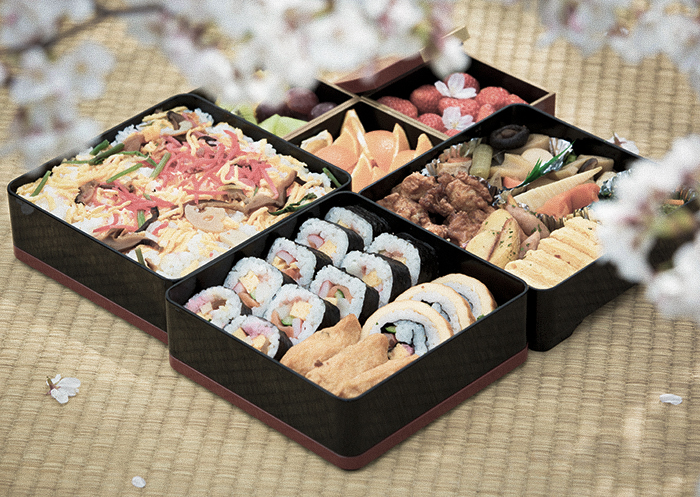
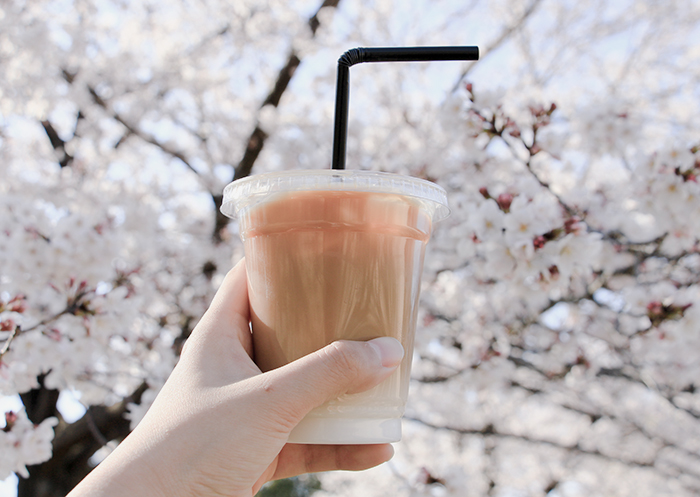
A Japanese proverb about hanami, 花より団子 hana yori dango — “dumplings over flowers” — describes someone who cares more about the food on offer than the cherry blossoms that are nominally the occasion, a gentle dig at prioritizing substance over refinement.
Whatever the proverb implies, the food is part of the appeal. Common hanami fare today includes:
– おにぎり Onigiri — rice balls eaten with one hand, a hanami staple for generations.
– Sandwiches — an increasingly common addition alongside onigiri, particularly popular with younger attendees for the colorful cross-section of fillings.
– 団子 Dango and 桜餅 sakuramochi — three-color dango skewers and sakuramochi, cherry-blossom rice cakes, are traditional hanami sweets still widely eaten.
– Alcohol, typically beer — a fixture of hanami gatherings. Canned beer is standard today; in the Showa era, large bottles poured for one another were more common, a style suited to a more communal way of drinking. Non-drinkers and children have juice or soft drinks instead.
Beyond these, one-handed snacks, tea, and 弁当 bento items such as 卵焼き tamagoyaki, rolled omelet and 唐揚げ karaage, fried chicken are also popular. In recent years, food stalls have set up during cherry season at well-known spots such as Ueno Park in Tokyo. What people bring varies widely — ohanami food is, in the end, a matter of personal taste.
Ohanami Etiquette
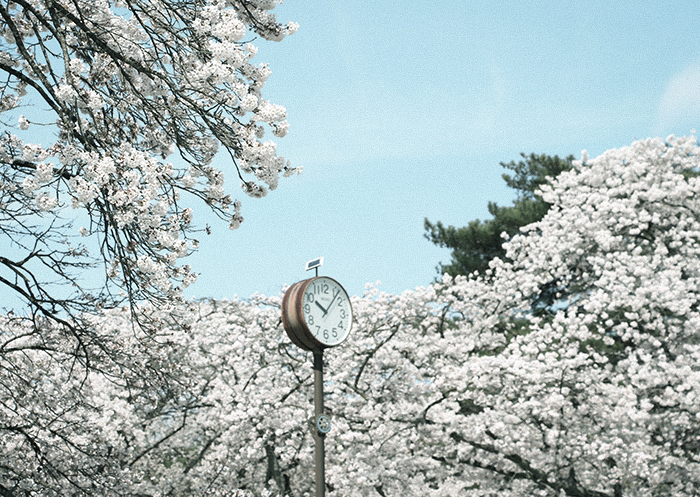
Ohanami is meant to be enjoyed, which is exactly why its etiquette is worth taking seriously.
Never break branches or climb the trees
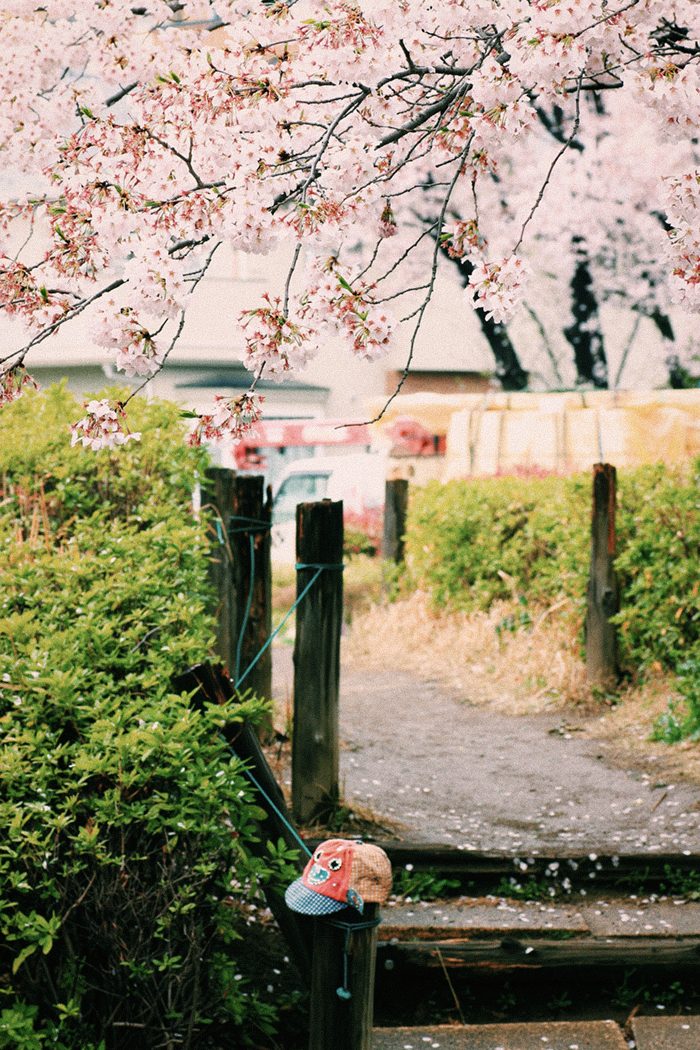
Cherry trees are delicate. A broken branch opens the tree to bacteria and fungal infection, and in the worst case, the damage can keep the tree from blossoming the following year. Deliberately breaking a branch can also expose the person responsible to a property-damage charge, 器物損壊罪 kibutsu songai zai, if the tree belongs to someone else. Stepping or sitting on the exposed roots causes similar harm and should be avoided as well — the point, in every case, is that everyone should be able to enjoy the same trees again next year.
Keep space-saving to a minimum, and share
Reserve only the space your group actually needs, and follow the specific rules of the park or venue, which vary from place to place. If you leave belongings behind to hold a spot, keep valuables on your person rather than in the unattended pile.
Watch the drinking
Drinking at hanami remains common, though nowhere near the scale of the late-Showa banquets. Getting rowdy or bothering other groups is best avoided, as is loud conversation or music — particularly after dark, when nearby residents are affected regardless of whether alcohol is involved.
Avoid food that needs an open flame
Some venues prohibit open flame outright — a rule known as 火気厳禁 kaki genkin — banning portable gas stoves, lighters, matches, and smoking alike. Where that rule applies, barbecue and stove-cooked hot pot are best skipped in favor of food that needs no heating, or food bought from stalls where they are available. Portable heaters are typically banned under the same rule, even though spring evenings in Japan can turn cold; a coat or a blanket is the practical substitute.
Take your trash with you
Leaving trash behind after hanami spoils the setting for the next visitor and is best avoided outright. Use a bin at the venue if one is provided; if not, take your trash home, and carrying a bag for the purpose makes this easier. Convenience stores and supermarkets passed on the way home are not an acceptable substitute — their bins are generally reserved for customers, and many stores explicitly prohibit outside trash being left there.
In Closing
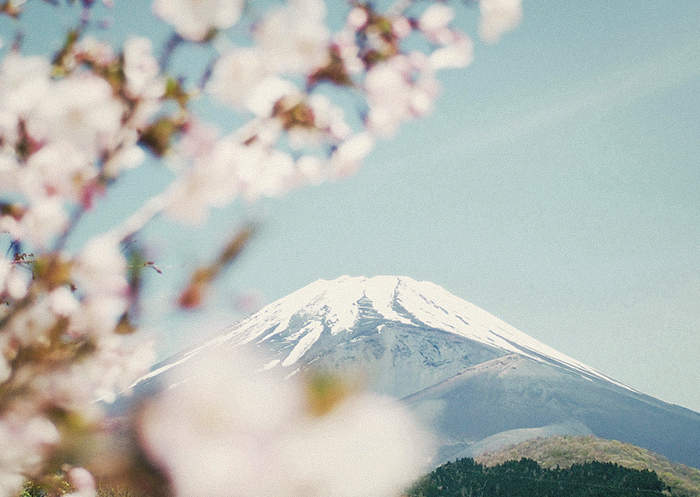
Ohanami has been a cherished part of Japanese life since antiquity, and today visitors from abroad take part in it as well — a reminder that the pleasure taken in cherry blossoms is not bound to one country. At the same time, complaints about hanami etiquette, at home and from abroad alike, have become more frequent: trash left under the trees, gatherings loud enough to disturb everyone nearby.
There is also a longer-term concern. Someiyoshino cherry trees may stop blooming reliably within a few decades, as rising temperatures from climate change outpace what the variety can adapt to. Protecting that longer horizon matters. So, in its own way, does treating each year’s blossoms — and the culture built around viewing them — as worth passing on rather than taking for granted.
KOTO is a journal of Japanese craftsmanship, culture, and the aesthetic sense behind them.
- SHARE
-


( landscape )