





Urashima Taro and the Tamatebako: Japanese Oldest Time Travel Story
When Most Japanese readers listen 玉手箱 tamatebako, they will remain story about 浦島太郎 Urashima Taro. In this story, Urashima Taro was given tamatebako, a box which was forbidden to open. Although Urashima Taro opened tamatebako, he turned old immediately. It is the ending everyone remembers, and it has quietly made the tamatebako into something close to Japanese own folk version of a time machine.
Looked at more closely, though, the tamatebako carries meanings well beyond that one famous scene — in what it was actually used for, in the craft that went into making one, and in what it may have been trying to say about time itself. This article works through all three, and then returns to the question the box’s ending seems built to raise: what a tamatebako is really protecting, and why it can never be opened safely.
What a Tamatebako Actually Was
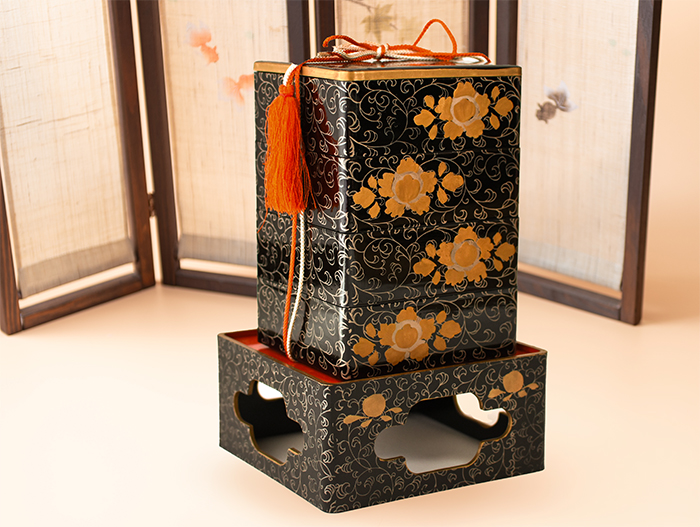
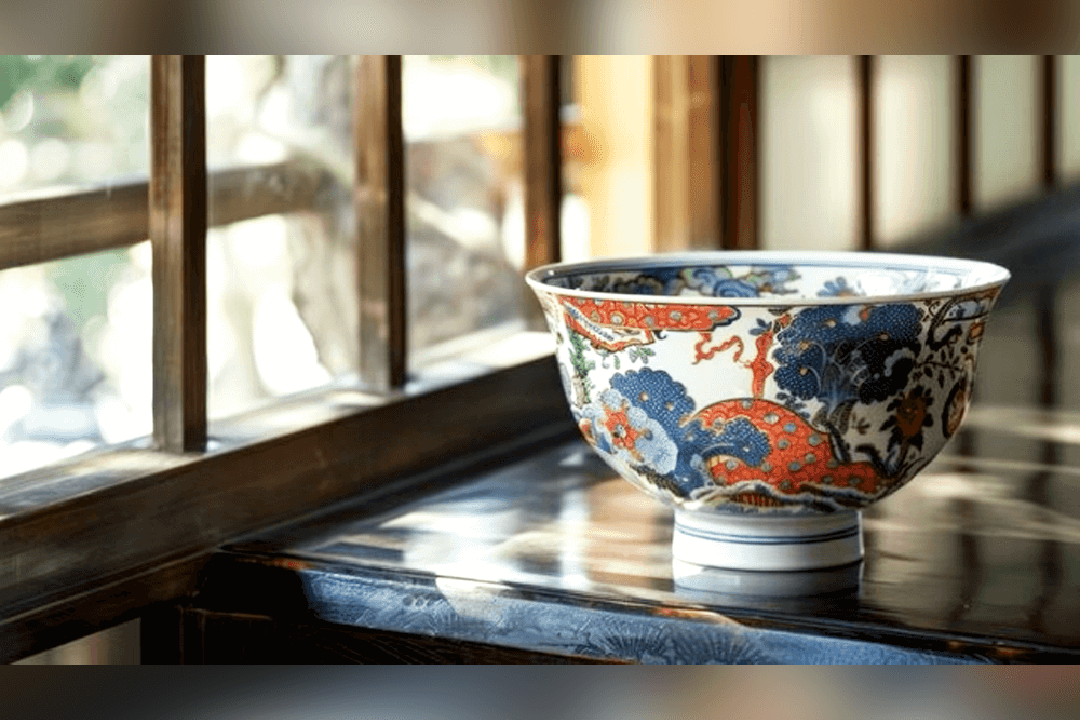
Before it became a story device, a tamatebako was simply a box for cosmetics or other valuables — the rough equivalent of a modern makeup pouch or accessory case. In practice, the cosmetics involved were mainly 紅 beni, rouge, and 白粉 oshiroi, white face powder, both of them luxury goods that were genuinely difficult to obtain at the time. Where affordable, good-quality cosmetics are available almost anywhere today, cosmetics of that era were closer to treasure.
Noblewomen also pressed the tamatebako into service as a kind of gift wrapping, sending a present to someone else inside a box worthy of a treasure, carried by a servant on their behalf — a gesture with a certain understated elegance to it.
There is a second, slightly darker meaning bound up in the object: a tamatebako is, by definition, an important box that must never be opened carelessly. Urashima Taro is the case in point. Given a tamatebako by 乙姫 Otohime and told explicitly not to open it, he opens it anyway out of curiosity — and instantly becomes an old man. The warning behind the story could not be plainer: whatever is inside, it is absolutely not to be looked at.
How a Tamatebako Was Made
Descriptions of tamatebako construction vary, but a general form is usually given.
Exterior. A wood base finished with 漆 urushi, lacquer — prized for its glossy black finish, though applying it demands a craftsman’s skill and careful handling; raw lacquer sap is caustic to the skin, and a colleague of this author once learned that the hard way, touching raw sap straight from the tree and suffering severe itching and irritation as a result.
Decoration. Gold and silver metalwork, carving, and painted design, sometimes including 蒔絵 maki-e, lacquer decorated with sprinkled gold, or 螺鈿細工 raden zaiku, mother-of-pearl inlay — work generally understood to mark a box as belonging to someone of high status.
Lid. Sliding or drawer-style openings both appear in the historical record, though illustrations of Urashima Taro’s story most often show a lid lifted straight off the top.
Making one demanded real labor and real skill from the craftsmen who built it — construction in keeping with an object meant to hold something precious.
Tama: A Word for Beauty

The word tamatebako has several proposed origins, the most widely accepted being a straightforward compound: 玉 tama plus 手箱 tebako, a small box for personal effects. Tama means “beautiful,” and the link between tama and beauty becomes clearer once tama is read as a stand-in for 宝石 hoseki, jewel or gem.
Modern readers tend to picture a jewel as something cut, like a diamond. In ancient Japan, gems were more often smoothed and rounded —翡翠 hisui (jade), or crystal, shaped rather than faceted. A Japanese expression still in use, “玉のように美しい赤ちゃん tama no yo ni utsukushii akachan“. This sentence means “A baby is precious and irreplaceable as a jewel (tama) .”
It is a striking way of putting a child’s worth into words. You will be able to fell It carries a meaning beyond the literal.
An Aptitude Test Borrowed the Name

Searching “tamatebako” today turns up something unrelated to folklore: a well-known aptitude test used in Japanese job hunting, also called 玉手箱 Tamatebako. Why the test was given that name has never been officially explained, but the likeliest reading is that it treats a candidate’s inner qualities — ability, aptitude, character — as something precious, examined carefully by a company hoping to judge compatibility fairly. There may be a second layer to the name as well: a tamatebako, once opened, reveals a surprising range of things inside — not unlike the way the test is meant to surface a candidate’s hidden potential.
The Story of Urashima Taro
Before getting to what the box might mean, it helps to have the story itself in hand.
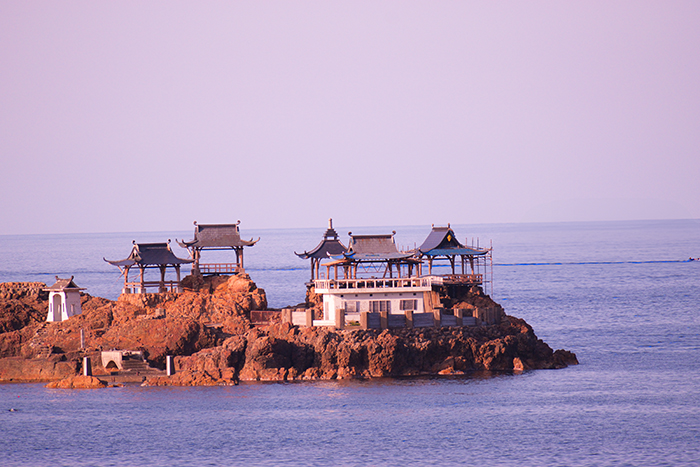
Long ago, there was a young man named Urashima Taro. One day, at the beach, he came across a group of children tormenting a turtle, and he saved it. A few days later, the turtle returned to thank him — by carrying him, on its back, down to 竜宮城 Ryugu-jo, the Dragon Palace at the bottom of the sea. There, a beautiful woman named Otohime welcomed him, and Urashima Taro spent his days at Ryugu-jo enjoying fine meals and banquets in her company.
Eventually he grew worried about the parents he had left behind on land, and told Otohime he wished to return home to see them. Otohime, reluctant but understanding, gave him a parting gift: the tamatebako — along with a single instruction. He was never, under any circumstance, to open it.
Back on the surface, Urashima Taro found that not only were his parents gone, but no one in the village recognized him, and the landscape itself had changed beyond recognition. While he had spent what felt like a few years at Ryugu-jo, hundreds of years had passed on land. Confused and disoriented, he forgot Otohime’s warning and opened the tamatebako. White smoke poured out, and in an instant, he became an old man.
The Tamatebako and Time Travel

What, then, connects the tamatebako to time travel? What follows combines the story as told with this author’s own reading of it — offered as interpretation, not as settled fact.
Theory One: Time Moved Differently in the Two Places
Within the story, Urashima Taro spends only a few years at Ryugu-jo, while three hundred to seven hundred years pass on land — accounts of the exact span vary. Had he simply been returned to the surface as he was, the years he had been spared might have caught up with him all at once, aging and killing him instantly. Otohime, the theory goes, feared exactly this, and sealed his soul inside the tamatebako to keep him from aging.
There is a version of this reading built on Otohime’s feelings rather than her fears. One theory holds that Otohime had fallen in love with Urashima Taro. Parting from him was painful, but if part they must, she wanted him, at least, to live out his days peacefully on land — and gave him the tamatebako as a treasure out of that wish. Taken a step further: if Urashima Taro‘s own presence — his soul — was itself the treasure to Otohime, then sealing it inside the tamatebako reads as an act of protection, a way of keeping his life on land safe rather than keeping him for herself. There is something quietly moving in a version of the story where Otohime does not try to hold him back, only to see him safely gone.
Urashima Taro, for his part, knows none of this. Not understanding Otohime’s intention, or what the box even contained, he opens it out of confusion — and because his own soul was sealed inside, the instant he does, he ages all at once in a burst of white smoke. The abrupt aging, and the mismatch in how time passed in the two places, both point toward something recognizable as time travel.
It is fair to ask why Otohime never simply explained her reasoning beforehand. There may be a reason she couldn’t. Japanese mythology returns again and again to a particular pattern: you must not do this, though I cannot tell you why — a structure usually read as testing whether a person can keep a promise even without understanding the stakes behind it. There is a gentler reading available too: perhaps Otohime, or the story itself, simply did not want to burden someone she loved with the whole truth. Either way, the fact that the truth is never spoken leaves the story with a lingering, unresolved ache.
A related possibility is that it was not Urashima Taro’s soul that Otohime sealed away, but his time itself. Three hundred years of elapsed time arriving in his body all at once would very likely have killed him outright; sealing that flow of time inside the tamatebako, on this reading, was what let him go on living at all once he returned to land. Japanese has a proverb for this, 時は金なり toki wa kane nari, “time is money.” This sentence means “Time is like money. is precious and finite, and should not be squandered.” Read a little loosely, Urashima Taro’s own remaining life may have been, to Otohime, exactly that kind of treasure: finite, and worth protecting, wherever he happened to be living it.
Theory Two: Was Ryugu-jo the Future?

A harder question follows naturally from the first: by what means, exactly, could Otohime have sealed a soul, or time itself, into a box? This author’s answer, offered frankly as speculation, is that Ryugu-jo represents a future Japan — a paradise not yet arrived at.
The story of Urashima Taro as it survives today traces back to the 御伽草子 Otogizoshi, a collection of illustrated short stories compiled at the end of the Muromachi period. That was an era just entering a long stretch of internal warfare touched off by a dispute over shogunal succession, in which regional warlords fought, region by region, each hoping to be the one who finally unified the country. Living through a period when war could break out anywhere, at any time, and life could be lost without warning, people may well have projected onto Ryugu-jo the paradise they could not find on land — something close to the Buddhist Pure Land, 極楽浄土 gokuraku jodo.
The setting supports the reading. At the bottom of the sea, Ryugu-jo is not merely paradise-like in mood; it is a place where the human Otohime and the fish live together without conflict. It can also be read as pointing toward 仙郷 senkyo, a hermit’s realm removed from the ordinary world, home to immortal sages. Set against that is the very first scene on land, where children are tormenting a turtle on the beach — an opening image of casual cruelty, against which Ryugu-jo’s harmony reads as its opposite. Read that way, the contrast becomes a wish: the present is full of conflict, but somewhere — in some future — a peaceful, undisturbed world might still exist.
How, mechanically, a soul or a span of time could be sealed into a box is never explained in the story, and Urashima Taro himself is never shown noticing anything unusual happening to him while it happens. Even now, this author notes, the nature of the soul, of life, and of time remains largely unresolved — so perhaps it is not so strange that Ryugu-jo, in the story, is imagined to have found some means of doing what modern understanding still cannot explain. A soul or a span of time that can be sealed away and returned later is, in effect, a way of making a person live forever. In an age when permanent separation from someone loved — family, friend, or lover — could arrive at any time through war, a story imagining eternal life, and a peaceful world free of conflict, along with the treasure that might make both possible, would have carried real weight.
This author is aware that reading Ryugu-jo as a stand-in for the future edges toward science fiction, and risks draining some of the romance out of the story as it has always been told. It is offered here only as one possible way of looking at it, not as the story’s real meaning.
The Real Treasure

This is not the only Japanese folktale built around a being from elsewhere who must eventually leave. In 竹取物語 Taketori Monogatari, The Tale of the Bamboo Cutter, かぐや姫 Kaguya-hime, a woman from the moon, returns there at last, reluctant to leave behind the time she spent on earth with the elderly couple who raised her. Otohime’s own nature is less settled — several theories exist about what, exactly, she is — but she is plainly not human either.
Time spent with a human being, and above all with the one she loved, was, this author believes, an irreplaceable treasure to Otohime. That is why she honored Urashima Taro’s wish to see the parents he was worried about, and why, wanting nothing more than for him to go on living well, she placed his soul — his time — inside the tamatebako as a treasure worth protecting.
People tend to picture treasure as something glittering: jewels, gold, valuable objects. What this story, like the Tale of the Bamboo Cutter, seems to be asking is something else — that the real treasure is time itself, spent with the people who matter, and lived out in a life that does not last forever.
The story never says what the world looked like several hundred years after Urashima Taro returned to it. That silence leaves room for the reader to imagine it. And because the original form of the tale took shape in a country at war, both it and the tamatebako may, in the end, be trying to hand down something simpler than a warning about curiosity: a sense of how much a peaceful world, and the people we get to share it with, are worth.
KOTO is a journal of Japanese craftsmanship, culture, and the aesthetic sense behind them.
- SHARE
-


( craft )