





Same Era, Different Culture: Kitayama and Higashiyama, Genroku and Kasei
Japan’s recorded history runs more than 2,000 years, and across it the country has produced culture after culture — distinct styles of building, performance, literature, and craft, each stamped with the moment that made it. What is less expected is that a single era can produce two cultures at once, each one recognizably different from the other despite sharing a country, a ruling class, and often a single century.
It happened twice. The 室町時代 Muromachi period produced both 北山文化 Kitayama culture and 東山文化 Higashiyama culture. The 江戸時代 Edo period later produced both 元禄文化 Genroku culture and 化政文化 Kasei culture. This article sets out what each of the four looked like, and what pulled them in such different directions despite growing from the same historical soil.
Two Eras, One Ruling Class
Before turning to the cultures themselves, it helps to place the two eras that produced them. Muromachi and Edo share one obvious trait: both were governed by samurai.
The Muromachi Period
The Muromachi shogunate was founded in 1336 by Ashikaga Takauji and lasted roughly 240 years. Its name comes from Muromachi, the district of Kyoto where the third shogun, 足利義満 Ashikaga Yoshimitsu, relocated the shogunate’s base.
In its early years the shogunate was contested from within: Takauji’s Northern Court stood against a Southern Court led by the reigning emperor, Go-Daigo, in a split known as the 南北朝時代 Nanboku-cho period, the era of the Northern and Southern Courts. Later, in its final century, a dispute over shogunal succession triggered the 応仁の乱 Onin War, which tipped the country into the long internal conflict of the 戦国時代 Sengoku period, the Warring States era. The Muromachi period is best understood as containing both.
In 1573, the fifteenth and last Muromachi shogun, Ashikaga Yoshiaki, was driven out by 織田信長 Oda Nobunaga, bringing the shogunate to its effective end.
Before it came the 鎌倉時代 Kamakura period (1185–1333), Japan’s first warrior government, founded by 源頼朝 Minamoto no Yoritomo. Its start date was long given as 1192; the more widely accepted date today is 1185, the year Yoritomo is considered to have effectively seized power. After Muromachi came the 安土桃山時代 Azuchi-Momoyama period (1573–1603), in which regional warlords fought repeatedly toward reunification, with Nobunaga and, after him, 豊臣秀吉 Toyotomi Hideyoshi at the center of politics. The era’s name combines Nobunaga’s Azuchi Castle with Momoyama, an alternate name for Hideyoshi’s Fushimi Castle.
The Edo Period
The Edo period was governed by the Edo shogunate, founded by 徳川家康 Tokugawa Ieyasu, and lasted some 260 years across fifteen shoguns. The warfare that had run through the Sengoku period ended, and people lived through a long stretch of comparative calm. Much of what reads as timelessly Japanese today — 握り寿司 nigirizushi, hand-formed sushi, and 歌舞伎 kabuki among it — took shape in this period, which is also, not coincidentally, the setting most often chosen for Japanese period dramas, 時代劇 jidaigeki.
Before Edo came the Azuchi-Momoyama period (1573–1603). Hideyoshi completed the reunification of Japan in 1590, with the Siege of Odawara and the pacification of the Ou region in the north. After his death, Ieyasu and the Toyotomi clan fought for succession. Ieyasu’s victory at the Battle of Sekigahara in 1600 settled that contest, and in 1603 he was appointed shogun, opening the Edo shogunate; the Toyotomi clan’s later destruction in the Summer Siege of Osaka secured Tokugawa rule for good.
After Edo came the Meiji era (1868–1912). The 大政奉還 Taisei Hokan of 1867, the return of political authority to the imperial court, closed out the age of samurai rule that had begun with Kamakura. The era name Meiji itself was proclaimed on the 8th day of the 9th month of Keio 4 — October 23, 1868 — and applied retroactively to the start of that year, which is why Meiji is counted from 1868 rather than from the Taisei Hokan. The same decree established 一世一元の制 issei ichigen no sei, one era name per reign, so that from Meiji onward an era runs to the end of the emperor’s reign rather than being changed at will within it.
Two Cultures Born in the Muromachi Period
The Muromachi period produced Kitayama culture and Higashiyama culture, both named for a shogun’s villa — Kitayama, “north mountain,” and Higashiyama, “east mountain.” The direction in each name makes them easy to mix up, but the two cultures themselves are not alike.
Kitayama Culture
Kitayama culture formed around the third shogun, Ashikaga Yoshimitsu. Yoshimitsu conducted 勘合貿易 kango boeki, tally trade, with Ming-dynasty China — named for the 勘合 kango, the certificates issued to prove a ship was an officially sanctioned trading vessel. Through this trade Japan imported raw silk, silk textiles, and copper coinage, and the resulting blend of Ming culture with Japan’s existing warrior and court society produced something conspicuously lavish.
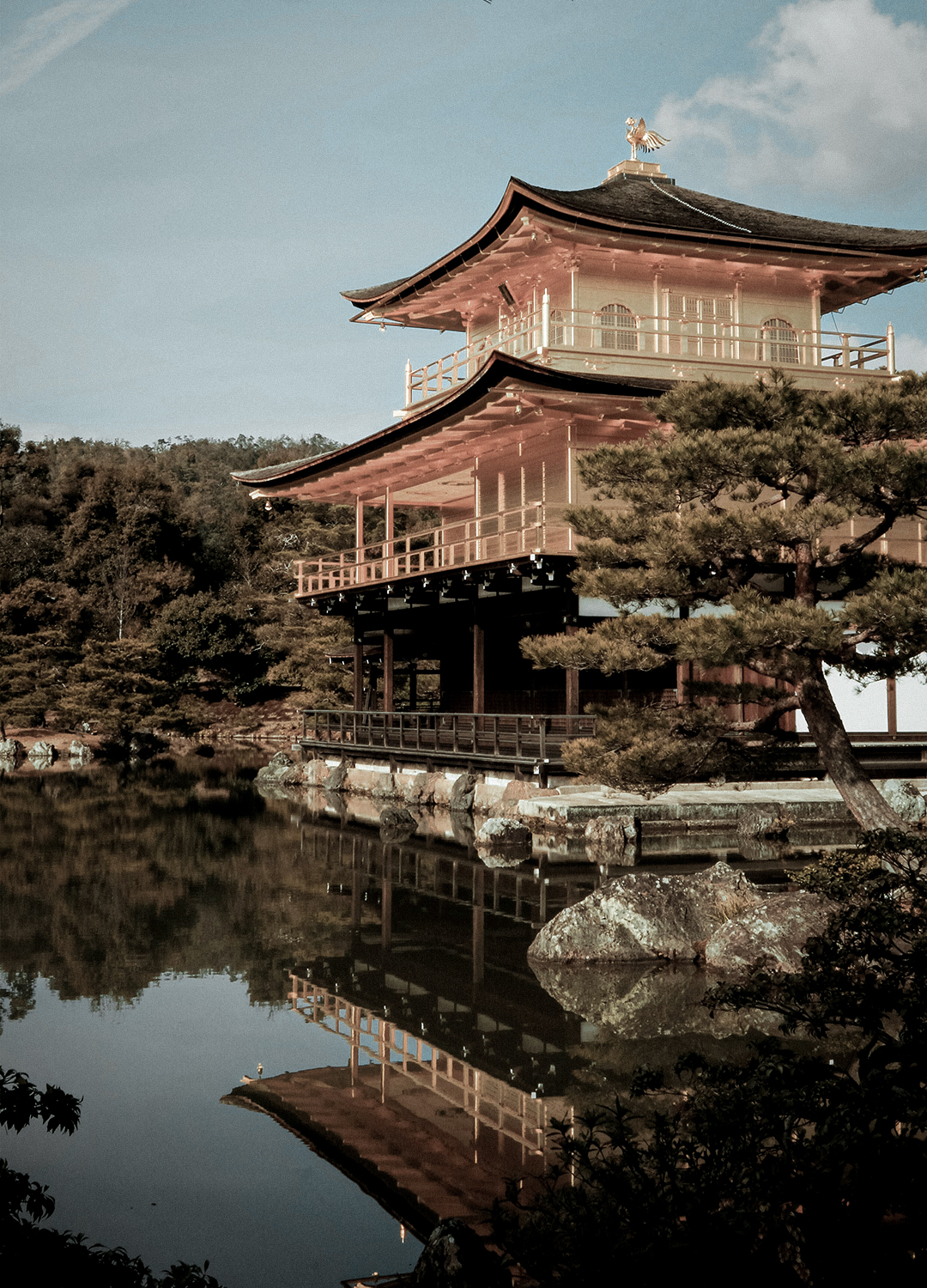
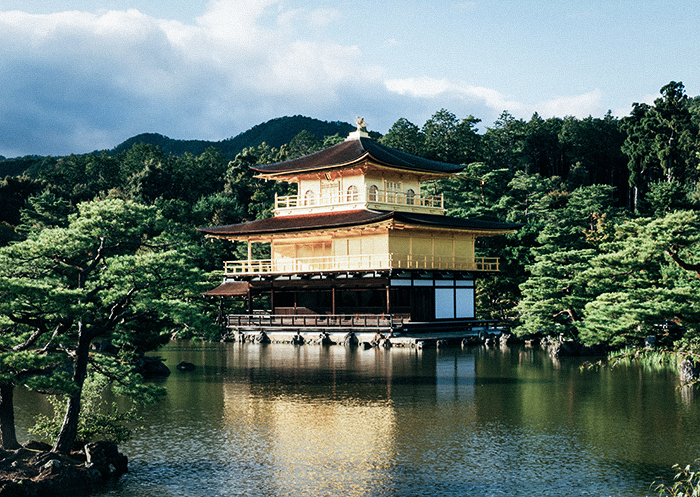
Architecture. 金閣寺 Kinkakuji, the Golden Pavilion, combines three styles across its three stories: 寝殿造 shinden-zukuri, the aristocratic residential style of the Heian court; 書院造 shoin-zukuri, a later reception-room style; and Zen temple architecture. The building burned down in a fire in the 1950s, and the structure visitors see today is a reconstruction.
Performing arts. 能楽 Nogaku, Noh theater, was established by the father-and-son pair 観阿弥 Kan’ami and 世阿弥 Zeami, and is considered the oldest surviving masked musical drama in the world. It comprises two forms: 能 Noh, built on tragic material drawn from gods and ghosts, and 狂言 Kyogen, dialogue-driven comedy about ordinary life. Two of its masks are widely recognized even outside Japan: 般若 hannya, a vengeful spirit born of a woman’s jealousy and resentment, and おかめ okame, a round-faced female mask.
Literature. 五山文学 Gozan bungaku, “Five Mountains literature,” developed Chinese-style poetry and prose among Zen temple scholars. 会所 kaisho, salons where 連歌 renga, linked verse, and other literary entertainments were held, played a central role in developing the literature of the period.
Crafts. 唐物 karamono, paintings, ceramics, and textiles made in China and brought to Japan through the tally trade, became prized decorations for reception rooms and are considered the origin of the 床の間 tokonoma, the decorative alcove still found in traditional Japanese rooms.
Everyday life. 花合わせ Hanaawase, a Tanabata-season custom, involved arranging flowers in many vases to decorate Yoshimitsu’s Kitayama residence. The practice of dressing a room with flowers is said to have taken root during this period.
Higashiyama Culture
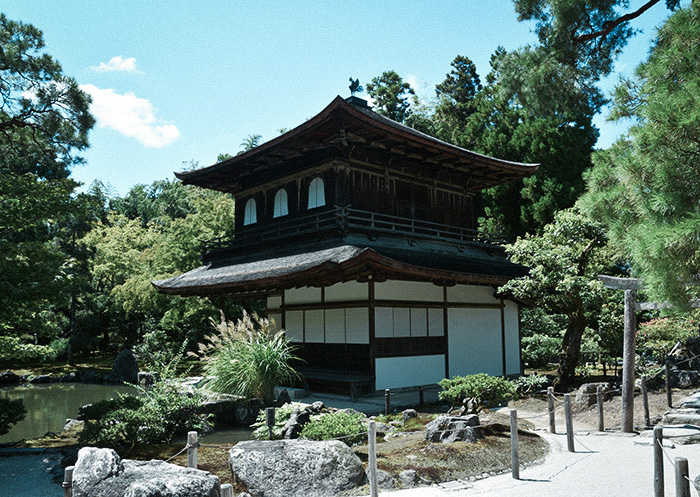
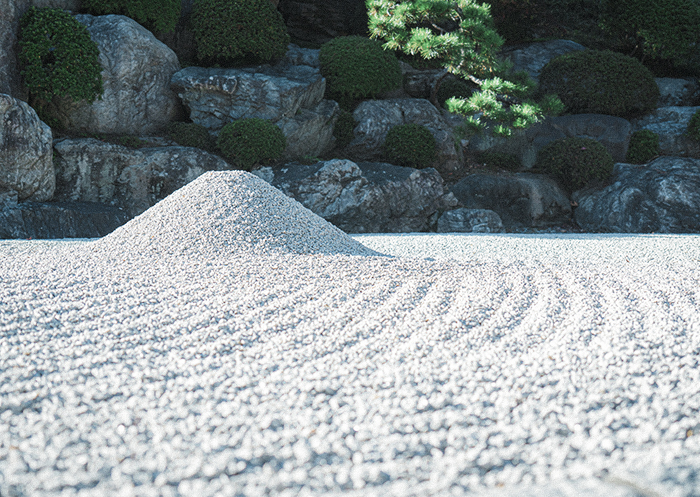
Higashiyama culture took shape later in the Muromachi period, centered on the eighth shogun, 足利義政 Ashikaga Yoshimasa. Where Kitayama culture prized display, Higashiyama culture established 侘び寂び wabi-sabi, an aesthetic that values plainness carried out with refinement.
Architecture. 枯山水 karesansui, dry landscape gardening, renders mountains and water using white sand and stone in place of the real thing — this author, seeing one in Kyoto, was struck by how precisely the raked sand suggested ripples on water. 書院造 shoin-zukuri, the prototype of the modern Japanese-style room, features tatami flooring, sliding 襖 fusuma doors, a tokonoma alcove, and 違い棚 chigaidana, staggered shelving set at different heights; at the time it served as a reception room or study for samurai. 銀閣寺 Ginkakuji, the Silver Pavilion, is far plainer in appearance than Kinkakuji, but its interior carries a functional beauty of its own.
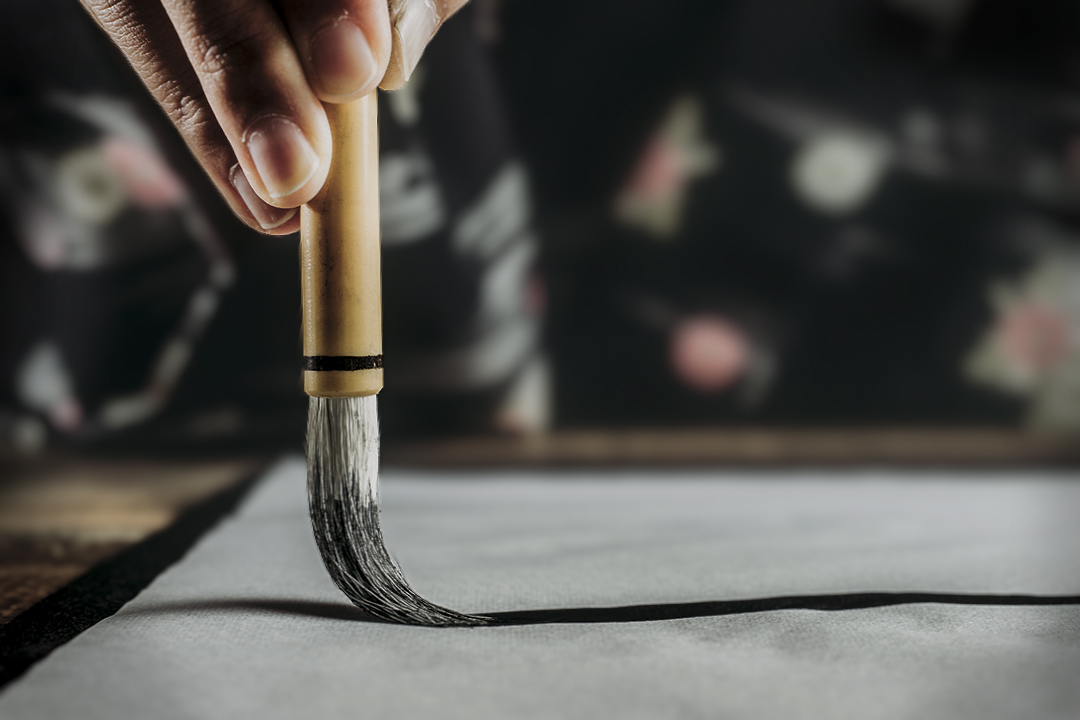
Performing arts. 香道 Kodo, the way of incense, is a performing art built around “listening” to fragrance as a means of turning inward; in some schools it is closely bound to samurai practice and valued as a form of spiritual discipline. 水墨画 Suibokuga, ink wash painting, was established in Japan by the monk 雪舟 Sesshu, who trained in Ming China, the origin of the technique, before fusing it with a distinctly Japanese sensibility; his skill earned him the title 画聖 gasei, “sage of painting.” 侘び茶 Wabicha, a school of tea ceremony founded by 村田珠光 Murata Juko, avoided ornate utensils in favor of a deliberately simple atmosphere — its emphasis on spirituality over display is closely bound up with the wabi-sabi aesthetic that Higashiyama culture established.
Two Cultures Born in the Edo Period
The Edo period produced two cultures of its own: 元禄文化 Genroku culture and 化政文化 Kasei culture, both named for the era names in use when each arose.
Genroku Culture
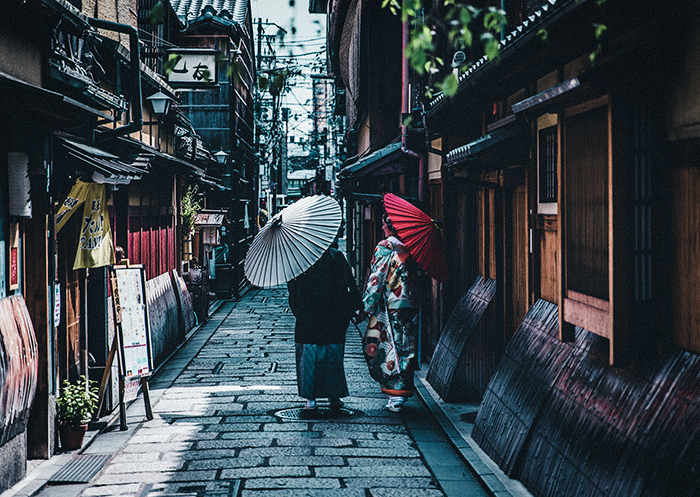
Genroku culture arose early in the Edo period, roughly across the Genroku era (1688–1704). Its driving force was the 上方 Kamigata region — Kyoto and Osaka — and especially its 豪商 gosho, wealthy merchants, whose patronage produced a culture with a free-spirited brightness and gorgeousness of its own.
Literature. 俳句 Haiku, established by 松尾芭蕉 Matsuo Basho, compresses a season or a mood into seventeen syllables arranged 5-7-5. A defining feature of haiku is the 季語 kigo, a word required to signal the season — sakura or 朧月 oborozuki, the hazy spring moon, for spring; 枯野 kareno, a withered field, or 霜柱 shimobashira, needle ice, for winter. 近松門左衛門 Chikamatsu Monzaemon produced a large body of scripts for puppet theater, 人形浄瑠璃 ningyo joruri, and for kabuki, many of which are still staged today.
Painting. 浮世絵 Ukiyo-e, woodblock prints made using multicolor printing techniques, produced many of its best-known works in the Edo period. Genroku culture’s standout is 菱川師宣 Hishikawa Moronobu‘s 見返り美人 Mikaeri Bijin, “Beauty Looking Back.”
Crafts. 友禅染め Yuzen-zome, a technique for dyeing patterns directly onto kimono fabric, was established during the Edo period and allowed for color and pattern work as delicate as if drawn by hand. Its vivid, realistic designs have been carried down to the present, and three regions — Edo, Kyoto, and Kaga (in what is now southern Ishikawa prefecture) — are considered its three major traditions, each with its own patterning.
Food. 天ぷら Tempura, a street-stall staple, was originally seafood caught near Edo and fried in sesame oil. かけそば Kake-soba, soba noodles served in broth, emerged as a beloved fast food for the notoriously impatient 江戸っ子 Edokko, the townspeople of Edo.
Kasei Culture
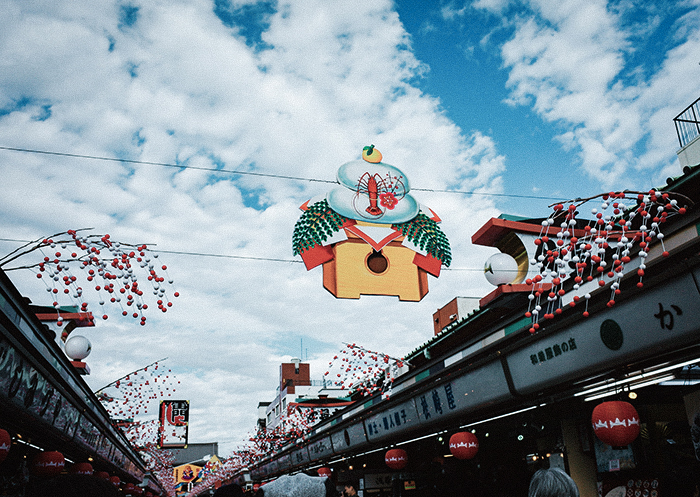
Kasei culture arose later in the Edo period, spanning roughly the Bunka and Bunsei eras (1804–1830), and was centered on the Edokko themselves. It favored the aesthetics of 通 tsu and 洒落 share, and carried a character that was, at once, faintly decadent and light on its feet — a practical, commoner-driven culture that reads today as an early ancestor of pop culture. (Its best-known recent depiction is Berabou, NHK’s 2025 Taiga historical drama.)
Tsu describes a deep understanding of a subject worn lightly — urbane, unshowy, aware of what really matters without making a show of seriousness about it. At its foundation is 粋 iki, an aesthetic built on restraint: an allure that does not flatter for attention, and a spirited indifference to outcome. An Edokko’s breezy manner, carried without slipping into crudeness, was exactly what counted as iki. Share carried a related instinct for cutting away excess, favoring a clean, uncluttered impression — one expected not only in appearance but in wit, wordplay, and a cultivated command of language.
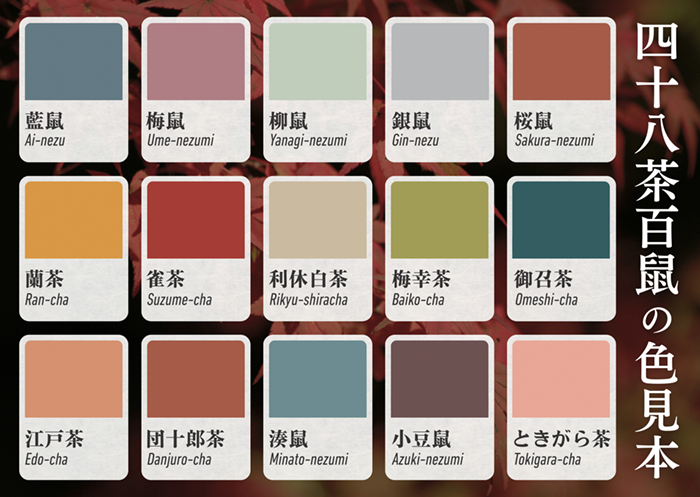
The same period gave rise to 四十八茶百鼠 shijuhatcha hyakunezumi, “forty-eight browns and a hundred grays” — a fashion culture built inside the limits of a sumptuary law restricting the colors commoners were allowed to wear, covered at greater length in KOTO’s article on Japanese traditional colors.
Literature. 川柳 Senryu, also built on seventeen syllables in 5-7-5, satirizes or simply observes daily life; unlike haiku or tanka, it requires no kigo. This author, having tried writing some in school, can attest that fitting anything into seventeen syllables is harder than it looks.
Painting. Ukiyo-e and its color-printed form, 錦絵 nishiki-e, reached their height in this period through artists including 葛飾北斎 Katsushika Hokusai, 喜多川歌麿 Kitagawa Utamaro, and 歌川広重 Utagawa Hiroshige, whose work later influenced European and American artists as Japonisme.
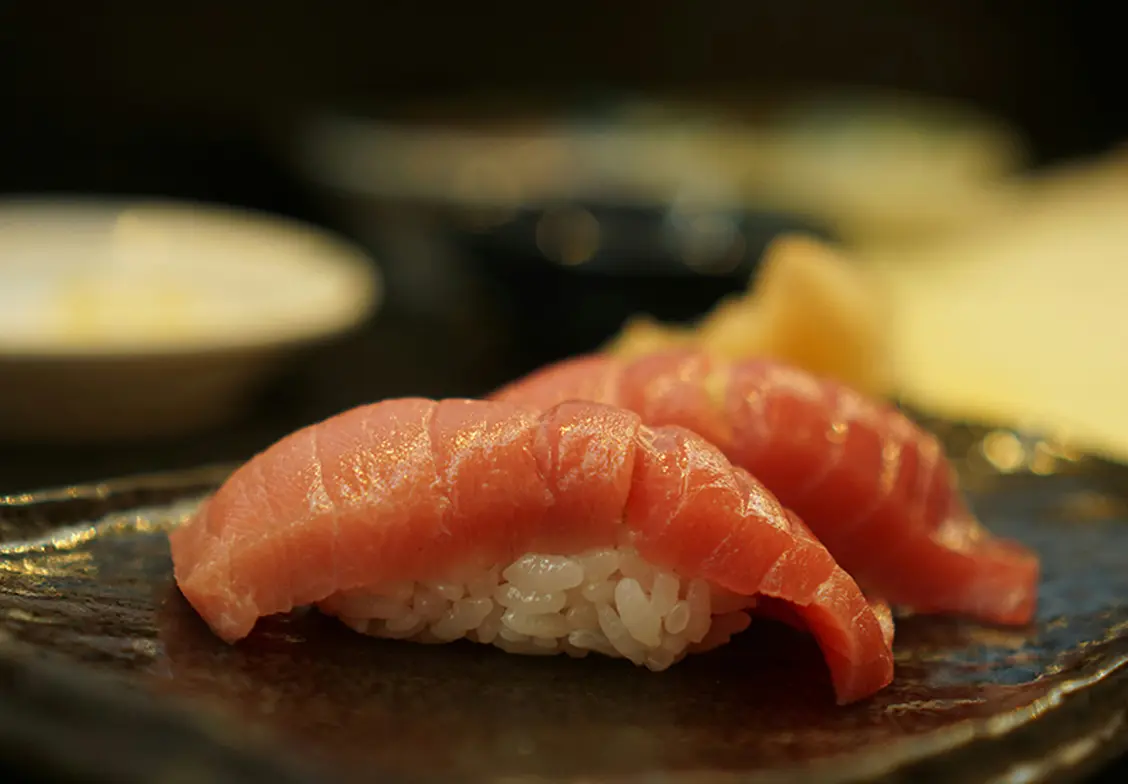
Food. 握り寿司 Nigirizushi, the hand-formed sushi familiar today, was born in this period — and, like tempura and kake-soba before it, started out as street-stall fast food rather than a formal meal.
Everyday life. 伊勢参り Ise-mairi, pilgrimage to Ise Shrine, took hold as a popular pastime among commoners. 寺子屋 Terakoya, the neighborhood schools that taught commoners’ children, spread rapidly in this period. Their origins are older — they grew out of temple education in the late medieval period — but it was here that they reached ordinary households in numbers, a subject covered at greater length in KOTO’s article on terakoya.
What Made the Difference
Kitayama culture — Higashiyama culture — Genroku culture — Kasei culture
|—|—|—|—|—|
Era — Early Muromachi — Late Muromachi — Early Edo — Late Edo
Character — Gorgeous, lavish — Plain, refined — Free-spirited, bright, gorgeous — Decadent, light on its feet
Shogun — Ashikaga Yoshimitsu (3rd) — Ashikaga Yoshimasa (8th) — Tokugawa Tsunayoshi (5th) — Tokugawa Ienari (11th)
Central figures — Ashikaga Yoshimitsu — Ashikaga Yoshimasa — Kamigata merchants (Kyoto, Osaka) — Edo townspeople
Politics — Stable — tally trade grew the economy; the Northern and Southern Courts had reunified — Unstable — the Onin War, sparked by a succession dispute, spread across Kyoto and left much of it scorched earth — Somewhat stable — economy and industry matured, though shifts in governing method caused periodic confusion — Somewhat unstable — repeated sumptuary edicts, driven by fiscal strain, placed heavy restrictions on commoners
One pattern is hard to miss: the earlier culture in each pairing — Kitayama, Genroku — arrived during a comparatively stable stretch of politics and reads as gorgeous and expansive. The later culture in each pairing — Higashiyama, Kasei — arrived once instability had set in, and reads as restrained or, in Kasei’s case, faintly defiant. Higashiyama’s plainness looks, on this reading, like a way of settling the mind during the unrest of the Onin War; Kasei’s wit and irony look like commoners pushing back, in the only register available to them, against a shogunate that kept restricting their lives.
Who stood at the center of each culture tells a related story. Both Kitayama and Higashiyama were shaped directly by the shogun of the day, in an era when internal conflict could still erupt without warning — Yoshimasa’s own reign saw the Onin War break out. Samurai lived without knowing when they might die, and a moment of settled composure carried real weight as a result; commoners, too, faced real danger from war and plunder rather than living apart from it. The Edo period, by contrast, was largely peaceful: for most of its length, until the turmoil of its final years, no samurai died in battle, and townspeople lived settled enough lives that they, rather than any shogun, eventually became the ones generating culture — a shift from the top-down pattern of Muromachi to something closer to the reverse.
In Closing
Two cultures, twice, out of the same country and the same century each time — and each pair turned out looking almost nothing alike. The difference traces back to the state of politics and the mood of the people living through it at the time.
Centuries on, the differences remain legible, and yet all four cultures still have the capacity to move people today, precisely because each one carries the intentions and effort of the people who lived through the era that produced it. Japan holds a great many other cultures worth this same kind of attention, and passing them on starts with the more basic task of making them known.
KOTO is a journal of Japanese craftsmanship, culture, and the aesthetic sense behind them.
- SHARE
-


( daily-life )