

Terakoya: The Edo-Period Neighborhood Schools Behind Japan’s Remarkable Literacy Rate
By the final decades of the Edo period (1603–1868), a large share of Japan’s population could read and write, at a time when literacy on that scale was rare almost anywhere in the world. The institution most responsible for it was not a national school system — Japan had none yet — but a loose, informal network of neighborhood schools called 寺子屋 terakoya, literally “temple children’s rooms.” How they worked, and why they spread as far as they did, explains a good deal about how Japan arrived at the modern era already primed to read.
Where Terakoya Came From
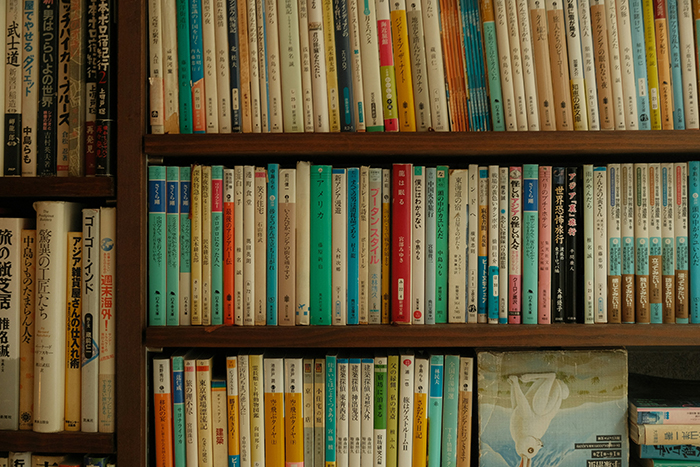
The institution traces back to the Muromachi period (1336–1573), when the earliest form was simple: a teacher lodged at a Buddhist temple and taught disciples there directly. It was in the Edo period, though, that the practice spread widely among commoners, moving out of temples and into private homes and rented rooms across cities, towns, and villages.
Why Terakoya Spread
One driving force was practical necessity: parents were often too occupied with work to handle their children’s education themselves, and terakoya filled that gap. In effect, they functioned as much like a daycare or after-school program as a school in the modern sense. Several other forces reinforced that spread.
One: Peace Made Literacy Worth Having
The Edo period was, by the standard of the Sengoku era of civil war that preceded it, remarkably peaceful — the risk of dying in internal conflict fell sharply. With that shift, people had reason to think seriously about the value of reading, writing, and arithmetic, skills previously less urgent for daily survival.
There was also a direct civic reason. Important notices from the shogunate were posted around town on 高札 kōsatsu, wooden signboards. Anyone who could not read them risked missing information that affected daily life directly.
Two: Publishing Technology Moved to Edo
Printing and publishing know-how migrated from Kyoto, the great city of the era, to Edo, the new political center. That same technology gave rise to a rental-book culture — the popular entertainment reading of the day — and the spread of both is credited with pushing literacy further.
Three: A Living for Lower-Ranking Samurai
Samurai of lower rank often struggled financially. Teaching at a terakoya became a valuable source of side income for them — not unlike a modern side job — while doubling as a public good: education spread, and a teacher earned a living. Both sides came out ahead.
Four: The Arithmetic of Interest
A cash economy took shape during the Edo period, and with it came the practice of lending and borrowing money at interest. Making sense of that required skill with the そろばん soroban, the abacus, and soroban instruction became a core part of terakoya learning.
Age and Tuition
Terakoya were not compulsory education, so there was no fixed age at which a child had to attend. Children of many different ages studied side by side in a single room — a marked contrast with Japan’s current system, in which compulsory schooling begins at age seven (measured against the school year, which runs from April 1 to March 31) and children are grouped strictly by age.
Tuition had no fixed rate, either. Families paid what they could, and in many cases paid in food or goods rather than cash.
What Terakoya Actually Taught

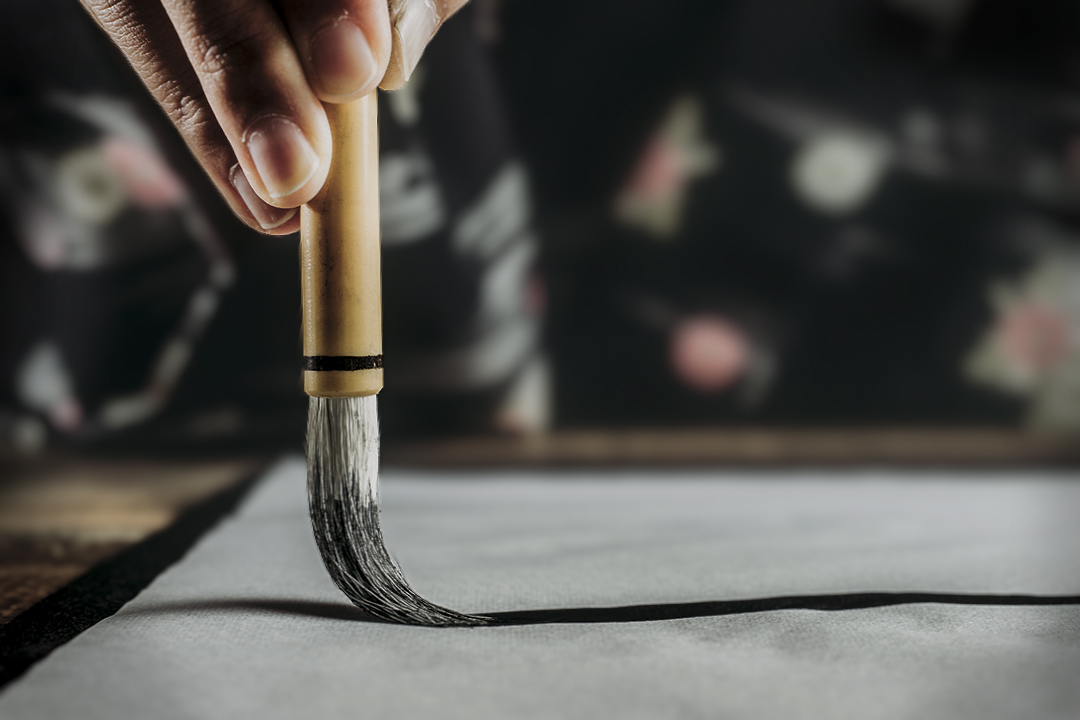
The core curriculum is usually summed up in three words: 読み・書き・そろばん yomi, kaki, soroban — reading, writing, and abacus arithmetic. Reading meant literacy itself; writing meant composing correctly in the grammar of the day; soroban meant calculation using the abacus, the calculator of the era.
Terakoya also taught beyond academics: basic housekeeping and cleaning, and courtesy toward others — respect for elders such as parents and teachers, and getting along with peers. Girls, particularly toward the end of the Edo period, were more often taught sewing, the tea ceremony, and flower arranging — a curriculum weighted toward the practicalities of running a household, distinct from what boys studied.
An Unexpectedly Modern Teaching Style
Terakoya are often described as having used teaching methods that would not look out of place today, methods that reportedly surprised foreign visitors who encountered Japanese schools during the Meiji era (1868–1912).
One: a curriculum tailored to the individual. Since children typically expected to take up their parents’ trade, teaching materials were adjusted to match each child’s likely future occupation.
Two: two-way instruction rather than one-way lecture. Terakoya are said to have relied heavily on students teaching each other what they did not understand, rather than a teacher simply talking at a room.
Three: a curriculum built around practical life skills — reading, writing, and the arithmetic a student would actually use, aimed squarely at what a future livelihood would require.
How Widespread Was Literacy?
Terakoya spread well beyond the cities, reaching rural areas and farming villages as well. By the Kaei era (1848–1855), toward the end of the Edo period, the enrollment rate is estimated at roughly 70%.
Literacy by the 1850s stood among the highest in the world at the time. The estimated figures:
Group — Literacy rate
|—|—|
Samurai class — Nearly 100%
Commoner men — About 50%
Commoner women — About 20–30%
These are estimates, and they should not be read as adding up to a single national figure. The samurai class made up only a small share of the population — by one estimate around seven percent — so a population-weighted average of the rows above lands nearer 40% than 70%. The roughly 70% figure often quoted for the late Edo period is an estimate of terakoya enrollment, not of literacy across the whole population, and historians continue to debate how far any single nationwide literacy figure can be trusted at all. What the records do establish is the reach of the institution itself: by the end of the Edo period terakoya had spread from the streets of Edo and Osaka to provincial towns and farming, mountain and fishing villages nationwide.
Schooling After the Meiji Restoration
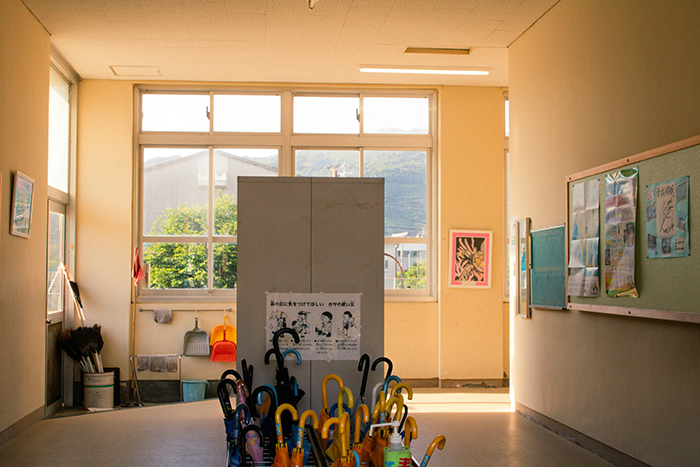
With the Meiji era came the 学制 Gakusei, the 1872 Education System Order, which reorganized education on an entirely new footing. Elementary schools, middle schools, and universities were established as three separate tiers, and elementary education became compulsory.
The rise of elementary schools effectively ended the terakoya, though some of their teachers went on working within the new system.
Schooling in the 2020s
Japan’s education system was revised repeatedly afterward, and the compulsory framework in place today was established in 1947: nine years, six in elementary school and three in middle school, covering ages six through fifteen.
What gets taught during those nine years is set by the 学習指導要領 Gakushū Shidō Yōryō, the national Courses of Study, applied uniformly across the country. Textbooks are written to follow those guidelines and are vetted by the national government before publication — though because multiple publishers produce them, and municipalities and individual schools choose among them, the specific material used (a geometry proof, a short story) can vary slightly from place to place.
The Courses of Study are revised every few years, so what one generation studied and another did not can differ meaningfully — sometimes a topic simply was not taught to a given cohort at all. This author belongs to the generation educated under 「ゆとり教育」 yutori kyōiku, the relaxed, “room to grow” curriculum of the 2000s, and later worked as a cram-school instructor in the 2020s. It was startling to discover that students were already being taught the subjunctive mood in English — material this author only encountered in high school — while covering statistics in middle-school math that this author’s own curriculum had skipped entirely.
Where ICT Education Echoes the Terakoya
The COVID-19 outbreak of 2020 accelerated the rollout of ICT education — digital-device-based learning — across Japanese elementary and middle schools. Working at a cram school during that period gave this author frequent occasion to learn how it functioned, and several points overlapped with terakoya-style teaching in ways worth noting.
A note on the classroom material referenced below: content and methods vary by prefecture, municipality, and individual school. Details that could identify any specific person, institution, or school have been withheld for privacy.
Personalized test preparation. Tablets issued to students come with built-in problem sets for test preparation and review. As a student works through them, the software tracks accuracy and flags recurring mistakes, then weights later questions toward the material that student struggles with, personalizing the content over time. Terakoya, similarly, structured lessons around a student’s likely future work. The basic idea of an individualized curriculum, in other words, was already in place in the Edo period.
The arrival of active learning. アクティブ・ラーニング active learning began spreading through Japanese schools around 2012. Where the older model had a teacher instructing students one-directionally, the shift gave students a more active role, working and communicating with each other. The 2020 Courses of Study describe this formally as 「主体的・対話的で深い学び」— “proactive, interactive, and deep learning.”
Examples this author heard directly from students: a single question answered individually by each student through a tablet and submitted; group-work answers compiled on a tablet and shared with the whole class; a shared folder where students can review each other’s answers; discussion materials edited simultaneously online by an entire class.
Terakoya were conducted face-to-face rather than through any device, but the underlying method — students teaching each other, actively rather than passively — was already there.
In Closing
Modern Japanese education has taken on digital tools that terakoya never had. What is striking is how much of the underlying method — a curriculum shaped around the individual, learning built through peer interaction, material tied to practical need — had already been worked out centuries earlier, without any of that technology. The more closely one looks at how a terakoya lesson actually ran, the more it looks like a class worth sitting in on.
Japan’s education system continues to develop in its own direction today. It is worth comparing against whatever your own country’s schools look like — the differences, and the occasional echo, tend to be equally interesting.
KOTO is a journal of Japanese craftsmanship, culture, and the aesthetic sense behind them.
- SHARE
-


( daily-life )