







Kimono and the Seasons: The Patterns, Fabrics, and Quiet Rules Behind Everyday Wear in Kyoto
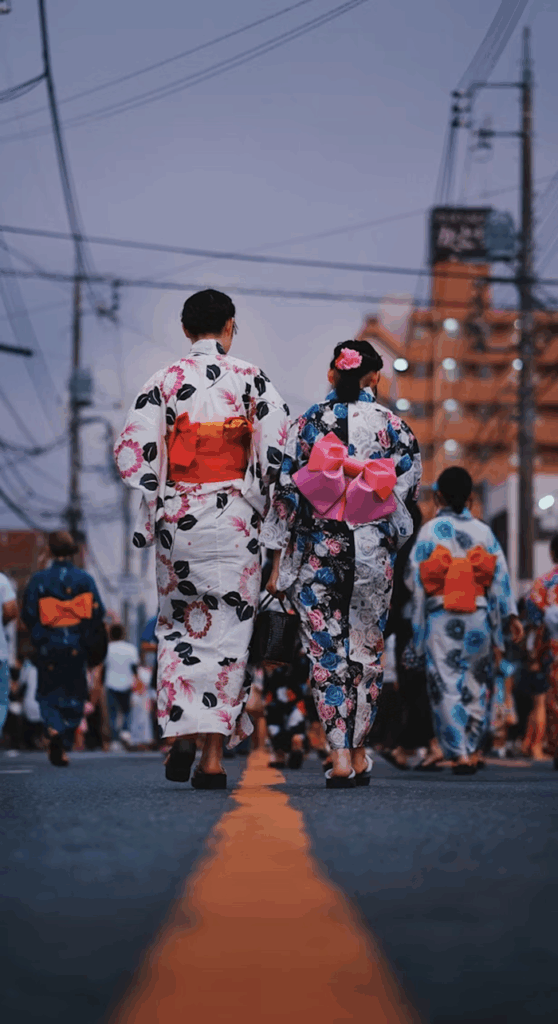
Ask most people outside Japan what a kimono is for, and the answer usually arrives already narrowed: a wedding, a coming-of-age ceremony, some once-a-decade occasion that calls for white gloves and formality. In Kyoto, the picture is different. Women there step out in 小紋 komon — a kimono patterned in a small design repeated evenly across the whole cloth — or in 紬 tsumugi, a nubby, hand-woven silk suited to daily wear, simply to run errands. In summer they wear 浴衣 yukata, a light, unlined kimono made for the heat; in winter, wool. The kimono, in other words, was never only formal wear. In Kyoto it still functions as a way of dressing for an ordinary day — one that happens to follow the calendar of the seasons rather than ignore it.
This article stays with that everyday register: how choosing a kimono by season works in practice, what the patterns and fabrics are actually doing, and what the whole habit feels like from the inside. The formal side of the kimono — the ranked types from uchikake down to tsumugi, and the weave traditions behind the cloth itself — is covered at length in a companion guide on this site.
What Wearing a Kimono Actually Feels Like
People who put on a kimono for the first time in years tend to describe the same small thing happening: the spine straightens on its own, and something in the posture quietly settles. None of that requires a special occasion.
Choosing a pattern or color to match the season carries a pleasure of its own — closer to turning the page of a diary than to getting dressed. Even in the plainest register, a komon worn for daily errands or a yukata worn to a summer festival, the act carries a small care for oneself that everyday Western dress doesn’t quite ask for. Worn this way, the kimono is less an outfit than a habit of paying attention — to the date, to the weather, to what the season outside the door is doing.
Kyoto, Where the Kimono Never Left Daily Life
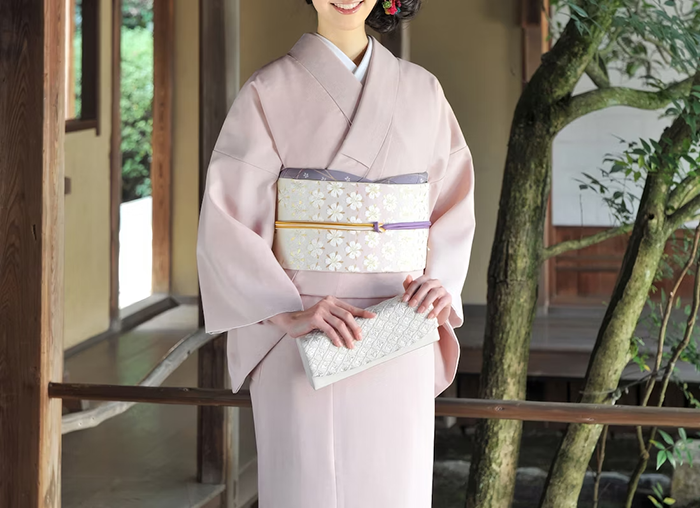
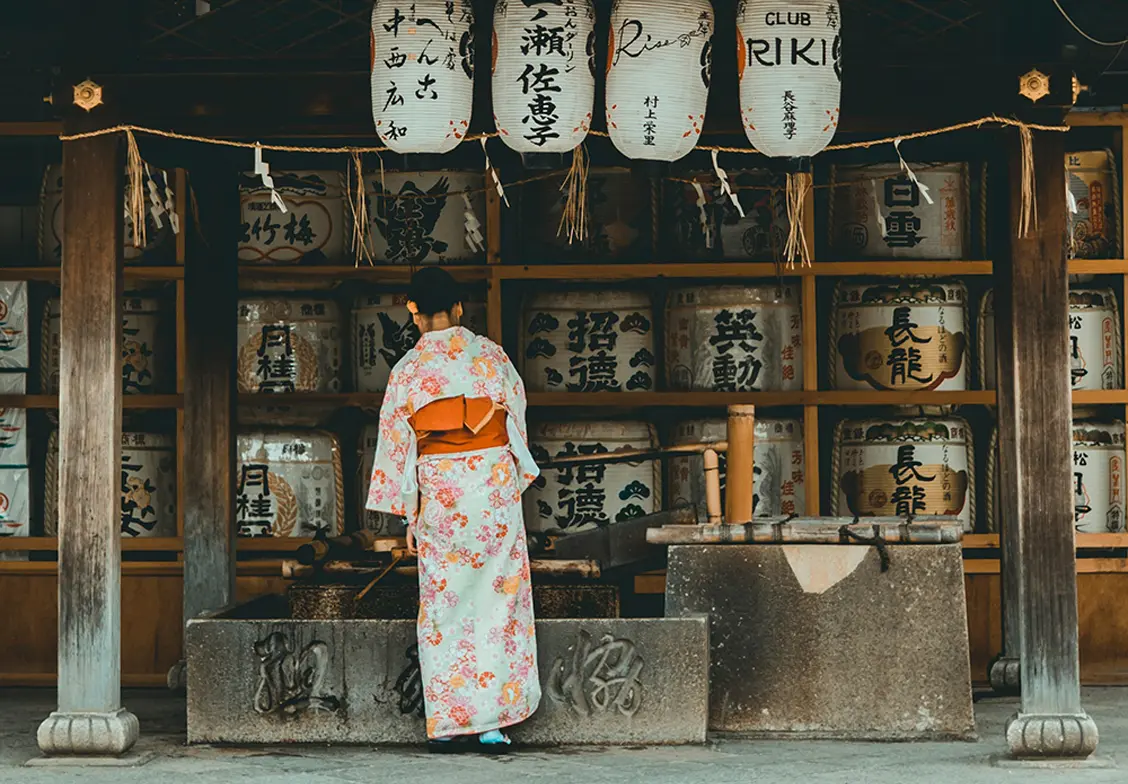
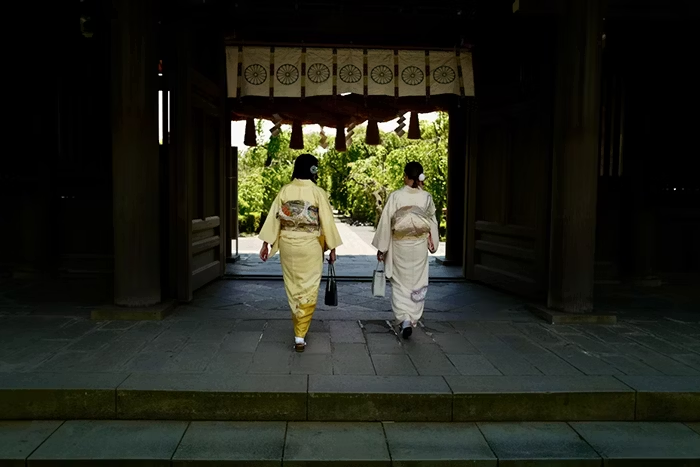
Walk through a Kyoto shopping street and the kimono on view are usually not the bright rental sets tourists wear for a day of sightseeing. They are quieter than that. This author has watched a woman pass by in tsumugi with a 羽織 haori — a short kimono jacket worn open over the robe — shopping bags in hand, and it was hard not to read the whole scene as evidence that the kimono there is simply part of living, not a costume put on for effect.
Another woman, on her way to a tea gathering, wore a restrained 付下げ tsukesage — a kimono whose pattern is deliberately understated, one register below the most formal wear. Both women carried the kimono the same unceremonious way, as an extension of an ordinary day rather than a departure from one.
Kyoto girls tend to absorb this by watching rather than by lessons — a mother’s or grandmother’s way of dressing, taken in over years rather than taught outright. It is a small, cumulative habit, repeated across a great many households, and it is a reasonable guess that habits exactly like this one are part of what gives the city as a whole its particular sense of poise.
The Types, Briefly — and Where to Read More
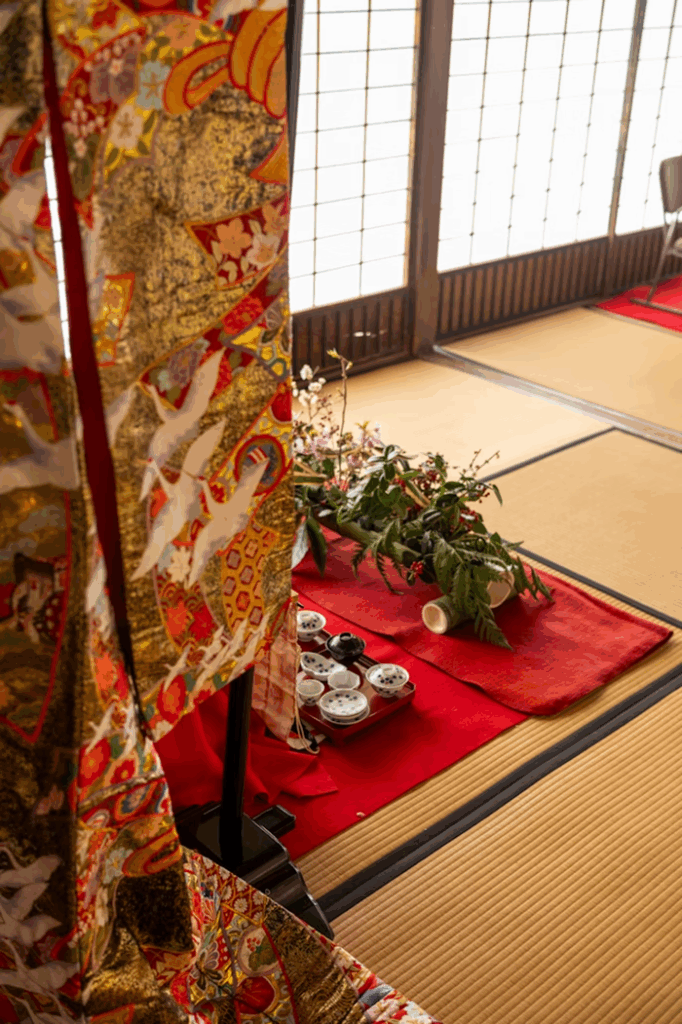
Kimono divide into more than ten commonly recognized types, each suited to a different setting: 打掛 uchikake, the elaborate outer robe worn by a bride; 黒留袖 kurotomesode, the most formal register a married woman wears; 訪問着 homongi and tsukesage for occasions a notch below that; komon and tsumugi for daily wear; yukata for summer. Because each type carries its own correct occasion, dressing for a given day in Kyoto is less a matter of taste than of simply knowing the rule — a komon for a meal with a friend, a homongi for a tea gathering, a tomesode for a wedding.
The full formality hierarchy, along with the weave traditions — Nishijin-ori, Hakata-ori, Yuki-tsumugi — that produce the cloth itself, is covered in a companion guide on this site; this article stays with the seasonal side of the kimono.
Fabric as a Way of Living Through the Seasons
Material changes a kimono’s character as much as pattern does. Silk carries a sheen that lends any kimono a certain refinement. Cotton is the fabric of daily wear, familiar and unfussy. Hemp lets air move through the cloth and is worn for its coolness in summer. Wool gives a soft warmth suited to winter. In recent years, polyester kimono have become common as well, favored by younger wearers mainly because they are easy to wash at home.
The logic behind these choices is practical rather than decorative. A hemp yukata worn to a summer festival lets a breeze through even after the wearer has broken a sweat; wool worn in winter takes the edge off cold air. Fabric, chosen this way, is less a question of material than a form of accumulated knowledge about how to get through each season comfortably.
Koromogae: Changing the Robes With the Calendar
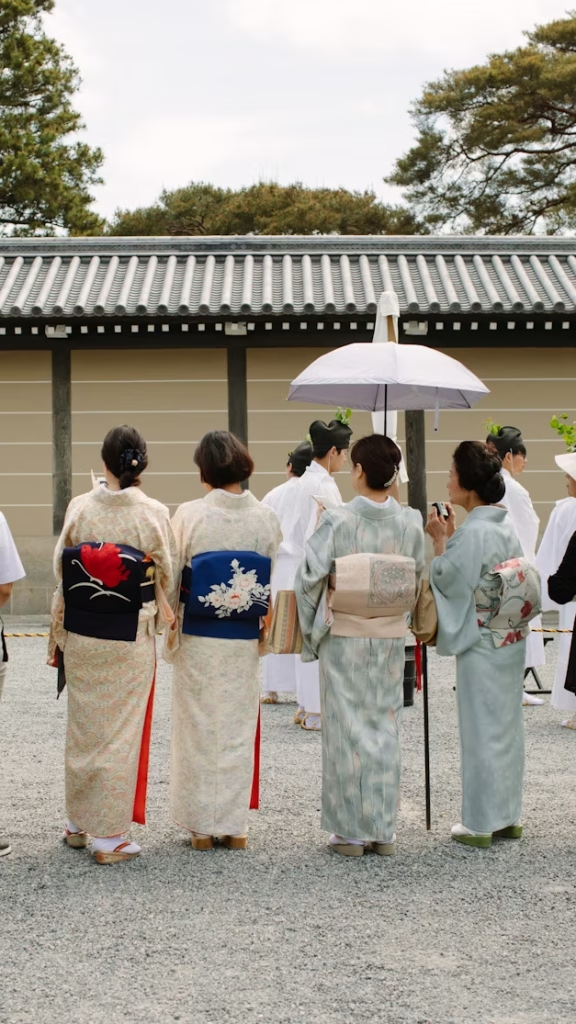
The kimono follows a fixed seasonal calendar known as 衣替え koromogae, literally “changing of clothes.” From October through May, the kimono worn is 袷 awase, fully lined. In June and September, the lighter, unlined 単衣 hitoe takes over. At the height of summer, July and August, the kimono is 薄物 usumono — thin, unlined cloth such as 絽 ro or 紗 sha, both loosely woven silks meant to let air through.
The rotation is a custom, but it developed as a practical one: a hitoe worn during the rainy season keeps the wearer light despite the humidity, and a usumono chosen for the last heat of summer produces a freshness that seems to fold the wearer into the surrounding scenery rather than fight it. Koromogae, in this sense, is less a wardrobe rule than a habit of staying in step with the season as it actually feels outside the door.
Patterns That Name the Season
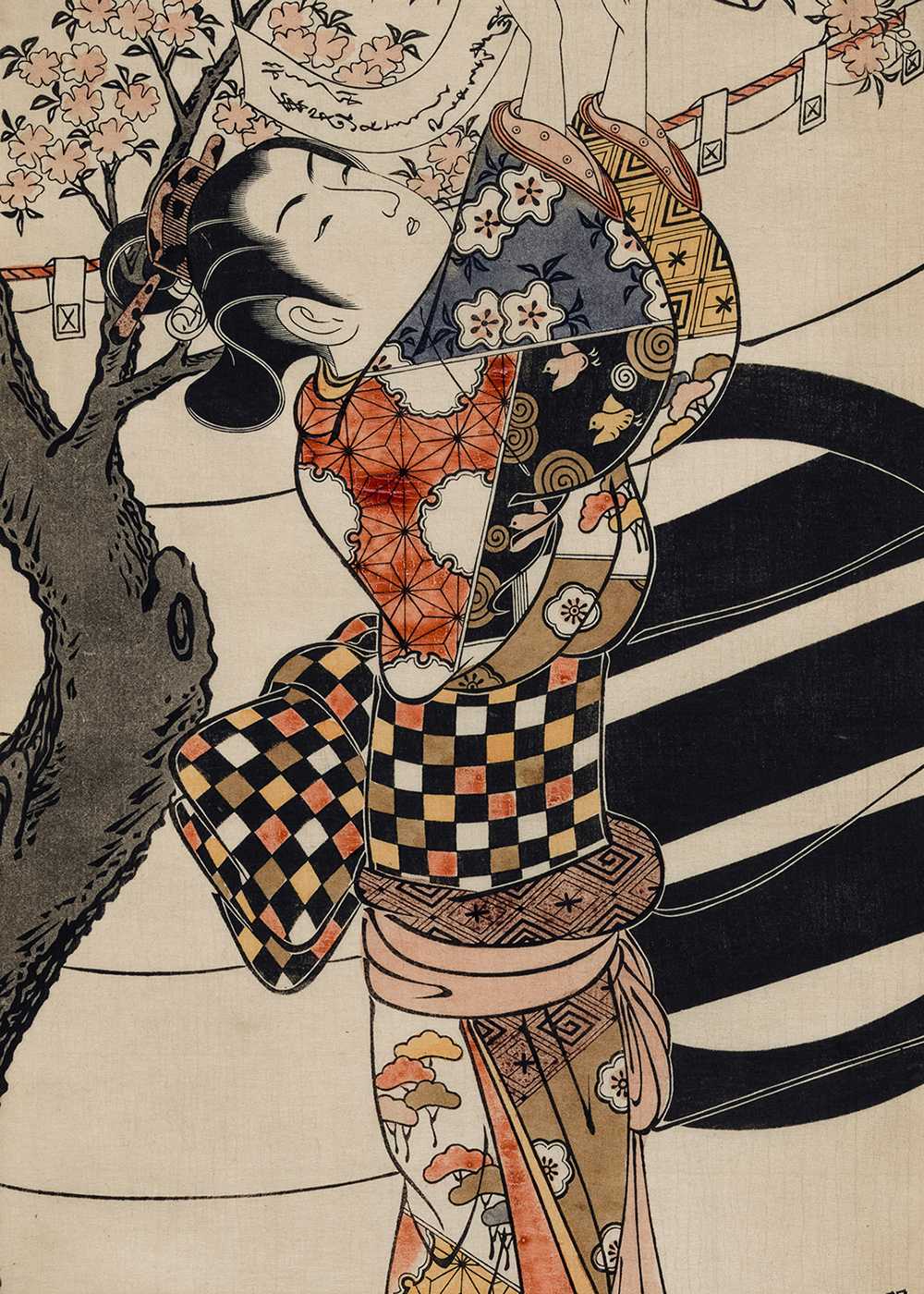
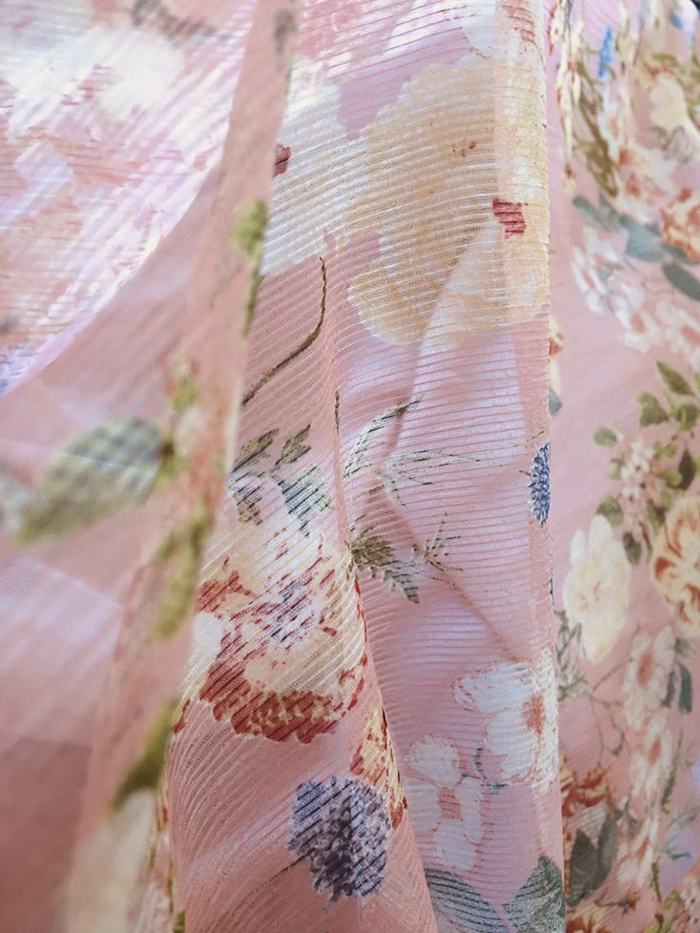
Kimono patterns are drawn directly from the natural world, and each season carries its own established vocabulary of motifs: 桜 sakura, cherry blossom, and 藤 fuji, wisteria, for spring; 流水 ryusui, flowing water, and 扇 ougi, the folding fan, for summer; 紅葉 momiji, maple leaves, and 菊 kiku, chrysanthemum, for autumn; 雪輪 yukiwa, snow rings, and 南天 nanten, nandina, for winter. 金魚 kingyo, goldfish, and 朝顔 asagao, morning glory, appear too, drawn from smaller, more domestic moments of the year rather than the grand seasonal set-pieces.
Worn well, the effect is that the pattern seems to speak for the season rather than simply decorate the cloth. This author once watched a woman in Kyoto wearing a komon patterned with chrysanthemums against a backdrop of autumn maple leaves, and the two — dyed cloth and living tree — blended into a single scene closely enough that it was genuinely hard to say where the print ended and the actual autumn began. A sakura-patterned obi worn to a spring hanami gathering has much the same effect in reverse: it tends to lift the mood of the occasion itself, and the conversation along with it.
In Closing
At its core, the kimono is one of the places Japan’s four seasons and its sense of aesthetics show up in daily dress. Learning the small rules — which fabric belongs to which month, which pattern belongs to which season — turns the question of what to wear into a genuine pleasure rather than a chore, and it is a waste to save the garment for only the handful of days a year that call for formal dress. Worn instead on an ordinary walk, or for an evening’s shopping, it changes, in a small way, how a familiar street looks. On the next free day, choosing a kimono over Western clothes, purely for the change of it, is worth trying.
KOTO is a journal of Japanese craftsmanship, culture, and the aesthetic sense behind them.
- SHARE
-


( daily-life )