






Japonisme: How 19th-Century Japan Captivated Western Art
Long before social media, before the internet itself, the West already had an image of Japan: a distant culture of the Orient, full of exotic appeal. What is less often said is how far that fascination actually went. Japanese art and design did not simply intrigue Western eyes — they reshaped Western painting, fashion, and interior taste. The name for that influence is Japonisme, and its story runs from Parisian easels to an island nation forced open by American warships.
What Is Japonisme?
Japonisme names the wave of enthusiasm for Japanese art and culture that swept the West from the late 19th into the early 20th century. The word is French: Japon, “Japan,” plus -isme. In Japan the same movement is sometimes rendered back into Japanese as 日本趣味 nihon shumi, “a taste for Japan.”
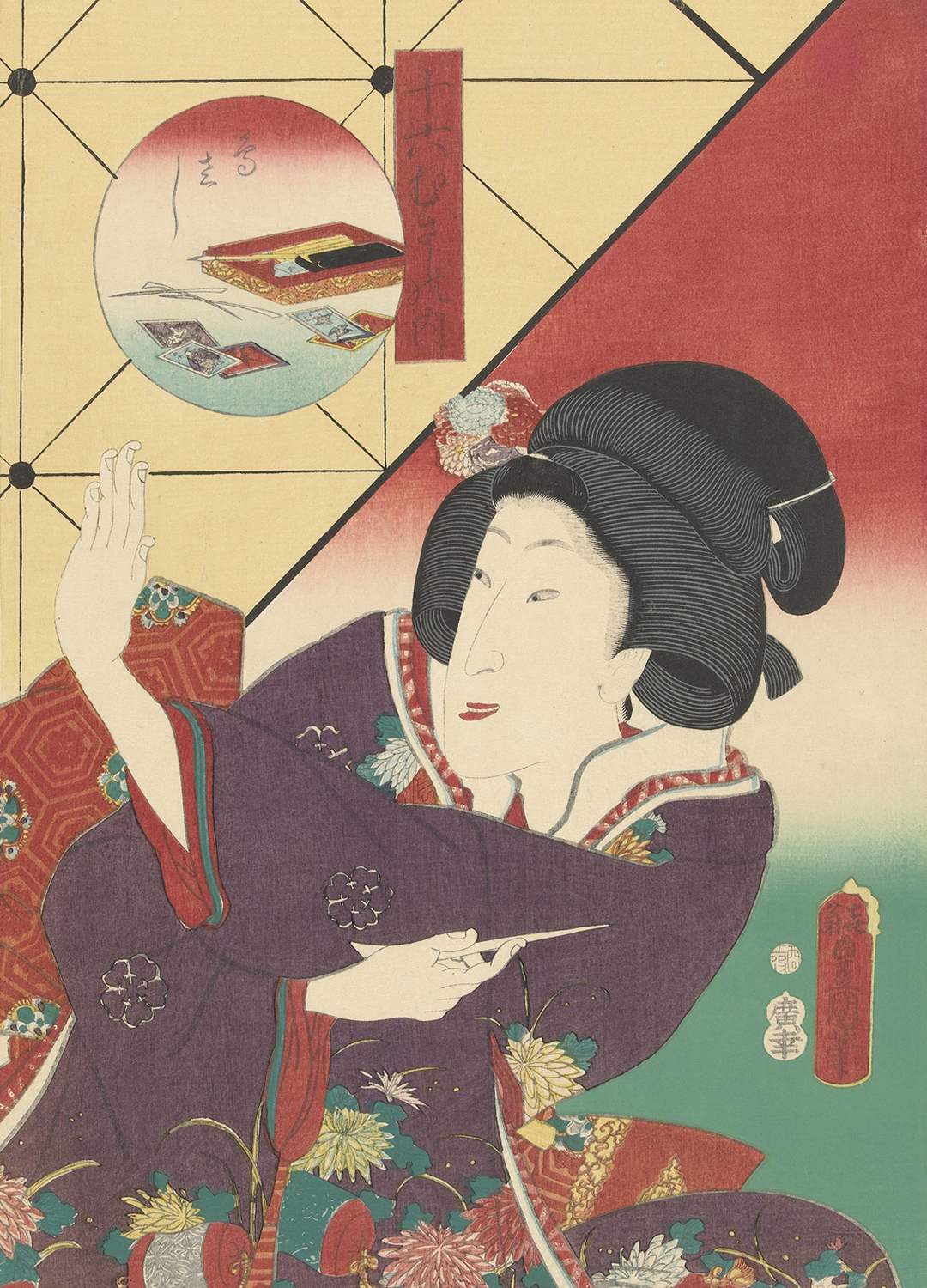
At its core, Japonisme meant something more specific than admiration. It was the practice of studying the creative principles behind Japanese art — 浮世絵 ukiyo-e woodblock prints, ceramics, lacquerware — and absorbing them deeply enough to carry them into one’s own work. The value lay not in copying Japan but in learning from it and making something new with the lesson.
A related but distinct term, Japonaiserie, covers the more surface-level fashion of the same period: working Japanese motifs directly into a painting or a room’s décor, or simply collecting Japanese art objects. The distinction is worth holding onto. The same enthusiasm for Japan produced both a discipline and a decorating trend, and 19th-century Europe did not always bother to separate them.
Japonisme has not stayed in the 19th century. It remains standard material in Japanese junior-high and high-school art textbooks, and it continues to fill museum exhibition calendars today.
Where Japonisme Took Hold
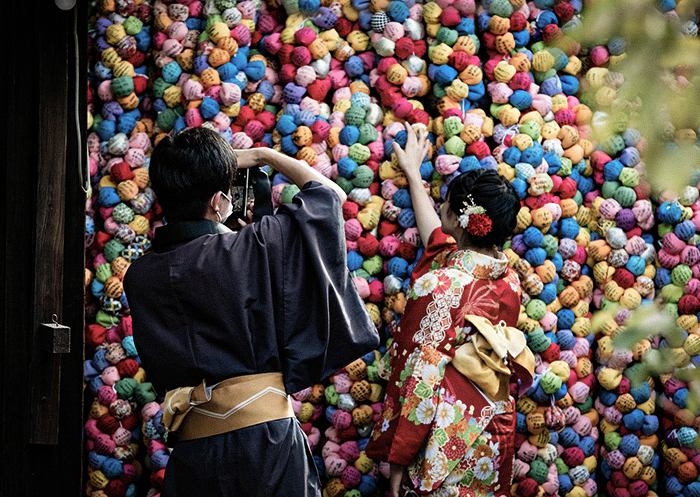
Which specific strands of Japanese culture actually became the raw material for Japonisme? Three are worth examining closely: kimono, ukiyo-e, and ceramics.
Kimono
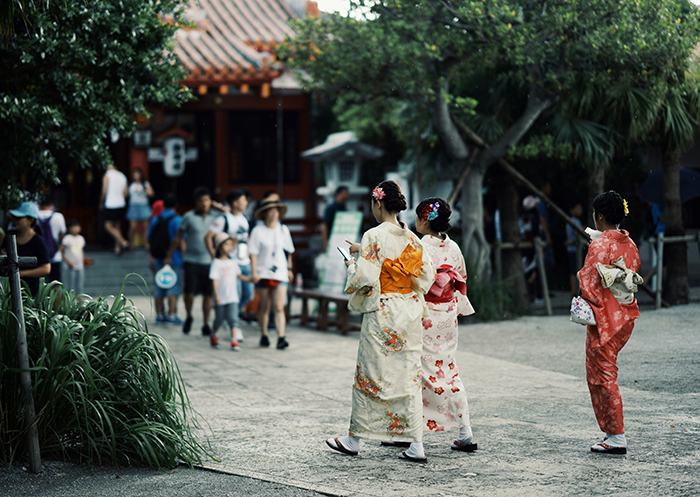
The silk cloth and nature-drawn patterns unique to kimono caught Western attention immediately. Its construction was just as striking: kimono are cut in straight lines, a method that threw into sharp relief how different it was from the three-dimensional tailoring of Western dress.
Kimono, Seen Through Japonisme
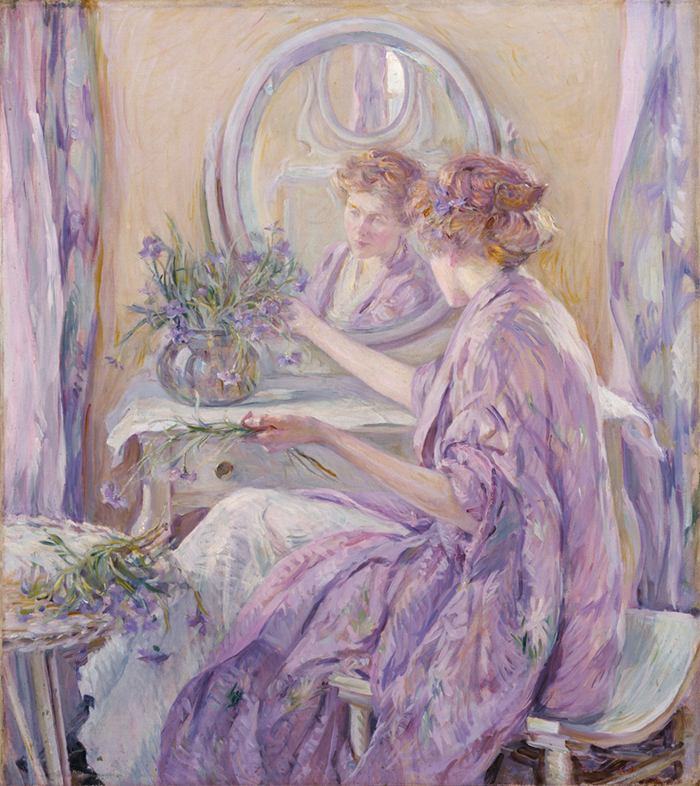
In The Violet Kimono (1910), the American painter Robert Lewis Reid — now held by the Smithsonian American Art Museum — shows just how freely kimono were worn in the West at the time: closer to a dressing gown than to the garment’s original form.
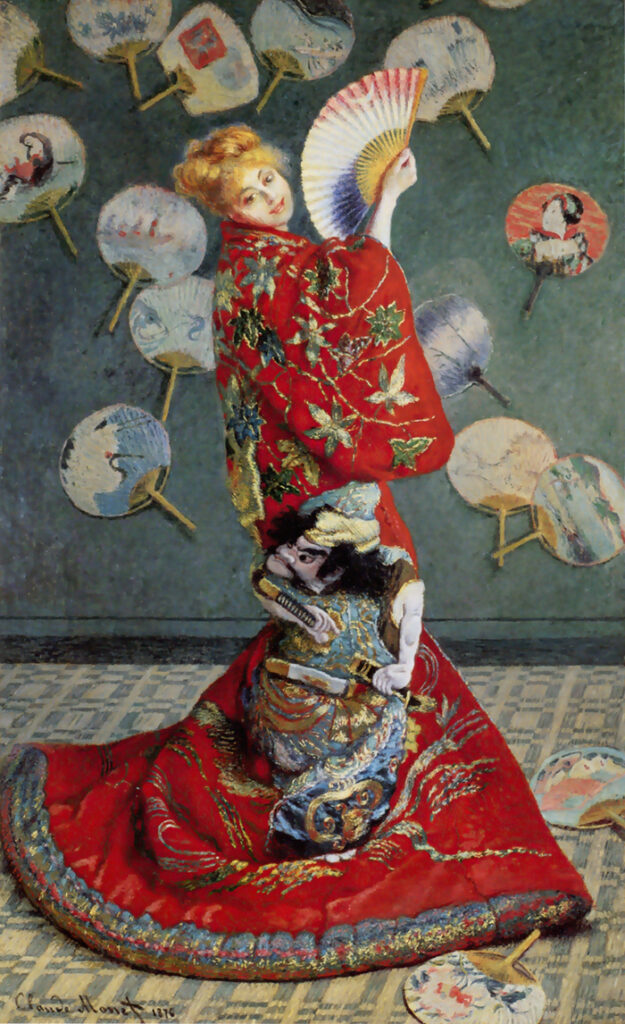
Claude Monet’s La Japonaise (1876, Museum of Fine Arts, Boston) makes the same point on a grander scale. The model is Camille, Monet’s first wife, in a red kimono embroidered with a samurai figure and maple leaves, a folding fan (扇子 sensu) in her hand and a round fan (団扇 uchiwa) worked into the background. Japanese motifs are layered into nearly every part of the canvas — one of the clearest single images of what Japonisme wanted from Japan.
Ukiyo-e
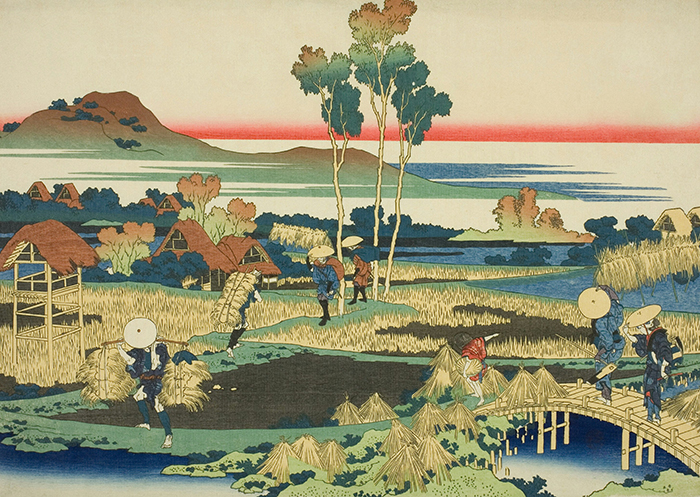
Bold composition, assertive line work, and a flatness that set aside Western perspective — Japanese ukiyo-e woodblock prints hit European painting like a jolt. Their color was just as unfamiliar: prints achieved a vividness that was light rather than heavy, nothing like the built-up density of oil paint.
Vincent van Gogh, among the Impressionists, was one of the artists most captivated. While living with his brother Theo, he assembled a personal collection of ukiyo-e, and is said to have held a particular fondness for the prints of Katsushika Hokusai. In 2025, the Tokyo Metropolitan Art Museum ran an exhibition pairing van Gogh’s own paintings with his ukiyo-e collection.
The Print and the Copy, Side by Side
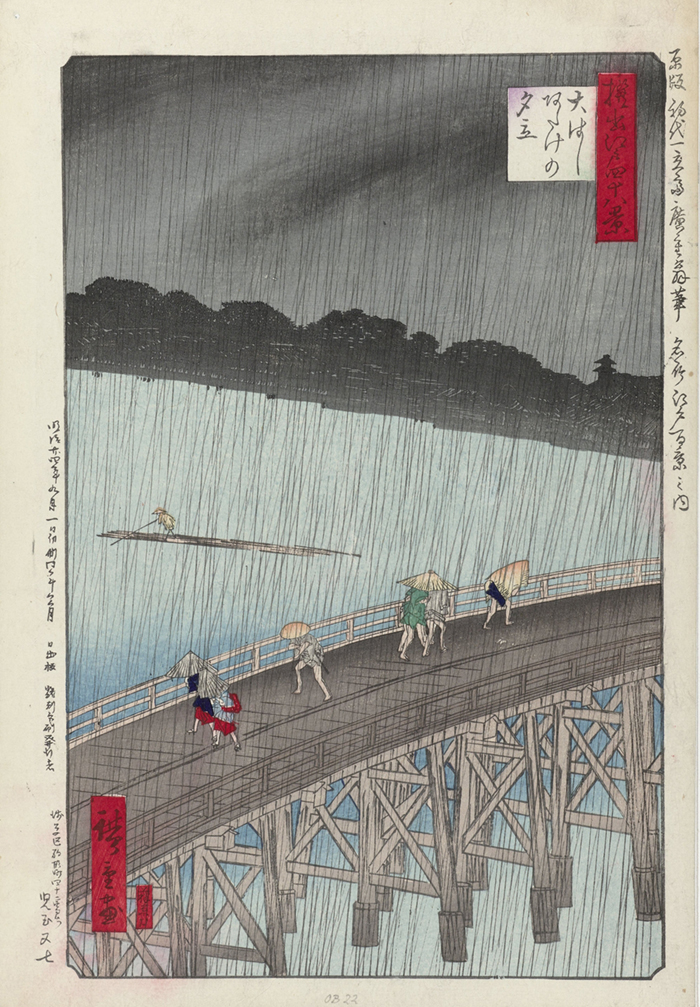
Utagawa Hiroshige’s Sudden Shower over Shin-Ōhashi Bridge and Atake (大はしあたけの夕立, 1856) — the 52nd print in his series One Hundred Famous Views of Edo — shows figures crossing the Ōhashi bridge over the Sumida River in a sudden downpour. It is held today by the Edo-Tokyo Museum, among other collections, and Hiroshige’s device for rendering rain as straight diagonal lines shocked viewers in Japan and abroad alike.
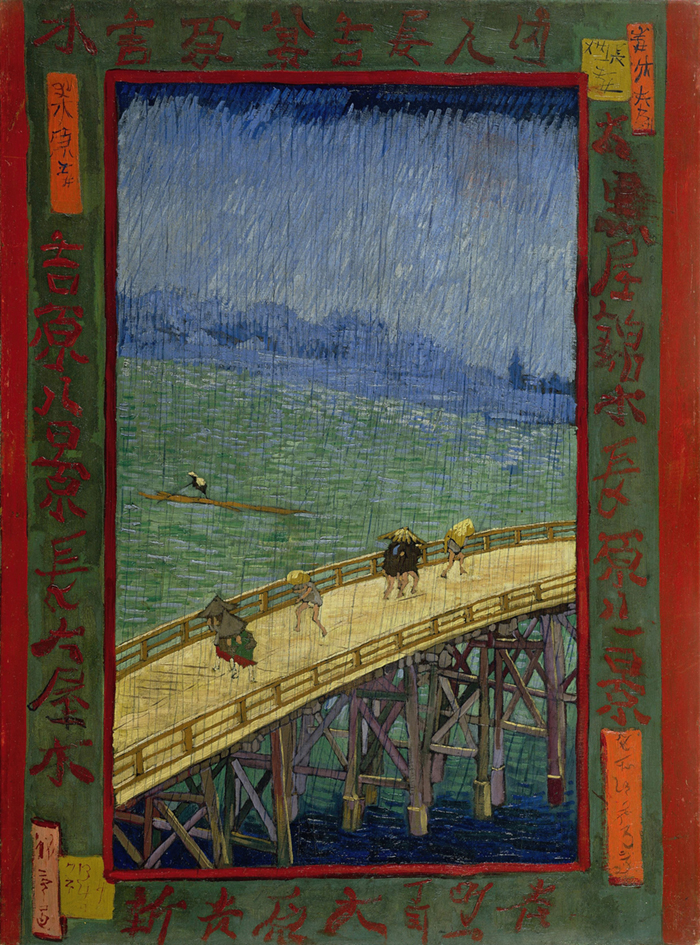
Van Gogh painted his own version in oil: Japonaiserie: Bridge in the Rain, after Hiroshige (1887, Van Gogh Museum). The bridge and its crossing figures are reworked with the volume and weight of oil paint, a visibly different language from Hiroshige’s flat planes. Look closely and there is a further detail: van Gogh framed the scene with dark-green-bordered panels filled with red characters reading roughly 吉原 (Yoshiwara) and 百景 (hyakkei, “hundred views”) — not fully legible, but striking evidence that van Gogh was working with kanji directly rather than simply admiring the print from a distance.
This author first learned of the Hiroshige–van Gogh connection from a junior-high art textbook, and still remembers the jolt of seeing the same subject rendered in two entirely different visual languages.
The Print Van Gogh Reimagined as an Oiran
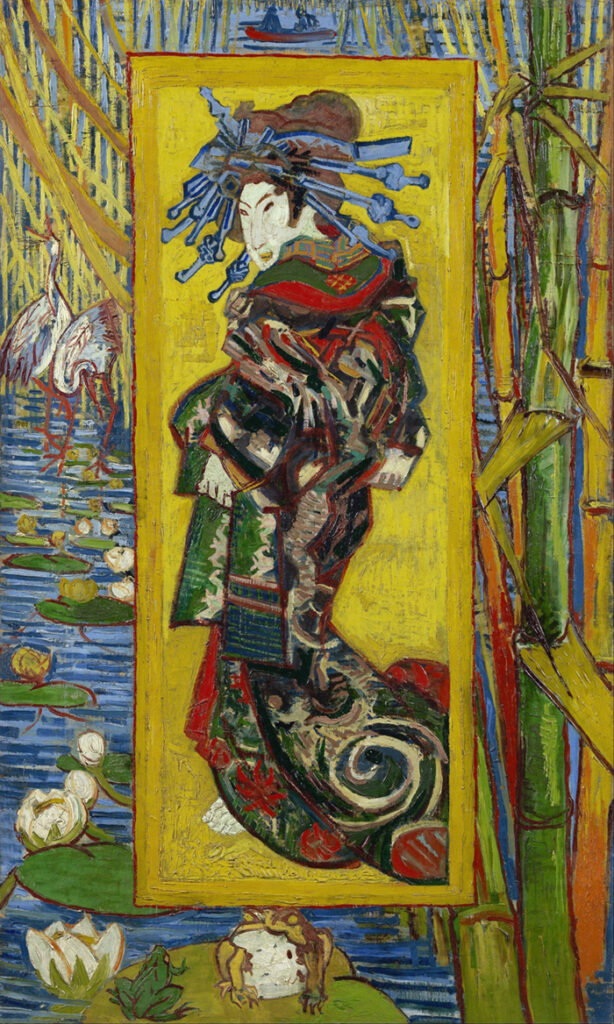
Van Gogh’s Oiran, after Keisai Eisen (花魁, 1887, Van Gogh Museum) draws on a print Keisai Eisen made in the 1820s or 1830s of an oiran — a high-ranking courtesan — in an uchikake robe patterned with clouds and a dragon. Van Gogh’s painting was used as the poster image for a 2017 exhibition at the Tokyo Metropolitan Art Museum, 『ゴッホ展 巡りゆく日本の夢』, loosely “Van Gogh: The Japan He Dreamed Of.” Around the oiran, van Gogh worked in bamboo, cranes, and lotus — Japanese motifs layered into the background rather than confined to the central figure.
Japan Was Learning From the West at the Same Time
The exchange ran in both directions. As Japan absorbed Western ways of life through the Meiji era (1868–1912), Japanese painters were absorbing Western painting too. Techniques believed to have entered Japanese art from the West for the first time include:
– Painting without outlines
– Building volume through planes of color rather than line
– The heavy, built-up brushwork particular to oil paint
Ceramics
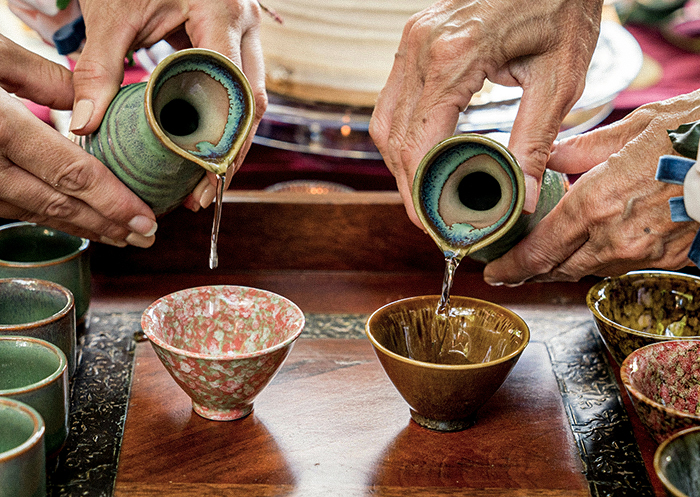
Japanese ceramics were on wide display at the 1867 Paris Exposition Universelle, and several are said to have struck Western viewers especially hard:
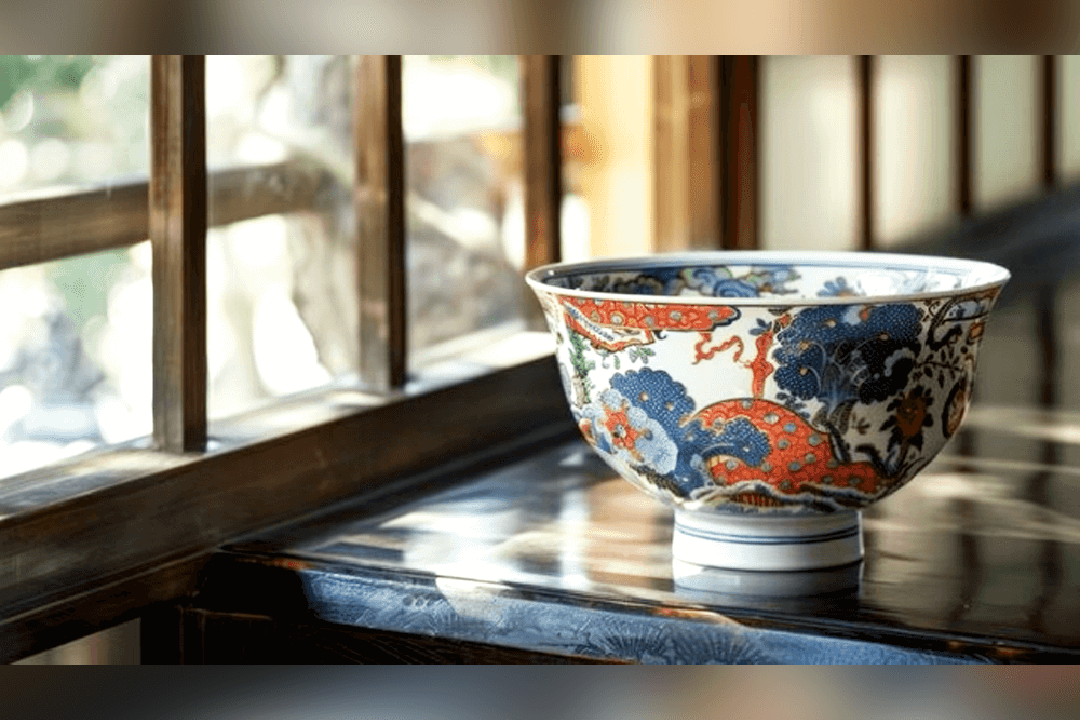
– 薩摩焼 Satsuma ware — prized for its finely detailed 金襴手 kinrande, gold-brocade decoration. It came in two distinct styles: Kyo-Satsuma, ornate and painterly, and Osaka-Satsuma, more commercial in intent but still refined.
– 有田焼・九谷焼 Arita ware and Kutani ware — known for vivid red-glaze and polychrome decoration (赤絵 akae). The traditional akae techniques and designs are themselves said to have influenced Western art in turn.
– Kobe-e (神戸絵付) — finely worked porcelain imitating Satsuma and Kutani ware, exported through the port of Kobe in Hyogo Prefecture, which is where the name comes from.
Through the Meiji era, the government pushed ceramic exports as part of 殖産興業 shokusan kogyo, its policy of promoting new industry, and Japanese ceramics reached Western hands in ever greater numbers as a result.
Why Japonisme Happened When It Did
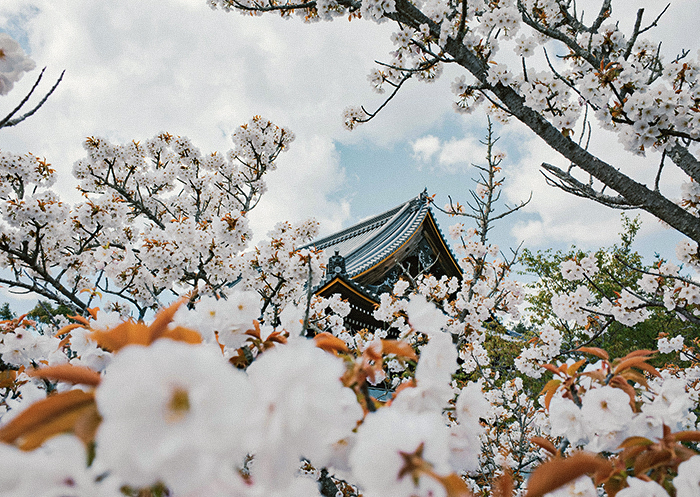
Japonisme’s rise traces directly back to Japan’s own history, from the last years of the Edo shogunate into the Meiji era. The hinge point is a single word: 開国 kaikoku, “the opening of the country.”
Japan Behind a Closed Door
For part of the Edo period (1603–1868), Japan pursued a foreign policy known as 鎖国 sakoku, “national seclusion.” It served two purposes. The first was to prevent the spread of Christianity, which the Tokugawa shogunate saw as a threat to the stability of its rule. The second was to keep Catholic powers from using missionaries as a foothold for invasion and colonization — a fear widely held in Japan at the time.
Sakoku did not mean total isolation. Trade and diplomacy continued, but only with three partners, and only under the shogunate’s direct management: China (through the Ming and later Qing dynasties), Korea, and the Netherlands.
The Black Ships
That arrangement held until 1853, when the American naval officer Matthew Perry arrived in Japan without warning. His fleet of 黒船 kurofune, “black ships,” threw the country into confusion. Perry wanted Japan opened as a base for American trade and supply, and backed the demand with an overwhelming, modern show of force. The shogunate agreed to open the country — without first securing the Emperor’s consent.
Opening the Country, Opening the Art World
Once the country opened, Japanese art and craft objects began crossing the sea in real quantity. Where Japan had once been known in the West only as ジパング Zipangu, a name wrapped in mystery, its actual craftsmanship now reached Western eyes directly, through export.
The 1867 Paris Exposition Universelle, at which the Edo shogunate chose to exhibit, marks the moment Japonisme took hold as an identifiable movement. The timing is worth noting: Japonisme’s rise coincided almost exactly with Japan’s own transition from the Edo period into the Meiji era, when the country was pushing hard toward Westernization and 殖産興業 shokusan kogyo to catch up with the Western powers. It amounts, in this author’s view, to two cultures absorbing each other’s lessons at the same moment, from opposite directions.
For more on kaikoku and Japan’s passage from the Edo period into the Meiji era, see our companion article on the opening of Japan (in Japanese).
Japonisme, Seen From the Present
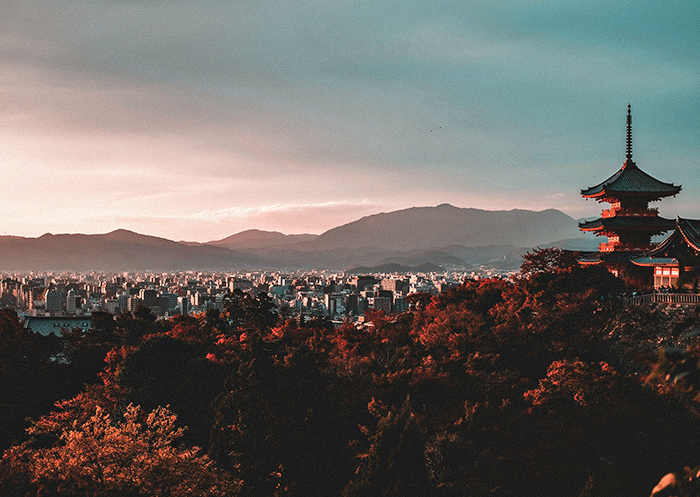
In 2026, Japan draws enormous international attention as a travel destination. What is it that visitors from abroad are actually drawn to?
– Japan’s four seasons — cherry blossoms and autumn foliage, and the cultural practice of hanami built around them, remain a major draw.
– Anime and manga — works spanning every genre have become global hits, and many visitors buy figures and character merchandise as souvenirs.
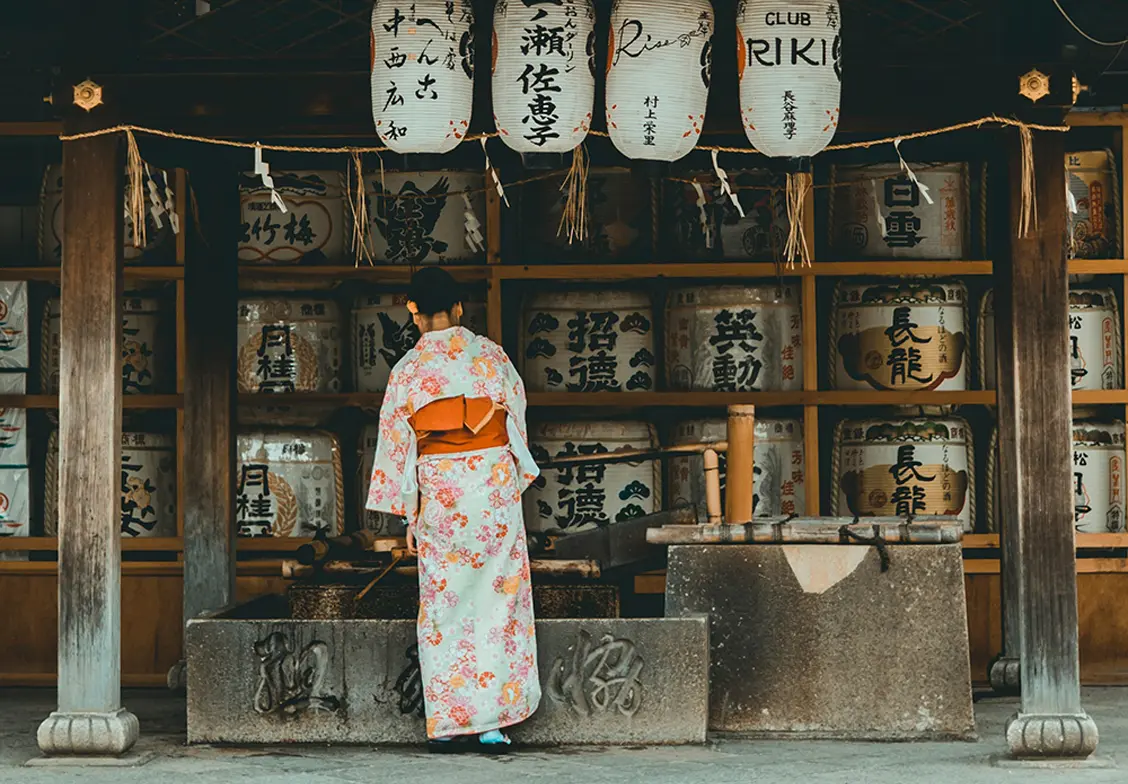
– Hands-on culture — kimono dressing, tea ceremony, and other ways of experiencing Japanese culture directly are in demand, and dedicated “ninja experience” programs have become especially popular.
– Sweets and cosmetics — prized for taste and quality, Japanese confectionery and cosmetics are popular enough that many visitors take part in 爆買い bakugai, buying in bulk, whether for themselves or as gifts.
What is listed here amounts, in effect, to a modern Japonisme.
In Closing: Japonisme Was the West’s Longing for Japan, Made Visible
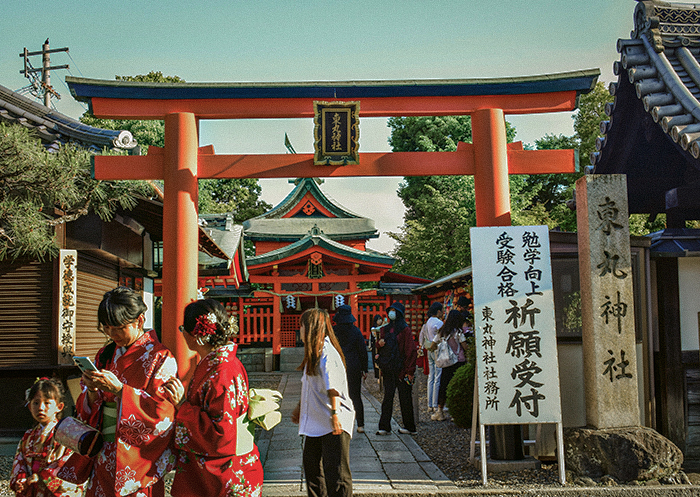
Japonisme did more than introduce Japanese culture abroad — it happened to land squarely on a turning point in Japan’s own history. And it unfolded during the very years Japan was itself absorbing Western culture through its own civilization and enlightenment. Two cultures taking in the best of each other at exactly the same time: it is a genuinely interesting symmetry.
The importance of cross-cultural, mutual understanding is still being asked of the world today. If this account of Japonisme has done anything toward that understanding, it has done its job.
KOTO is a journal of Japanese craftsmanship, culture, and the aesthetic sense behind them.
- SHARE
-


( daily-life )