





Kimono: A Guide to the Types, the History, and the Textiles Behind Japan’s National Dress
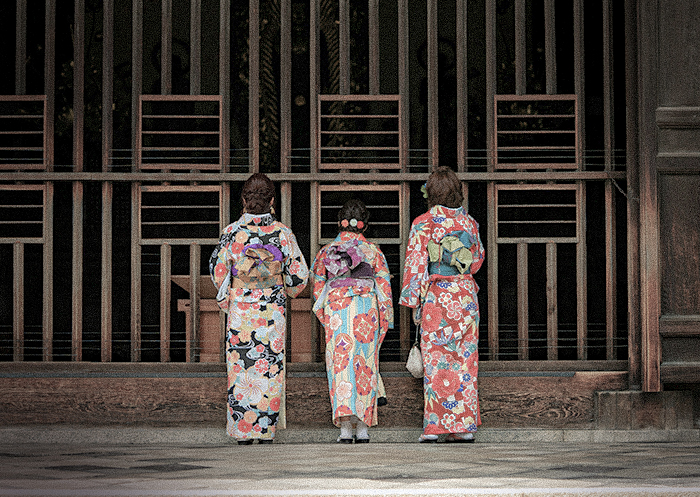
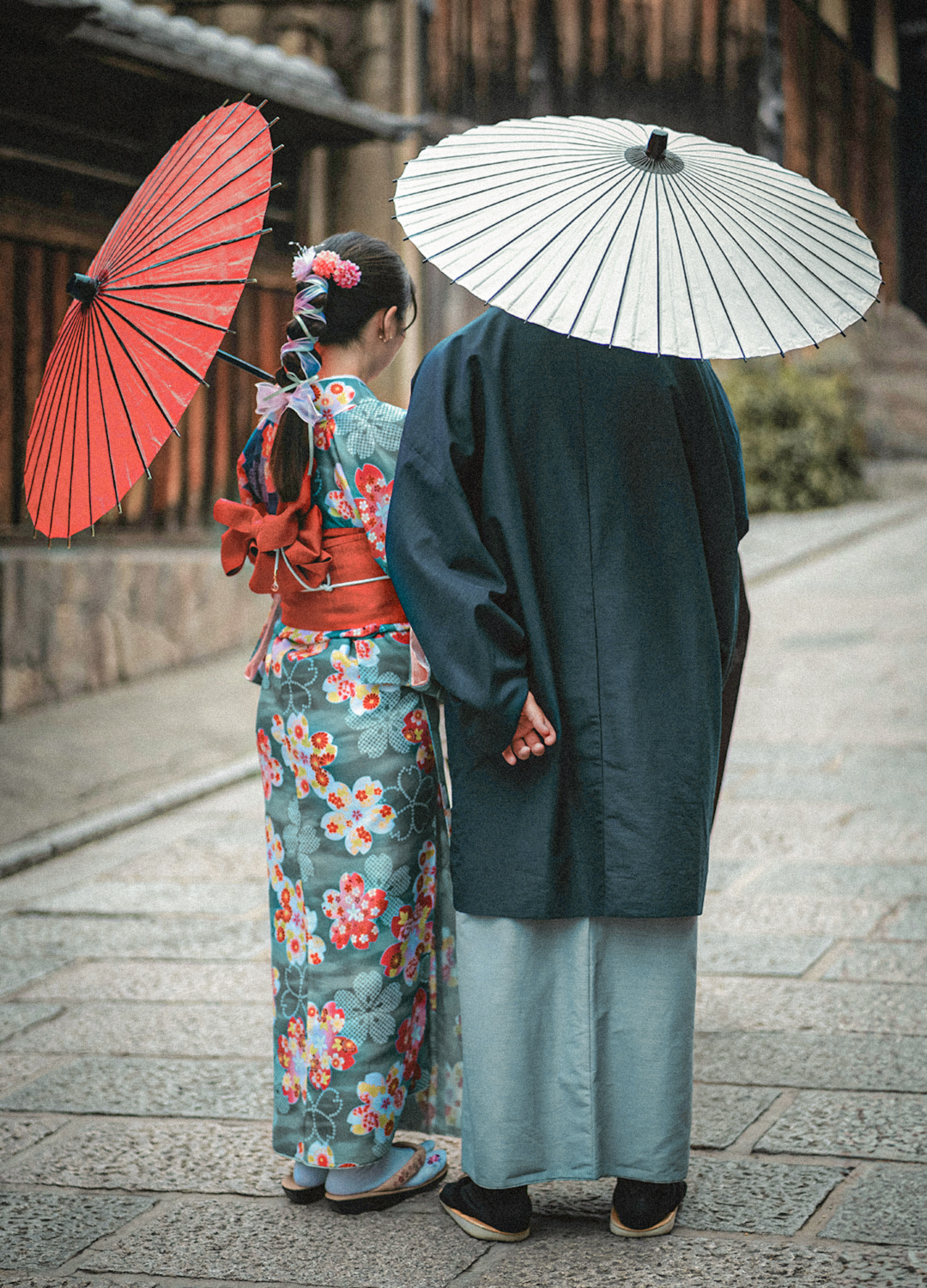
Ask someone outside Japan to name one image of Japanese culture, and the kimono is usually among the first offered — the shape, the sash, the color and pattern of the cloth. Fewer people could explain why it looks the way it does, or that the single word “kimono” actually covers a hierarchy of formality that a Japanese wearer reads instantly and a visitor rarely can.
This article sets out what a kimono is, how the garment reached its present form, and the weave traditions — Nishijin-ori, Hakata-ori, Yuki-tsumugi — that give the cloth itself its character.
What “Kimono” Means in Japan
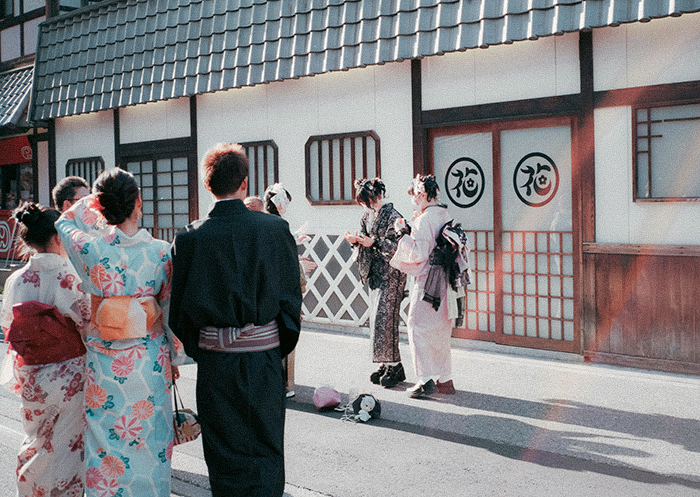
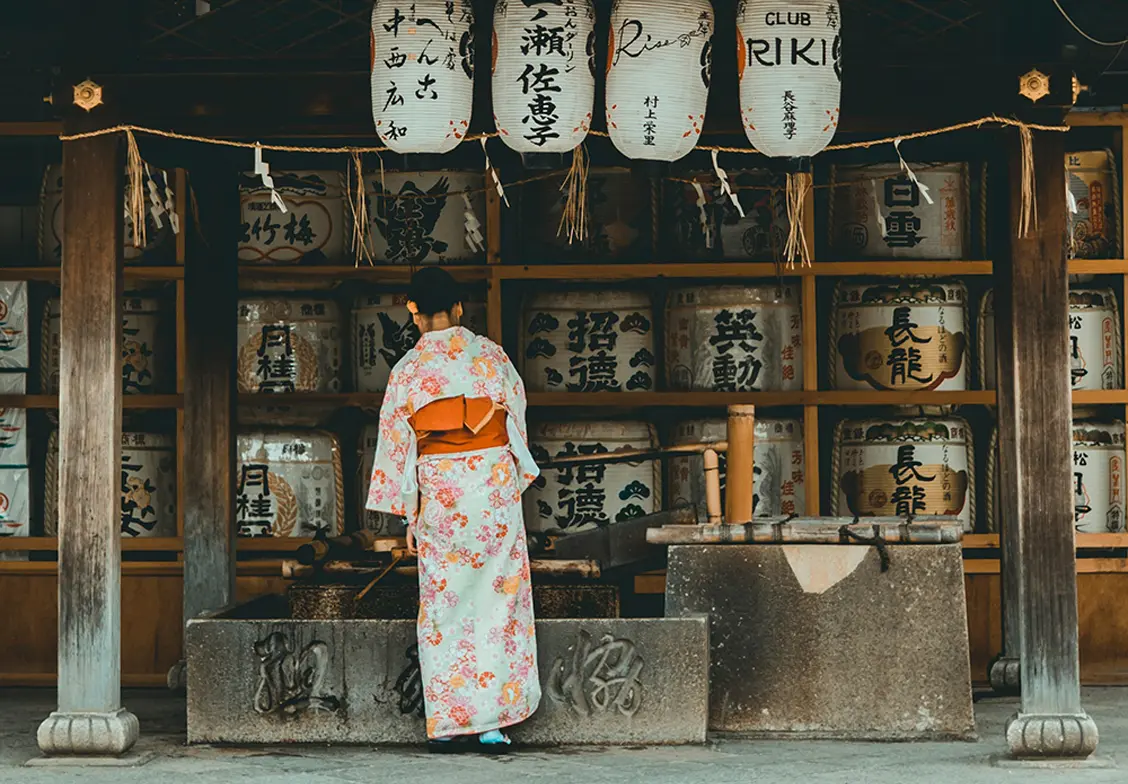
A 着物 kimono is, in its simplest description, a rectangle of cloth wrapped around the body and held closed with a long, narrow sash called an 帯 obi.
“Kimono” once meant, quite literally, something worn — clothing in general. Today the word has narrowed to mean specifically Japan’s traditional dress.
Both men’s and women’s kimono are cut using 直線裁ち chokusen-dachi, straight-line cutting: every panel of the garment is a straight rectangle, with no curved seams. Two practical qualities follow from that method:
– No cloth is wasted in the cutting — the entire bolt goes into the garment
– Because the garment is a set of straight panels folded and tied rather than shaped to a body, it can be adjusted at the point of dressing to fit a wide range of heights and builds
Kimono, Wafuku, and Gofuku: Three Words, Three Origins
Two other words are often used as though they were plain synonyms for kimono, and each carries a slightly different history.
和服 wafuku — literally “Japanese clothing” — is close to a synonym for kimono today. The word itself, however, is a product of the Meiji era (1868–1912): once Western dress arrived in Japan and needed a name, 洋服 yofuku, it created wafuku as the counterpart term.
呉服 gofuku strictly means bolts of woven cloth — 反物 tanmono — rather than the finished garment. The word preserves a memory of trade: it names 呉 Go, or Wu, an ancient Chinese kingdom credited with bringing weaving technique to Japan. In the Edo period (1603–1868), merchants who dealt in silk bolts opened shops called 呉服屋 gofukuya, and as those shops began tailoring the cloth into finished kimono as well, “gofuku” came to be used for the garment itself — a usage that has lasted into the present.
A Short History of the Kimono
The kimono did not begin as a kimono. Through the Nara period (710–794), both men and women in Japan appear to have worn something closer to a one-piece dress.
The shape recognizable today emerged in the Heian period (794–1185), the era in which a distinctly Japanese court culture took hold. The straight-line cutting method was developed within that shift.
By the Edo period, kimono-making had advanced enough that the garment doubled as a work of decorative art, not clothing alone. A fine kimono became a family asset, handed down across generations. That habit persists in one specific garment today: a 振袖 furisode, the long-sleeved kimono worn by unmarried women, is still commonly kept and worn within a single family. The furisode this author’s grandmother bought has been worn by four women in the family — the author’s mother, the mother’s cousin, an older sister, and the author herself.
The Meiji era brought Western dress into everyday life, and today most people in Japan wear Western clothing day to day. The kimono has held on at specific thresholds instead — ceremonies, weddings, festivals. Recently it has also picked up a more casual, mixed register: worn with lace accessories or sneakers rather than the traditional full set.
The Types of Kimono, Ranked by Formality
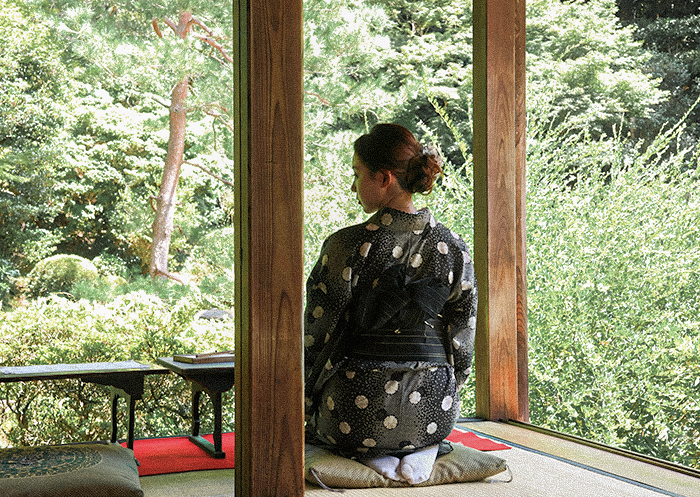
Kimono carry a formality ranking called 格 kaku, roughly “rank,” and choosing correctly for the occasion’s TPO — time, place, and occasion — is treated as a basic courtesy. From most to least formal:
Formal Dress: 礼装着 reisōgi
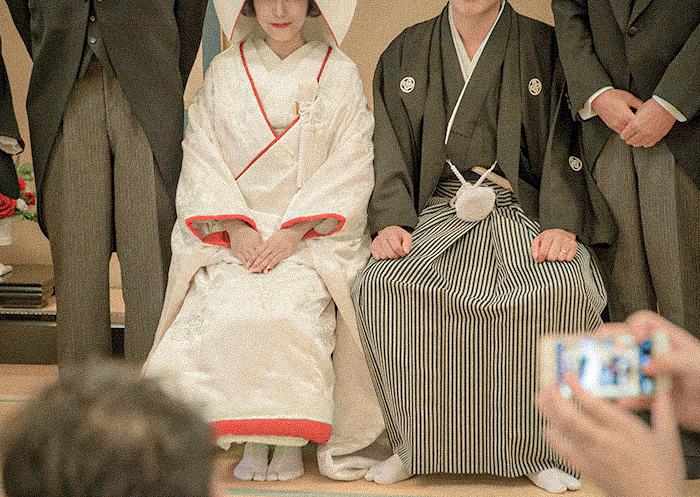
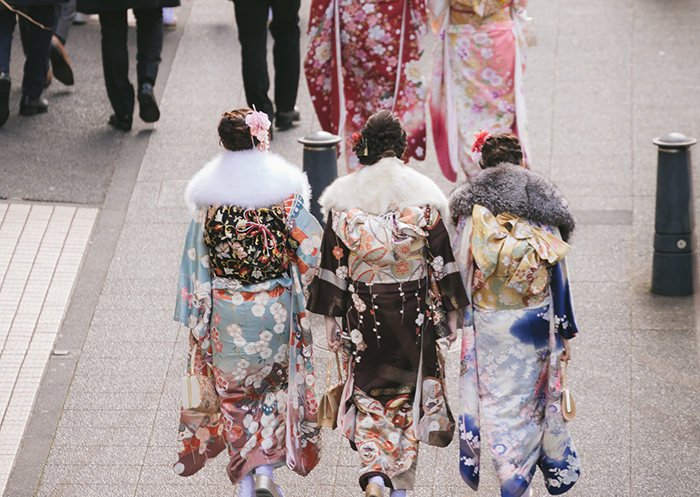
The highest rank, worn at weddings, funerals, the 成人式 seijin-shiki (Coming-of-Age ceremony), formal matchmaking meetings, and official receptions.
– 打掛 uchikake — worn chiefly by brides, in white (shiromuku) or in color
– 黒留袖 kurotomesode — a black kimono with no pattern woven into the ground cloth and an auspicious design confined to the hem. It is the most formal kimono a married woman wears, reserved at a wedding for the immediate family of the bride and groom, or the go-between’s wife
– 本振袖 hon-furisode — the most formal kimono for an unmarried woman, with long sleeves and bold color and pattern. It is the garment most associated with the Coming-of-Age ceremony
– 喪服 mofuku — a matte black kimono marked with 五つ紋 itsutsumon, five family crests placed at the back, both chest panels, and both sleeves, worn by mourners at a funeral. Unlike kurotomesode, it carries no pattern at all
– 黒羽二重五つ紋 kuro-habutae itsutsumon — men’s formal dress: a glossy black 羽二重 habutae silk robe and matching outer jacket, both marked with the five crests, worn over a striped 袴 hakama
Semi-Formal Dress: 略礼装着 ryaku-reisōgi
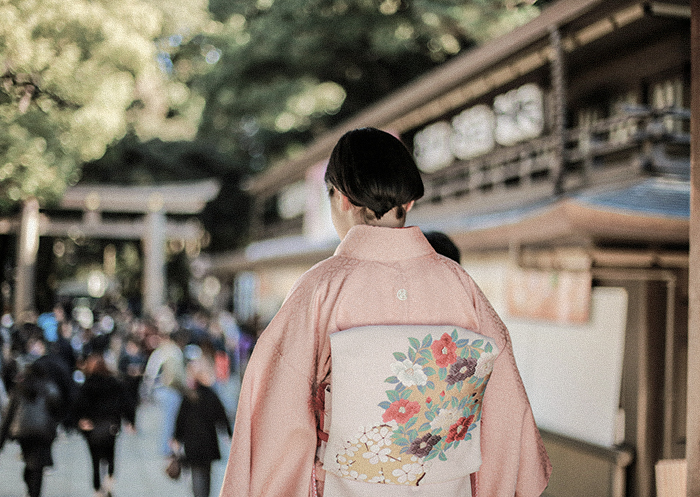
Also called jun-reisō, this register is worn at entrance and graduation ceremonies, a child’s 七五三 Shichi-Go-San rite, and private parties or tea gatherings. Guests at a wedding — as distinct from the couple’s immediate family — generally dress at this level too.
– 訪問着 hōmongi — pattern flows continuously from shoulder to hem; worn by married and unmarried women alike
– 付け下げ tsukesage — a hōmongi with the pattern reduced and understated
– 色留袖 irotomesode — pattern confined to the hem, as with kurotomesode, but on a ground color other than black — bright pink or blue among them — and worn regardless of marital status
– 色無地 iromuji — a single solid color, any but black. Ordinarily everyday wear, it is promoted to semi-formal when the weave itself produces a subtle self-pattern, 地紋 jimon, visible in the cloth’s own sheen
Outing Wear: 外出着 gaishutsugi
Less strict than the two ranks above, but dressier than everyday wear — worn to the theater, to a restaurant meal, to the first shrine visit of the New Year, and across the widest range of occasions of any rank.
– 小紋 komon — stencil-dyed, with a pattern scattered evenly across the whole cloth; the range of motifs is large
– 絞り shibori — pattern produced by hand-binding sections of cloth before dyeing, so the bound areas resist the dye. Often expensive, given the hand labor involved
Everyday Wear: 普段着 fudangi
Ordinary daily dress, closer to what “casual” means in Western clothing — generally easier to maintain and to wear, but not considered appropriate for formal or official settings (a yukata party, where the invitation specifies yukata, is an exception).
– 紬 tsumugi — thread dyed before weaving, 先染め sakizome, then woven directly into the pattern rather than dyed after weaving
– 浴衣 yukata — a light, unlined summer kimono, associated today mostly with summer festivals
Kimono by Season
The weight and lining of a kimono change with the calendar:
– January–May, October–December: 袷 awase, a fully lined kimono
– June and September: 単衣 hitoe, unlined
– July–August: 薄物 usumono, an unlined, breathable cloth for the height of summer
The Textiles Behind the Kimono
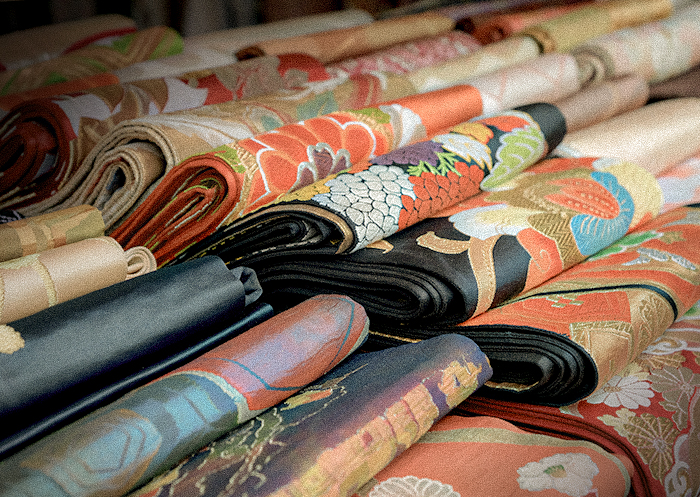
The weave is not incidental to a kimono — it is often the reason a given garment carries the rank it does, and several of Japan’s textile traditions are themselves protected crafts.
西陣織 Nishijin-ori — Kyoto’s Finest Weave
Woven in the Nishijin district of Kyoto, Nishijin-ori is silk, ranked among the finest textiles produced in Japan, and used mainly for obi and for hōmongi. Two variants in particular, 唐織 karaori and 金襴 kinran, are prized as material for high-grade obi.
The craft traces to sericulture and weaving techniques brought to Japan by immigrants from the continent in the fifth and sixth centuries, during the Kofun period. The name “Nishijin” is later: it dates only from after the Onin War (1467–1477), when weavers who had fled the fighting resumed their work on the site of the war’s western camp — Nishi-jin, literally “western camp” — which supplied the name.
Like tsumugi, the technique depends on sakizome, thread dyed before it is woven, to build its intricate, richly colored patterns. The refinement carried forward from the Edo period earned Nishijin-ori a place among Japan’s Traditional Crafts in 1976, when twelve of its techniques were formally designated, and the name is registered as a trademark. Today the weave also appears outside the kimono, in interior textiles and neckties.
博多織 Hakata-ori — the Obi That Does Not Loosen
Hakata-ori originates in the Hakata district of Fukuoka. Its origin is dated to the Kamakura period (1185–1333), when the technique was brought back from Song-dynasty China.
The weave is built by beating a thick, bundled weft thread against fine warp threads — a distinctive method that also gives the finished silk its characteristic sound as the threads move against each other. The result is a fabric strong and supple enough to have earned Hakata-ori its reputation: the obi that, once tied, does not come loose.
Hakata-ori was designated a Japanese Traditional Craft in 1976, the same year as Nishijin-ori. Beyond obi, it now appears in everyday accessories — wallets, stoles — marketed internationally under the name HAKATA JAPAN.
結城紬 Yuki-tsumugi — Three Generations in One Cloth
Yuki-tsumugi is woven in Ibaraki and Tochigi prefectures. It originates in the Nara period and had become a specialty product of the Kanto region by the Kamakura period. Nishijin-ori, Hakata-ori and Yuki-tsumugi are all silk. What sets Yuki-tsumugi apart is where its silk comes from: not reeled filament, but 真綿 mawata — silk floss opened out from cocoons that cannot be reeled into ordinary silk thread — hand-spun into a soft, untwisted yarn. Despite the character 綿 in its name, mawata is not cotton.
Three techniques, each designated an Important Intangible Cultural Property, define the cloth; a piece meeting all three is called 本場結城紬 honba Yuki-tsumugi, “genuine Yuki-tsumugi”:
– 手つむぎ糸 tetsumugi-ito — yarn drawn by hand from 真綿 mawata, silk floss, with no twist added
– 絣くくり kasuri-kukuri — thread bound by hand, section by section, so the bound areas resist dye and produce a precise pattern
– 地機 jibata — the oldest form of loom, with the warp threads anchored at the weaver’s own waist
What defines Yuki-tsumugi above all is durability. Worn across three generations — grandparent, parent, child — the cloth is said to develop a character it cannot have when new, a quality summed up in the saying: wear it three generations, and the flavor comes out.
How to Wear a Kimono Well
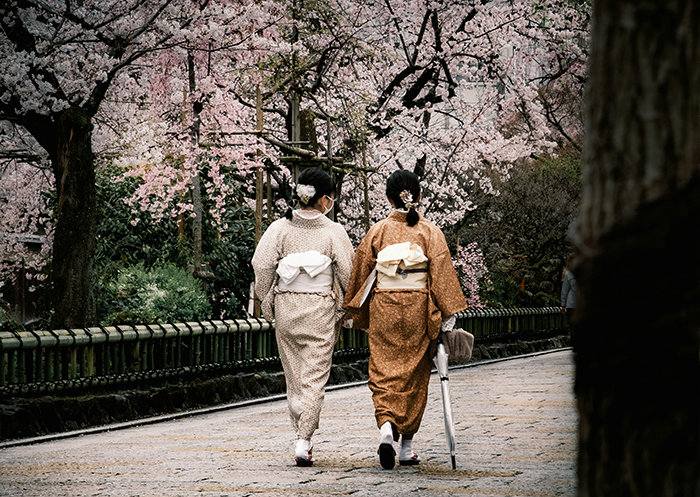
Match the Formality to the Occasion
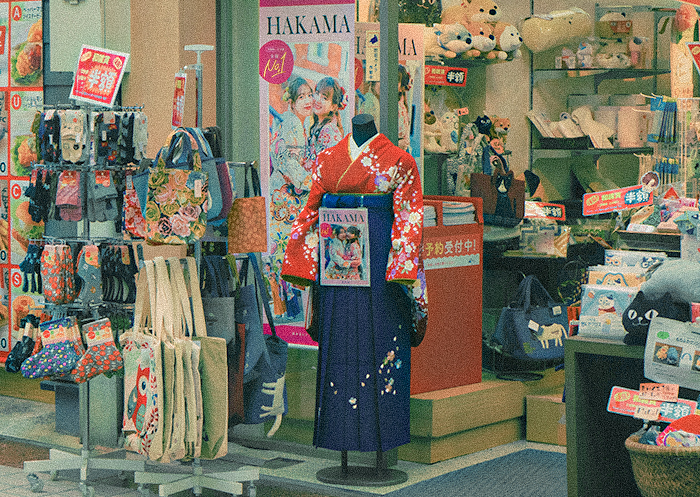
The rank of kimono should follow both the event and the wearer’s relationship to it. An entrance ceremony calls for a hōmongi or irotomesode; a friend’s wedding, attended as a guest rather than family, calls for restraint — a kurotomesode, reserved for the couple’s own family and the go-between’s wife, would be a mistake.
One point of etiquette is easy to miss: unlike a man’s hakama, a woman’s hakama does not count as formal dress. This author learned that from a kimono-loving grandmother, who explained that a woman’s hakama ranks as semi-formal at best, or simply fashionable dress — not the garment to choose for someone serving as the day’s central figure at a Coming-of-Age ceremony, where a hon-furisode is the better option if a kimono is worn at all.
Dress a Half-Season Ahead
Kimono patterns follow the calendar closely, and wearing a motif drawn from half a month to a month ahead of the actual season is considered 粋 iki — stylish, knowing.
This sense of timing has a long paper trail. In 枕草子 Makura no Sōshi (The Pillow Book), Sei Shōnagon’s collection of court observations from the Heian period, section twenty-two, titled すさまじきもの sugamajiki mono — “things that ruin the mood” — singles out a plum-colored robe worn in the third or fourth month of the old lunar calendar, months that fell in what is now early summer. Plum blossom belongs to spring; wearing its color once summer has arrived, Sei Shōnagon judged, kills the effect entirely. The observation is a small, sharp record of how closely dress and season were tracked in Heian Japan.
If It Stains, Don’t Panic
Kimono cloth is delicate and, with a few exceptions such as polyester or yukata fabric, cannot simply be laundered. If a kimono is stained, blot the moisture out with a dry cloth and take it to a specialist cleaner. Rubbing at a stain or wetting it further tends to set it or damage the fabric, and is best avoided. Kyoto and Tokyo’s Asakusa district both run kimono rental services for sightseeing; if a rented kimono is stained, report it to the shop rather than attempting to treat it yourself.
Carriage Matters Too
This author learned that lesson directly, once. Rushing to get ready backstage before a Japanese-dance performance at a school festival, wearing a yukata, she was stopped by a teacher: walk with long strides, and the kimono comes loose. Shortening the stride and turning the feet slightly inward, by contrast, keeps the garment in place. Moving with smaller, more deliberate gestures than usual does more than prevent a kimono from slipping — paired with the garment itself, it tends to look better, too.
In Closing
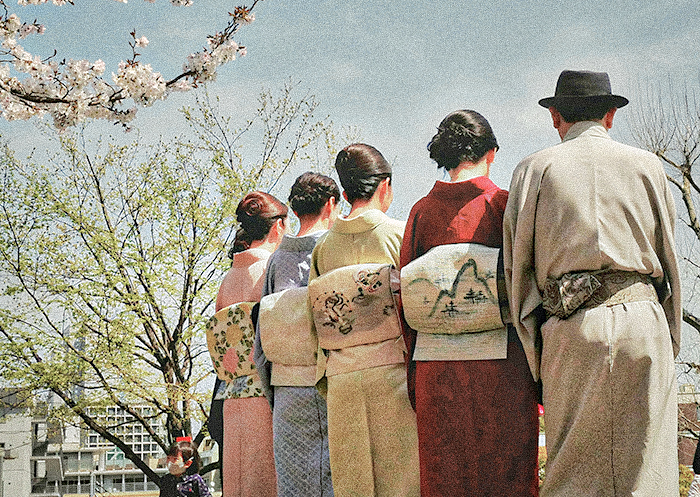
The kimono has become an occasional garment rather than a daily one, but the types, the ranks, and the weaves behind it are not difficult to learn, and knowing them changes how the cloth reads. Kimono that can go into a home washing machine are now on the market, one sign that the tradition keeps finding new ways to stay wearable. Where a rental shop makes it possible to try one on, it is worth doing.
KOTO is a journal of Japanese craftsmanship, culture, and the aesthetic sense behind them.
- SHARE
-


( daily-life )