






Why Japanese Water Is Soft: The Geography, History, and Beliefs Behind It
Japan is a nation surrounded on all four sides by the sea, and its relationship with water runs deep. Water is also, by its nature, an element of the natural world, which is part of why it sits so close to Shinto belief.
What follows sets out how that relationship was built — through geography first, then through history, and finally through folklore.
The Geography Behind Japan’s Water
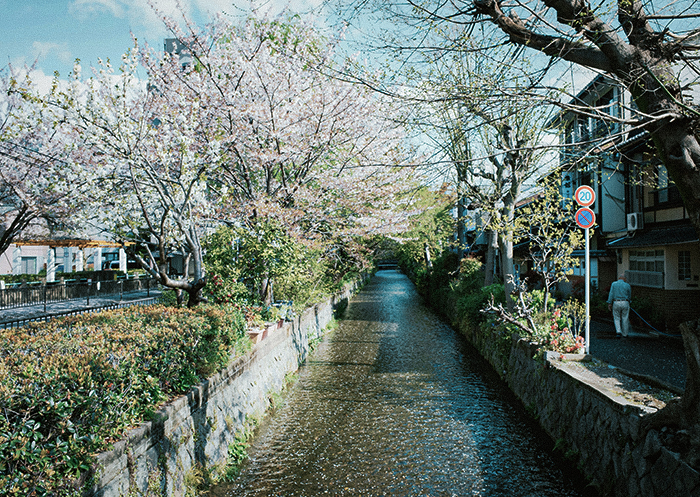
Rivers Steep Enough to Be Called Waterfalls
Japanese rivers are known for one geographic trait above all: they are steep. The reason is straightforward. A river’s length from source to mouth is short, while the drop in elevation over that distance is large.
The Shinano River, said to be the longest in the country, falls at a gradient of roughly 0.3 degrees from source to mouth. That figure looks almost flat on paper, but among rivers it already counts as steep. The Seine, in Europe, falls at only about 0.03 degrees by comparison — a tenth of the gradient — which puts the difference in scale.
Japan’s steepest first-class river is the Joganji River, which runs through Toyama Prefecture, at a gradient of roughly 2.5 degrees. Johannis de Rijke, a Dutch civil engineer who worked on Japan’s rivers in the late nineteenth century, is said to have looked at it and called it “not a river, but a waterfall.”
Abundant Rain, Scarce Reserves
Japan sits in a temperate, humid climate, and the season known as 梅雨 tsuyu — the rainy season — brings heavy rainfall each year. Annual precipitation runs at roughly 1.4 times the world average.
That much rain suggests a country rich in water reserves. In practice, the reserves it can actually hold onto are limited. The land is narrow and the rivers are steep, so rain that falls reaches the sea again almost immediately, before the ground has much chance to hold it. As a result, the water available per person in Japan is only about a quarter of the world average. Abundant rainfall paired with scarce reserves is, arguably, exactly the condition that taught a culture to treat water with care.
A Mountainous, Island Country Produces Soft Water
Japan is an island nation, bounded by the sea on every side, and mountains — including hills and volcanic zones — cover roughly three-quarters of its land.
The ground itself is made largely of granite and the sand and mud that granite breaks down into, along with volcanic rock. That geology runs acidic, and acidic ground holds far less mineral content than the limestone geology found elsewhere. Add the steep rivers, which give rainwater little time to dissolve minerals out of the soil as it runs off, and the result is 軟水 nansui — soft water, water low in magnesium, calcium, and other minerals — found throughout the country.
Japanese soft water is generally described as mild on the palate. With little mineral content to dissolve into it, it carries a low hardness and a clean, light taste.
How Soft Water Shaped Washoku
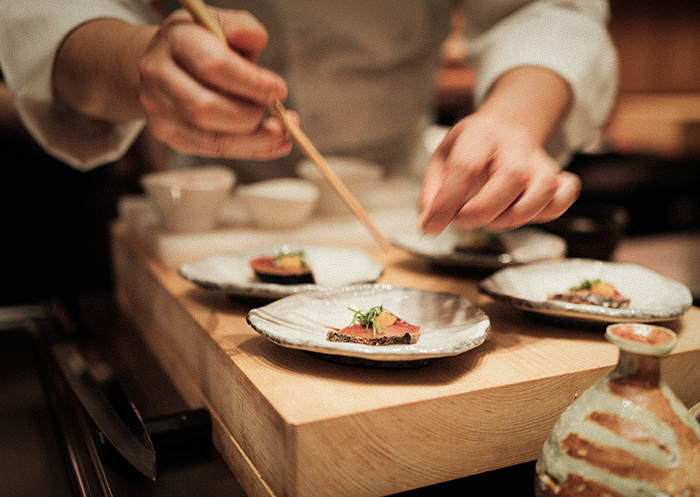
Japan’s soft water is a plausible explanation for how washoku, Japanese cuisine, came to exist in the form it did. The reason given is that the low mineral content specific to soft water suited the way dashi and other core ingredients were prepared.
Dashi and Soft Water
The だし dashi used in Japanese cooking is drawn mainly from 昆布 kombu, kelp, and カツオ節 katsuobushi, dried bonito flakes. The glutamic acid and other umami compounds inside them are extracted by the water they steep in.
Using hard water changes the outcome. The calcium in hard water binds with 藻酸 argin-san — alginic acid, the slick compound on the surface of kombu — and forms a film across it. That film keeps glutamic acid from being drawn out fully, and the dashi loses depth. Soft water, with little calcium to interfere, draws the umami out cleanly. Japan’s soft water suited dashi almost perfectly: it releases umami while letting a dish stay seasoned lightly and still taste of what it is made from.
Rice and Soft Water
Cooking Japanese rice — the japonica variety — in soft water produces a fluffier texture and a fuller sweetness. The reason is that soft water spreads moisture evenly through the grain as it cooks.
Hard water produces the opposite result: a drier, grainier texture, because the calcium in the water binds with the rice itself. Even the washing stage benefits from soft water, for the same reason. Rice sits at the center of washoku, which makes the water it is cooked in a genuinely load-bearing detail.
Fermented Foods and Soft Water
納豆 natto,味噌 miso, soy sauce, and sake all count as fermented foods, and water quality is one of the deciding factors in how each turns out. The minerals dissolved in water, and its hardness, affect the activity of the microorganisms fermentation depends on — in the brewing of sake and miso especially, trace elements such as calcium, magnesium, and potassium shift how vigorously yeast and lactic acid bacteria multiply.
Low-mineral soft water tends to slow fermentation down, and a slower fermentation is generally the gentler, more flavorful one. Since miso and soy sauce are seasonings that carry the flavor of a dish, drawing their umami out fully has a direct effect on how the finished food tastes.
Vegetables, Wasabi, and the Water Behind Every Course
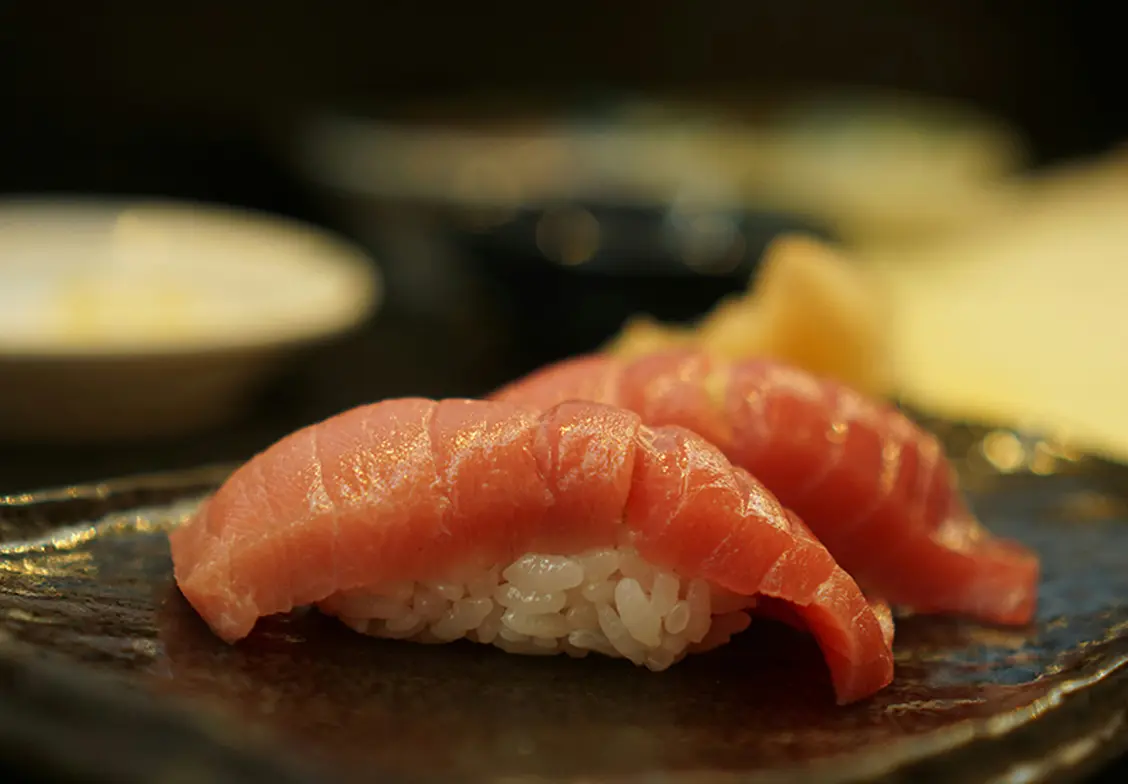
Good vegetables and good tofu both depend on good water, and わさび wasabi, the plant served with sushi, needs genuinely clean water to grow at all. Boiling and simmering ingredients — steps that run through nearly every washoku recipe — use water at every stage, directly or indirectly, and Japan’s soft water sits behind all of it, including the tea served after the meal.
East and West: Two Regions, Two Waters
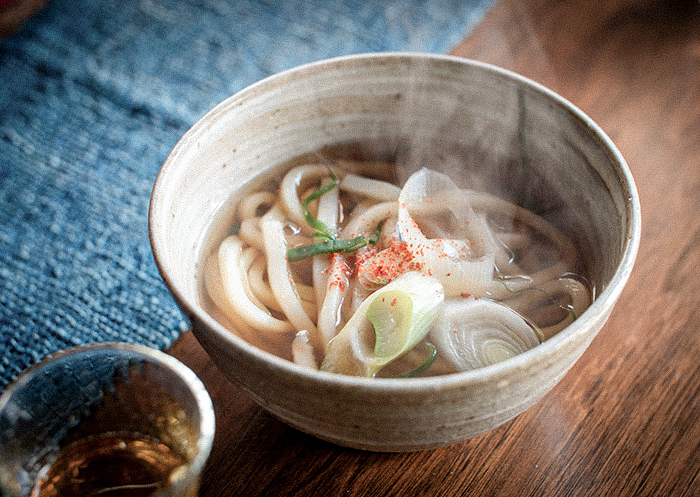
Even within Japan, eastern and western regions season their washoku somewhat differently, and the clearest example is the dashi used in udon broth.
Udon broth in western Japan is famously transparent — clear enough to see the bottom of the bowl — built on a delicate dashi. Udon broth in eastern Japan is built on 濃口醤油 koikuchi shoyu, dark soy sauce, and comes out a deep brown.
The reason traces back to water. Soft water in western Japan runs lower in calcium than water in the east — well water drawn within Kyoto city is said to run especially soft — and that made it well suited to kombu dashi, which is why a rich, umami-forward dashi culture developed there. Water in eastern Japan runs slightly harder by comparison, which is part of why a heavier, soy-sauce-forward style of seasoning took hold instead.
Washoku, “The Cuisine of Water”
Washoku is sometimes called “the cuisine of water,” on the reasoning that water quality shapes its flavor so directly that some cooks treat water itself as a seasoning. Washoku’s popularity is now global, and it holds UNESCO Intangible Cultural Heritage status — an outcome that owes a real debt to the soft water the Japanese archipelago produces.
Western cooking built around meat is generally said to turn out better with hard water instead, mineral-rich as it is. That each cuisine seems matched to the water native to its own soil is one of the more interesting facts about how food culture forms.
History: Japan’s Long Relationship with Water
Geography explains where Japan’s relationship with water begins. What follows is how that relationship played out across its history, era by era.
Ancient to Medieval Japan: Rice Paddies and the Water That Built Villages
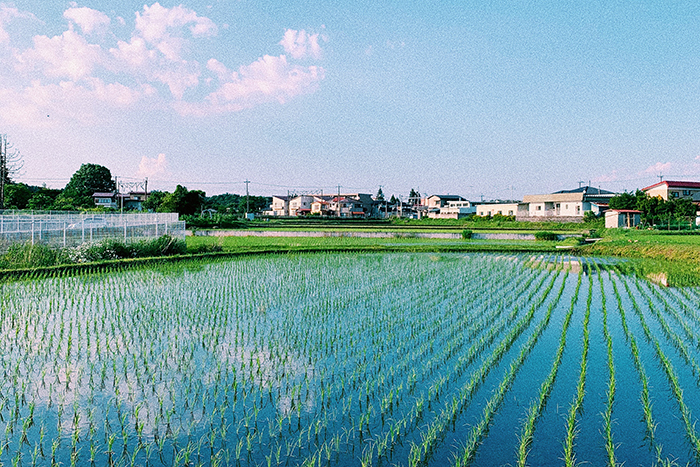
After rice cultivation reached Japan, irrigation ponds and small waterways were developed to support it, and a distinct Japanese society and culture grew up around that work. Rivers and well water served as everyday water in the earliest periods, though water quality and shortages were recurring problems.
Water was never only a matter of drinking. It was essential to growing rice, the staple food, and a prolonged drought that made water unusable was a threat to a village’s survival. Because the amount of water available to a village also shaped how far it could grow, abundant water sometimes became the very thing villages fought each other over.
The Edo Period: A City Built on Water
In the urban center around Edo — present-day Tokyo — the facilities that would become the prototype for Japan’s modern water supply were built. The best known is the 小石川上水 Koishikawa Josui, constructed in the era of Tokugawa Ieyasu, a large-scale water system that ran on wooden and stone pipes.
Deliberately poisoning that water counted as a serious crime. In the Edo period (1603–1868), throwing poison into a well was treated as a grave offense, on the reasoning that fouling the water a town’s residents depended on for life was tantamount to killing them.
From the Meiji Era Onward: Toward Safer, Cleaner Water
Cholera and other infectious diseases spread widely through Japan’s cities after the start of the Meiji era (1868–1912), and supplying hygienic water became an urgent priority. The effort paid off: in 1887, Japan’s first modern waterworks was built in the city of Yokohama.
Entering the high-growth years of the 1950s through the 1970s, Japan needed to respond to rapid population growth and industrialization, and dam construction and other water development projects went ahead across the country.
That same industrialization also risked real environmental damage. In the 1950s, industrial waste — methylmercury — released into rivers and the sea caused Minamata disease: the mercury passed up the food chain into fish, and the people who ate them developed symptoms as a result. Dam construction, for its part, sometimes submerged entire villages, and it is said to have driven local protest movements wherever that happened.
Folklore: Water as Belief
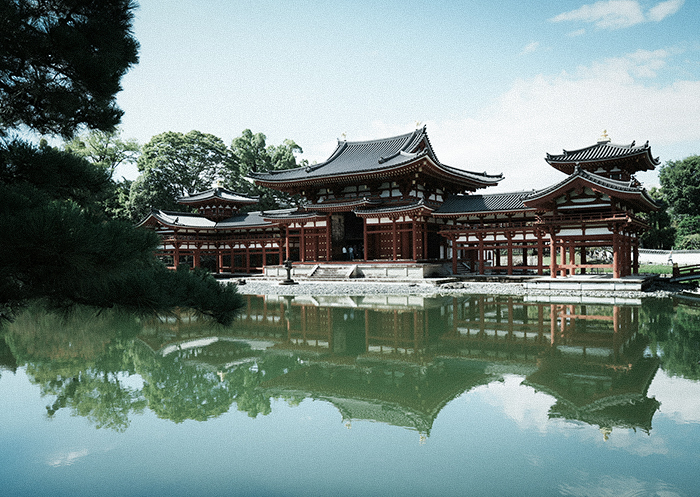
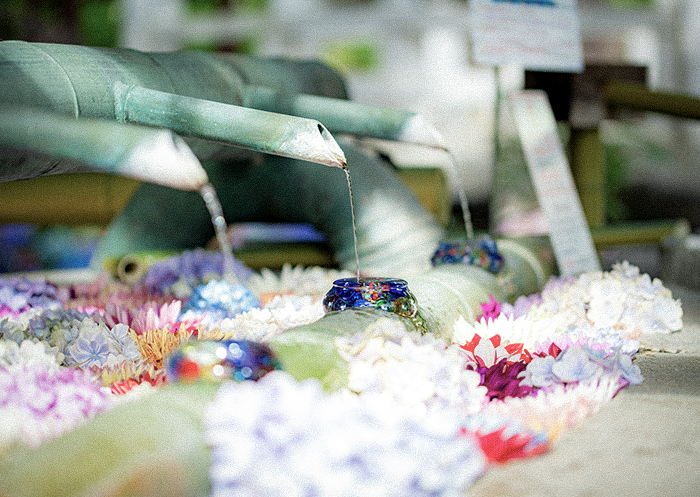
Japan’s tradition holds that gods inhabit nature and the objects within it — a concept known as 八百万の神 yaoyorozu no kami, the eight million gods — and water is no exception. Shrines connected to water are scattered across the country as a result. Here is how that belief took shape.
A Force Both Blessing and Feared
Japan’s nature worship reaches back to antiquity, and worship connected to water in particular runs deep, for a reason rooted in water’s two faces: the blessing it brings, and the fear it can inspire.
The blessing side traces to rice cultivation. Rice paddies have been the mainstay of Japanese agriculture since ancient times and remain so today, and the rain-prone climate noted above is part of why. The abundance rain brings became, for many, both a daily comfort and something close to a spiritual anchor. A god named 水分神 Mikumari no Kami — literally, the god of water distribution — is worshipped in various places as a guardian of watersheds and of the rice paddies themselves.
The fear side is just as real. Flood and drought are both forms of disaster, and in the ages before modern forecasting, disaster meant a genuine threat to life. Heavy rain and the flooding it caused were understood as the anger of 龍神 Ryujin, the dragon god, and calming Ryujin — for the sake of steady rainfall and protection from disaster — became a serious concern. Excavations at ancient sites have turned up considerable evidence of rituals performed at the water’s edge.
The Water Itself as Sacred Ground
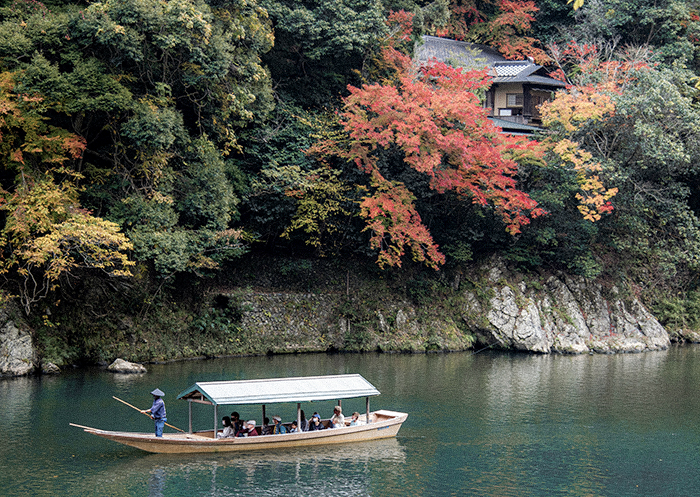
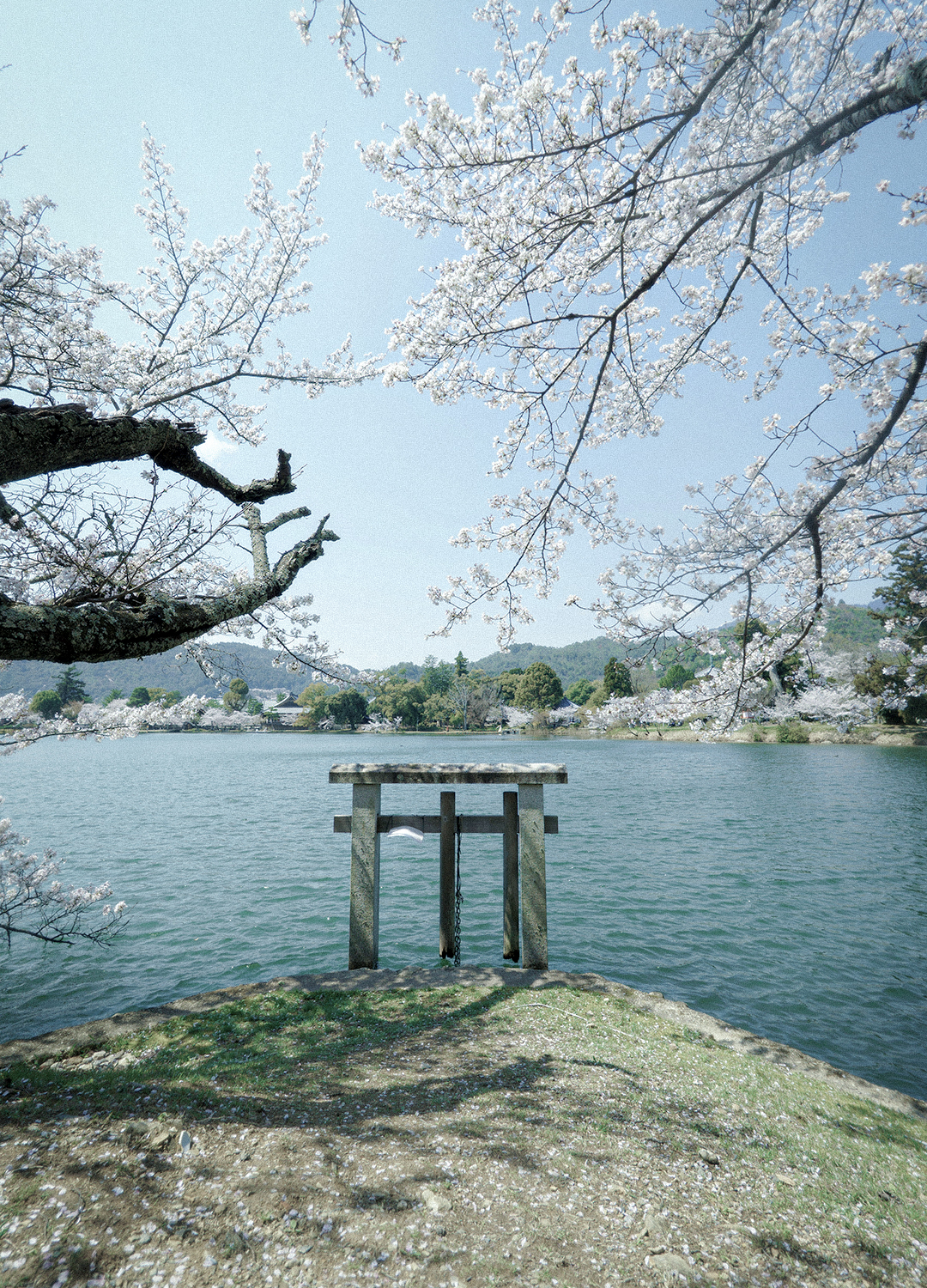
The gods connected to water are not limited to Ryujin. Waterfalls, springs, and other places where water rises from the ground have long been treated as sacred spaces in their own right, and springs welling up from deep within a mountain in particular were revered as sites of holy water.
There is also belief in the 祓戸大神 Haraedo no Okami, gods who carry sin and impurity away on river rapids and out to sea. 瀬織津姫神 Seoritsuhime no Kami is among the best known of them.
Water That Purifies Body and Soul
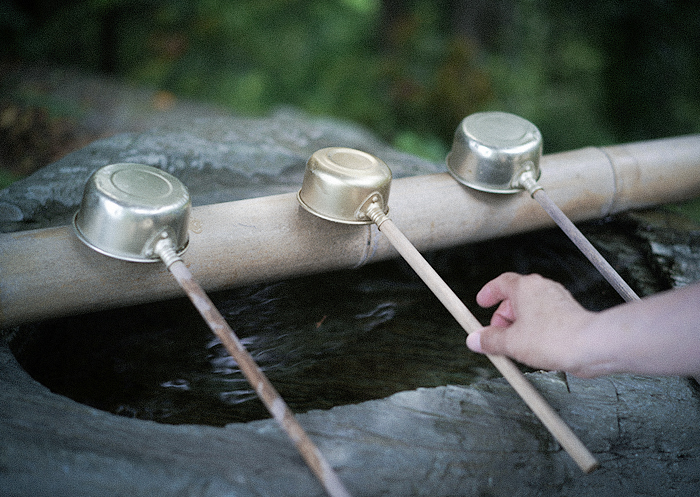
For the Japanese, water carries a strong association with purifying the soul. 滝行 takigyo — standing beneath a waterfall and letting the water fall over the body — is a well-known ritual built entirely around the idea of cleansing body and mind with water.
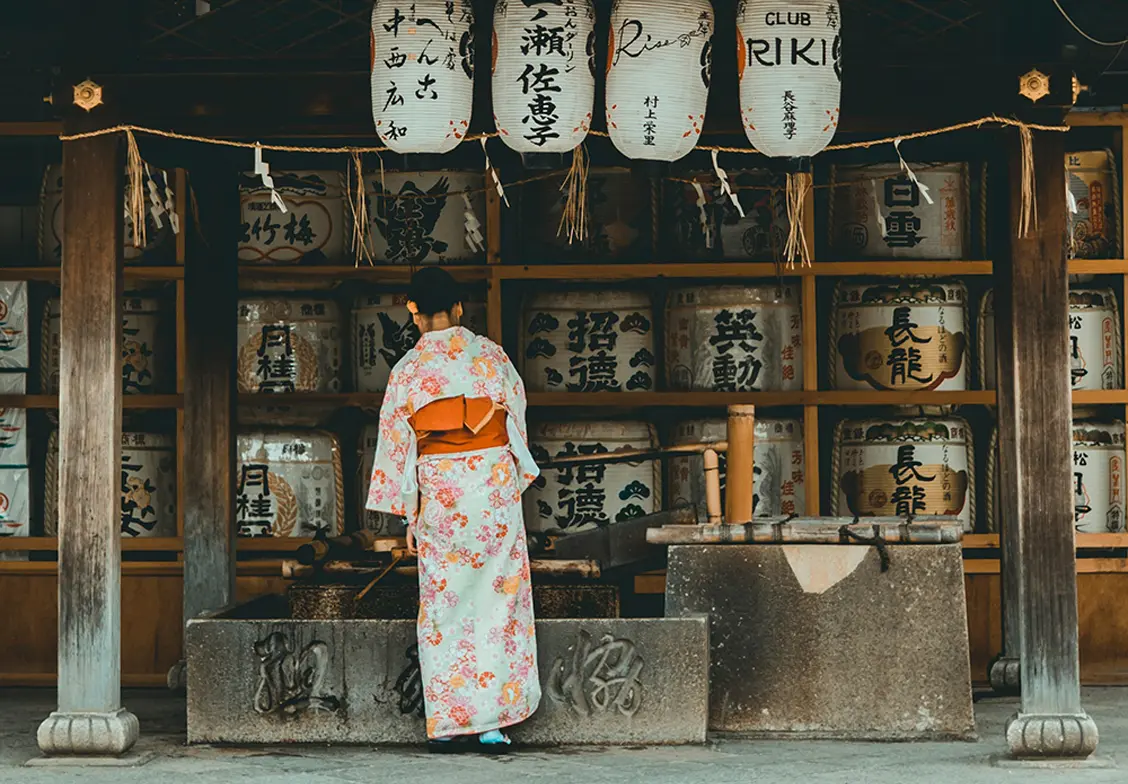
Nobody needs to stand under a waterfall to take part in that idea, though. Rinsing the hands and mouth with water at the 手水舎 temizuya on the way into a shrine is the same act of purification, done at a smaller scale. Nor is purification through water confined to Shinto. Buddhism, which arrived from the continent during the Asuka period (592–710), also holds that clear, clean water removes impurity and heals illness. The idea of purifying body, mind, and soul with water is still very much alive, both in Shinto ritual and in everyday life.
(For more on how these beliefs run through daily life, see this author’s related pieces on 神道 Shinto in daily life, and on the manners expected on a shrine visit — in Japanese for now, English versions in progress.)
Water in Japan Today
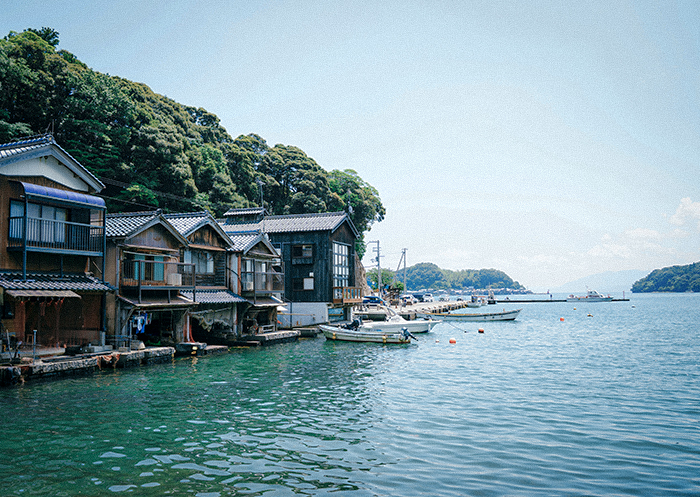
One of the Few Countries Where the Tap Water Is Safe to Drink
Water supply coverage in Japan today runs close to 100 percent, and its safety is such that water can be drunk directly from the tap. That level of reliability is owed to generations of engineers and the infrastructure they built.
Countries where tap water can safely be drunk straight from the faucet are relatively rare — Japan is usually counted among a group of roughly nine to fifteen such countries worldwide, though the exact count varies by source. Aging pipes can still introduce rust or sediment in places, so travelers are generally advised to check locally whether tap water is drinkable before assuming so.
Tap water also carries a distinct regional taste. It is not unusual for Japanese to have a strong local preference — visitors from other parts of the country sometimes remark on how good a particular region’s tap water tastes compared to their own.
A Recent Water Shortage
In recent years, Japan has seen periods of lower rainfall, and dam reservoir levels dropping enough to make the news, with some municipalities calling for water conservation as a result. At the lowest points, reservoir levels have dropped far enough to expose villages that were submerged when a dam was originally built — a stark reminder, after a very long history of taking water for granted, that it deserves to be used with care.
Proverbs and Idioms Built on Water
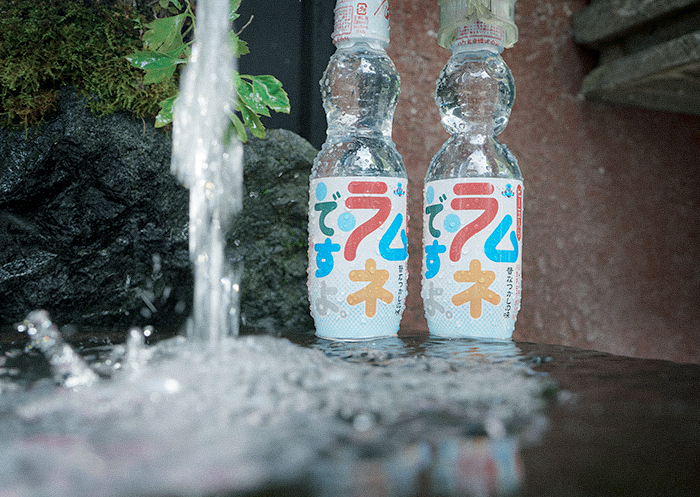
Japanese carries a set of ことわざ kotowaza, proverbs, and 四字熟語 yojijukugo, four-character idioms, that draw directly on water. A selection of each follows.
Proverbs
水に流す mizu ni nagasu, “to let it flow away with the water” — to treat a past trouble or grudge as though it never happened, and not hold it against someone.
足を洗う ashi wo arau, “to wash one’s feet” — to reflect and give up a wrongdoing, returning to an honest life.
雨降って地固まる ame futte chi katamaru, “the ground hardens after the rain” — reconciling after a quarrel leaves a bond stronger than before.
雨垂れ石を穿つ amadare ishi wo ugatsu, “dripping rain bores through stone” — persistence eventually bears fruit, as rain falling on a single spot will, in time, wear a hole through stone.
覆水盆に返らず fukusui bon ni kaerazu, “spilled water does not return to the tray” — regret cannot undo the past, just as water spilled from a tray cannot be poured back.
水魚の交わり suigyo no majiwari, “the bond of water and fish” — a closeness too deep to separate, likened to the relationship between water and the fish that live in it.
水清ければ月宿る mizu kiyokereba tsuki yadoru, “when the water is clear, the moon dwells in it” — a life kept honest and a heart kept clear, like clean water, will naturally draw beautiful things to it — the moon’s reflection among them.
Four-character idioms
明鏡止水 meikyoshisui — a mind at rest, clear of both worldly attachment and the smallest cloud of doubt.
我田引水 gaden insui, “drawing water to one’s own rice paddy” — acting purely in one’s own interest, without regard for anyone else; likened to a farmer who diverts water to his own field without a thought for his neighbors.
行雲流水 kouun ryusui, “drifting clouds, flowing water” — living without attachment, moving with events the way clouds and water move on their own.
In Closing: A Country Shaped by Its Water
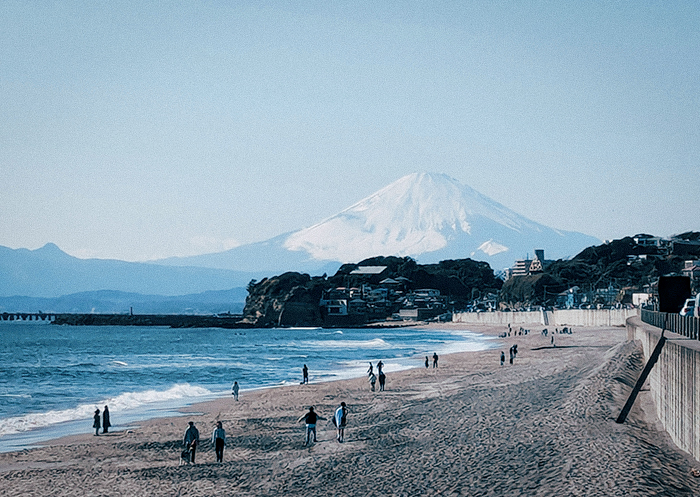
Japan’s daily life has been inseparable from water since ancient times, carried forward largely unbroken. It is worth pausing on the fact that without Japan’s particular geography, washoku as it is known today would very likely not exist at all.
Japan’s water is, by most accounts, both beautiful and good to drink — but keeping it that way, while protecting the natural systems it depends on, is very much a live question today. Everyone who lives in Japan, or visits it, has some part in passing its clean water and the culture built on it to the generations that follow.
KOTO is a journal of Japanese craftsmanship, culture, and the aesthetic sense behind them.
- SHARE
-


( daily-life )