






Why Shogun Succeeded Where Hollywood’s Japan Never Had
Hollywood has told stories set in Japan many times before. None of them held the world’s attention the way Shogun did when it premiered on FX in 2024.
The novel it is based on, James Clavell’s Shogun, had already been adapted once, in 1980. That earlier version ran into the same wall most Hollywood productions set in Japan had run into: it leaned on stereotype, and it built its story around an English navigator rather than around Japan itself. Japanese audiences noticed. So, eventually, did Hollywood.
The Idea of Japan Hollywood Inherited
To understand what the 2024 Shogun was reacting against, it helps to know where the West’s picture of Japan came from in the first place. Two ideas did most of the work: Zipangu and Japonisme.
Zipangu: An Island of Gold
Zipangu is the name the Venetian merchant Marco Polo used for Japan in his account of his travels, the 東方見聞録 Toho Kenbunroku — known in English as The Travels of Marco Polo. In it, Polo describes Zipangu as an island producing enormous quantities of gold, a place he never actually set foot in himself but had heard described secondhand. The description stuck anyway, and Japan picked up the nickname “the golden country” long before most Westerners had any other source of information about it. One theory holds that “Zipangu” itself derives from the medieval Chinese pronunciation of “Japan” — something close to “Jihpen” or “Zeppen” — and that the modern English word “Japan” traces back to that same root, several centuries and several languages removed from the country it names.
Japonisme: When Japan Reshaped Western Art
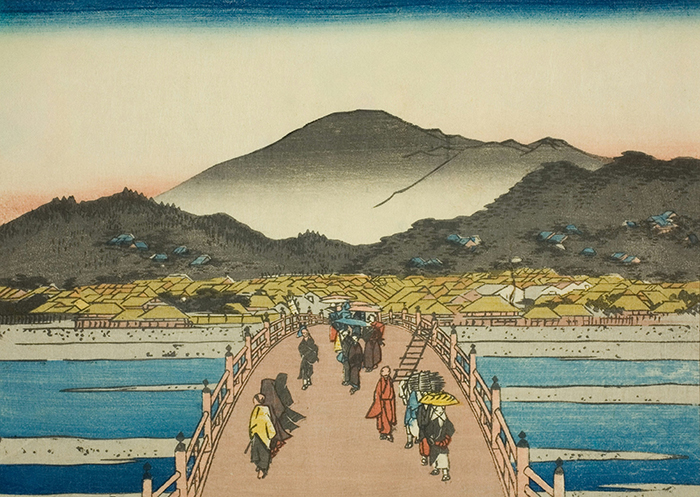
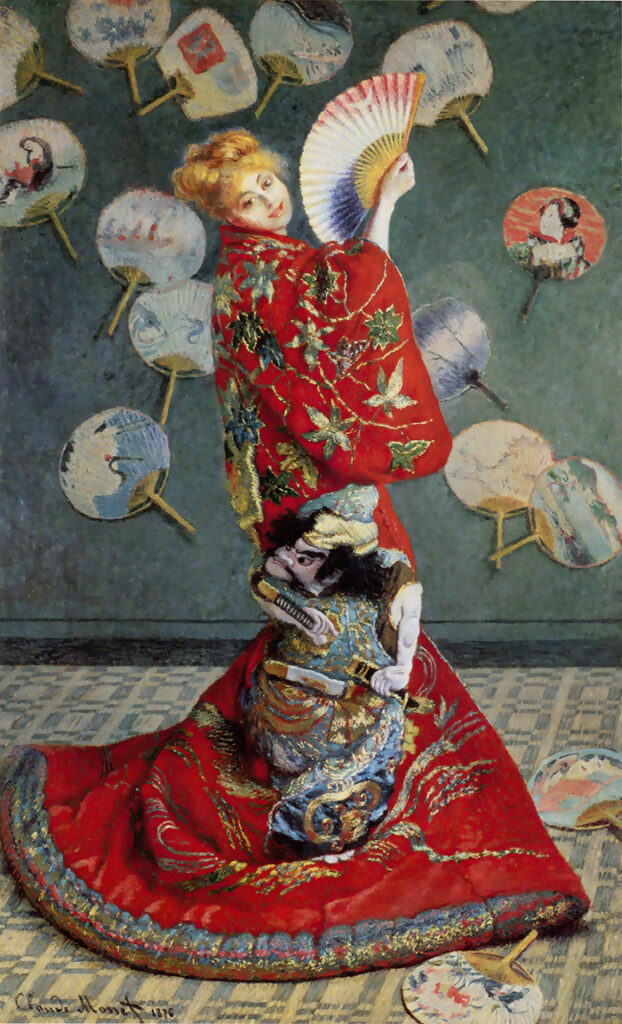
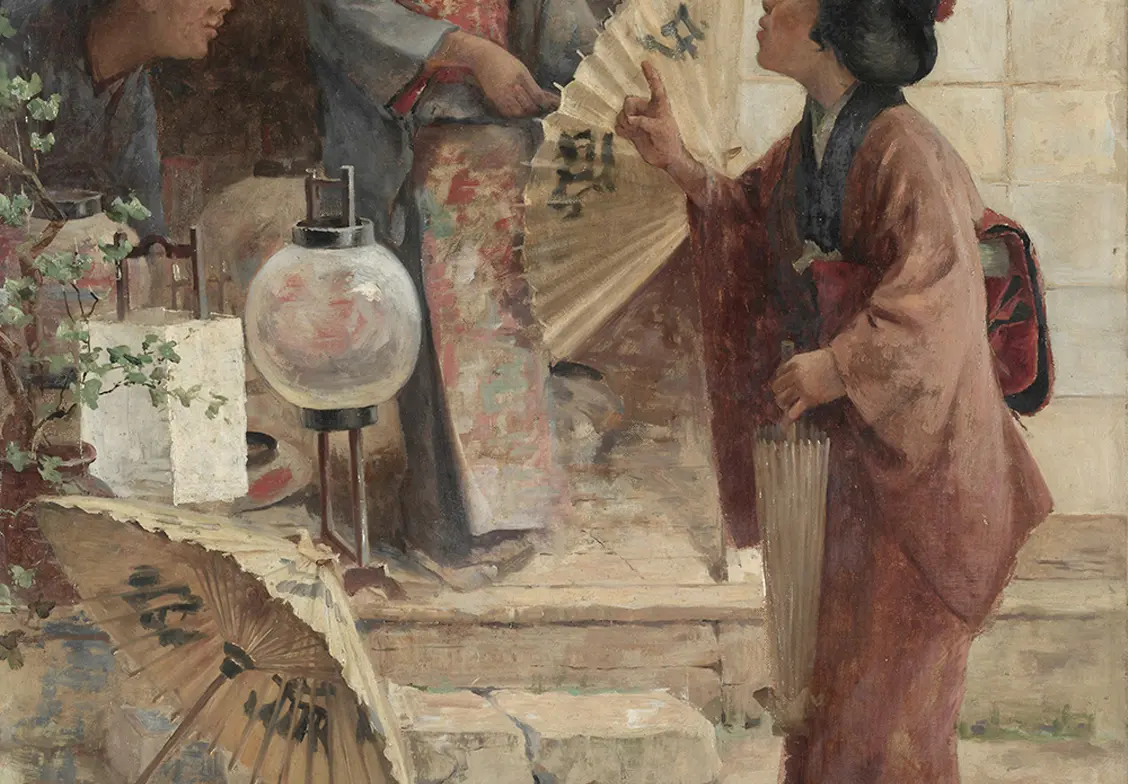
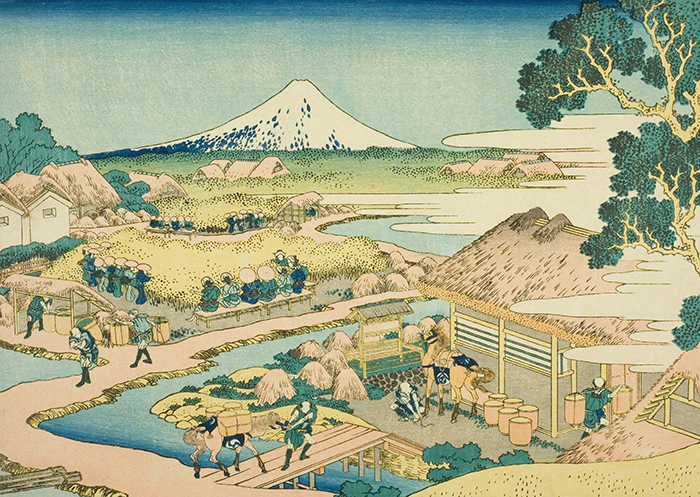
Japonisme is the term for the wave of interest in Japanese aesthetics that swept Europe and the United States in the second half of the 19th century, after Japan’s ports opened in the 1850s following Commodore Matthew Perry’s arrival with his so-called black ships. Ceramics and kimono began reaching Western markets, but nothing landed harder than 浮世絵 ukiyoe — Japanese woodblock prints.
Western art at the time prized perspective, shading, and the faithful, near-scientific rendering of what the eye saw. Ukiyoe did none of that, and Western painters found the difference startling: bold composition, unconventional cropping, flat fields of color, strong outlines. Those qualities fed directly into Impressionism. Monet and Van Gogh both worked kimono and ukiyoe motifs into their own paintings. None of it would have happened without Japan’s ports opening when they did.
Zipangu and Japonisme are two centuries-old fantasies of Japan — one about wealth, one about aesthetics — and Hollywood, whether it knew it or not, kept drawing on both. The question Shogun’s production had to answer was how to make a Japan story that a Japanese audience would not wince at.
The Sanada Method
That question found its answer through one working relationship: showrunner Justin Marks and 真田広之 Hiroyuki Sanada, the series’ star and a producer on the project.
Marks asked Sanada directly what mistakes Hollywood had historically made in portraying Japan. Sanada’s answer, as he later described it, amounted to a single instruction: stop drawing a misunderstood Japan, and commit to being “authentic.” Authenticity — being genuine, being the real thing, not an approximation of it — became the production’s working principle from that conversation onward.
What Authenticity Looked Like on Set
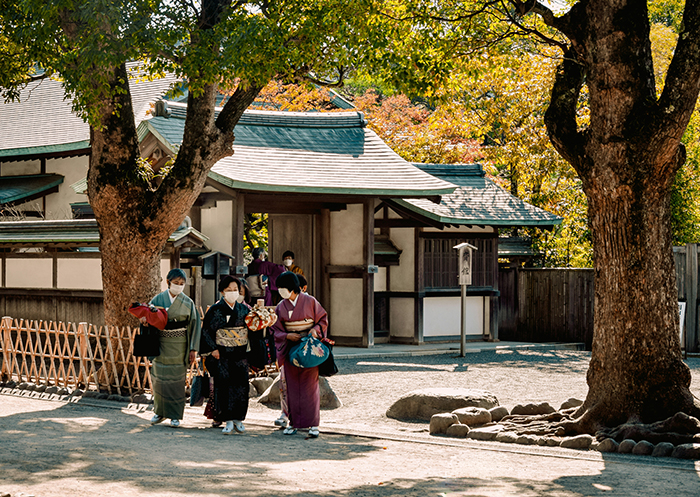
The commitment showed up in small decisions that most viewers would never consciously register, but that a Japanese audience would.
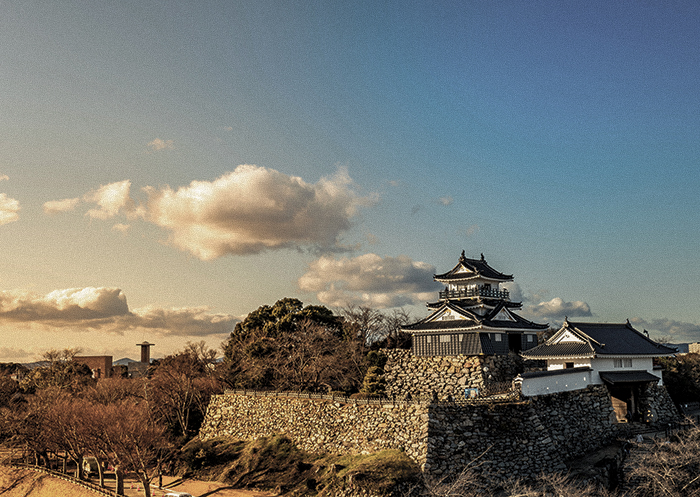
Castle scenes are one example. Productions typically fill a set like that with extras — peasant characters included, partly for cost, partly to make the frame feel busy. But peasants were not permitted inside a castle in the period Shogun depicts, so the production left them out of those scenes.
The Noh performance in episode six is another. The performers wore costumes actually used for Noh in Japan, and the result reportedly looked, even to Japanese viewers, close to watching a real performance.
Off camera, the production distributed a roughly 900-page manual covering Japanese culture and history to cast and crew. Soldiers’ helmets were tied at the chin rather than the neck. Actors practiced walking in 草鞋 waraji — straw sandals. Spears were held only in the right hand, on the reasoning that left-handedness was not a documented practice in Japan of that era. Catering on set served Japanese food.
This author sees an echo of two Japanese sayings in all of this. 郷に入れば郷に従え — go ni ireba go ni shitagae, when in a place, follow its customs — and 百聞は一見にしかず — hyakubun wa ikken ni shikazu, one look is worth a hundred accounts, because seeing something directly makes it register faster and deeper than being told about it. The cast and crew were made to experience the culture physically, not just brief on it, and that is arguably the only method that could have delivered on Sanada’s word “authentic.”
Costume received the same treatment. The production worked closely with costume designer Carlos Rosario, using fabric woven in Japan and positioning family crests, 家紋 kamon, correctly for how they would actually sit on the body when worn. Shogun won the Emmy for costume design on the strength of that work.
Professionalism at the Level of Craft
Sanada’s own role went well past acting. As both star and producer, he checked costumes, sets, and props in detail; briefed the American production on historical accuracy and helped calibrate how far the drama could bend it; coached his fellow actors in swordwork and period manners; reviewed how extras carried themselves; and only then changed into costume to perform his own scenes. Each of those checks happened before he had put on his own costume for the day — meaning the production’s authenticity was, in practice, being signed off on by its own lead actor before a single one of his scenes was shot. Castmates have described it as commanding real respect, and Sanada himself has said the arrangement left him no room to phone in a performance. It is a level of ownership that starts to look less like acting and more like craftsmanship in the traditional sense.
Much of the crew working on props and set design, not just the cast, had roots in Japan. Shoes were banned on the tatami built for the set, matching how tatami is actually used in Japan — the production wanted a crew that knew the material, not just a set that resembled it.
Japanese, Not English
Hollywood has historically cast Japanese actors according to an unexpected standard: not acting ability alone, but how well they could perform in English. Shogun reversed that. Its cast performs almost entirely in their native Japanese — more than 70 percent of the dialogue is in Japanese, with English subtitles carrying the rest. Freed from the English-fluency filter, the production could cast for performance first.
Sanada himself began his career at 東映太秦映画村 Toei Uzumasa Eigamura and 東映京都撮影所 Toei Kyoto Studio in Kyoto, two of the studios most closely associated with classic 時代劇 jidaigeki — Japanese period drama — and appeared in jidaigeki roles from his teenage years onward. That background is not incidental to why Shogun looks the way it does.
Relationships That Cut Close to the Bone
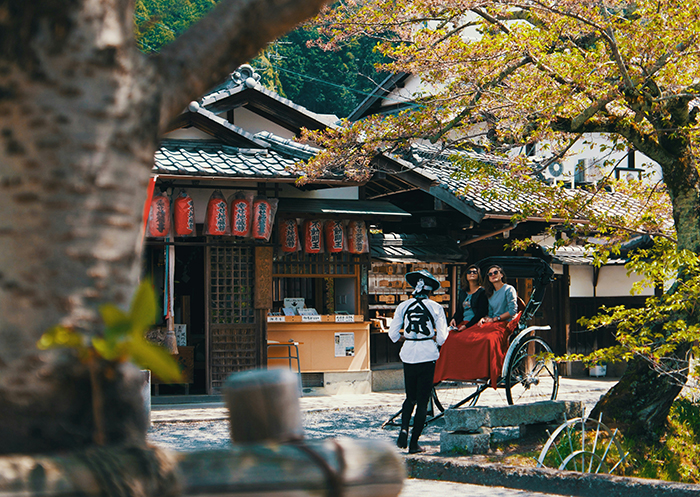
Shogun’s web of relationships — Toranaga’s scheming, the bond between Mariko and Blackthorne, and others — carries real weight, and two elements in particular reach past plot mechanics into something closer to the human condition.
The first is loyalty to one’s lord and courtesy among comrades — a core piece of Bushido. Characters protect what matters to them and give up their lives for it without hesitation, walking a hard road side by side toward a shared goal. That resonates now for the same reason it resonated then.
The second is that the series does not let its major characters end well. Several meet violent, unresolved deaths rather than the tidy resolution a “happy ending” would supply. That refusal mirrors the setbacks and losses that make up an ordinary life more than fiction usually admits to.
What Actually Makes a Masterpiece
Beyond Shogun, what do the stories that stay loved for decades have in common? This author once heard an answer from a design instructor: they get at something true about being human. Anpanman, Doraemon, and Crayon Shin-chan — three of Japan’s most enduring children’s franchises — treat love, friendship, courage, and justice as subjects worth taking seriously. Neon Genesis Evangelion, a cultural phenomenon when it aired in 1995, looked directly at the fear and confusion inside teenagers rather than softening it.
Shogun’s popularity sits on the same foundation, built here from the details above — the loyalty, the unresolved grief, the refusal to simplify what it means to inherit a life that others died to secure.
A Small Confession
Accepting Shogun’s Emmy, Sanada spoke about the production as a meeting of East and West on equal footing, made by people who had set out to respect each other, and said he was glad to have made a Japanese period drama the rest of the world could genuinely connect with.
Japanese people carry their own unconscious stereotypes about the rest of the world, and this author is no exception. Years ago, studying abroad, this author asked a local student whether they disliked natto. They laughed and said they actually liked it — found it delicious, in fact. It was a small moment, but it made clear that this author had been carrying an assumption about what “Westerners” think of natto without ever checking it.
Every country carries its own language, customs, and values, and none of that goes away. What matters more is the willingness to sit down and actually ask — to approach someone wanting to understand them, rather than assuming the answer in advance. Shogun’s story is, among other things, a case study in what that willingness can produce.
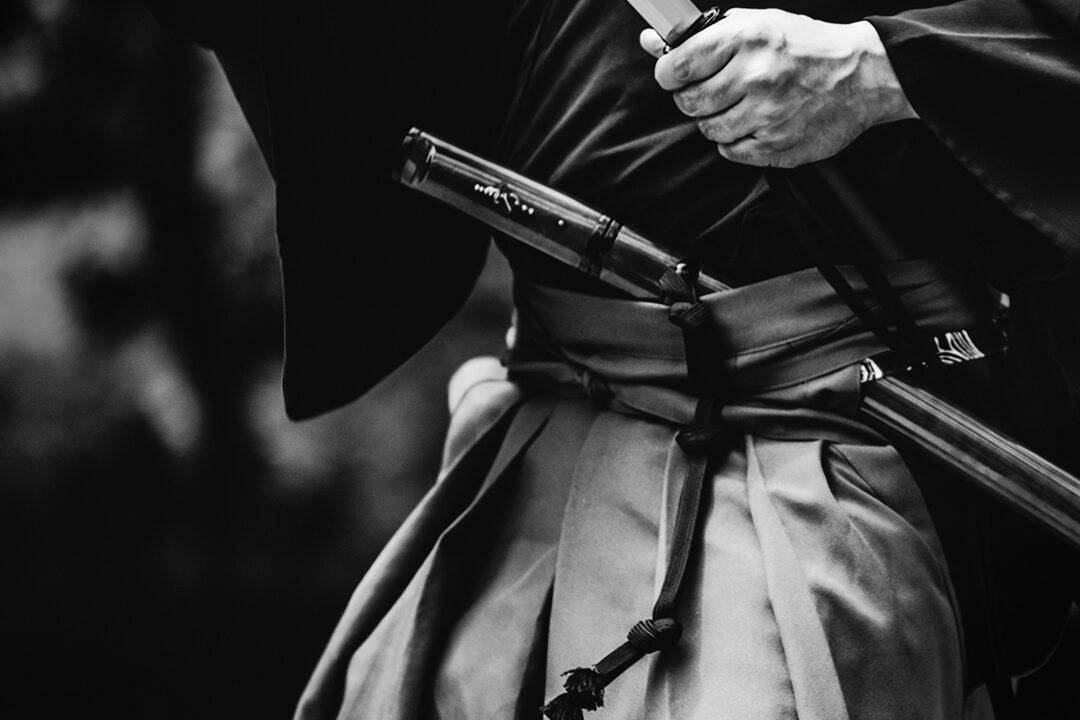
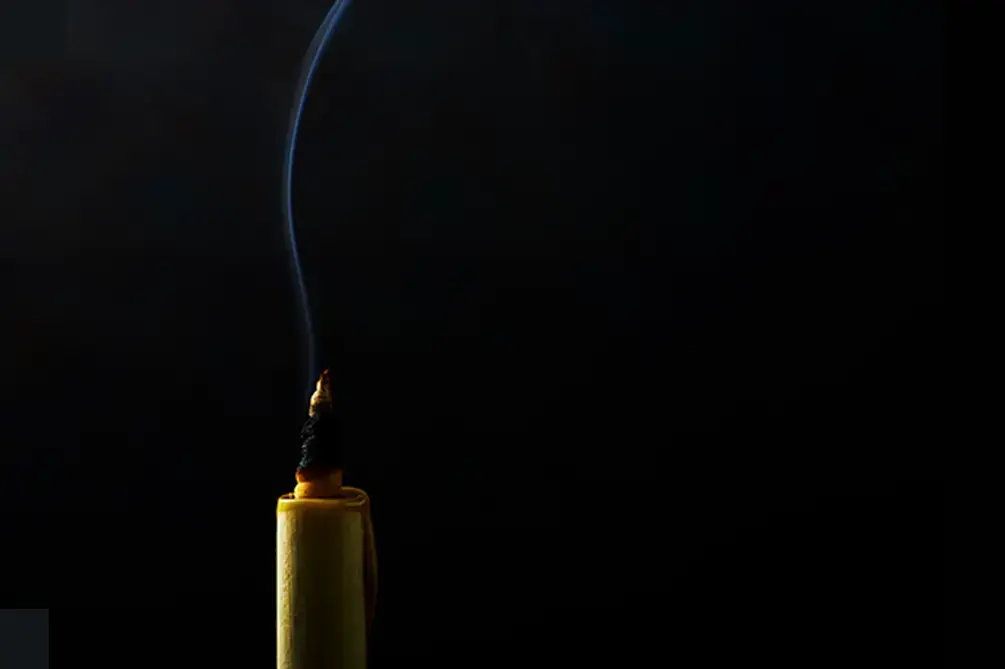
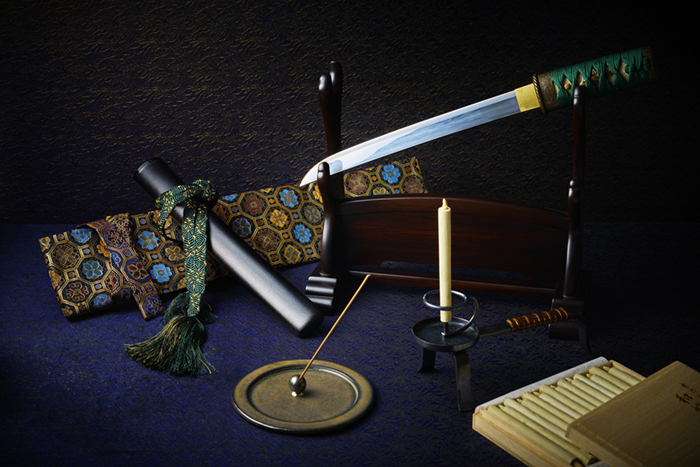
KOTO offers pieces made for those who wish to keep the samurai’s discipline within reach — a Japanese sword and a hand-made candle, produced to order by craftsmen working in traditions two thousand years old. Because each is made individually, no two are ever the same.
- SHARE
-


( tales )