



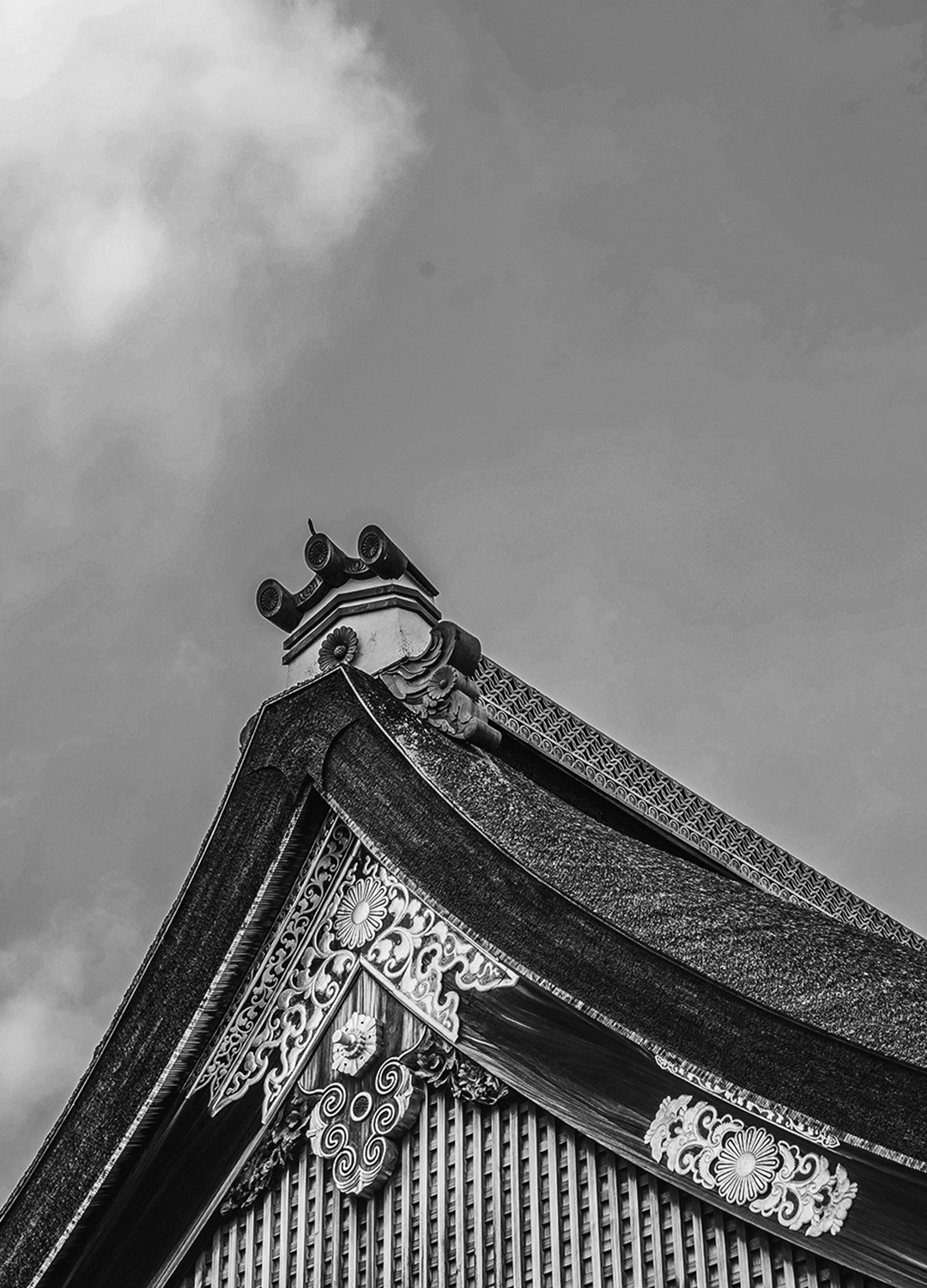
Why Is the Imperial Palace in Tokyo, Not Kyoto? The History Behind Edo Castle
The 皇居 Kokyo — the Imperial Palace in Japan, home to the Emperor and the imperial family — sits in the center of Tokyo, Japan’s capital. Its grounds are extensive, said to cover roughly a tenth of the entire Chiyoda ward that surrounds it, and beyond its role as a residence, it is genuinely loved by ordinary Japanese people: for its appearance, and for events like the 皇居ラン Kokyo Run, the jogging course that circles its outer moat.
Most of the history and cultural heritage associated with the Imperial Family is concentrated in Kyoto Prefecture, 360 kilometers away from Tokyo.Anchor city in Japanese history was Kyoto. But Japanese capital is Tokyo in modern days. It is hard not to notice the imbalance.
This article explains the mystery why the Imperial Palace locate in Tokyo.
The Palace as It Stands Today
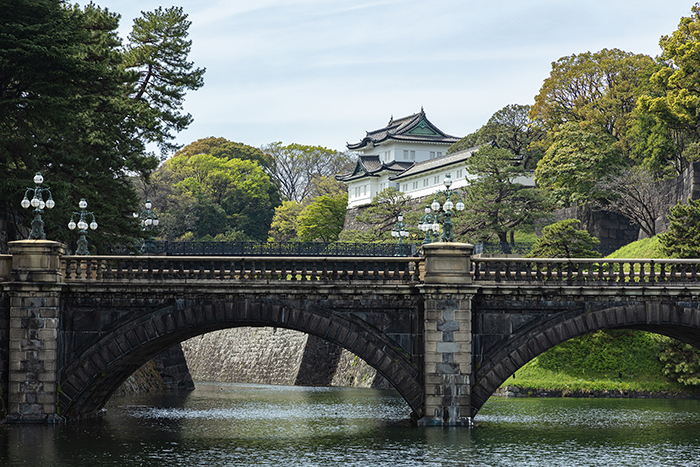
The Imperial Palace occupies the heart of Chiyoda, Tokyo. Beyond the residence of the imperial family itself, it comprises several distinct buildings.
The 宮殿 Kyuden — the Palace proper — is where the Emperor conducts official duties and where court ceremonies are held. The 紅葉山御養蚕所 Momijiyama Imperial Sericulture Farm is where successive empresses have raised silkworms, a practice begun by Empress Shoken, consort of Emperor Meiji. And the 宮内庁 Kunaicho, the Imperial Household Agency, the government body that manages the imperial family’s affairs and the palace grounds, is also based on the site.
Visiting the palace itself requires an advance application or a same-day numbered ticket. One part of the grounds, however, is open without restriction: the 東御苑 Higashi-Gyoen, the East Garden, a public park worth the visit for anyone in the area.
A Move That Is Only 160 Years Old
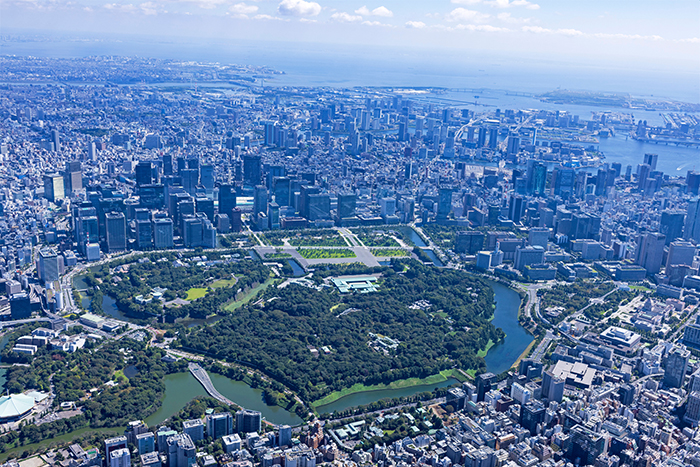
The Imperial Palace did not stand in Tokyo until the Meiji era. Since that move, roughly 160 years have passed, as of 2025.
Kyoto, by contrast, had housed the Emperor since the Heian period began in 794. The exact address changed over the centuries, but for more than a thousand years, until 1868, Kyoto was where the Emperor lived.
Set against a thousand years, 160 is a short span. So what moved the palace from Kyoto to Tokyo? The answer runs through a long stretch of Japanese history.
Why the Building Looks Like a Castle
The Imperial Palace occupies the former 江戸城 Edo Castle. It began serving that new role in 1868, the year the Edo shogunate ended following the 大政奉還 Taisei Hokan (the return of power to the Emperor, 1867) and the Meiji era began. That is also why the building still carries the silhouette of a castle rather than a palace in the conventional sense.
From 1888 the site was known as the 宮城 Kyujo. That name was abolished in 1948, replaced by the name still used today: 皇居 kokyo, the Imperial Palace.
Whose Castle Was It?
Edo Castle originally belonged to the 江戸幕府 Edo shogunate, the government that had ruled Japan, and to the 徳川家 Tokugawa family, its line of successive shoguns.
For roughly 700 years, Japan was governed by samurai, and the Edo shogunate is generally considered the last of these “samurai governments.” Through that entire period, the Emperor and the 朝廷 chotei — the imperial court, made up of the Emperor and the court nobility — remained in Kyoto, holding no political power but serving as the symbolic center of authority.
The Shogunate and the Tokugawa
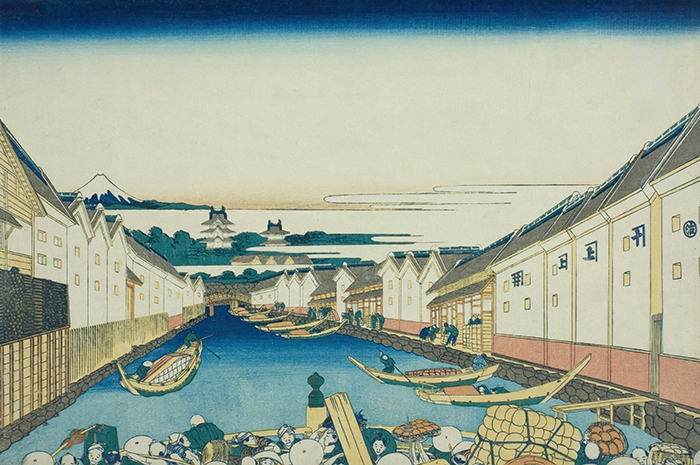
The Edo shogunate was founded in 1603 by 徳川家康 Tokugawa Ieyasu, who established his base in what is now Tokyo. Fifteen successive shoguns governed Japan from there for more than two hundred years. (This author has written at greater length on Tokugawa Ieyasu and the two other unifiers of Japan, Oda Nobunaga and Toyotomi Hideyoshi, elsewhere.)
Many of the cultural forms still loved today trace back to this period: 浮世絵 ukiyo-e, woodblock prints, 相撲 sumo, 歌舞伎 kabuki, and 落語 rakugo comic storytelling all emerged during the Edo period (1603–1868). So did much of the imagery behind Japan’s jidaigeki — its period dramas — many of which are set in this era.
One small measure of how alive that imagery still is: a song called “マツケンサンバ Matsuken Samba,” first released in 2004 by the actor and singer Matsudaira Ken, went through a full revival on social media around 2020, generating collaboration cafes and commercials for years afterward. Matsudaira had played the shogun in the television drama “暴れん坊将軍 Abarenbo Shogun“ — a character based on Tokugawa Yoshimune, the eighth Edo shogun — and is affectionately known by fans as 上様 Uesama, an old term of address for a shogun.
Why the Shogunate Was Founded in Edo
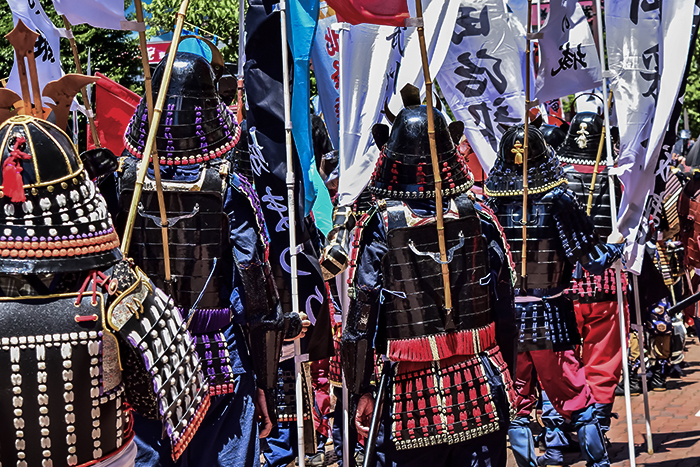
Before Tokugawa Ieyasu founded his shogunate, Japan was in the Sengoku period, the age of warring states, when rival warlords fought one another for the position of supreme ruler — the goal known as 天下統一 tenka toitsu, the unification of the realm.
At the time, Ieyasu held two provinces: 三河 Mikawa (in what is now eastern Aichi Prefecture) and 駿河 Suruga (in what is now central Shizuoka Prefecture). His rival 豊臣秀吉 Toyotomi Hideyoshi, then the more powerful of the two, had him relocated to Edo — present-day Tokyo — reportedly to serve as a defensive stronghold on the eastern front. Edo at the time was underdeveloped and, by most accounts, an inconvenient place to be based.
Ieyasu went on to achieve the unification of Japan, and the Edo shogunate followed. Over roughly two hundred years, transportation and commerce developed steadily, and Edo grew into one of the leading cities in Japan.
Shut Out by Sakoku
During the Edo period, the shogunate pursued 鎖国 sakoku, a policy of extreme restriction on contact with foreign countries. The purpose was to prevent the spread of Christianity, which had been introduced by Portuguese traders during the Sengoku period, and by extension to secure stable rule under the shogunate.
Why Christianity Was Unwelcome
Edo-period society was organized, in principle, around a fourfold order beneath the shogun known as 士農工商 shinokosho.
Class — Description
士 Shi — 侍 Samurai (Japanese warrior) , also called 武士 bushi. Held political and military roles, and formed the ruling class.
農 No — Farmers. Grew crops and were obligated to pay a tax known as 年貢 nengu.
工 Ko — Artisans. Produced crafted goods; building trades such as 大工 daiku (carpenters), 左官 sakan (plasterers), and 鳶 tobi (scaffolders) were especially prestigious.
商 Sho — Merchants. Handled the buying and selling of goods; kimono dealers, known as 呉服商 gofukusho, They changed the department stores after the Meiji era.
Christian teaching holds that all people are equal before God — a principle that sat uneasily with a social order built on fixed rank.
Two clarifications are worth making here. First, this is not offered as commentary on any religion; it is included solely to describe the conditions of the Edo period, and it should be noted that freedom of religion is guaranteed in Japan today under Article 20 of the Constitution. Second, recent scholarship has increasingly treated shinokosho not as a strict hierarchy but as a general term for the whole of the population, and for that reason it is no longer taught in Japanese schools as a rigid class system in the way it once was.
Perry and the Black Ships
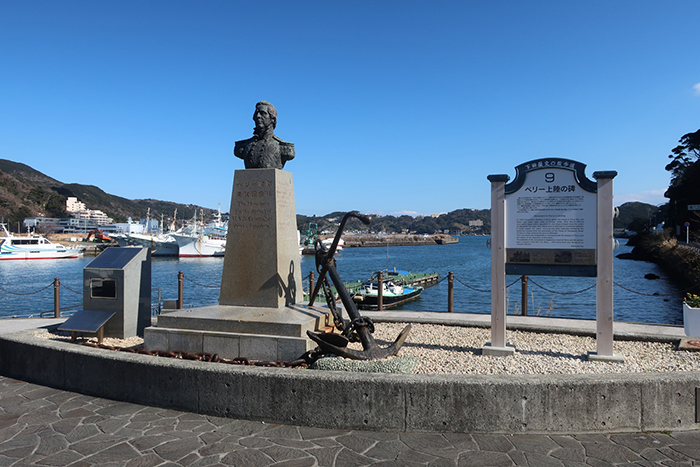
In the midst of this seclusion policy, in 1853, the American Commodore Matthew Perry arrived abruptly in Japan aboard a fleet of large warships — the 黒船 kurofune, Black Ships.
Among his aims was securing Japan as a waypoint for trade across Asia and as a resupply point for American whaling ships. Under sakoku, Japan had a standing policy — the 異国船打払令 Ikokusen Uchiharai Rei — of driving off foreign vessels by force. But the West had, by then, been transformed by the Industrial Revolution, and the gap in military strength left Japan with no real way to turn Perry’s fleet away.
Backed by overwhelming, modern military force, Perry demanded that Japan open itself to the outside world. The shogunate ultimately yielded to the demand.
Treaties, Turmoil, and Public Anger
Under threat of force, the shogunate signed a series of treaties with the United States without the Emperor’s consent — terms that proved unfavorable to Japan. Similar treaties followed with Britain, the Netherlands, Russia, and France.
The unequal terms made daily life harder for ordinary people, and the Emperor of the time was known to dislike foreigners. Discontent toward a shogunate that had made these decisions unilaterally built up steadily.
A Country Divided
The population split into two camps: the 攘夷派 Joi-ha, who wanted to revere the Emperor while expelling foreigners, and the 開国派 Kaikoku-ha, who favored opening the country and learning from the West to strengthen Japan. The two sides grew increasingly opposed.
The shogunate attempted 公武合体 Kobu Gattai, a policy of political union between the shogunate and the imperial court, which had until then been outside the center of power. It did not resolve the conflict. It was during this period that the 新撰組 Shinsengumi, commissioned by the shogunate to keep order in Kyoto and suppress the more radical elements of the Joi-ha, became active — a group whose exploits are still a recurring subject of Japanese period dramas.
The End of Shogunate Rule
The movement to overthrow the shogunate culminated in the Taisei Hokan, ending the age of the samurai and beginning a new nation-building project centered on the Emperor, starting in the Meiji era.
As Japan set out to learn from Western nations and modernize while absorbing Western culture, the new government needed a symbol of itself. The decision was made to use Edo Castle — handed over in a 無血開城 muketsu kaijo, a bloodless surrender — as the new Imperial Palace.
That decision is the direct answer to the question this article opened with: why the Imperial Palace moved from Kyoto to Tokyo in the Meiji era. Edo also had practical advantages. Its transportation and economy were already among the most developed in Japan, and the public had long associated Edo with the seat of government, which made it a natural choice.
Edo was renamed 東京 Tokyo — “the eastern capital” — and Japan’s capital moved with it, from Kyoto to Tokyo. Behind the move was also a wish to balance power between Japan’s east and west while the new government found its footing.
What Became of the Palace in Kyoto
The former Imperial Palace in Kyoto is preserved today as the 京都御所 Kyoto Gosho, the Kyoto Imperial Palace, and is open to the public. It is managed by the Imperial Household Agency, so visitors see the exterior only, but it has been open year-round since 2016 and is well worth the visit for anyone touring Kyoto.
A History Still Visible Today
The reasons behind the Imperial Palace’s move to Tokyo trace back through a long and eventful stretch of Japanese history, and much of that history remains visible in the palace as it stands now.
The final years of the Edo period are known as the 幕末 Bakumatsu, and they produced no shortage of drama, with people on opposing sides of a deep divide. What they shared, whatever their position, was a wish to see Japan become a better country for the generations that would follow. Writing this, this author found themselves thinking back on those figures and their hopes, and grateful for the calm of the present. Anyone passing near the Imperial Palace might find it worth pausing, for a moment, on the history and the hopes that brought it there.
KOTO is a journal of Japanese craftsmanship, culture, and the aesthetic sense behind them.
- SHARE
-


( daily-life )