



What Makes Japanese Hard: Three Writing Systems, Verb-Last Grammar, and Three Levels of Keigo
On social media, one claim about Japanese comes up again and again: that it might be the hardest language in the world to learn. Japanese speakers themselves are more likely to point to something else — the beauty of the language’s pronunciation, and how much of it is built around consideration for whoever is listening. There is also a simple, often-overlooked fact sitting behind the difficulty question: Japan is essentially the only country where Japanese functions as the de facto national language. This article works through the structural features usually blamed for the difficulty, then looks at how Japanese children themselves are taught to read and write their own language — because even native speakers spend years on it.
The Features That Define Japanese
One: Three Scripts, and Sometimes a Fourth
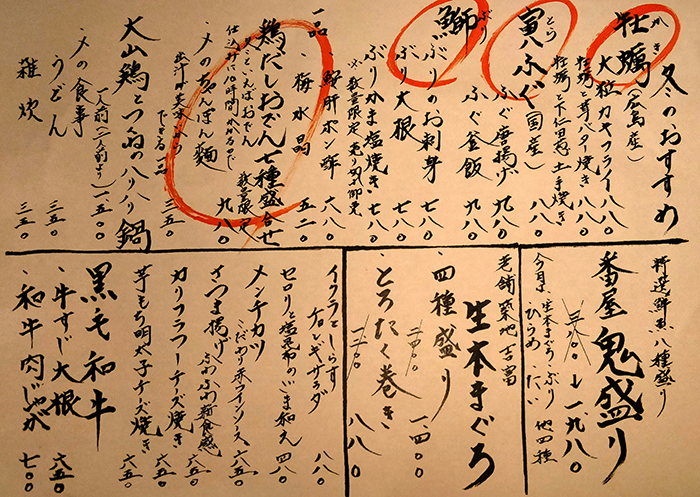
Japanese is written in three systems at once: ひらがな hiragana, カタカナ katakana, and 漢字 kanji — Chinese characters. A learner needs all three before they can read a newspaper, a menu, or a street sign.
Kanji arrived from the Chinese mainland first. Hiragana and katakana were both developed later, in the Heian period (794–1185), as ways of writing the sounds of Japanese with characters simpler than kanji.
平仮名 hiragana descends from a cursive, further-simplified form of kanji known as 草書体 sōshotai, “grass script,” which is why its characters are built from soft, continuous curves: さくら (sakura, cherry blossom), はんなり (hannari, a Kyoto word for quiet elegance). For centuries it was the script court women used for waka poetry and letters. Today it covers:
– native Japanese words (和語 wago) with no standard kanji, such as さしみ (sashimi) or くらし (kurashi, daily life)
– particles and grammatical endings, such as が (a subject marker) or です/ます (polite verb endings)
– ふりがな furigana, the small phonetic guide printed above an unfamiliar kanji — 京都 written with きょうと above it, for instance
片仮名 katakana is built differently: each character is a fragment cut from a kanji. The katakana ア, for example, comes from the left-hand radical of the kanji 阿 (the こざとへん kozato-hen). Monks originally used it to gloss Chinese poetry; today it marks:
– foreign names and places: ロンドン (Rondon, London), ジョン (Jon, John)
– loanwords from other languages: トラベル (toraberu, “travel”), フォトスポット (photo spot)
– scientific and technical terms: サクラ, the species name for cherry (as opposed to the everyday 桜), or オオサンショウウオ, the Japanese giant salamander
– onomatopoeia: バーン (baan, a bang), チカチカ (chika chika, flickering)
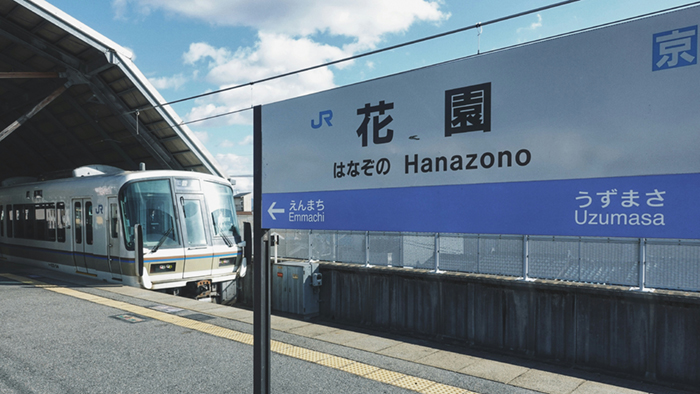
A fourth system rides alongside the other three: ローマ字 rōmaji, the Latin alphabet, used on train signs — JR Hanazono Station in Kyoto prefecture, for instance, posts its name in kanji, hiragana, and rōmaji together — as well as in passports and for typing on a keyboard.
Linguists have a term for running two or more scripts side by side within a single language: ダイグラフィア, digraphia. Outside Japanese, it shows up in Serbian and in Konkani, spoken on India’s western coast — but Japanese is the standard example people reach for, since it is not running two scripts but three at once, each with its own job. Learning all three before anything else is possible is very often the first thing people mean when they call Japanese hard.
Two: The Verb Comes Last
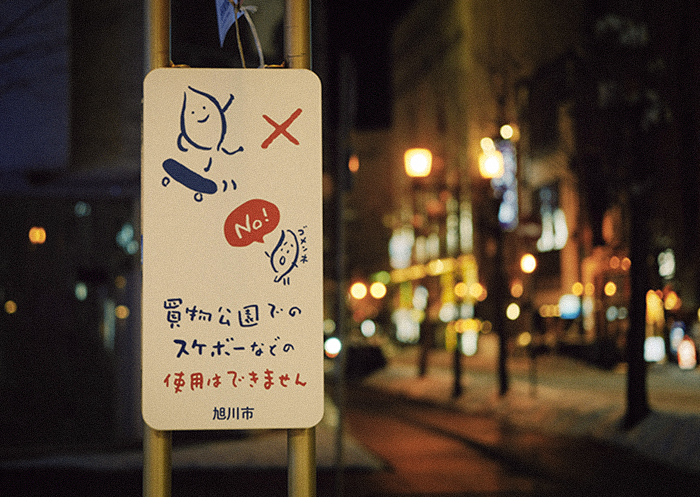
In most of the world’s languages, the verb sits right after the subject. Japanese does not follow that order. Say, in Japanese, that you are going to Kyoto next week to see a friend who studies Japanese culture:
私は日本文化を学んでいる友人に会うために、来週京都へ行く予定です。
The verb — 行く, “go” — arrives at the very end of the sentence. Render the same information in English and the order flips:
“I am going to visit Kyoto next week to meet my friend who is studying Japanese culture.”
Here “going” sits right after the subject. Japanese belongs to what linguists call an SOV language — subject, object, verb — a group said to be concentrated mostly in Asia, and which also includes Korean, Hindi, and Mongolian.
The trade-off is that conclusions arrive late. Because the verb comes last, a listener often cannot tell what a Japanese sentence is actually saying — agreeing, refusing, asking — until its final word. In business settings today, the more common advice runs the other way: state the conclusion first, and let the reasoning follow. Put the Kyoto trip through that filter and it breaks into three short, ordered statements:
私は来週京都に行きます。
理由は友人に会うためです。
その友人は日本文化を学んでいる人です。
“I’m going to Kyoto next week.”
“The reason is to see a friend.”
“That friend is someone studying Japanese culture.”
Set this against the single long sentence above and the difference in clarity is immediate — which is exactly why Japanese speakers are increasingly coached to front-load their conclusions rather than let the grammar bury them at the end.
Three: Three Layers of Keigo
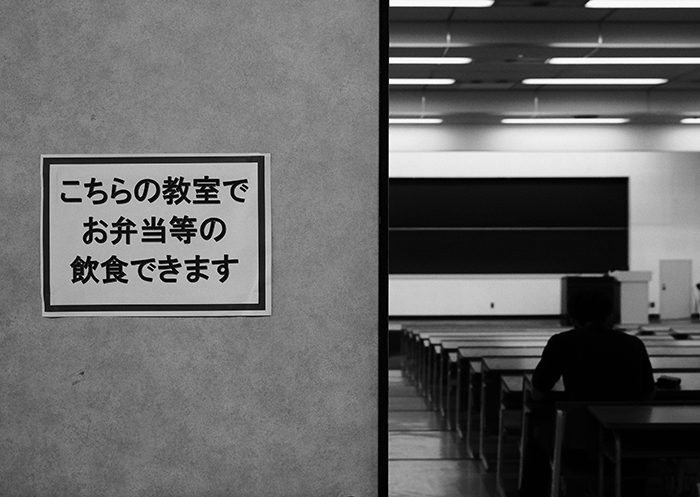

Japanese has a formal register for addressing people of higher status, called 敬語 keigo — and it is not one register but three.
尊敬語 sonkeigo, respectful language, used for the actions of someone senior to you. 食べる (taberu, “to eat”) becomes 召し上がる (meshiagaru): どうぞ、冷めないうちにお召し上がりください — “Please, do have some before it gets cold,” said to a guest. 来る (kuru, “to come”) becomes いらっしゃる (irassharu) or お見えになる (omie ni naru): 山田部長が会議室にお見えになりました — “Section Chief Yamada has arrived in the meeting room.”
謙譲語 kenjōgo, humble language — literally, lowering oneself to raise the other person — used for your own actions when addressing someone senior. 食べる becomes いただく (itadaku): お昼はすでにいただきました — “I have already eaten lunch.” 行く (iku, “to go”) becomes 伺う (ukagau): 明日は午前10時に伺う予定です — “I plan to call on you tomorrow at 10 a.m.”
丁寧語 teineigo, polite language, built by attaching です or ます to the end of a sentence, or お or ご to the front of a noun. It is the register an article like this one would be written in, in Japanese: 明日は11時に京都駅に集合です, “We meet at 11 a.m. tomorrow at Kyoto Station.” 弁当 (bentō, a boxed lunch) becomes お弁当; 確認 (kakunin, confirmation) becomes ご確認. Not every noun accepts them: words borrowed from outside Japan — 外来語 gairaigo, such as ビール (bīru, beer) — do not take お or ご.
On top of all three tiers, speakers often add a クッション言葉 kusshon kotoba, a “cushion word,” to soften a request further: お手数ですが、今一度お忘れ物がないかご確認ください — “I’m sorry for the trouble, but please check once more that you haven’t left anything behind.” 恐れ入りますが、車内でのおタバコはご遠慮ください — “I’m terribly sorry, but please refrain from smoking on board.”
Keigo is hard enough that Japanese people fail at it too — including one of the writers on this project, in a story worth telling in full.
A first-person failure: the double honorific. While working part-time at a museum, this author greeted every visitor at the ticket counter with チケットを拝見いたします — “I will [humbly] examine your ticket.” 拝見 (haiken) is already the humble form of “to see”; いたします (itashimasu) is already the humble form of “to do.” Stacking both onto a single sentence is called 二重敬語 nijū keigo, “double keigo,” and a colleague eventually pointed out that it read as more obsequious than polite. The fix was to drop one layer: チケットを拝見します — “I will examine your ticket.” One honorific, not two, said the same respect more plainly. Overdoing keigo, it turns out, can land as poorly as skipping it.
Four: A Preference for Not Saying Things Outright
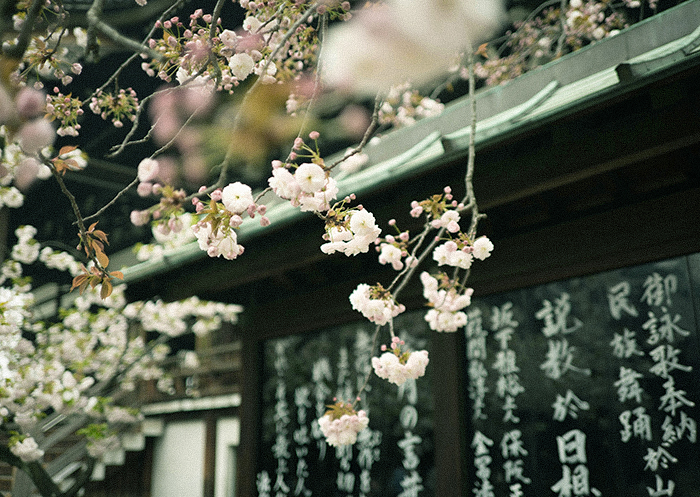
Visitors to Japan often notice this: Japanese speakers can be strikingly indirect about stating their own position. A few things are usually going on at once.
Meaning is read from context as much as from words. Japan is often described as a ハイコンテクスト, “high-context,” communication culture — one where a great deal is left unsaid and instead picked up from tone, expression, and shared background between speakers. It is the same soil that grows expressions like 暗黙の了解 (anmoku no ryōkai, “a tacit understanding, unspoken but assumed”), 以心伝心 (ishin-denshin, “heart transmitting to heart,” understanding without words), and 空気を読む (kūki o yomu, “read the air,” pick up on an unstated mood).
Prohibitions arrive softened. Ride a Shinkansen to Kyoto and the announcements will ask passengers to お控えください from phone calls in the carriage, and ご遠慮ください from smoking. Both phrases translate loosely as “please refrain,” and read at face value they sound almost optional — as if declining were acceptable. In practice, both mean 「やめてください」, “please stop.” The mildness is deliberate: a prohibition delivered this way avoids making the listener feel directly accused.
The root runs back to an old preference for harmony over directness. The idea is traceable at least to the year 604, when Prince Shōtoku (聖徳太子 Shōtoku Taishi) issued the Seventeen-Article Constitution (憲法十七条 Kenpō Jūshichijō). Its opening line, 和を以て貴しと為す (wa o motte tattoshi to nasu) — “harmony is to be valued above all, for in it lies the avoidance of needless conflict” — has stood ever since as a kind of founding statement for the value Japanese culture places on smoothing things over rather than stating them flatly.
The convention is not fixed, either. In recent years a debate has surfaced online over younger Japanese speakers reportedly no longer reading ご遠慮ください as a prohibition at all — taking it instead at its softer face value, as a mere suggestion. Language keeps shifting even at home, in other words, and the correct reading of a phrase like this one is something native speakers now have to keep checking too.
How Japanese People Learn Japanese
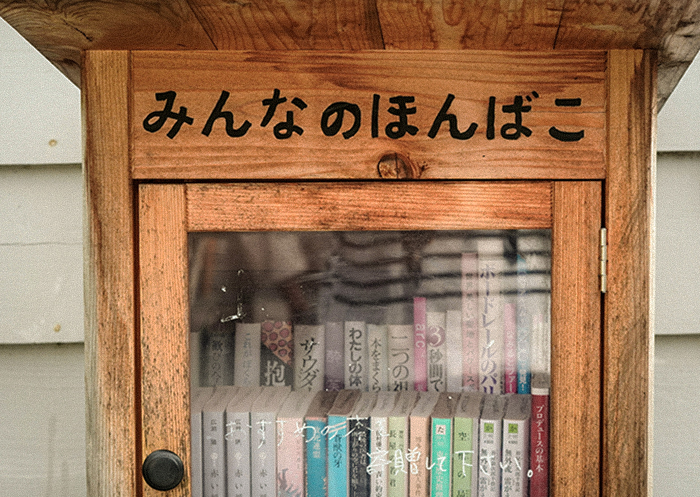
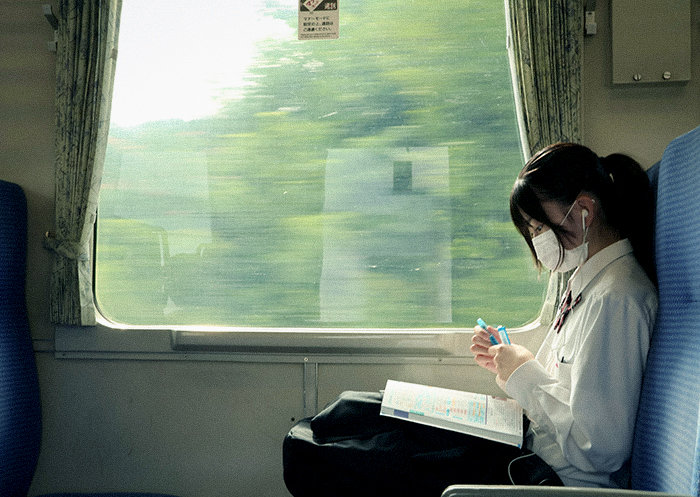
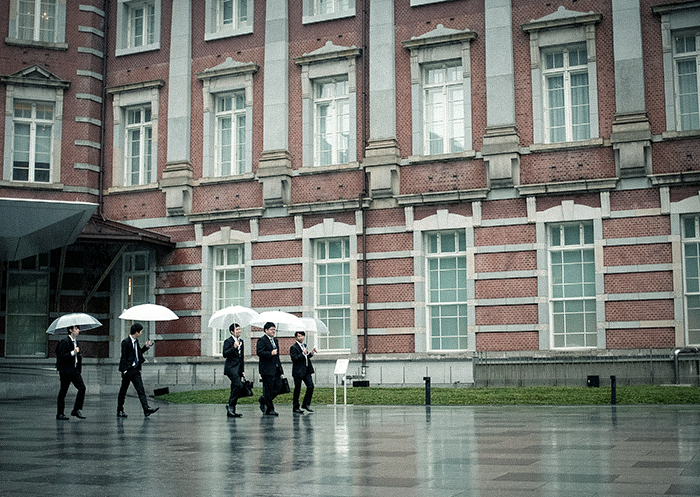
Given how much of the above trips up native speakers, it is worth asking how Japanese people themselves acquire it. The process runs over roughly fifteen years, not one method — and it varies by household and by school, so what follows is a general outline rather than a fixed curriculum.
Early childhood: picture books read aloud. 絵本の読み聞かせ (ehon no yomikikase), being read picture books, is considered formative for language development from a very young age. Picture books lean heavily on onomatopoeia, which gives small children an early, playful introduction to one of Japanese’s more distinctive features.
Around age six: writing hiragana and katakana by hand. Practice usually begins around kindergarten, ahead of formal schooling, though the exact timing depends on the household and the preschool. Once elementary school starts, kanji reading and writing become a core part of 国語 kokugo, the Japanese-language subject.
Elementary school: reading, reading aloud, and composition. Kokugo class covers several skills beyond kanji:
– reading comprehension of literature and essays, including questions that ask students to infer a character’s unstated feelings — training in exactly the high-context reading described above
– 音読 ondoku, reading a passage aloud, which is expected to build correct pronunciation and intonation along with comprehension (this author’s own homework in the practice, decades ago, meant reading aloud to a parent and getting a signature as proof; today the same assignment is often submitted as an audio recording uploaded from a tablet)
– composition, most famously the summer-vacation 読書感想文 dokusho kansōbun, a written report on an assigned book, which trains reading and writing together
– occasional units on haiku (俳句) and senryu (川柳), short-form poetry valued for compressing a scene or a feeling into very few words
– 四字熟語 yojijukugo — four-character idioms — and ことわざ kotowaza, proverbs, such as 石の上にも三年 (ishi no ue nimo sannen, “three years on a stone”: sit on a cold stone long enough and it warms — patience eventually pays off)
By middle and high school, the personal 作文 sakubun of elementary years gives way to 小論文 shōronbun, the short essay — a more logical, more compressed form that some schools require even for entrance exams.
Adolescence: keigo, in practice. Middle school is typically where students start actually using keigo with teachers and senior students, rather than just studying it. Job interviews later require it in earnest, and starting a first job is when most Japanese adults circle back to formally brush up on it. Many people keep building vocabulary well past school — through haiku or tanka as a hobby, or simply through reading — a process this author considers close to endless, given how much room the language leaves for it.
In Closing
None of this is really a case against Japanese so much as a description of what its reputation is built on: three scripts instead of one, a grammar that saves its verb for last, three tiers of formality layered onto ordinary speech, and a habit of leaving things unsaid on purpose. Concern is sometimes raised inside Japan itself, especially about younger generations, over an inability to use “correct” Japanese and over declining reading and writing ability. Spend any real time with the structure of the language, though, and the more common reaction runs the other way: how much depth is packed into it, and how much of it even a native speaker is still learning decades in.
KOTO is a journal of Japanese craftsmanship, culture, and the aesthetic sense behind them.
- SHARE
-


( language )