







Why Japanese Tea Rooms Are So Small: Inside the Architecture of the Chashitsu
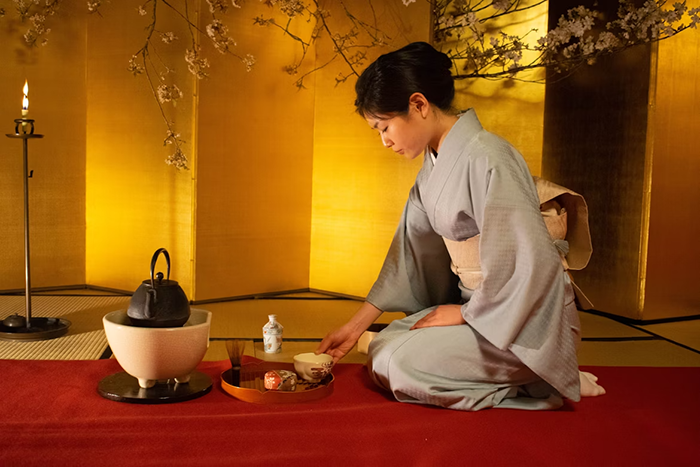
Foreign visitors to Japan increasingly want to do more than watch the country go by — they want to take part in it. Food culture is usually the first thing people reach for, but it is far from the only Japanese practice that draws interest from abroad.
茶道 chado, the Way of Tea, is one of them.
Chado is practiced inside a room called the お茶室 ochashitsu, or 茶室 chashitsu — the tea room. At a glance it looks like an ordinary 和室 washitsu, a Japanese-style room floored in 畳 tatami. It is not. A chashitsu is built to its own set of rules, and each one exists for a reason. This article sets out what draws people to chado, and then looks closely at the room itself.
The Charm of Chado
Chado is assumed to be about drinking 抹茶 matcha and eating a sweet 和菓子 wagashi. That assumption is not wrong, but it is not where the appeal ends.
Because the Room Is Small, People Grow Close
A chashitsu is a genuinely narrow space, and inside it the distance between people closes almost by necessity. Two guests meeting for the first time can, over the course of a single sitting, become unexpectedly comfortable with each other simply because the room leaves no room to stay at arm’s length. That closeness, arrived at quickly and with so little effort, is one of chado’s real charms.
A Kind of Spiritual Discipline
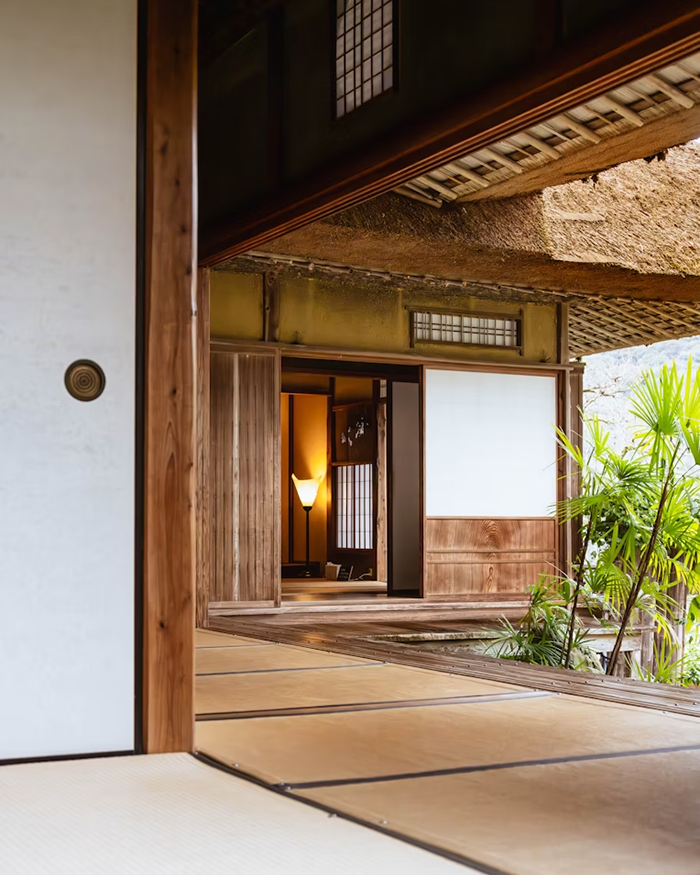
Chado follows a set sequence in which a host prepares and serves tea to a guest, but the sequence itself carries respect, sincerity, and consideration inside it.
Many people have encountered the term 侘び寂び wabi-sabi. 侘び wabi is the practice of accepting a state that has not gone as hoped, and of finding richness in what is plain and unadorned. 寂び sabi is the beauty and calm found inside imperfection — an appreciation for age, for quiet, for things worn rather than new.
In practice, what matters most is that the host performing the service and the guest receiving it hold mutual respect for one another and take pleasure in the tea together. A culture built around that kind of spiritual attention tends to stay with a person afterward — a genuinely fresh experience whether or not they, or for that matter most Japanese people, have ever taken part in chado before.
An Artistic Encounter
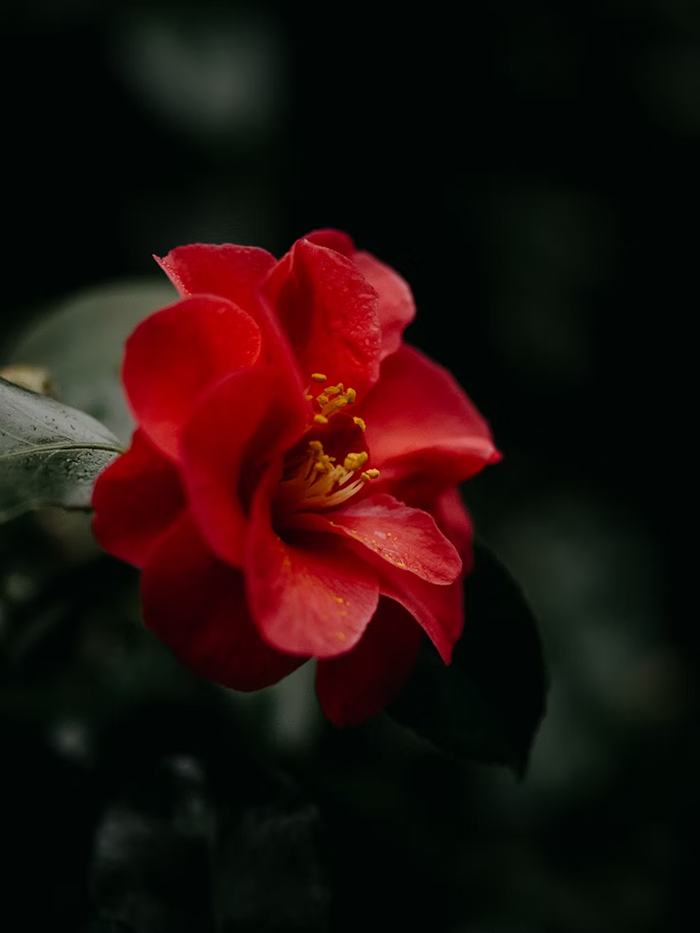
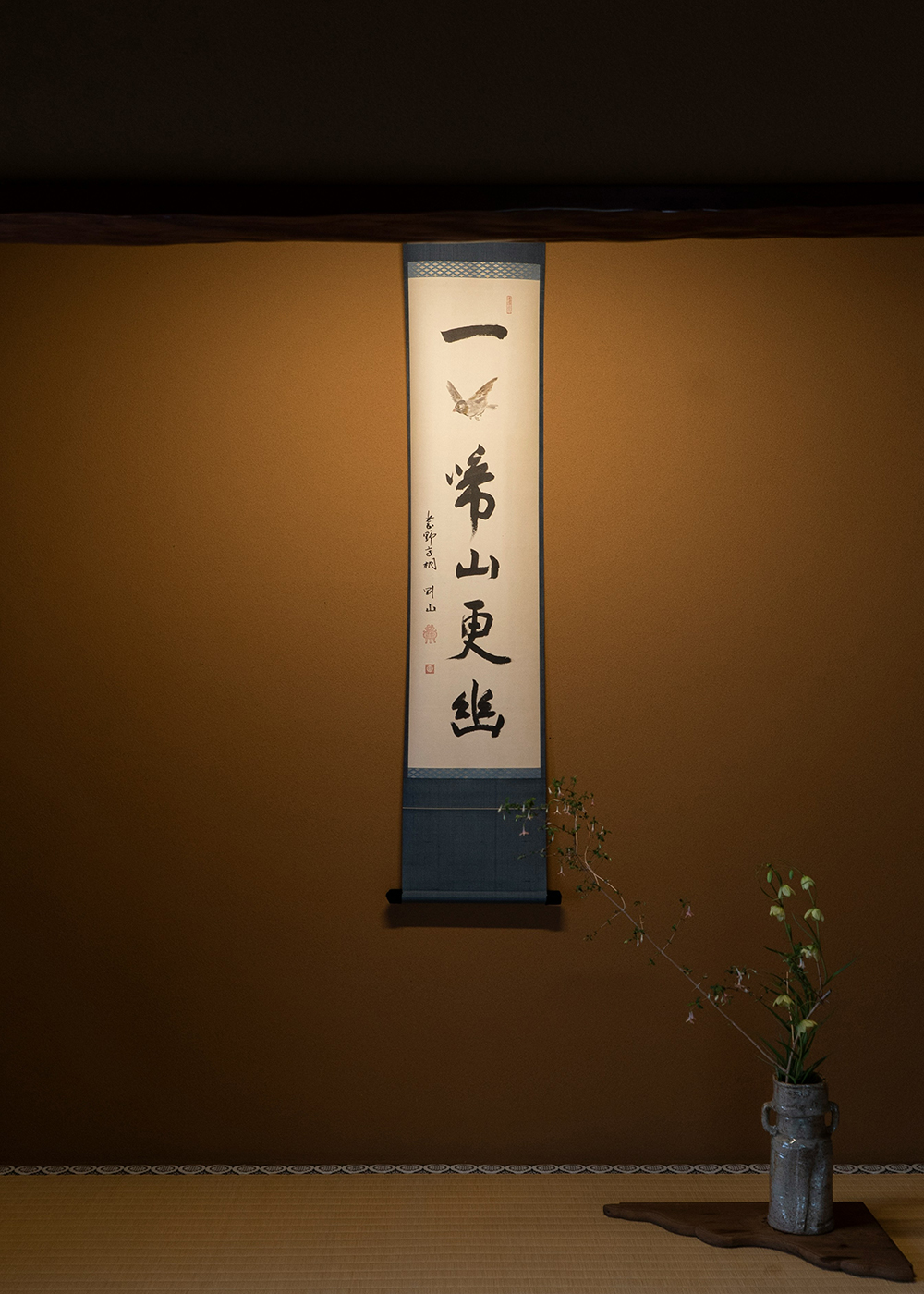
Beyond the beauty of the room itself, chado gathers a surprising amount of art into a small space: a 掛け軸 kakejiku, a hanging scroll, inscribed with phrases such as 日々是好日 nichinichi kore kojitsu — every day is a good day — 和敬清寂 wakei seijaku — harmony, respect, purity, and stillness — 一期一会 ichigo ichie — one time, one meeting — or 且坐喫茶 shaza kissa — sit down, and drink your tea; incense burning quietly; flowers arranged with real precision.
Taking these in is, on its own, worth the visit. Smartphones are generally treated as taboo inside a chashitsu, but where a host gives permission, photographing the scroll or the flowers is usually welcomed.
Characteristics of the Tea Room
Chado carries the image of taking place in an ordinary washitsu. In practice it happens in a purpose-built ochashitsu, and the room said to have been perfected by the tea master 千利休 Sen no Rikyu (1522–1591) is a refined space where Japanese sensibility and artistry meet directly.
More people today convert a single room of their own home into a tea space, but a room only qualifies as a proper chashitsu once it satisfies a specific set of conditions.
Four and a Half Tatami Mats
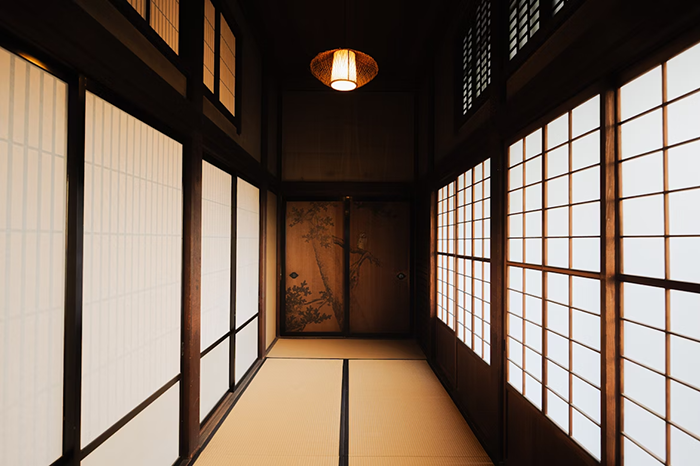
A standard chashitsu measures 四畳半 yojohan, four and a half tatami mats, a space roughly three meters square. Anything smaller than that is called a 小間 koma, a small room; anything larger than a standard chashitsu is a 広間 hiroma, a large room.
The Hearth That Boils the Water
No tea can be made without a 炉 ro, a hearth set into the floor. The ro proper, though, is used only through the winter months. From spring through autumn it is covered over, and a portable brazier called a 風炉 furo takes its place instead.
A Doorway Sixty to Seventy Centimeters Square
Anyone who has actually stepped into a chashitsu will have felt this directly: the entrance is nothing like an ordinary door. It measures roughly sixty to seventy centimeters square, and an average adult finds it distinctly cramped to pass through.
This opening is called the 躙り口 nijiriguchi — the crawling-in entrance — and it is built low and narrow on purpose, so that entering requires bending down and crawling through.
Why demand that posture of every guest? Because the design carries a deliberate meaning: inside the tea room, everyone is equal, whatever their rank outside it. For that reason, in the era when the custom took shape, a guest could not enter a chashitsu while wearing a sword. And because the doorway itself is so narrow, the sense of crossing into another world the moment one is inside becomes that much stronger.
The Mizuya
The 水屋 mizuya is where a host keeps and organizes the tools used in the tea ceremony. It is not part of the tea room itself but sits directly beside it.
The Roji
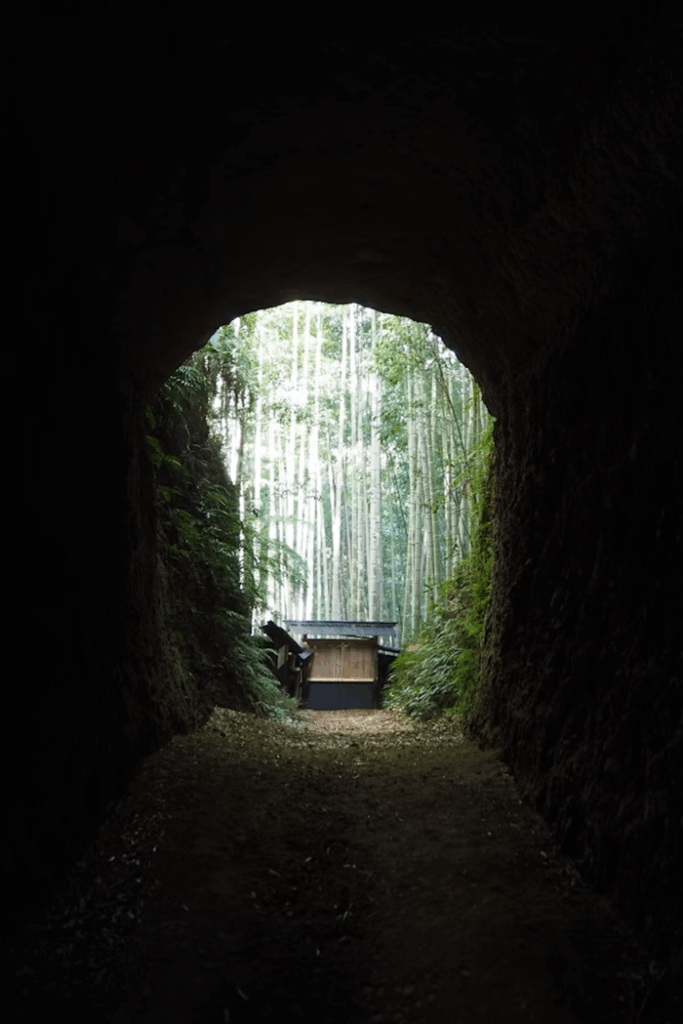
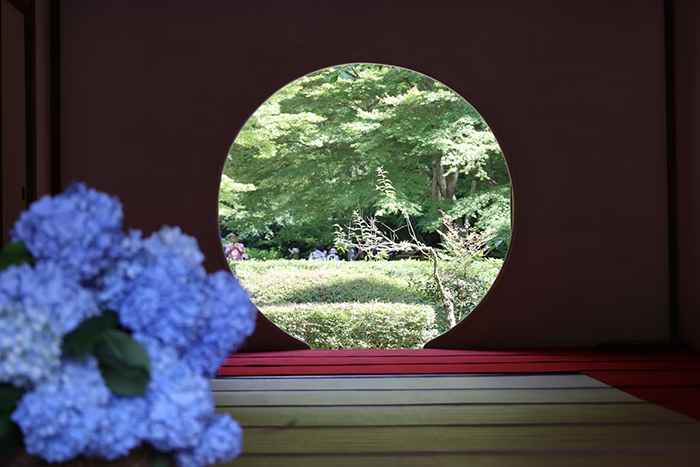
Also outside the chashitsu proper, set in front of it, is the 露地 roji — a garden compressed into a small, deliberate form. Reaching the tea room means walking through it first. Stepping stones, plantings, and raked gravel give it a genuine sense of atmosphere, enough that simply looking at it is its own small pleasure.
In Closing
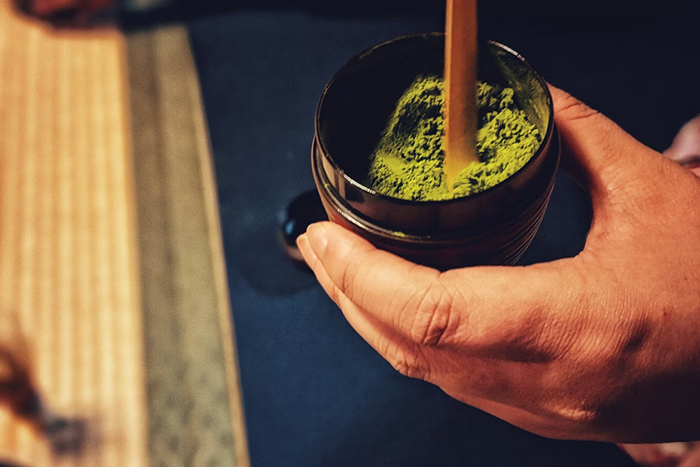
This article has set out the charm of chado and the workings of the room where it happens: a space small enough to draw people close, a discipline that asks something of the spirit, and an art gathered quietly into a few square meters. The ochashitsu itself turns out to be neither an ordinary Japanese room nor an incidental backdrop — it is a space built, in every measurement, purely to serve tea.
For anyone who has not yet stepped through a nijiriguchi, it is worth doing once. It carries the full weight of old, good Japan.
KOTO is a journal of Japanese craftsmanship, culture, and the aesthetic sense behind them.
- SHARE
-


( food )