The History and Enjoyment of Sumo: Essential Knowledge on Rankings, Rules, and Trivia
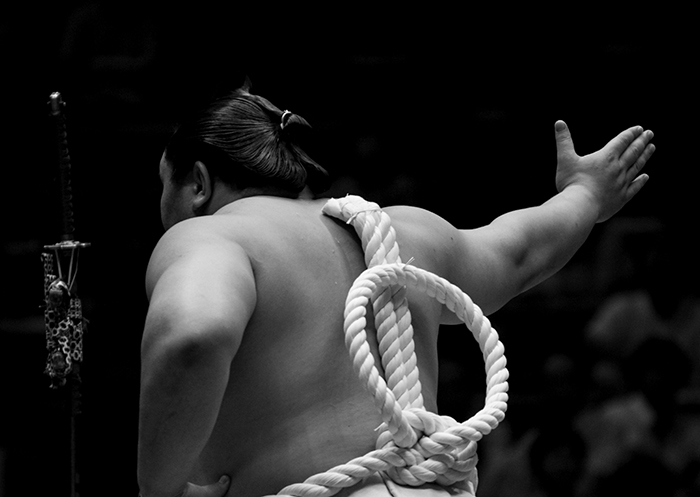
相撲 sumo is Japanese traditional wrestling and the representative national sport of Japan. This sport plays a one-on-one test of strength. For centuries, it has harmonized two distinct aspects: that of a sacred 神道 shintō, indigenous religion of Japan ritual, and that of a professional spectacle evolving from the Edo period. Furthermore, history records that 武士 bushi, Japanese warriors utilized Sumo as a form of rigorous martial training to refine their combat skills.
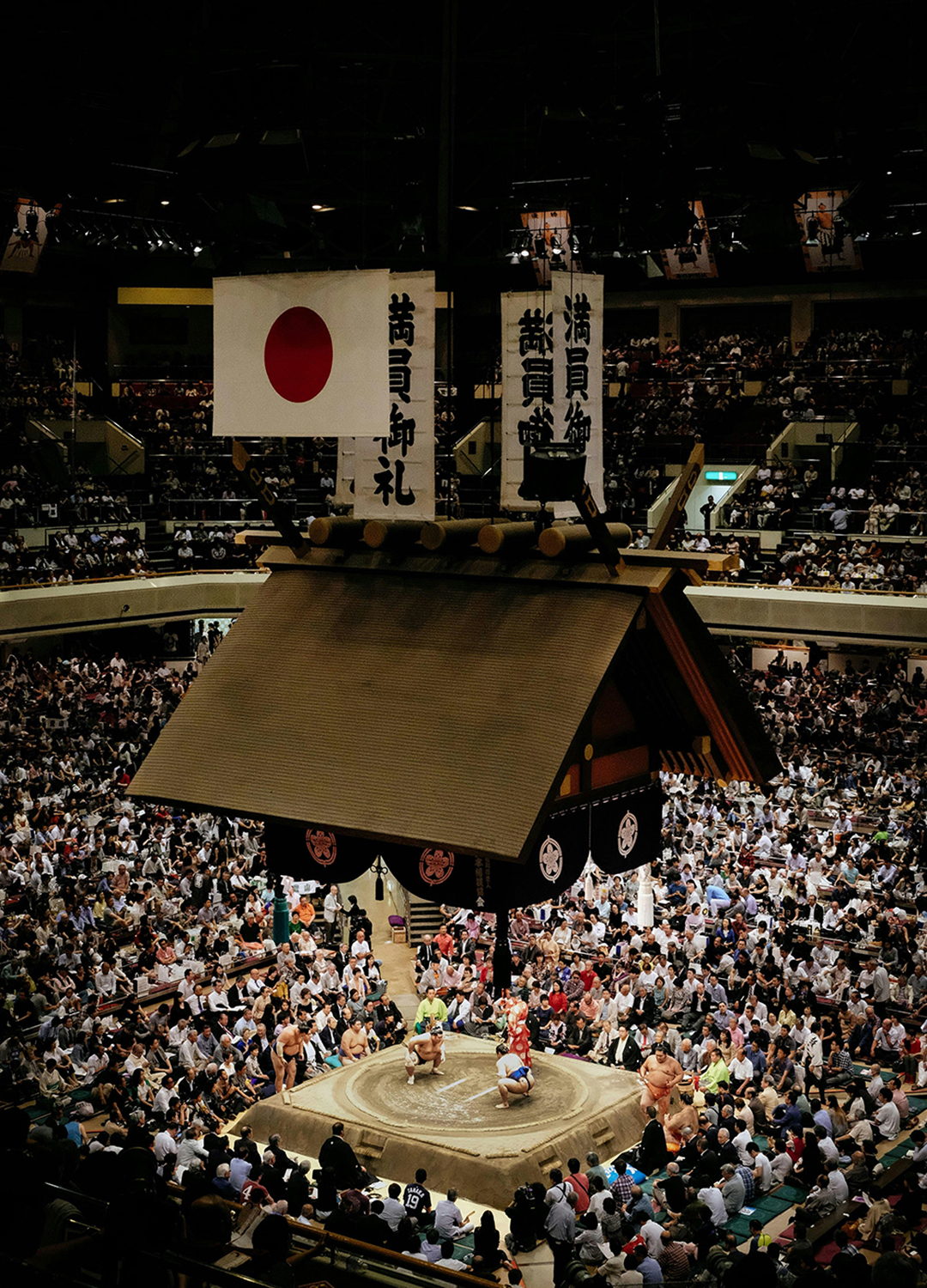
In the contemporary era, 大相撲 ōzumō, grand sumo wrestling, organized by the Japan Sumo Association, serves as the professional realm of the sport. Within this domain, athletes known as 力士rikishi, the wrestlers of sumo contend on the 土俵 dohyō, sumo ring, demonstrating their refined techniques to alter their standing upon the 番付 banzuke, official ranking hierarchy.
The competition takes place across six annual official tournaments, known as 本場所 honbasho, hosted in four major cities: Tokyo, Osaka, Aichi, and Fukuoka.
Moreover, ōzumō preserves unique aesthetic traditions nearly unchanged from the Edo period, including the 土俵入り dohyō-iri, ring-entering ceremony, 化粧回し keshō-mawashi, ornate ceremonial aprons, and distinct 髷 Mage, traditional topknots. The following sections detail the historical evolution and structural principles essential to understanding the art of sumo.
Rules and Mechanics of Sumo
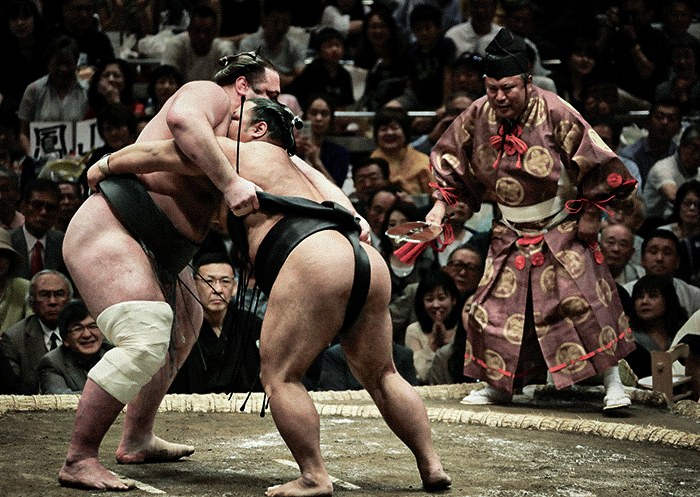
The fundamental rules governing a sumo bout are exceptionally concise. Two rikishi positioned to the East and West sides of the ring, engage in a individual contest of strength and skill.
A contest, known as a 取り組み torikumi, the bout of sumo, is generally decided by one of two outcomes:
- Forcing the opponent outside the perimeter of the dohyō.
- Causing any part of the opponent’s body, other than the soles of the feet, to touch the ground.
The bout commences upon the call of “はっけよい、のこった Hakkeyoi, nokotta“ from the 行司 gyōji, the referee of sumo and continues uninterrupted until a decisive outcome is achieved. At present, eighty-two official winning techniques, termed 決まり手 kimarite, are officially recognized.
Conversely, prohibited actions known as 禁じ手 kinjite exist within the sport. A rikishi who commits a prohibited action forfeits the bout by disqualification, as determined by the gyōji and the panel of judges. Specifically, eight actions are classified as kinjite:
- Striking the opponent with a closed fist.
- Intentionally grasping the opponent’s hair.
- Poking vulnerable area, such as the eyes or the solar plexus.
- Striking both of the opponent’s ears simultaneously with open palms.
- Grasping the opponent’s throat.
- Kicking the opponent’s chest or abdomen upward.
- Bending back one or two of the opponent’s fingers.
- Grasping the front vertical section of the 回し mawashi, loincloth, or inserting fingers from the side to pull it.
(This rule exists primarily to prevent injury near the groin. Furthermore, any deliberate action aimed at unfastening the opponent’s loincloth—thereby forcing a 不浄負け fujō-make — immediate loss by disqualification due to exposure — is strictly forbidden.)
Intriguingly, actions not explicitly enumerated as prohibited remain legal within the rules, such as kicking the legs or applying joint locks. That rikishi consistently refrain from employing such maneuvers is attributed to their inherent pride as custodians of a national tradition and their deep reverence for 相撲道 sumō-dō, the way of sumo.
The Banzuke Hierarchy
Professional rikishi are arranged within a strict hierarchy known as the 番付 banzuke, official ranking list, determined entirely by performance in official tournaments. Re-evaluated following every tournament, the hierarchy ascends through the following ranks:
- 横綱 Yokozuna (grand champion)
- 大関 Ōzeki (champion)
- 関脇 Sekiwake (junior champion)
- 小結 Komusubi (junior champion, second grade)
- 前頭 Maegashira (senior rank wrestler)
- 十両 Jūryō (second-tier professional wrestler)
- 幕下 Makushita (third-tier wrestler)
- 三段目 Sandanme (fourth-tier wrestler)
- 序二段 Jonidan (fifth-tier wrestler)
- 序ノ口 Jonokuchi (introductory rank wrestler)
Makuuchi
幕内 makuuchi is the top division encompasses the ranks from Yokozuna through maegashira. Within makuuchi, the elevated ranks of ōzeki, sekiwake, and komusubi are collectively termed 三役 San’yaku, the three high ranks, holding premier status. The title sekiwake historically originates from the concept of “one who stands at the side of the ōzeki.” This ranking framework traces its origin back to the early development of Ōzumō (grand sumo wrestling) in the Edo period. The maegashira tier is subdivided into numbered ranks from 1 to 10, often referred to as 平幕 hiramaku, unranked wrestlers within the top division.
Jūryō
十両 Jūryō, the division situated just above 幕下 makushita, serves as an important threshold. Sumo wrestlers ranked in either the makuuchi or jūryō divisions are known as “関取 sekitori.” Upon reaching the rank of sekitori, a sumo wrestler is recognized as a professional and becomes eligible to receive a salary for participating in bouts.
Reaching this tier grants significant privileges, including a formal salary, dedicated attendants, and the honor of wearing a customized 化粧回し keshō-mawashi, ornate ceremonial apron during the 土俵入り dohyō-iri ,ring-entering ceremony. Crossing the threshold to become a sekitori represents a paramount objective for aspiring competitors.
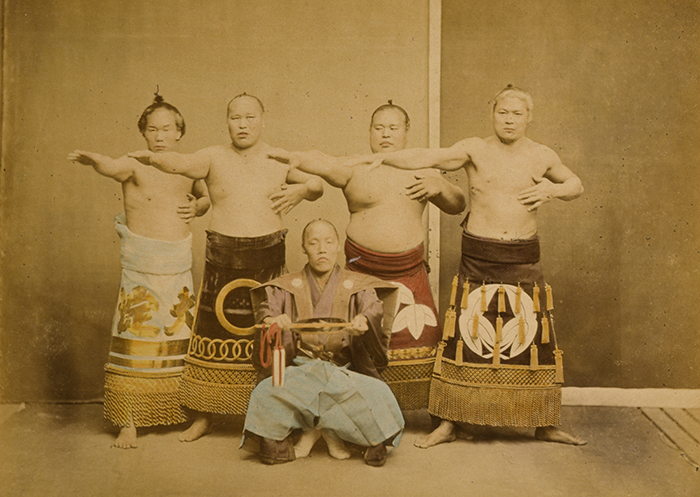
These garments frequently feature intricate embroidery depicting motifs related to the wrestler’s birthplace or personal significance.
Dohyō-iri
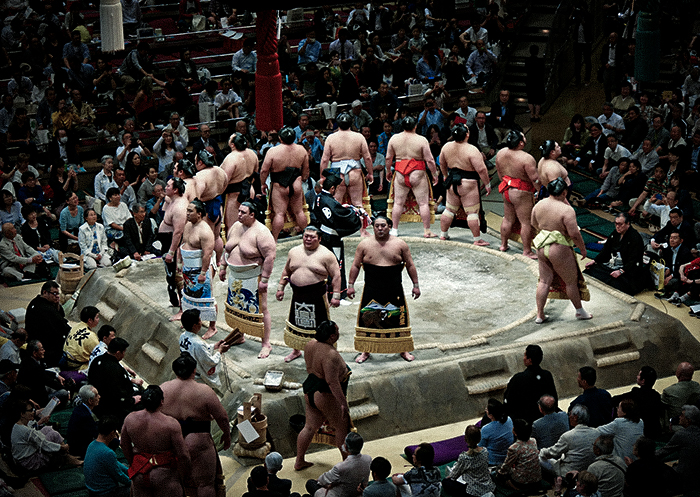
The dohyō-iri, ring-entering ceremony is a traditional ritual performed by 関取 sekitori. Originating as a sacred 神道 shintō, indigenous religion of Japan practice to purify the ring, it serves in contemporary times as a formal presentation of the wrestlers to the assembled audience.
Divided into East and West groups, wrestlers ascend the ring in ascending order of rank, forming a circle before executing prescriptive movements to purify the space.
Notably, a 横綱 yokozuna, grand champion of sumo wrestlers performs a separate, individualized ceremonial entrance, serving as a distinct highlight of the event.
Makushita
幕下 makushita represents the entry level upon joining professional sumo. Sumo wrestlers in this division receive no official salary, living instead on stipends provided by their respective 部屋 Heya, sumo stable.
Consequently, makushita wrestlers fulfill roles as 付き人 tsukibito, the attendants to senior wrestlers, managing daily chores and assisting with training.
Attire and Hairstyles of the Rikishi
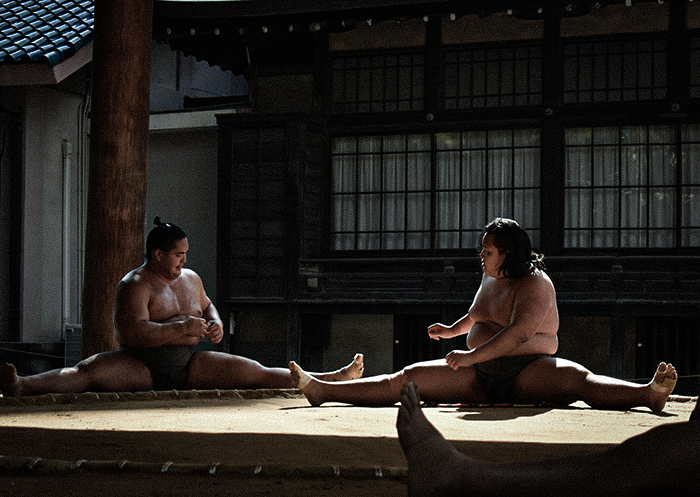
Beyond the ceremonial aprons, 大相撲 Ōzumō, grand sumo wrestling preserves distinctive attire and grooming customs.
Ōichō
The 大銀杏 Ōichō is a topknot shaped like a ginkgo nut. It is a formal hairstyle worn exclusively by sekitori. Its name derives from its resemblance to the leaf of the ginkgo tree. These complex topknots are crafted by specialized artisans known as 床山 tokoyama, sumo hair stylists.
Sumo wrestlers begin growing their hair upon entry into the sumo world to eventually accommodate the Ōichō. While most attain sufficient hair length by the time they reach the top division, exceptional wrestlers who advance rapidly may occasionally enter Makuuchi before their hair can be styled into a full topknot. Such occurrences attract considerable attention across sports news media.
Mawashi
The 回し mawashi, loincloth of sumo is the heavy fabric belt bound around the waist during practice and official tournaments. Wrestlers in the Jūryō division and above wear silk Mawashi, whereas those in lower divisions utilize cotton.
Owing to belief in good fortune and the structural attributes of the material, a Mawashi is never laundered after use; rather, it is dried and maintained continuously. Historically, the permissible colors for tournament Mawashi were restricted to dark shades such as navy or purple. Modern regulations, however, permit Sekitori to select brighter hues, including light blue or pink, according to personal preference.
History of Sumo
The origins of Sumo extend back to the mythological era of Japan. Evolving from ancient religious rituals and ceremonial rites, it developed into a form of martial training for 武士 bushi, Japanese warriors during the medieval period, eventually becoming a professional performance sport during the Edo period(1603–1868).
Ancient Era to the Heian Period: Sacred Rituals and Court Ceremonies
Sumo is recorded in Japanese mythology as a foundational trial of strength. During antiquity, bouts were conducted as religious rites to divine agricultural yields. In the Nara period (710–794) and Heian period (794–1192), court ceremonies known as 相撲節会 Sumai no Sechie, imperial sumo festivals were established, gathering strong men from across the nation to compete before the imperial court.
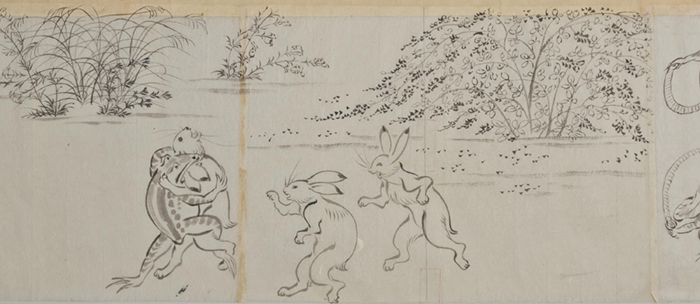
National Institutes for Cultural Heritage Integrated Search System
Tokyo National Museum, Chōjū-jinbutsu-giga (Collection of Tokyo National Museum)
Copy by Maeda Tsuranari (born 1838), Gift of Mr. Hadata Kayuki, cataloged in “ColBase”.
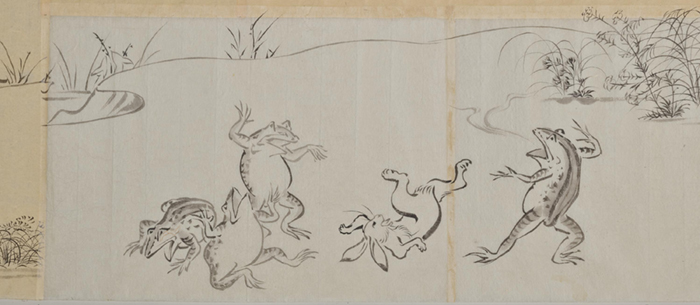
National Institutes for Cultural Heritage Integrated Search System
Tokyo National Museum, Chōjū-jinbutsu-giga (Collection of Tokyo National Museum)
Copy by Maeda Tsuranari (born 1838), Gift of Mr. Hadata Kayuki, cataloged in “ColBase”.
The two images referenced above depict scenes from the 鳥獣戯画 Chōjū-jinbutsu-giga, frequently described as the oldest manga in Japan.
These scrolls illustrate hares and frogs engaged in Sumo wrestling. Created between the late Heian period and the Kamakura period (1185-1333), they confirm the established presence of sumo in Japanese society by that era.
Kamakura to Sengoku Period: Martial Discipline for Bushi
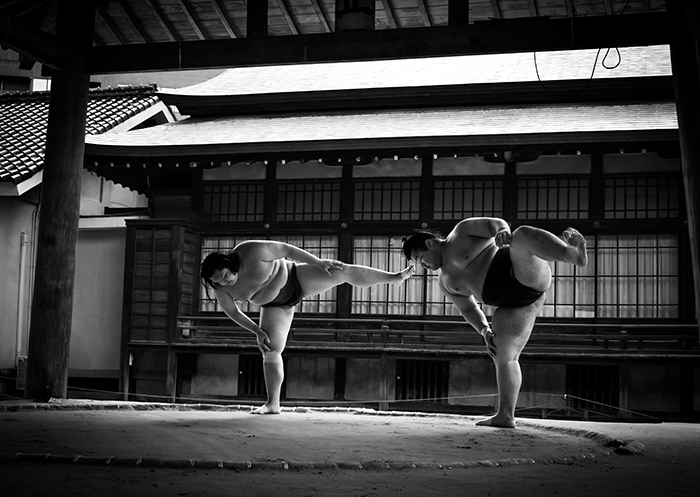
With the transition of political power to the warrior class following the Heian period, the imperial court festivals of Sumai no Sechie ceased.
Sumo was subsequently incorporated into the daily discipline of the bushi as a form of close-quarters combat training suitable for armored warfare.
源頼朝 Minamoto no Yoritomo, founder of the Kamakura Shogunate, harbored a strong affinity for Sumo. Historical records in the Azuma Kagami (Mirror of the East) note that he commanded Sumo demonstrations alongside Yabusame (mounted archery) during festivals at Tsurugaoka Hachimangū shrine.
Thus, for the medieval bushi, sumo functioned primarily as a practical martial art rather than a spectator sport.
During the Sengoku period(1467-1615), sumo further emphasized its character as a martial discipline. 織田信長 Oda Nobunaga famously hosted large-scale command performances, assembling as many as 1,500 competitors annually near Azuchi Castle. Superior wrestlers were awarded prizes or taken directly into his service as retainers. This period exemplified an alignment between the martial ethos of the era and the practical application of sumo.
For Those Who Want to Live Inside the World of the Samurai
KOTO makes traditional pieces that let you experience the samurai spirit directly, in objects rather than images. Product details are here.
Edo Period: Rise of Professional Wrestlers and Special Privileges
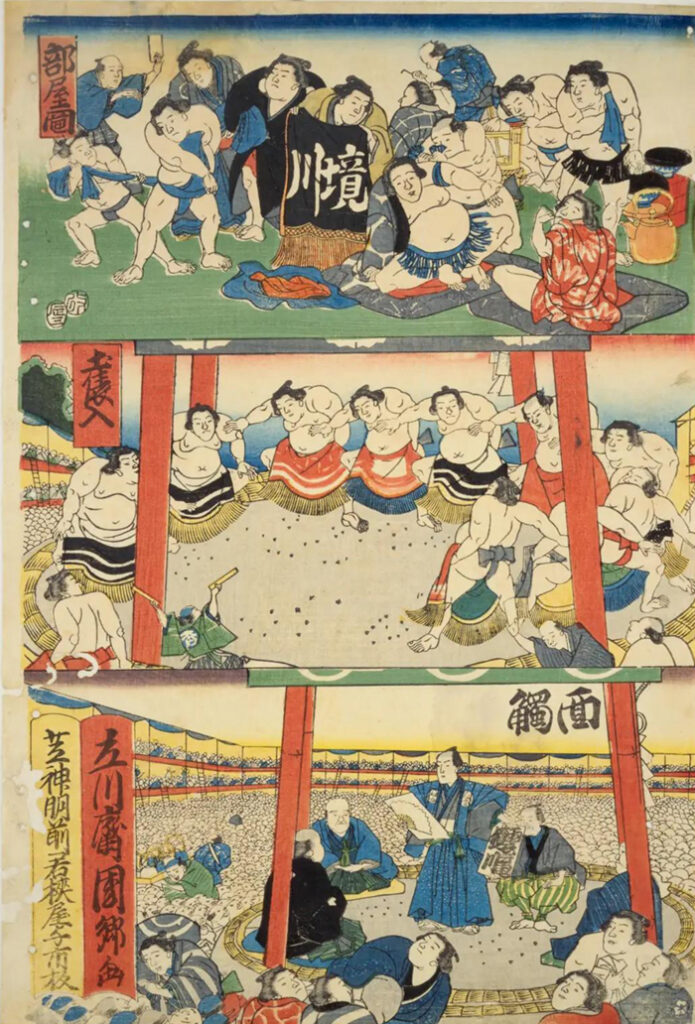
Tachikawa Saikuni, “Room Diagrams, Sumo Ring Entrance Ceremonies, and Face-to-Face Reports,” translated by Wakasaya Yoichi, 1856 (Ansei 3). National Diet Library Digital Collection.
During the Edo period, masterless warriors and men of exceptional strength began pursuing Sumo professionally, leading to the organization of Kanjin-zumō (fundraising sumo tournaments) across Japan.
By the mid-Edo period, regular commercial tournaments became established, laying the structural foundation for the modern 土俵 dohyō, 番付 banzuke, and 部屋 heya.
Regional 大名 daimyō, feudal lords actively competed to employ formidable wrestlers as official retainers to represent their domains in competition. Exceptionally successful wrestlers were granted the extraordinary privilege of 苗字帯刀 Myōji-taitō — the right to bear a surname and wear two swords. This privilege, ordinarily reserved strictly for the bushi and denied to farmers or merchants, underscored the elevated status accorded to elite wrestlers.
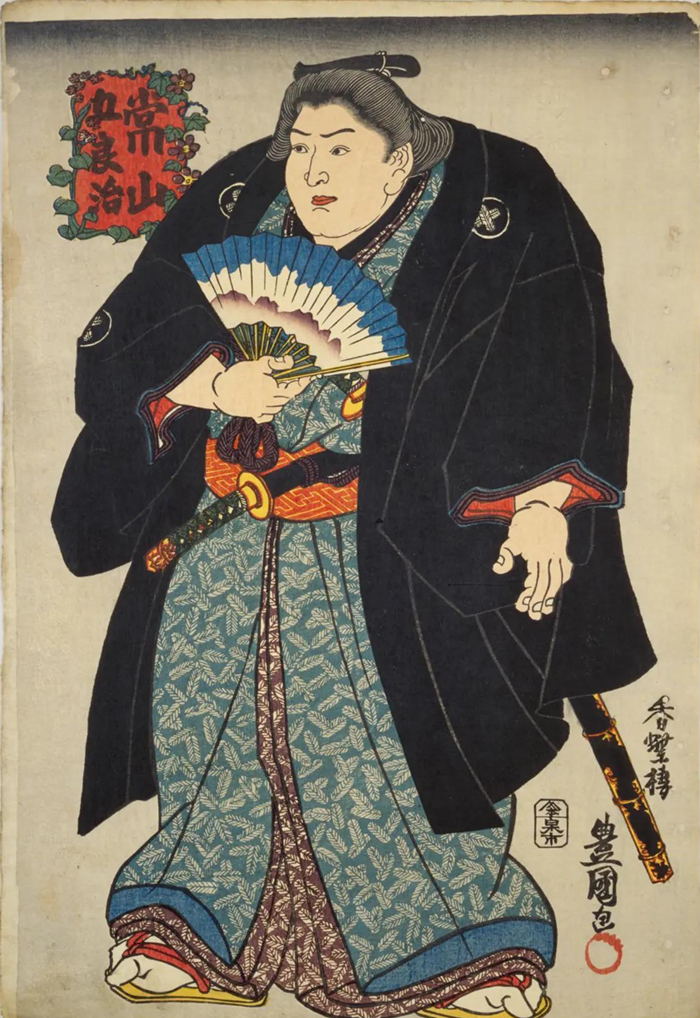
Source Citations:
Kōchōrō Toyokuni, “Jōzan Gorōji,” Izumi-shi. National Diet Library Digital Collection
The Yokozuna and the Concept of Arahitogami
The rank of 横綱 yokozuna, grand champion of sumo wrestlers embodies a spiritual significance transcending physical dominance. Because ōzumō retains its sacred origins, numerous elements — such as the canopy suspended above the ring — derive directly from shintō architectural traditions.
In particular, the heavy braided rope worn by a yokozuna during ceremonial entrances is widely held to share its origin with the しめ縄 shimenawa, sacred rope used to delineate holy spaces in shintō shrines.
Accordingly, a Yokozuna is viewed not merely as the highest-ranked athlete on the banzuke, but as a living symbol of the sacred dignity of sumo.
This perspective has historically led to the invocation of the term 現人神 arahitogami, a deity appearing in human form.
The designation arahitogami reflects more than exceptional physical power; it signifies profound reverence for a competitor who fully embodies the moral dignity, etiquette, and spiritual depth of 相撲道 sumō-dō, the way of sumo.
The Custom of Nyonin Kinsei
By long-standing tradition, women are restricted from ascending the dohyō in ōzumō, a custom known as 女人禁制 nyonin kinsei, exclusion of women.
The Japan Sumo Association cites three primary rationales for maintaining this tradition:
- The historical origins of ōzumō as a sacred shintō ritual.
- The obligation to preserve traditional cultural heritage.
- The concept of the dohyō as a sacred arena dedicated to male training.
Cultural and Contextual Note:
However, historical perspectives regarding the precise origins and formalization of this custom vary among scholars. Some researchers suggest that the rationale connecting shintō purity concepts to the exclusion of women was consolidated during the Meiji era as part of efforts to elevate the social standing of the sumo institution.
Indeed, policies regarding gender boundaries underwent notable shifts from the Meiji era onward. For example, an 1872 government decree (太政官布告 Dajōkan fukoku) formally abolished long-standing restrictions on women entering sacred mountain sites across Japan.
The topic of nyonin kinsei encompasses diverse viewpoints and remains a subject of ongoing dialogue. The Japan Sumo Association explicitly clarifies that its policy does not stem from an interpretation of women as impure, nor does it imply a valuation of gender superiority.
Aspects of Sumo Trivia
The following historical details offer additional insight into the culture of sumo.
The Custom of Throwing Zabuton Upon a Kinboshi
A victory achieved by a 平幕 hiramaku, unranked top-division wrestler over a 横綱 yokozuna, grand champion of sumo wrestlers is termed a 金星 kinboshi. On such occasions, spectators historically responded by throwing their 座布団 Zabuton, Japanese seat cushions into the ring. This movement is called “座布団投げ zabuton-nage“
Although this gesture possesses historic roots, it is currently classified as a prohibited action.
Origins in Nage-bana
The practice of throwing cushions evolved from an older custom known as 投げ花 nage-bana, throwing gifts for sumo wrestlers. During the Meiji era(1868-1912), patrons expressed appreciation for favored wrestlers by throwing personal belongings—such as outer coats or hats—into the ring. Representatives of the wrestler would subsequently return these items to the owner in exchange for a monetary tip.
Following the opening of the original Ryōgoku Kokugikan in 1909, nage-bana was formally prohibited. Nevertheless, the impulse among spectators to throw objects persisted, leading to the adaptation of throwing seat cushions in place of personal attire.
Contemporary Status of Zabuton-Nage
In contemporary competition, throwing zabuton remains a violation of venue regulations. To ensure spectator safety, the Japan Sumo Association frequently issues requests urging restraint.
However, restraining audience enthusiasm during the rare occurrence of a major upset victory remains difficult, and the practice occasionally recurs.
The historical function of nage-bana was eventually superseded by the modern 懸賞金 kenshō-kin, sponsored prize money system. Under this arrangement, corporate sponsors contribute monetary prizes.
Prior to a bout, banners depicting sponsor logos are paraded around the dohyō , serving an active promotional role within the modern sport.
Unattended Tournaments During Public Health Crises
While official tournaments are ordinarily held before live audiences and broadcast nationally, public health crises have occasionally disrupted attendance.
The spread of COVID-19 in 2020 exerted a profound impact upon ōzumō. In March of that year, the Spring Tournament in Osaka was conducted entirely without spectators to mitigate transmission risks. This marked the first instance of a tournament held behind closed doors since 1945, during the final months of World War II.
Subsequent disruptions included the complete cancellation of the May tournament and the relocation of the July tournament to Tokyo without spectators. The cancellation of an official tournament represented only the third such occurrence in modern history, following cancellations in 1946 (due to delays in repairing the damaged Ryōgoku Kokugikan) and 2011 (due to match-fixing investigations).
The sight of wrestlers competing within a silent arena stood as a solemn moment in the history of the sport.
Cultural Impact of Elite Rikishi
Throughout the history of ōzumō , prominent wrestlers have generated widespread public interest extending far beyond traditional sports audiences.
The Waka-Taka Era (1990s)
During the 1990s, the brothers Wakanohana and Takanohana achieved immense national popularity. Bouts featuring the brothers drew extraordinary television viewership ratings, reaching up to 66.7 percent and triggering a national enthusiasm described as the defining sumo surge of the post-war period.
Asashōryū (2000s)
Asashōryū achieved distinction as the first wrestler from Mongolia to attain the rank of Yokozuna (grand champion). His career was characterized by dominant athleticism paired with an assertive personality that challenged conventional expectations within the sport, capturing significant public attention throughout his tenure.
Ōnosato (2020s)
The year 2024 saw a remarkable resurgence in public engagement, driven in part by the emergence of young talents such as Ōnosato. Every ticket across all ninety days of official competition sold out, a milestone unrecorded since the peak of the Waka-Taka popularity twenty-eight years prior.
Oki Koten-zumō: Preserving Ancient Ritual Traditions
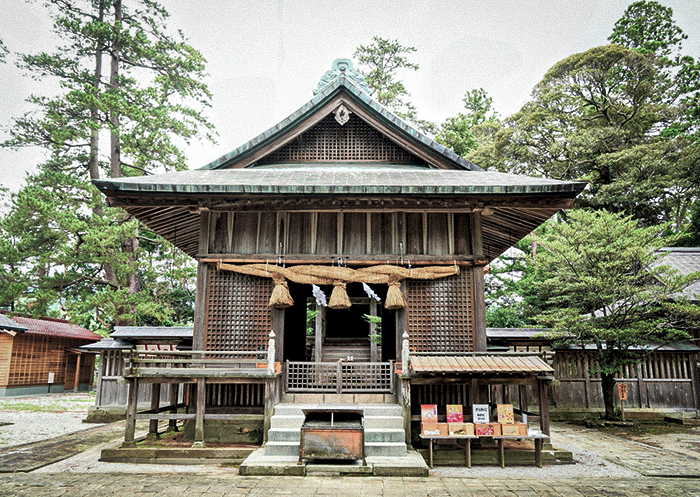
In the Oki Islands of Shimane Prefecture, a rare form of ancient wrestling known as 隠岐古典相撲 Oki Koten-zumō, Oki classical sumo is maintained as a sacred rite. Unlike professional ōzumō, this practice is held exclusively during major civic milestones or shrine festivals, such as the 20th anniversary of the founding of Oki-no-shima Town in September 2024.
Oki Koten-zumō preserves several distinct ceremonial features:
Ninjō-zumō
In this tradition, paired competitors face each other twice. Following an initial bout fought earnestly, a second bout is conducted in which the previous winner intentionally yields victory to the opponent. Those sumo style is known as “人情相撲 ninjo-zumo (reciprocal bouts).”
By ensuring that each wrestler secures one win and one loss, the tradition preserves social harmony within small island communities.
Three-Tiered dohyō
While standard sumo rings consist of two raised tiers, the ring used in Oki Koten-zumō features three tiers. This design evokes the structure of a 三方 sanpō, sacred wooden tray topped with ceremonial rice cakes, reflecting the explicitly sacred character of the event.
Abundant Use of Salt
While salt is routinely scattered to purify the dohyō in professional competitions, the quantity used in Oki Koten-zumō is exceptionally large. Both competitors and audience members participate in scattering salt to purify the sacred space.
Conclusion: A Legacy Enduring Through Time
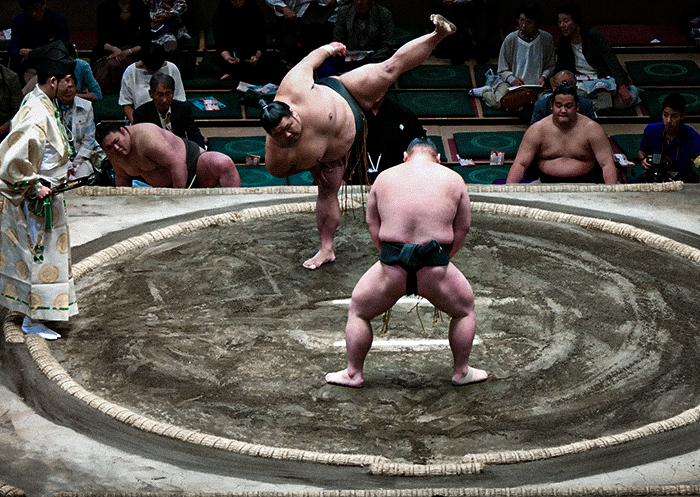
Japanese Sumo has developed over centuries into an enduring cultural institution. Having functioned historically as a sacred rite, a martial discipline for warriors, and a celebrated spectator sport, it continues to hold a distinguished place in contemporary society. Modern broadcasts and media coverage sustain widespread engagement with the sport, ensuring the continued preservation and evolution of this cultural tradition.
Pieces Made to Order, for You
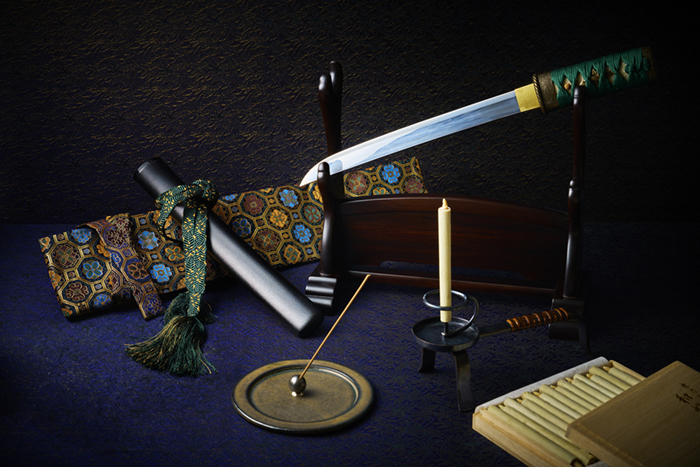
The samurai carried their duty to protect the country as a matter of pride, and fought without flinching from the cost.
The traditional objects they kept close to sharpen body and mind, brought into contemporary form. Made by Japanese craftsmen working within a tradition of manufacture two thousand years old, and finished to the last detail.
Every piece is made to order, so no two are ever the same.
Keeping one at hand is a way of sitting with yourself. Feel the value of your own life through it, and your spirit sharpens of its own accord.
KOTO offers pieces made for those who wish to keep the samurai’s discipline within reach — a Japanese sword and a hand-made candle, produced to order by craftsmen working in traditions two thousand years old. Because each is made individually, no two are ever the same.
- SHARE
-


( craft )