







Japanese Mythology: The Gods Behind the Birth of Japan and Its Imperial Line
Every part of the world has produced its own mythology, shaped by the culture that carried it. These stories have moved readers across every era since.
Japan is no exception. Its myths, read closely, open onto something larger than folklore: a account of how the nation and its imperial line came to be. This article sets out that world, tracing the gods and the stories through Japan’s history.
The Two Texts That Preserve the Myths
Japanese mythology survives chiefly through two texts.
古事記 Kojiki (712)
The Kojiki tells the history of the imperial family in narrative form. It was written using 万葉仮名 man’yogana, a system that assigned Japanese sounds to Chinese characters.
Myth occupies a large part of it, and the Izumo cycle of stories in particular sits at its center. For a time it drew less attention than the Nihon Shoki, the text described below. That changed in the Edo period (1603–1868), when the scholar Motoori Norinaga (1730–1801) argued for its historical and mythological importance, and the Kojiki has been read seriously ever since.
日本書紀 Nihon Shoki (720)
The Nihon Shoki records the founding of the Japanese state in an official capacity. It was written in classical Chinese and follows the conventions of Chinese official history, which suggests it was compiled to present Japan’s founding and history to audiences both at home and abroad.
Compared with the Kojiki, it carries more diplomatic and factual material — foreign relations, policy, matters of public record. It also sets variant accounts alongside its main narrative, a choice that shows an intent to represent regional traditions objectively rather than settle on a single version.
Both texts were compiled by order of Emperor Tenmu (r. 673–686), the 40th emperor in the traditional succession. Together they are known as 記紀 Kiki, and they remain the essential sources for how Japan speaks about its own origins.
The Three Worlds
Japanese mythology takes place across three settings. 高天原 Takamagahara, the High Plain of Heaven, is where the gods dwell, and it has long been treated as the most sacred of the three. 葦原中国 Ashihara no Nakatsukuni, the Central Land of Reed Plains, is the earth where humans live. 黄泉の国 Yomi, the underworld, is where the dead reside.
The First God and the Birth of the Land
The first god to appear in Japanese mythology was 天之御中主神 Amenominakanushi no Kami. Without gender and without visible form, this deity arose as the origin of the cosmos at the center of Takamagahara.
Five more gods followed, known together as 別天つ神 Kotoamatsukami, the Distinct Heavenly Gods. After them came Izanagi and Izanami, the two gods who would create the land.
Izanagi and Izanami
Izanagi and Izanami are Japan’s oldest married gods. Together they became the ancestors of many gods and of the land itself.
The Birth of the Islands
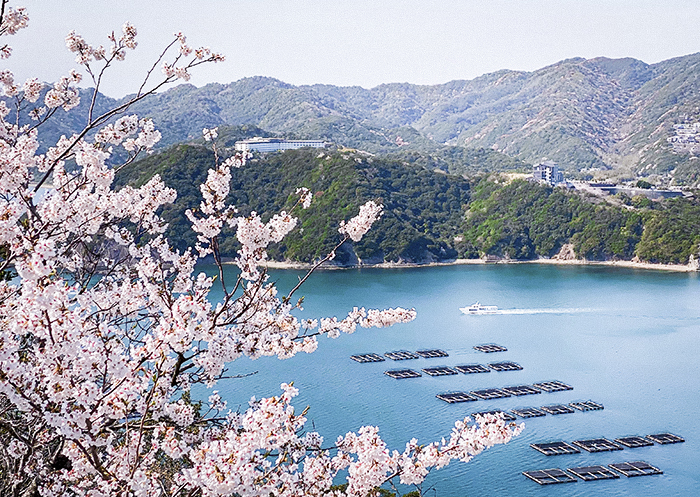
One day the gods of Takamagahara gave Izanagi and Izanami an order: churn the unformed sea of mud and bring forth land.
The two lowered 天沼矛 Amenonuboko, a jeweled spear, from the floating bridge of heaven. They stirred the seawater with it, and when they drew it back up, the brine that dripped from its tip piled into Onogoro Island. Where Onogoro actually stood is disputed, but the area around present-day Awaji Island, in Hyogo Prefecture, is generally considered the most likely site.
Izanagi and Izanami descended to Onogoro, married, and from that union brought forth 大八島国 Oyashima, the Eight Great Islands — the land that is now the Japanese archipelago.
Islands born in this act of creation:
– Awaji (Hyogo Prefecture)
– Shikoku
– Oki (Shimane Prefecture)
– Kyushu
– Iki (Nagasaki Prefecture)
– Tsushima (Nagasaki Prefecture)
– Sado (Niigata Prefecture)
– Honshu
The marriage of Izanagi and Izanami and the birth of these islands together make up the legend known as 国生み Kuniumi, the Birth of the Land.
The Journey to Yomi
After Kuniumi, Izanagi and Izanami went on to give birth to the countless gods of nature. But Izanami died from burns suffered while giving birth to Kagutsuchi, the god of fire.
Grieving, Izanagi followed his wife to Yomi, the land of the dead, and tried to persuade her to return with him. Izanami told him she could not come back at once — she had already eaten the food of Yomi. She said she would consult the gods there, and asked Izanagi not to look at her until an answer came.
Izanagi could not wait. He looked, and found his wife transformed into something monstrous. Terrified, he fled, and an enraged Izanami sent a host of grotesque pursuers after him. Izanagi barely escaped, and sealed the boundary between Yomi and the living world — the slope known as 黄泉比良坂 Yomotsu Hirasaka — behind an enormous boulder.
From the other side, Izanami swore that she would kill a thousand people on the earth every day. Izanagi answered that he would then see to it that fifteen hundred were born every day. This exchange, the myth holds, is why human life is bound to death.
The Three Noble Children
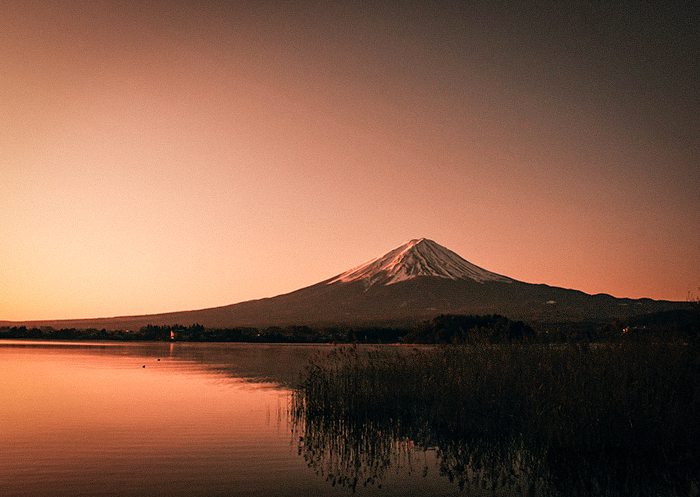
When Izanagi purified himself after returning from Yomi, three sibling gods were born from the ritual. They are known together as 三貴子 mihashira no uzu no miko, the Three Noble Children.
天照大神 Amaterasu

Amaterasu, the sun goddess, was born from Izanagi’s left eye and is the eldest of the Three Noble Children. She stands at the summit of the countless gods and is regarded as the ancestor of the imperial line. That she is a female deity was not lost on later generations — in the early twentieth century, the suffragist Hiratsuka Raicho, a leading voice in the Taisho-era (1912–1926) movement for women’s rights, invoked her in the famous line “in the beginning, woman was the sun.”
The Heavenly Rock Cave
When her younger brother Susanoo went on a destructive rampage, an angry Amaterasu withdrew into 天岩戸 Amano Iwato, the Heavenly Rock Cave. With the sun goddess in hiding, the earth was plunged into darkness, and misfortune spread.
The other gods, led by the wisdom god Omoikane, devised a plan to draw her out: raise a commotion outside the cave, and use the flash of a mirror to catch her off guard. Ame-no-Uzume danced, and the gods around her celebrated with such noise that Amaterasu, curious, opened the cave door a crack. In that moment her own radiant light struck a mirror the gods had set out and reflected back at her. Startled, she was pulled the rest of the way out, and daylight returned to the world.
Other figures in this story:
– Omoikane — the wisdom god who devised the plan to lure Amaterasu out. He later helped guide her grandson Ninigi when he descended to earth.
– Ame-no-Uzume — the goddess whose dance was central to the plan. She is worshipped today as a goddess of the performing arts, and later married Sarutahiko, discussed below.
The Three Sacred Treasures
Two objects from the Amano Iwato episode, together with a sword later presented by Susanoo, became the origin of the 三種の神器 Sanshu no Jingi, the Three Sacred Treasures of the imperial regalia:
– 八咫鏡 Yata no Kagami — the mirror used to draw Amaterasu out of the cave.
– 草薙剣 Kusanagi no Tsurugi — the sword born when Susanoo defeated the serpent Yamata no Orochi, and presented to Amaterasu.
– 八尺瓊勾玉 Yasakani no Magatama — the curved jewel used alongside the mirror in the ritual to draw her out.
A fuller account of the Three Sacred Treasures is available on the Japanese-language site (in Japanese).
月読命 Tsukuyomi
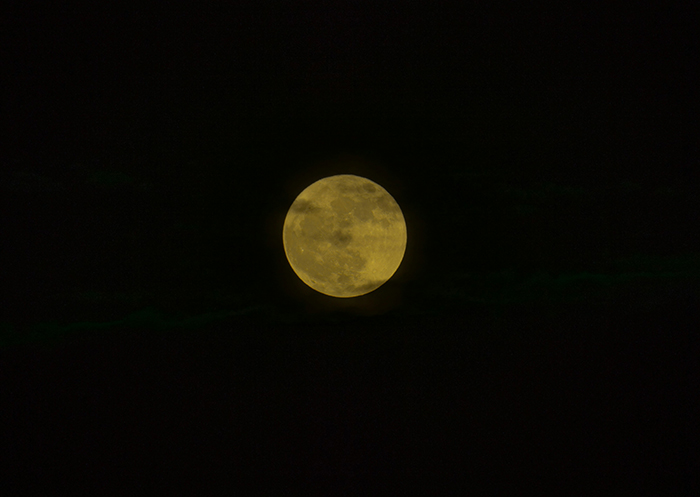
Tsukuyomi, god of the moon and the night, was born when Izanagi washed his right eye. Traditions differ on Tsukuyomi’s gender, giving accounts of both a male and a female deity.
Far fewer myths survive about Tsukuyomi than about Amaterasu or Susanoo. Even so, as the god of the moon, Tsukuyomi has long been worshipped as a deity of the calendar, of agriculture, and of divination. Old Japan kept time by 太陰暦 taiinreki, a lunar calendar based on the moon’s phases, and that calendar and the moon’s cycles governed the timing of farming and fishing. A fuller account of the moon and the lunar calendar is available on the Japanese-language site (in Japanese).
スサノオノミコト Susanoo
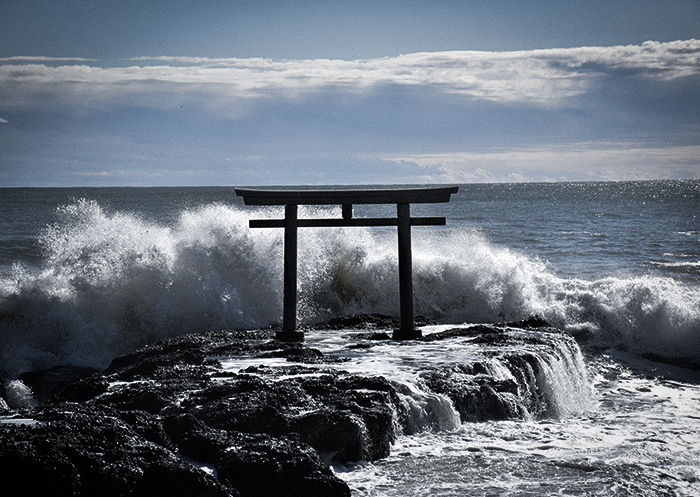
Susanoo, youngest of the Three Noble Children, is a male god who governs storms and the sea. His unruliness repeatedly angered his sister Amaterasu, but the legend of Yamata no Orochi shows a different side of him: a strong sense of justice.
Yamata no Orochi
After his misconduct grew too much to bear, Amaterasu expelled Susanoo from Takamagahara. Wandering the earth, he came upon the family of Kushinada-hime.
Her sisters had already been offered up, one after another, to Yamata no Orochi, a monster with eight heads and eight tails. Kushinada-hime, the youngest, was weeping as her own turn as sacrifice approached when Susanoo found her and fell in love at first sight. He offered to defeat the monster in exchange for her hand in marriage. He succeeded, and the two were wed.
The Sword That Became a Sacred Treasure
From the body of the slain Orochi came a sword, 天叢雲剣 Ame no Murakumo no Tsurugi, later known as Kusanagi no Tsurugi and counted among the Three Sacred Treasures. One tradition holds that the sword was lost beneath the waves at the Battle of Dan-no-ura (1185); today, a stand-in (katashiro) fulfills its ceremonial role.
Other figures in this story:
– Kushinada-hime — the goddess who married Susanoo. Because she was transformed into a comb during the battle with Orochi, she has also been read as a mythic origin for the custom of shrine maidens wearing a comb in their hair. Her name is written 奇稲田姫, “wondrous rice-paddy princess,” which has led some to see her as a virgin deity in service to a god of the rice paddies.
– Yamata no Orochi — the eight-headed, eight-tailed serpent defeated by Susanoo, from whose body the sword emerged.
More Than a Troublemaker
Susanoo’s justice was matched by intelligence. A poem he is said to have composed for his new wife is counted as the oldest recorded in Japan:
Yakumo tatsu / Izumo yaegaki / tsumagomi ni / yaegaki tsukuru / sono yaegaki wo
In modern paraphrase: eightfold clouds rise over Izumo, building an eightfold fence — a fence I raise to shelter my new wife within it. What a fence it is.
His victory over Orochi was equally a matter of strategy rather than brute strength. To keep Kushinada-hime safe, he first transformed her into a comb and tucked it inside his robe. He then set out eight vats of strong sake, got the monster drunk, and struck as it slept. The plan worked, and Orochi was defeated. These episodes are why Susanoo continues to be worshipped as a god of martial valor and of warding off misfortune.
The Descent to Earth
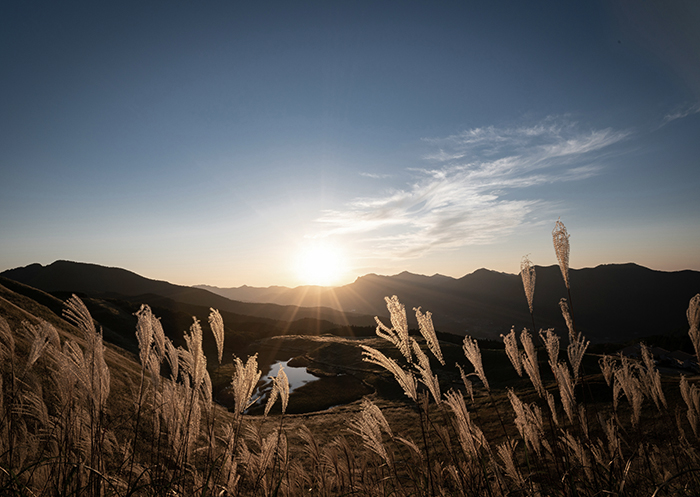
Amaterasu’s grandson, Ninigi, descended from Takamagahara to Ashihara no Nakatsukuni, the earth. This event is known as 天孫降臨 Tenson Korin, the Descent of the Heavenly Grandson.
ニニギノミコト Ninigi
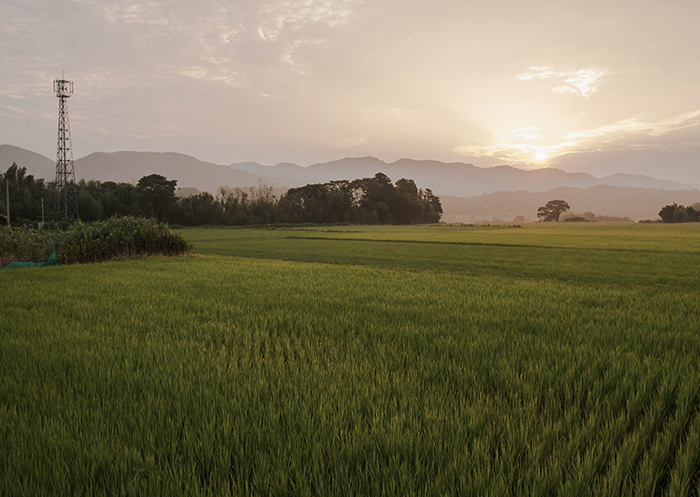
Ninigi is Amaterasu’s grandson and the great-grandfather of Emperor Jimmu, the first emperor in the traditional succession. Ordered to pacify an earth that was then in turmoil, he descended at Takachiho, in what is now Miyazaki Prefecture.
Before he left, his grandmother Amaterasu entrusted him with the Three Sacred Treasures, and it is this line of descent that has made him the mythic ancestor of the imperial family. Because he is credited with bringing rice cultivation to Takachiho on his descent, he is also worshipped as a god of the harvest and of industry.
Another figure in this story: Sarutahiko, who guided Ninigi’s descent to earth and later married Ame-no-Uzume. One tradition holds him to be an ancestor of the tengu.
Did Ninigi Shape Human Lifespan Too?
The exchange between Izanagi and Izanami at Yomi is usually cited as the origin of human mortality. A second tradition traces the same outcome to an episode in Ninigi’s own life: his marriage.
Wanting to Marry One of Two Sisters
Ninigi met a beautiful woman on a beach and asked her to marry him. She told him he would need her father’s blessing first.
When Ninigi went to her father, Oyamatsumi, with his proposal, Oyamatsumi set a condition: Ninigi would have to marry both of his daughters together. One was the woman Ninigi had met on the beach, the beautiful Konohanasakuya-hime. The other was her sister, Iwanagahime, whose appearance Ninigi found unappealing — and marrying her was the one part of the arrangement he could not accept.
In the end, Ninigi took only the younger, beautiful Konohanasakuya-hime as his wife, and sent her elder sister Iwanagahime back, along with the wedding gifts that had accompanied her.
Why Oyamatsumi Wanted Both Sisters Married
Oyamatsumi’s insistence on marrying off both daughters together had a reason: each carried a distinct quality.
Konohanasakuya-hime governed the prosperity of a household, blossoming the way flowers do. Iwanagahime, meanwhile, carried the quality of eternal life. Because Ninigi rejected her, his descendants — including, the myth holds, all of us — were given a finite span of years to live instead.
Other figures in this story:
– Konohanasakuya-hime — celebrated for beauty likened to cherry blossoms, and married to Ninigi. To prove that her unborn child was truly his, she is said to have given birth inside a burning hut, a mark of her strength of will.
– Iwanagahime — Konohanasakuya-hime’s elder sister. Though her marriage to Ninigi did not go forward, she retained her rock-like, enduring quality, and is regarded today as a source of blessings for health and long life.
– Oyamatsumi — a mountain god, born of Izanagi and Izanami. Because he served sake at his daughters’ wedding, he is also worshipped as a god of sake brewing.
Gods of Nature
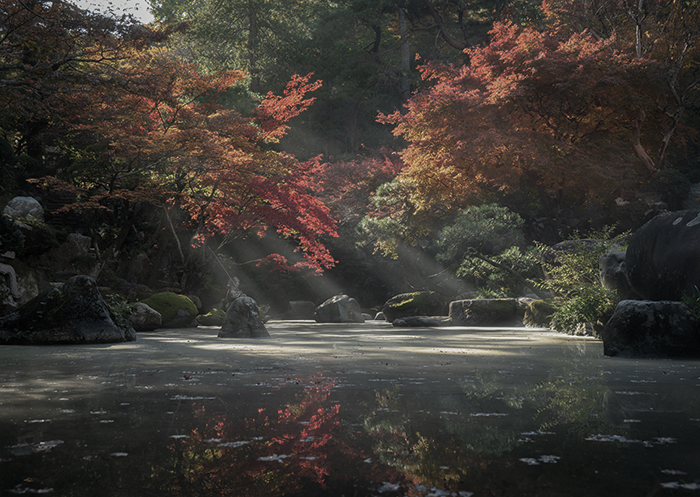
Shinto, closely bound to Japanese mythology, holds that divinity is not limited to particular beings but present throughout the natural world — a concept known as 八百万の神 yaoyorozu no kami, the eight million gods.
Among the gods most closely tied to nature:
– Hi no Kagutsuchi — god of fire, whose birth cost his mother Izanami her life.
– Uwatsutsunoo, Nakatsutsunoo, and Sokotsutsunoo — three gods of water, born from the purification ritual Izanagi performed on his return from Yomi. They are also worshipped as gods of the sea and of safe passage at sea.
– Watatsumi — a sea god about whom few traditions survive, leaving much of his nature obscure.
– Kamowakeikazuchi — god of thunder. The “wake” in his name has been explained two ways: as a reference to youthfulness, or as a description of lightning splitting the sky.
In Closing
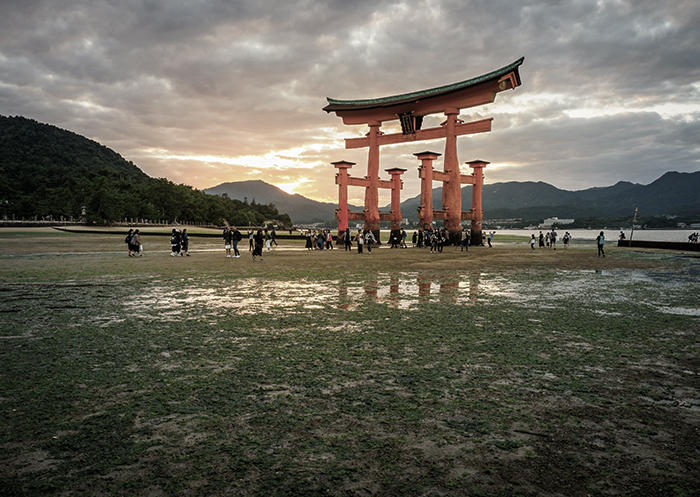
Japanese mythology is populated by gods rooted in the natural world, and as the yaoyorozu no kami of Shinto, they have long been a source of spiritual grounding for the Japanese people.
What this author finds most striking is how human these gods are. Amaterasu, the supreme deity of the pantheon, is shown in the Amano Iwato episode as something other than perfect or complete. She goes on, afterward, to face many of the myths’ events by consulting and working alongside the other gods, growing as she does. Gods who are imperfect, rather than singular and absolute as in a monotheistic tradition, end up resembling us more than they differ from us.
In regions of Japan with deep ties to these myths, the legends and cultural heritage connected to these gods are still carried forward today. If this article has left you curious about Japanese mythology, visiting one of those places is a fitting way to follow that interest further.
KOTO is a journal of Japanese craftsmanship, culture, and the aesthetic sense behind them.
- SHARE
-


( philosophy )