






Japanese Rice Fields Through the Four Seasons: A Landscape Shaped by Rice Farming
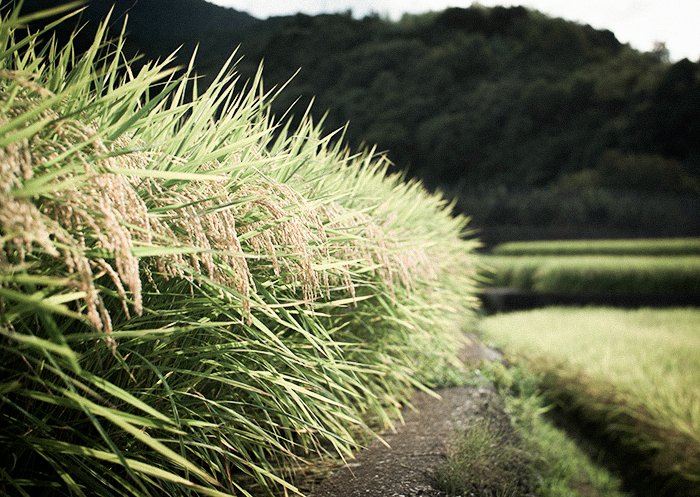
Rice farming utilizing 田んぼ tanbo, Japanese wet rice fields, has been practiced in Japan since ancient times.
The fields created their own calendar. The scenery around them shifts with the crop itself, and a set of seasonal customs and festivals has grown up alongside that shift.
This article walks through what a rice paddy looks like across 4 seasons—spring, summer, autumn, and winter.
Spring: The “Water Mirror” Born From Planting
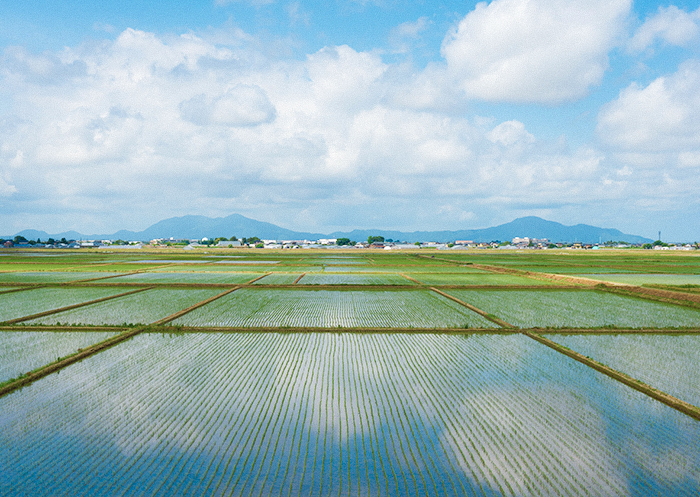
田植え taue, rice planting begins gradually from mid-April and typically peaks around Golden Week, Japan’s early-May holiday stretch. Seedlings raised earlier from seed are transplanted into rice fields that have already been flooded with water.
While the rice seedlings are still short, the flooded rice field is mostly water, and that water reflects the scenery around it. The effect has a name: 水鏡 mizukagami , the “water mirror.”
It appears best on calm, windless days, and a clear blue sky caught in a still paddy is a genuinely refreshing sight.
Other Places in Japan Known for 水鏡 mizukagami
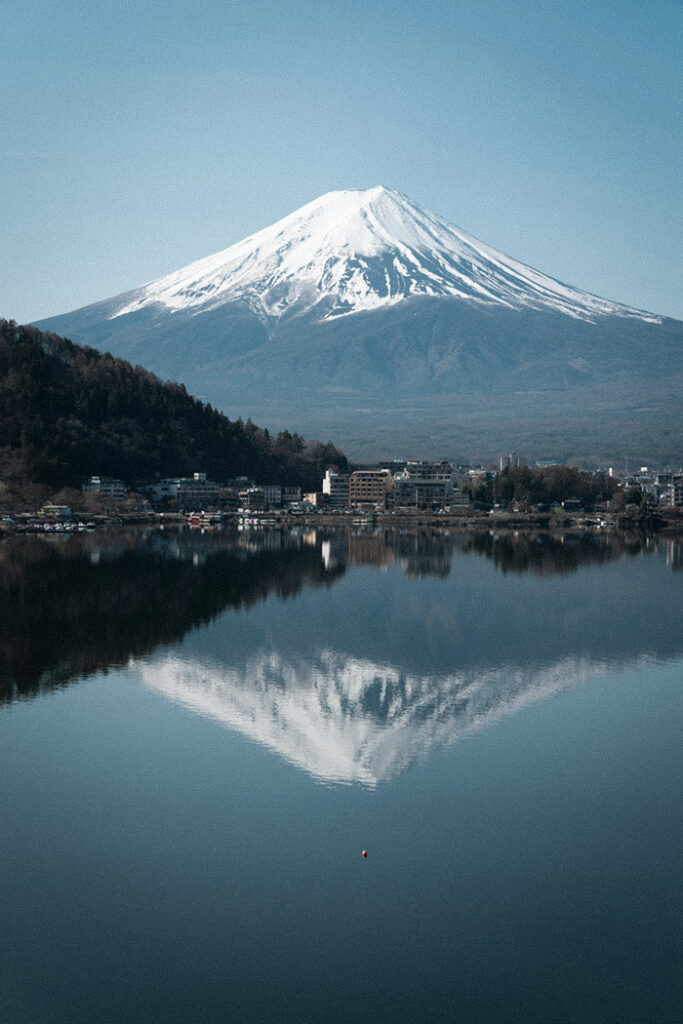
Known as 逆さ富士 Sakasa-Fuji, “upside-down Fuji,” it is considered one of Japan’s most celebrated scenic views.
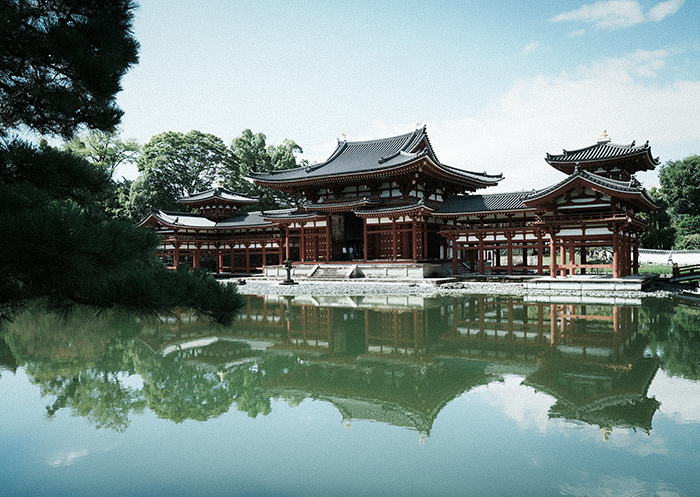
Built to evoke the Buddhist Pure Land, the hall is a UNESCO World Heritage Site and the model for the image on the 10-yen coin.
Rice fields are not the only place to find this effect in Japan. Two 水鏡 mizukagami here are known well beyond the country’s borders.
At Lake Kawaguchi in Yamanashi Prefecture, on a still day, Mount Fuji appears twice: once rising into the sky and once inverted in the water below it. The reflection is known as 逆さ富士 Sakasa-Fuji, “upside-down Fuji,” and it counts among Japan’s most celebrated scenic views.
In Kyoto, the Phoenix Hall of Byodo-in temple was built to evoke the Buddhist Pure Land, and its reflecting pond was part of that design from the start. The hall is a UNESCO World Heritage Site and the model for the image struck on the 10-yen coin.
Summer: The Season of Green, Growing Rice
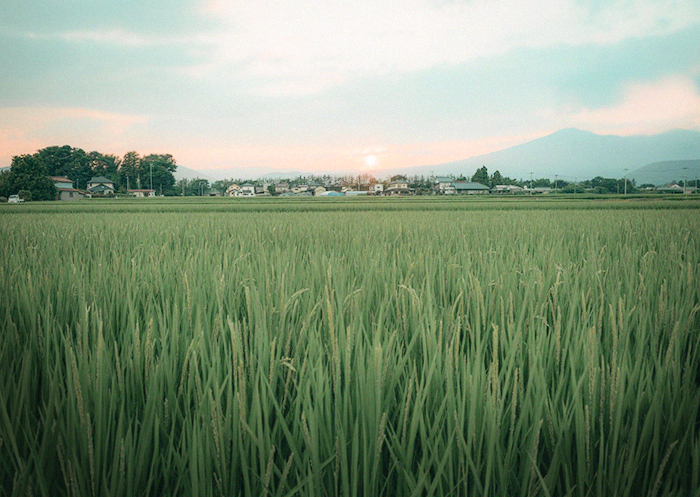
Through summer the seedlings flourish, and the sheet of water that once rice field gives way to a carpet of green that fills the view instead. Sunlight glancing off the young rice gives the whole field a cool, refreshing look, even as the air around it grows heavier with heat.
Japanese summers have been running hotter in recent years, which makes the sight of rice growing vigorously through the season a genuinely welcome one, at least to this author.
Why Sunflowers Turn Up at the Edge of the Rice Field
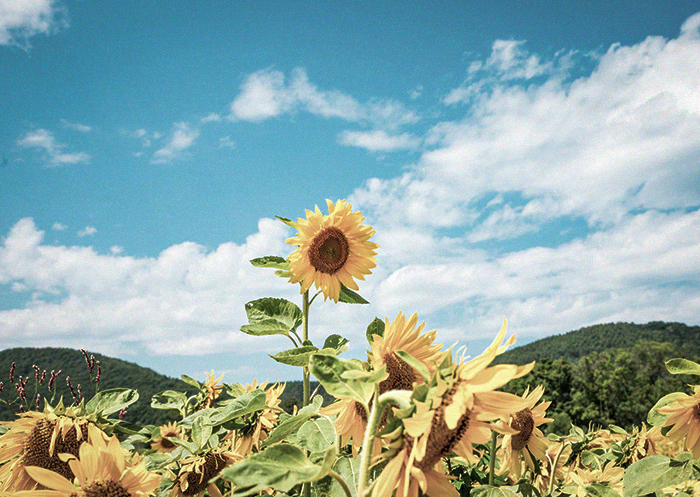
Sunflowers, blooming toward the sun, are one of the fixtures of a Japanese summer, and it is not unusual to find them planted along the borders of rice fields. Some farmers go further and convert 休耕田 kyukoden, rice fields resting between rice crops, into full sunflower fields.
The plant is not there only for the view. Sunflowers are put to work on behalf of the rice crop in a few practical ways:
As fertilizer — once the flowers have bloomed, the plants are plowed back into the earth, where they break down into a natural fertilizer.
As soil conditioner — the sunflower’s firm, spreading roots loosen compacted soil, improving both drainage and aeration.
As weed control — the plants draw nutrients out of the surrounding soil before weeds can use them, and their height and broad leaves block the sunlight weeds need to grow.
The Sunflower Miyazawa Kenji Planted
Miyazawa Kenji, the author of “Night on the Galactic Railroad” and the poem “Be Not Defeated by the Rain,” spent much of his life working to improve local farming while teaching at the Hanamaki Agricultural School in Iwate Prefecture. A story about a single sunflower has come down from that time.
The Tohoku region was then suffering through repeated cold-damage harvests, and its farmers worked with their eyes fixed on the ground in front of them. Kenji planted one sunflower in the middle of a field, deliberately giving people something above eye level to look toward, and offering, in a different register, a sense of beauty worth pausing for.
A single sunflower standing tall and bright against a field of green crops is remembered as something that gave many people courage.
The field where Kenji planted it was, strictly speaking, a dry field rather than a flooded rice field.
Even so, the lift that a sunflower blooming with that much determination gives a person seems to hold true in any era.
Autumn: When the Rice Fields Turns to Gold
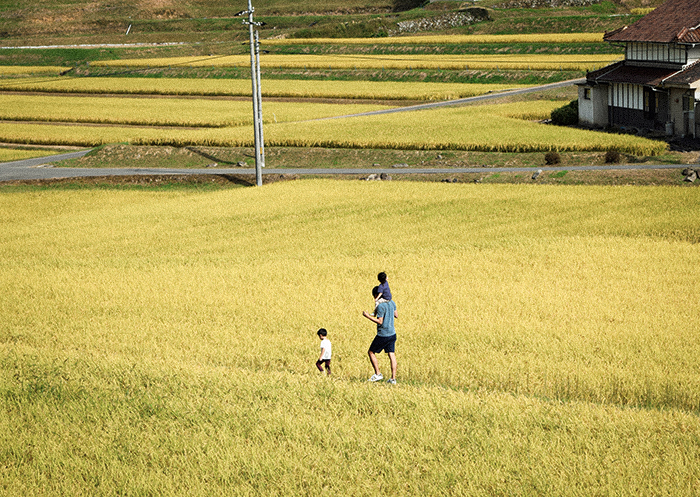
Autumn is when the harvest finally begins.
Rice fields ripened to gold, filling the view from edge to edge, is the kind of sight that leaves a strong impression the first time it is seen. This author looks forward to it every year.
What Are Those White objects Left in the Rice fields?
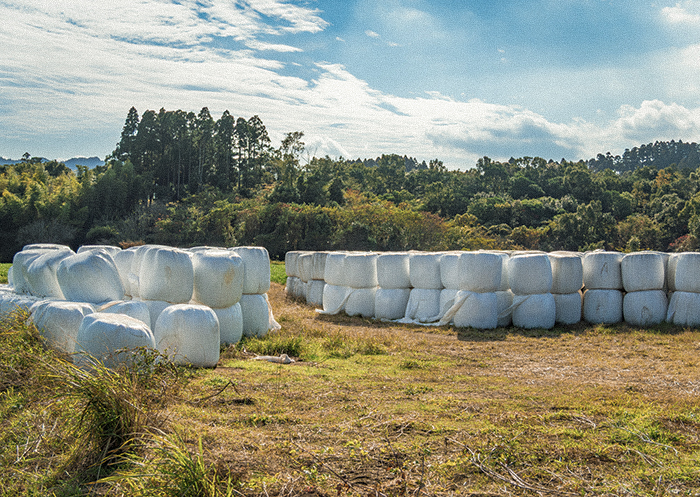
Once the harvest is finished, Many white objects like oversized marshmallows are placed in rice fields in almost Japan.
Those whites objects are called 稲発酵粗飼料 ine hakko soshiryo, known in English as whole crop silage — feed made by fermenting and sealing an entire harvested crop.
In Japan, it is produced from corn and from rice plants alike.
The process starts with the harvested ears, stalks, and leaves, rolled into large bundles. These are wrapped in white plastic film and left to ferment through the action of lactic acid bacteria, which turns them into feed. Before the white wrapping goes on, the rolled bundle is often compared to a rolled cake.
The finished feed is used mainly to raise cattle, and it has a real nutritional advantage: it delivers the fiber-rich stalks and leaves and the energy-rich grain in a single feed, giving the animal a more balanced diet than either part could on its own.
As a child, this author found it a small mystery that marshmallow-looking objects turned up all over the rice fields. Looking back, using every part of the harvested crop, down to the stalks and leaves, for the cattle that share this landscape, feels like a quiet piece of accumulated knowledge.
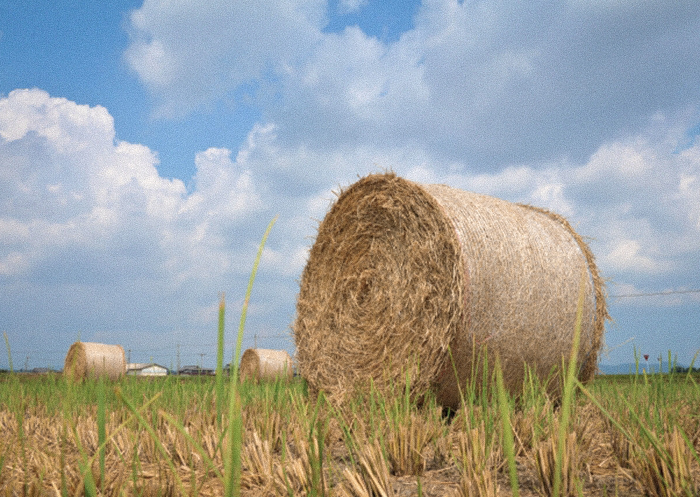
Winter: White Snow Over the Cut Rice Fields
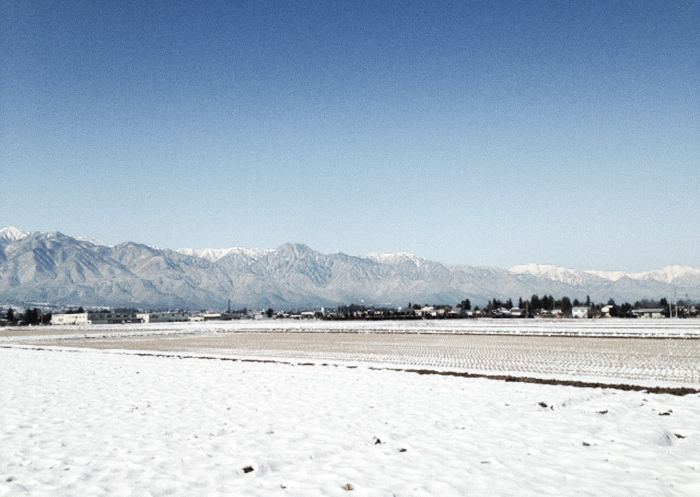
Rice fields after harvest, its stalks cut down to stubble, carries a faint touch of loneliness.
Snowfall changes that completely. The field turns silver-white, and snow catching the light can flash like scattered jewels.
There is something endearing, too, in the cut stalks that poke just above the snow’s surface. Come spring, the meltwater soaks back into the same soil, and the cycle returns to planting once again.
A Life Built Around the Rice Field Calendar
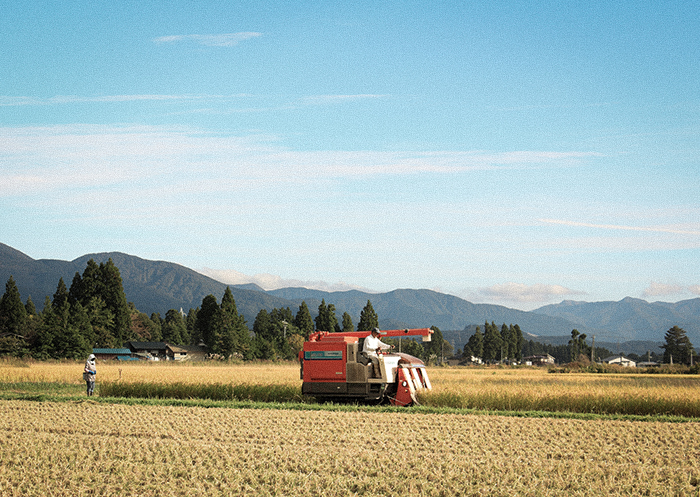
Life in Japan has long been organized around coexistence with the natural world, and rice farming is one strand of that. Out of a way of life shaped by nature’s gifts, a number of traditional festivals and events have grown up around the rice paddy.
お田植祭 Otaue Matsuri
Held every spring, this festival is also known as お田植祭 Otaue Matsuri or 田遊び Ta-asobi.
Its purpose is 予祝 yoshuku, a pre-celebration of the year’s harvest performed in advance, offered as a prayer for a good crop that autumn. Dance modeled on the motions of rice planting is performed before the gods, and several regional versions are designated Important Intangible Folk Cultural Properties.
田楽 Dengaku
田楽 Dengaku is a song-and-dance performance that imitates the tasks of rice farming, offered to honor the gods. It began as a religious rite, then gathered popularity as entertainment through the Heian period (794–1185).
One event in particular, the 永長の大田楽 Eicho no Odengaku of the summer of 1096, is said to have swept up the entire city of Kyoto in 田楽 dengaku fever, regardless of social rank. Performers who specialized in it, known as 田楽法師 dengaku hoshi, emerged as a distinct profession.
田楽 dengaku later fed directly into the birth of 能 Noh and 狂言 Kyogen theater.
A version handed down from the Kamakura period (1185–1333) survives today as the 鶴見の田祭り Tsurumi no Ta Matsuri, held in Kanagawa Prefecture.
あえのこと Aenokoto
あえのこと Aenokoto is a tradition of the Noto region of Ishikawa Prefecture.
A household invites the 田の神様 ta no kamisama, the Japanse deity who governs rice farming and the five grains, into the home and lays out a feast in gratitude.
The ritual offers thanks for the harvest just gathered and prays for abundance the following year. It was designated an Important Intangible Folk Cultural Property in 1976 and inscribed on UNESCO’s Intangible Cultural Heritage list in 2009.
Rice-Planting Experience Events
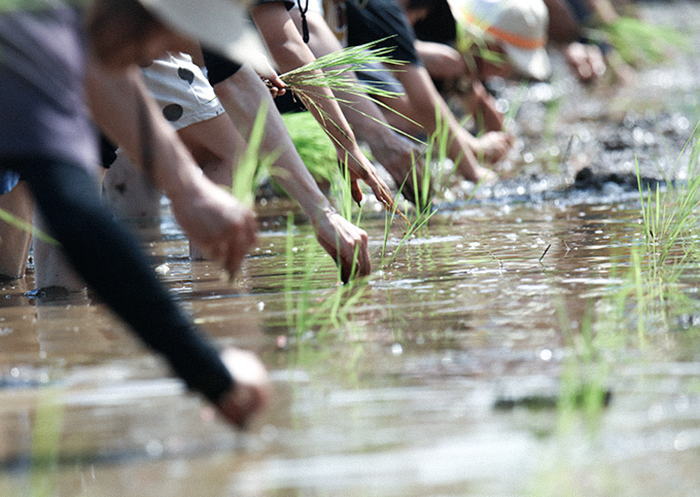
Some events held in spring allow participants to plant rice seedlings by hand alongside local farmers. The role of these events is to promote food education and a deeper appreciation for agriculture.
They give participants a direct sense of the effort behind every harvest, along with a chance to meet other people, of every age, from the surrounding area — part of what makes these events popular in their own right.
泥んこバレー Doronko volley
泥んこバレー Doronko volley is played in a rice field before planting season, or in one lying fallow, with a flooded, deliberately muddy court. Players sink into the mud with every step.
The appeal is straightforward: the freedom of getting thoroughly muddy, combined with a full-body way of meeting the natural world, has made it popular with adults and children alike, and it is now held in various forms across Japan as part of regional revitalization efforts.
田んぼアート Tanbo Art
A more recent addition is 田んぼアート tanbo art, which treats the rice field itself as a canvas. By combining ordinary japonica rice with ancient rice varieties in different colors, farmers plant designs directly into the field, images that only reveal themselves fully when viewed from above.
Closing Thoughts: The Rice Paddy as Nature’s Own Calendar
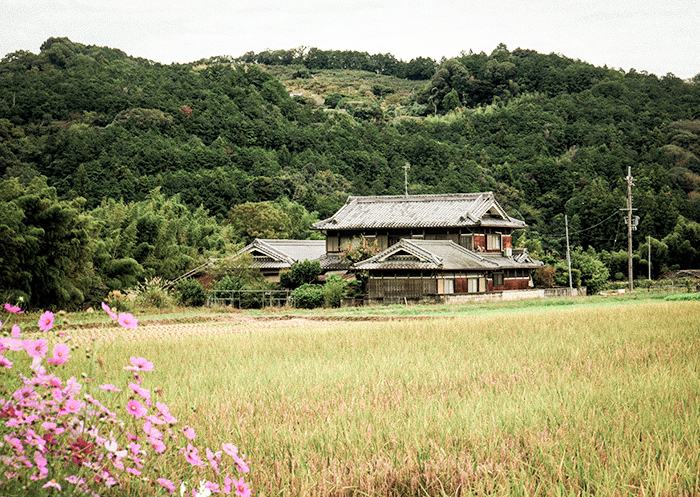
This author did not grow up on a farm, but spent childhood years walking past rice fields on the way to school, watching the seasons turn through them without quite realizing it at the time.
Later, moving away for school and then work, and losing that daily view of the rice fields, left a surprisingly real sense of absence.
Looking back, the rhythm of this author’s own life and the changing seasons were, in some quiet way, rooted in the sight of rice fields.
Calling a rice field a calendar written by nature does not feel like an overstatement.
Day by day, in small increments, Japanese rice fields register the turning of the seasons and offer something calming in return. The next time the opportunity arises, it is worth tracing the seasons through a rice field for yourself.
KOTO is a journal of Japanese craftsmanship, culture, and the aesthetic sense behind them.
- SHARE
-


( landscape )