









Kyoto Cuisine and Longevity: The Seasonal Food Wisdom Behind a Long-Lived City
Mention Kyoto and the first image that comes to mind is usually temples, history, tourism. Less well known is that Kyoto is also spoken of as a city of long life.
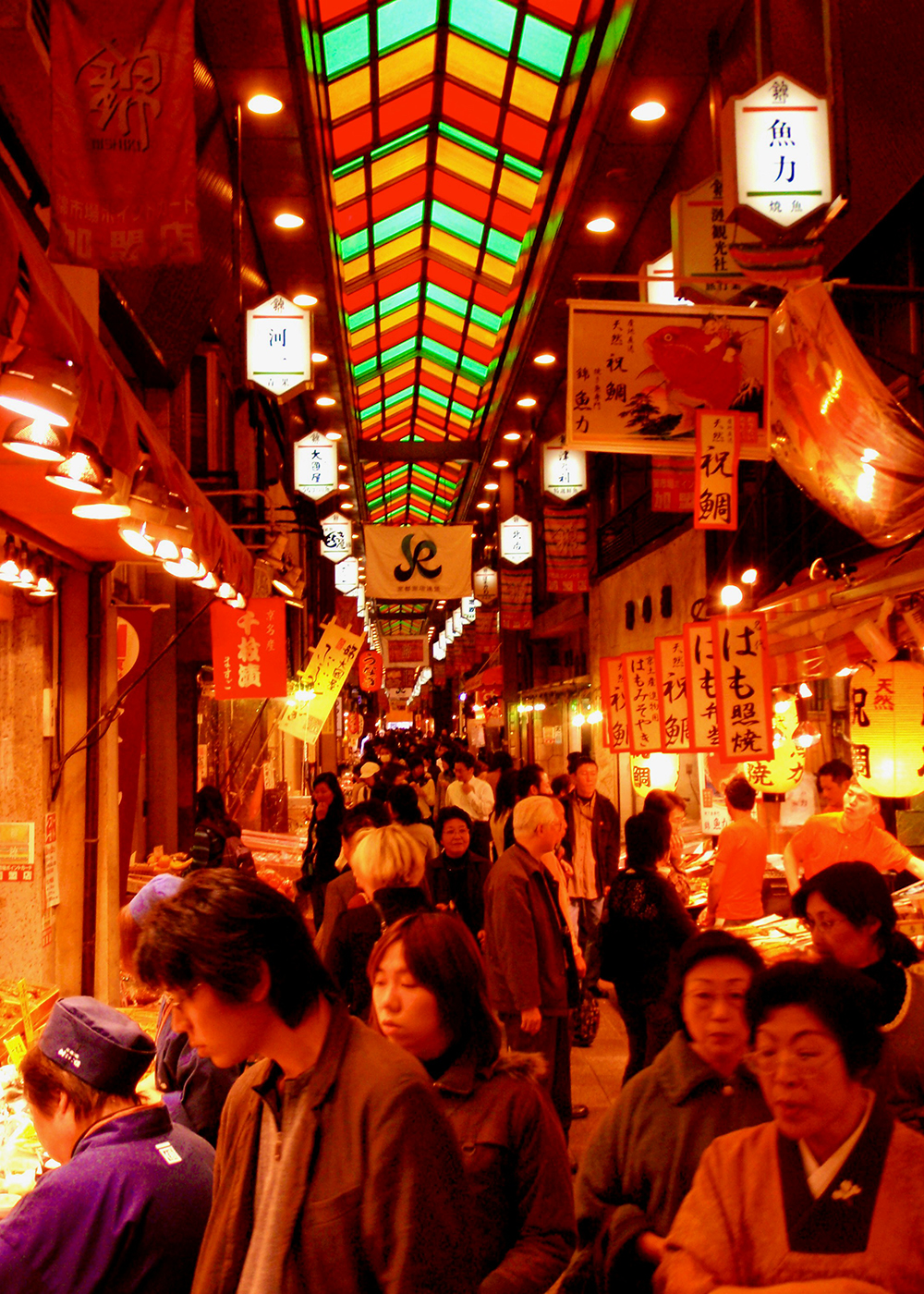
Walk through its neighborhoods and it is common to see elderly men and women pedaling bicycles, looking entirely at ease. At the morning markets, circles of people form around the season’s vegetables, choosing and talking, and something of that warmth seems to belong to the place itself.
Underneath that everyday scene sits a quieter thing: a food wisdom rooted in the land, carried on so consistently that it may be part of why Kyoto has come to be called, informally, a “city of longevity.”
Kyoto Vegetables and a Prized Fish
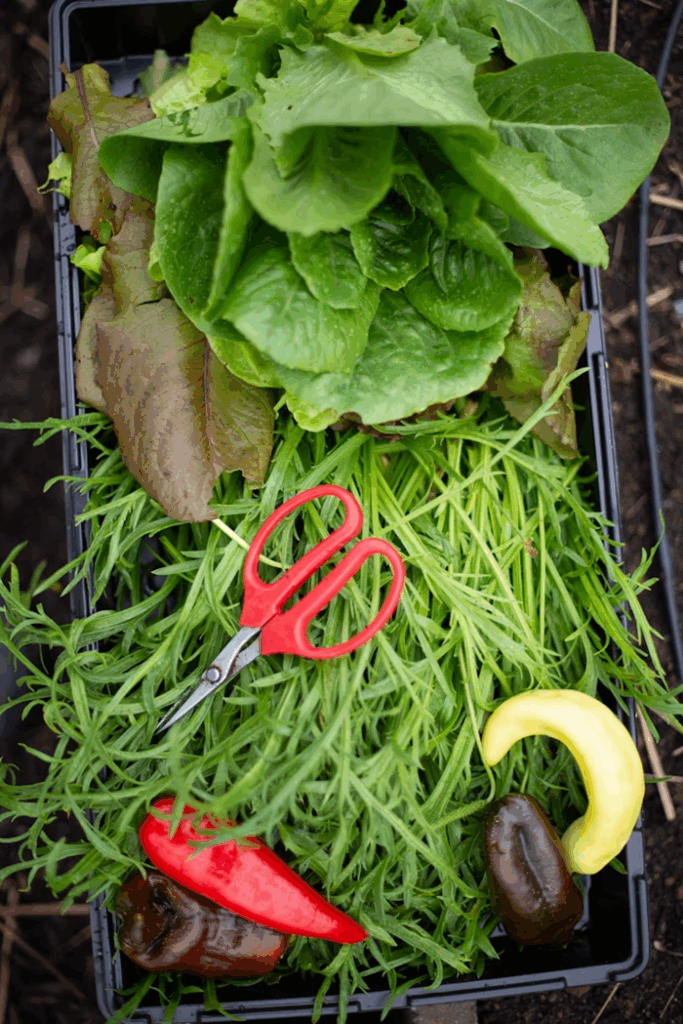
Consider 京野菜 kyo-yasai, Kyoto’s own heirloom vegetables: 賀茂なす kamo-nasu, a round Kamo eggplant; 九条ねぎ kujo-negi, Kujo green onion; 聖護院かぶ shogoin-kabu, Shogoin turnip; 堀川ごぼう horikawa-gobo, Horikawa burdock root. Each has a strong character of its own, and each has been cultivated locally for generations, grown and cooked differently as the seasons turn.
Kyoto’s distinctiveness shows in its fish as well as its vegetables. ぐじ guji — a name for 甘鯛 amadai, tilefish — is counted among the finer fish of Kyoto cuisine. It carries a traditional name of its own and appears often at celebrations and formal occasions, standing as one representative face of Kyoto’s food culture.
Even in something as small as what an ingredient is called and how it is handled, the pride and inherited culture of Kyoto’s people comes through. A name alone can carry the particular character of a place and the quiet self-regard of the people who live there — and behind a simple word often sits a long history and an attachment to the land.
What a Meal Is Made to Carry
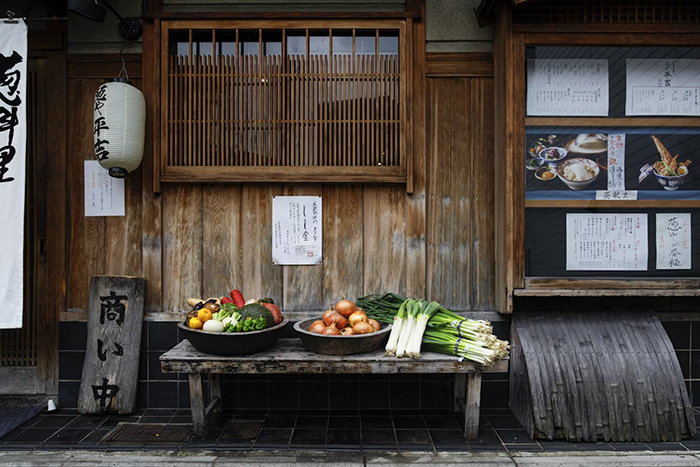
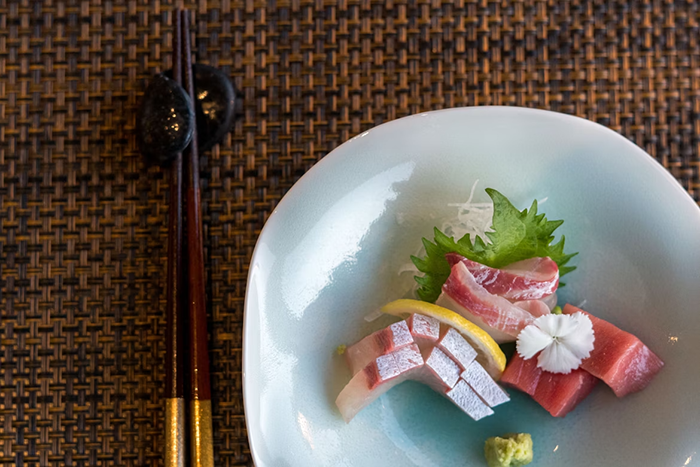
In Kyoto, the act of eating together is treated with real care. Around each seasonal event and turning point of the year, the table is built around whatever is in season.
At 節分 Setsubun, the seasonal turning point marking the start of spring on the old calendar, a grilled sardine and a sprig of holly, 焼き鰯 yaki-iwashi and ひいらぎ hiiragi, are set at the entrance. At the winter solstice, pumpkin is eaten. At New Year, the table holds お雑煮 ozoni, the New Year’s soup, made here with a white miso base. At year’s end, families and neighbors gather around a large pot of simmered daikon radish, 大根炊き daikon-daki, in a custom particular to Kyoto.
These seasonal dishes carry wishes that go unspoken: 無病息災 mubyo sokusai, freedom from illness, and the health of one’s family, among them.
Kyoto places real weight on 旬 shun — the idea of a food at its proper season. Supermarkets today stock nearly everything year-round, but a look into a local market or greengrocer still shows each season’s vegetables and fish at their best. Tasting the season at the table is a quiet luxury that this place has kept.
Spring: Bamboo Shoots and Junsai
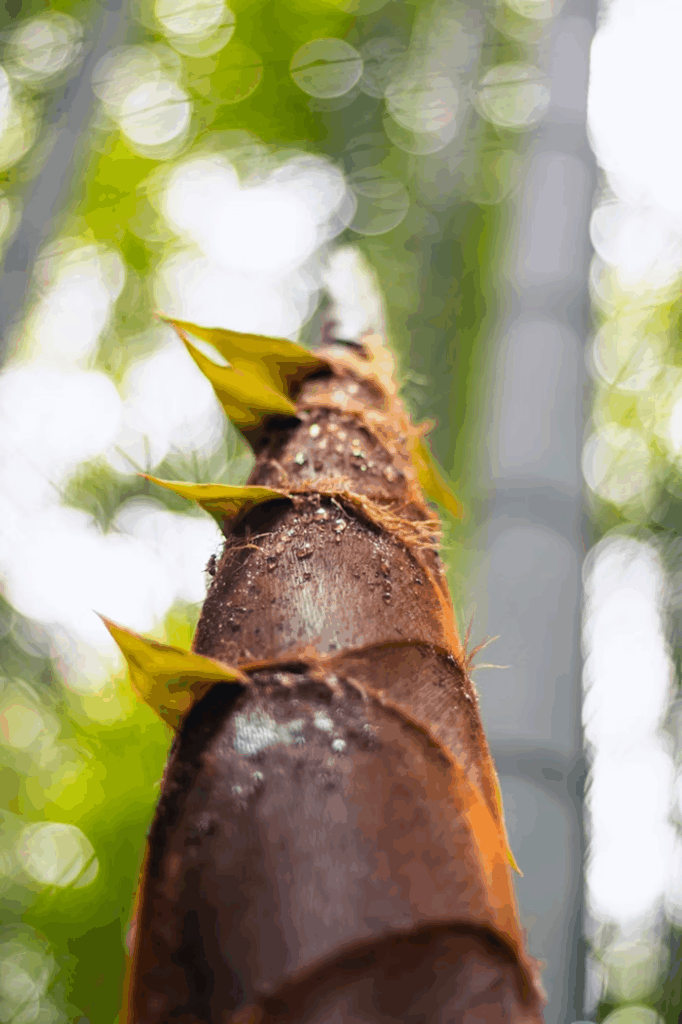
Spring is peak season for digging bamboo shoots in Kyoto’s bamboo groves. Shoots dug the same morning carry little of the bitterness found later in the day, and taste excellent simply simmered, or prepared as 若竹煮 wakatake-ni, young bamboo simmered together with wakame seaweed. Sharing the harvest among relatives and neighbors is itself something of a spring custom.
じゅんさい junsai, water shield, is hand-picked from ponds and marshes, its smooth texture and gentle flavor coloring the spring table. It is, in its own small way, a season beginning — a modest pleasure a family shares together.
Summer: Hamo
By summer, 鱧 hamo, pike conger eel, fills the shops. The fish’s unusual vitality once let it be carried alive all the way to landlocked Kyoto from the coast, and it became, over time, a symbol of the Kyoto summer.
As 祇園祭 Gion Matsuri, the Gion Festival, approaches, every traditional restaurant in the city turns its menu over to hamo. 骨切り honekiri, a knife technique for cutting through the fish’s many fine bones, is on full display in 湯引き鱧 yubiki-hamo, hamo lightly blanched and served refreshingly with a plum-flesh sauce, 梅肉 umeniku. For many in Kyoto, eating hamo is the moment summer feels real again.
Autumn: Tanba Chestnuts
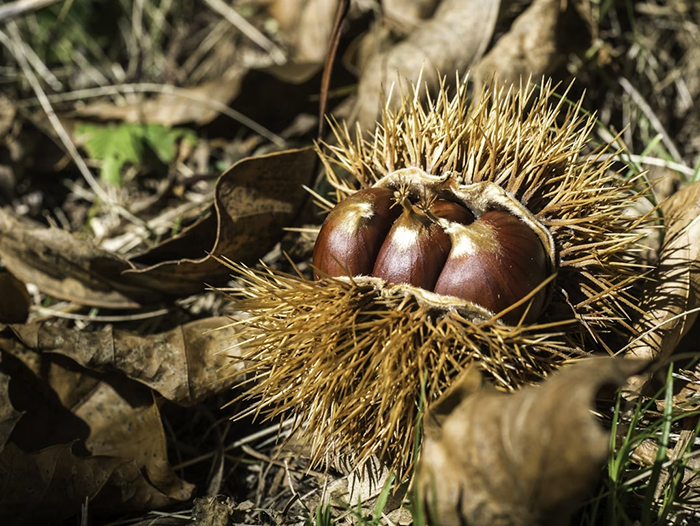
Autumn in Kyoto means 丹波栗 Tanba-guri, Tanba chestnuts, grown in the Tanba region northwest of the city. Locals go out chestnut picking, and confectioners’ shelves fill with 栗きんとん kuri-kinton, a sweet chestnut paste, and 栗蒸し羊羹 kuri-mushi-yokan, steamed chestnut jelly, announcing the season’s arrival.
The scent of freshly steamed chestnuts, the warmth of chestnut rice, 栗ご飯 kuri-gohan — these bring their own quiet comfort. Celebrating the harvest and sharing autumn’s flavors with family and friends is how the season is kept here.
Winter: Steamed Sushi and White Miso
Kyoto winters run cold, and on the coldest days the steam rising off 蒸し寿司 mushi-zushi, steamed sushi, is its own reward — vinegared rice piled with ingredients and steamed through, warming body and mind together.
As New Year approaches, white miso ozoni becomes the standard on Kyoto tables. Its gentle sweetness and depth of flavor settle into a meal, and the time a family spends together over it feels warmer for it.
In Closing
A food wisdom built around valuing daily life runs through Kyoto’s cuisine: enjoying the year’s seasonal events, sharing what is in season. These small, repeated habits are, in their own way, probably part of what connects to a sense of wellbeing over time — though the connection is more a matter of accumulated custom than of proven cause and effect.
Living in a convenient age, bringing a little of the season’s change back to the table, even in a small way, can make daily life feel a little richer. Anyone with the chance to visit Kyoto might try tasting its seasonal flavors firsthand, and see what the everyday wisdom behind a long life feels like close up.
KOTO is a journal of Japanese craftsmanship, culture, and the aesthetic sense behind them.
- SHARE
-


( daily-life )

