








What Is Tsuyu? Inside Japan’s Rainy Season and the Culture Born From It
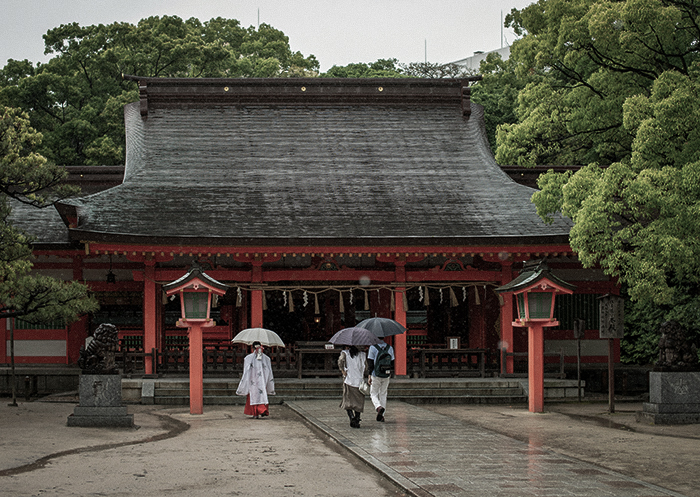
Every June, a stretch of grey weather settles over most of the Japanese archipelago and stays for weeks. It has a name: 梅雨 tsuyu, the rainy season.
Tsuyu runs, in a typical year, from early June into mid-July, though the exact start and end shift with the year and the region. It belongs to a climate pattern unique to East Asia, Japan among it. This author has curly hair, and each tsuyu becomes a quiet, daily contest with the humidity.
It is easy to think of tsuyu only as the season of damp and low pressure. But look past the inconvenience and it turns out to be a season in which a great deal of Japanese culture becomes visible at once — in a flower, in a kitchen ritual, in the architecture of a house, in the words the language has built for rain. This article sets that culture out.
Why the Kanji Read “Plum Rain”
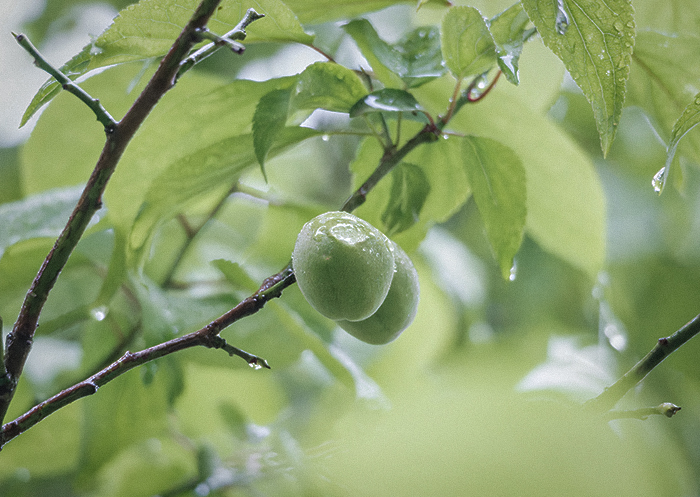
The word tsuyu is written with two characters, 梅 (plum) and 雨 (rain) — literally “plum rain.” The reason is straightforward: the season falls when plums ripen on the tree. The term itself was borrowed from China.
The reading has not stayed fixed. Tsuyu was once read baiu, and one theory holds that baiu began as 黴雨 — “mold rain,” 黴 bai meaning mold — a fitting description of a season that leaves everything faintly damp, before the more auspicious plum character was substituted in. It later shifted, once the word had settled into Japanese, to the modern reading tsuyu. Several explanations are offered for that shift:
– that it comes from 潰ゆ tsuyu, “to crush” or “to soften,” describing the moment plums ripen until they burst
– that it was suggested by 雨露 amatsuyu, “rain and dew”
– that the reading simply drifted over time to suit the sound of Japanese speech
No single explanation is settled as fact; all three circulate as theories.
The Natural World Tsuyu Brings Into View
Japan has a long history of living alongside its natural surroundings, and the scenery specific to tsuyu is no exception. Two threads of that scenery are worth following closely: a flower, and a kitchen tradition built around another fruit of the season.
紫陽花 Ajisai — the Hydrangea
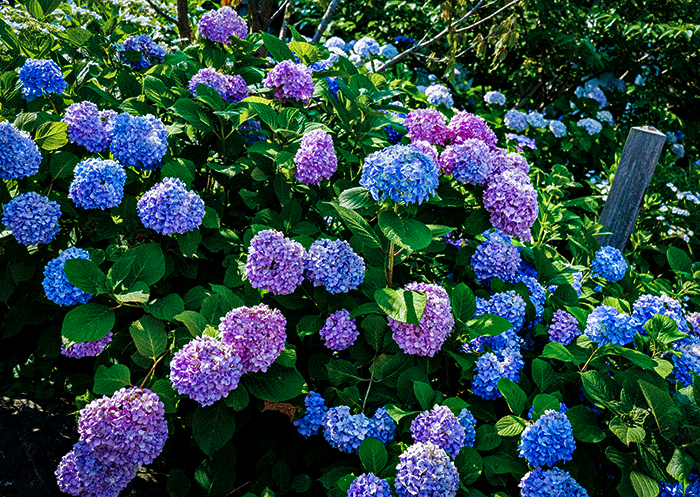
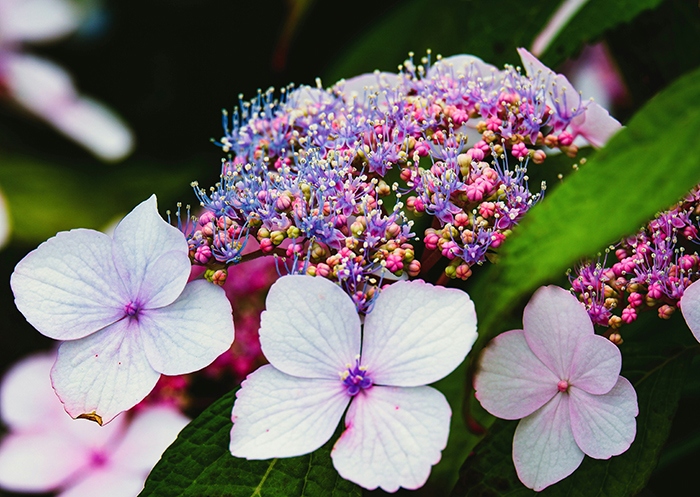
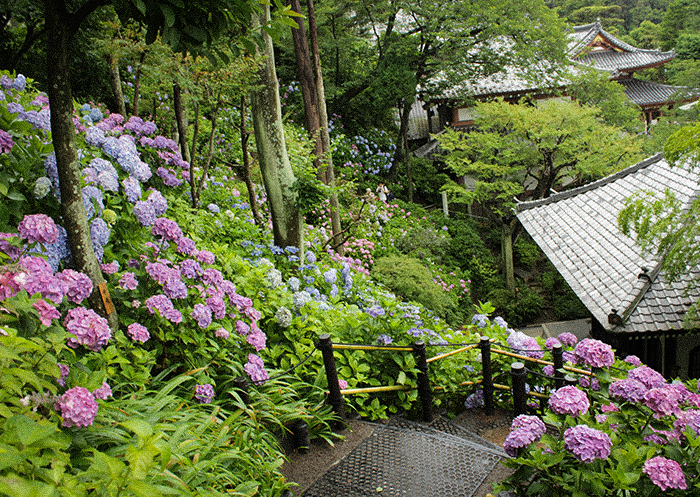
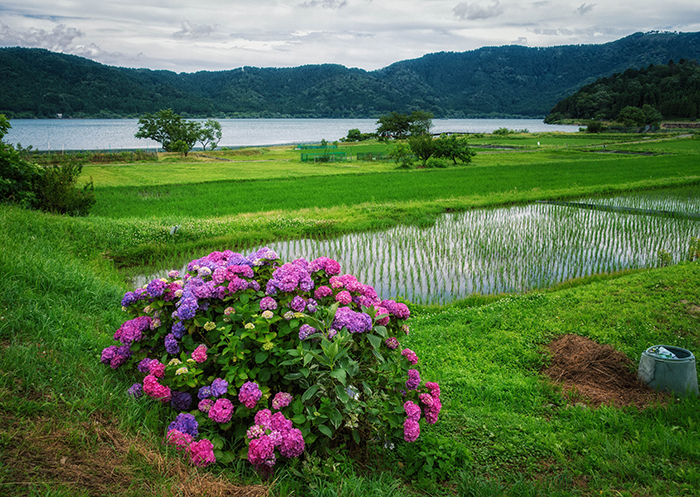
The hydrangea, blue-to-purple in bloom, is the flower most associated with tsuyu. Japan is considered a native habitat, and the plant’s presence is attested as far back as the Asuka period (592–710) into the Nara period (710–794), in the poems of the 万葉集 Man’yoshu, Japan’s earliest major anthology of verse.
The name traces to the flower’s color: 藍色 ai-iro, indigo blue. 集真藍 azusai, meaning “a gathering of indigo,” is said to have shifted over time into ajisai.
What looks like the petals — four square-edged panels — are technically 萼 gaku, sepals, not petals at all. The true flower is the small, granular cluster at the center that the sepals surround.
The kanji now used for the plant, 紫陽花, originally named a different flower altogether. The attribution to hydrangea is traced to the Heian-period (794–1185) poet Minamoto no Shitagou, who is said to have assigned these characters to the flower he saw in front of him. Today, temples such as Hase-dera, in Kanagawa Prefecture, are known as hydrangea destinations and draw visitors specifically for the bloom.
An Unlucky Flower, Until Not Long Ago
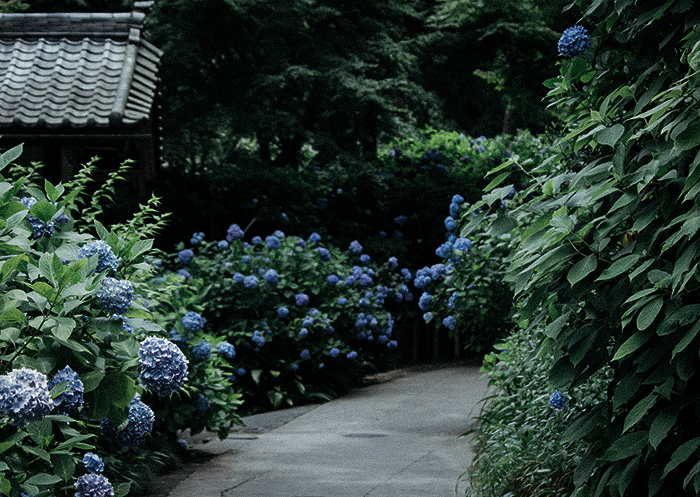
The hydrangea’s present popularity, prized for its cool, elegant coloring, is a comparatively recent development. Until the Taisho era (1912–1926), the flower was more often regarded as inauspicious, and people kept their distance from it. Three characteristics explain why.
The first was its association with death. Because the hydrangea’s sepals number four, and 四 shi, four, is a homophone for 死 shi, death, the flower carried an unlucky number by implication. In an age before modern medicine, a certain number of people fell ill and died during the damp weeks of tsuyu each year. Hydrangeas were planted at temples and graves as offerings to the dead, and the sight of a cold-colored flower blooming quietly in that setting was apparently unsettling enough that the plant picked up the nickname 幽霊花 yurei-bana, “ghost flower.”
The second was the flower’s habit of shifting color, since hydrangeas change hue with the pH of the surrounding soil. That instability read to observers as fickleness, as a change of heart, and it was resented for a long stretch of Japanese history on those grounds. In the age of the samurai especially, unwavering loyalty to one’s lord was an absolute, and to let one’s feelings drift, for any reason, and lose that loyalty was considered a disgrace worse than death.
The third was more practical: hydrangeas propagate easily by grafting. On its face that might read as a sign of fertility and good fortune, but the ease with which any amateur could grow and multiply them made it a genuine threat to the livelihood of professional gardeners, who resented the plant on economic grounds. That a trait so ordinary could become a source of ill will is, perhaps, the last thing the hydrangea itself would have expected.
How Hydrangeas Became Fashionable Again
One turning point behind the flower’s modern popularity is the 西洋アジサイ seiyo ajisai, the “Western hydrangea.” The story begins with Japanese hydrangeas making their way to the West by way of China and London. Breeders in France began developing new cultivars from them in the early twentieth century, and the resulting Western hydrangea was later reimported into Japan.
Japanese painting and ceramics exported in that same period found favor in the West as part of the broader vogue for Japanese aesthetics known as Japonisme, and the hydrangea appears to have been counted among the goods that captivated Western taste at the time.
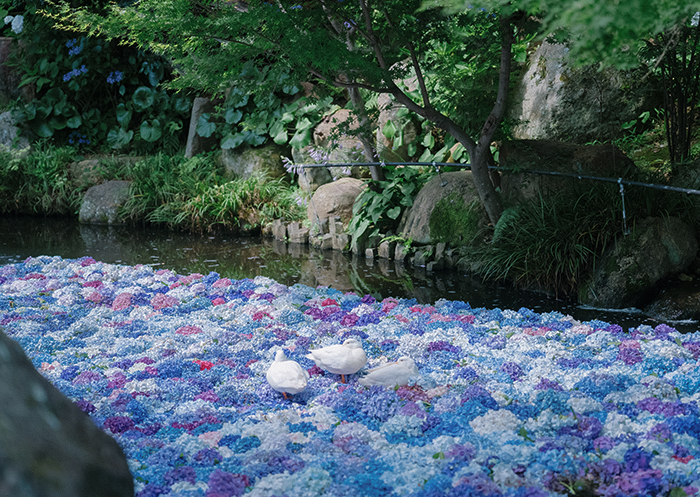
By the mid-twentieth century, hydrangeas were also being used widely as a draw for domestic tourism. Festivals built around the flower are held across the country, and temple grounds stage displays with hydrangea blossoms floated in 手水 chozu, purification water. One well-known example is at Amabiki Kannon, a temple in Ibaraki Prefecture, where the display — called 水中華 suichuka — floats hydrangea blooms on water, and visitors can watch ducks glide gracefully across it.
梅仕事 Umeshigoto — Plum Work
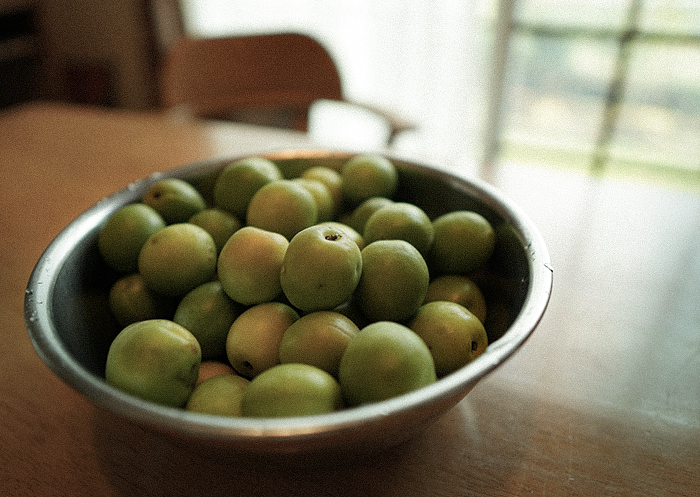
Because the rain during tsuyu is near-continuous, outdoor work has always been difficult during these weeks, and people turned instead to tasks that could be done indoors. One of the most enduring is 梅仕事 umeshigoto, “plum work.”
Around June, when plums come into season, households use that year’s harvest to make preserved food at home. The two most traditional products of plum work are 梅干し umeboshi, salted pickled plums, and 梅酒 umeshu, plum wine. Umeboshi in particular is valued in summer for the citric acid the plum contains, which is thought to help recovery from fatigue.
More recently, arrangements such as plum miso, plum jam, and plum pickles have also become popular. Anyone making them at home is advised to keep water and stray bacteria out of the process, since both invite mold and unwanted fermentation.
A Culture Built Around the Sound of Rain
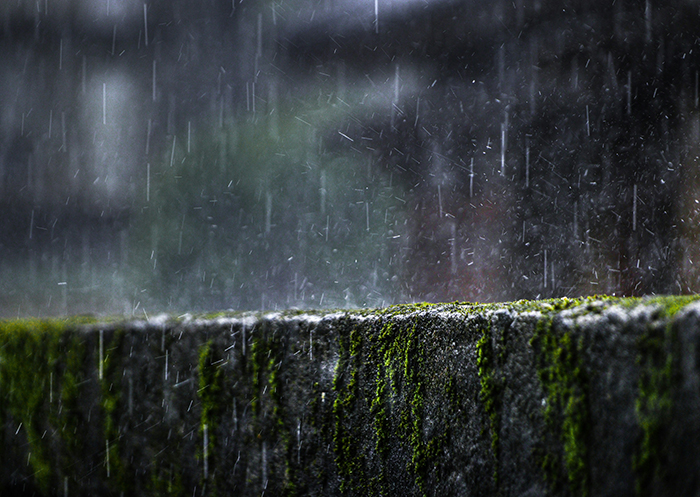
Listening to the sound of rain has long been treated in Japan as its own form of conversation with nature — whether that meant enjoying the sound of rain striking a paper umbrella, or capturing that sound in onomatopoeia, a sensibility this author would call distinctly Japanese.
Japanese uses different onomatopoeia to describe different qualities of rainfall. しとしと shitoshito evokes a quiet, gentle rain; ざあざあ zaazaa evokes rain striking the ground hard and fast.
More recently, the particular, faintly irregular sound wave of rainfall has drawn attention as a form of sound healing. This author has used videos with rain sounds as sleep aids and can report, looking back, that they genuinely helped.
In Japan, nature is appreciated not only by sight but as a form of music in its own right. Reading the changing seasons through all five senses is, in that sense, a sensibility that developed out of a long history of living alongside the natural world.
How the Traditional Japanese House Coexists With Tsuyu
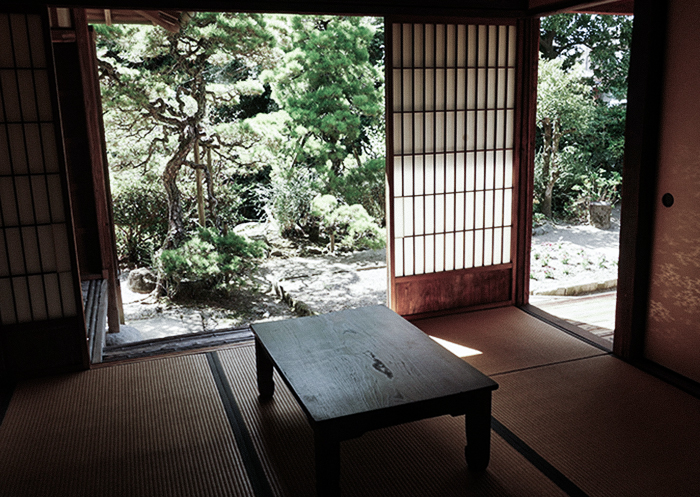
The humidity that builds up during tsuyu is exactly the condition mold needs to spread, and the traditional Japanese house, passed down over centuries, developed its own methods for living alongside that dampness.
– Timber (pillars, flooring) — the wood used for pillars and floors absorbs moisture from the air during the high humidity of tsuyu and summer. In winter it releases that moisture back, which helps keep the air from drying out.
– Earthen walls and plaster — 土壁 tsuchikabe, earthen walls, and 漆喰 shikkui, plaster, are natural materials that readily absorb and release moisture. By doing so they keep the humidity of an entire room naturally regulated, making it more comfortable to live in.
– Shoji screens — the washi paper used in 障子 shoji screens is highly absorbent. It draws in humidity during summer and helps retain warmth in winter.
– Raised-floor construction — some traditional Japanese houses use a building method called 高床式 takayukashiki, “raised-floor construction,” which lifts the floor well above ground level. Letting air pass beneath the floor is said to have been the method’s purpose: protecting the timber from moisture.
That the practical wisdom of an earlier way of life is built directly into the architecture is one of the more interesting things about the traditional Japanese house.
The Vocabulary of Rain: Eight Words for Tsuyu
Japanese has long rendered the small shifts and moods of the natural world in careful, particular language. Tsuyu alone has produced a small vocabulary of its own.
– 走り梅雨 hashiri-tsuyu — unsettled, showery weather that arrives before the main rainy season properly begins
– 送り梅雨 okuri-tsuyu — the heavy rain that marks the season’s end
– 戻り梅雨 modori-tsuyu — rain that returns just after summer has arrived, as though tsuyu itself had come back
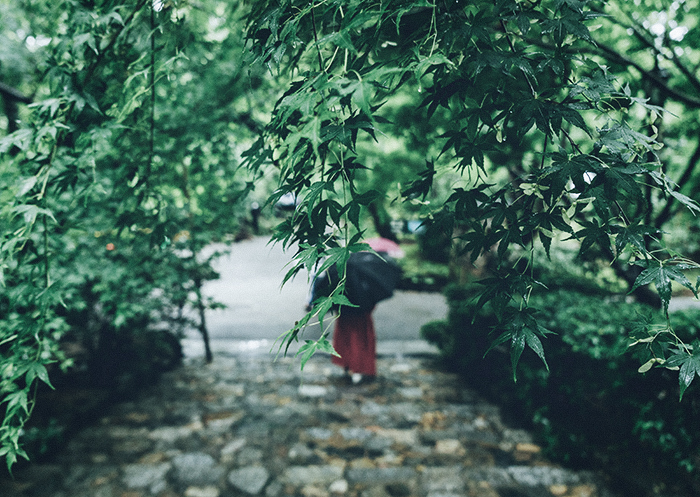
– 青梅雨 ao-tsuyu — rain that leaves the green of trees and leaves looking especially vivid
– 空梅雨 kara-tsuyu — a tsuyu season that, against expectation, brings a run of clear, dry days instead
– 梅雨寒 tsuyu-zamu — the sudden chill in the air that follows a fall of rain
– 男梅雨 otoko-tsuyu — literally “male rain”: rain that strikes the ground hard and heavy
– 女梅雨 onna-tsuyu — literally “female rain”: rain that falls quietly and steadily
Two Things Worth Knowing About Tsuyu
Tsuyu is central to how Japan talks about its own seasons, and it comes with two details that surprise most people who first hear them.
One: Not Everywhere in Japan Has a Tsuyu
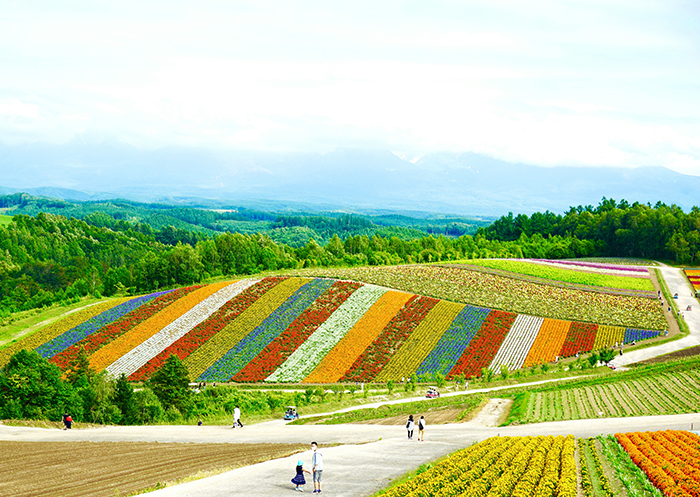
Hokkaido, the northernmost of Japan’s prefectures, does not, in fact, have a rainy season. The reason lies in both how tsuyu forms and in Hokkaido’s own climate.
Tsuyu occurs because a stationary front, known as the 梅雨前線 baiu zensen, the tsuyu front, sits over Honshu, the country’s main island. Like the cherry blossom front in spring, the tsuyu front advances northward as the season goes on — but by the time it would reach Hokkaido, it has generally weakened. In some years the front dissipates before it gets there at all.
There is also a difference of climate zone. Honshu falls within a 温暖湿潤気候 ondan shitsujun kiko, a humid subtropical climate, whose defining features include both the formation of tsuyu and four sharply distinct seasons. Hokkaido, by contrast, belongs to a 亜寒帯 akantai, a subarctic or cool-temperate zone, with short summers and severe winters — a climate that is rarely blanketed in the sustained warm, humid air a tsuyu season requires.
That the same country can hold such different climates within it is, on its own, worth knowing.
Two: How the Start and End Dates Are Decided
The dates on which tsuyu begins and ends in a given year are determined by the 気象庁 Kishocho, the Japan Meteorological Agency (JMA). According to the agency’s own published explanation, the process works as follows.
The JMA defines tsuyu as “a phenomenon, or the period, in which rainy or overcast days occur frequently from late spring into summer” — specifically, a stretch in which the amount of sunshine fluctuates because of that pattern of rain and cloud.
Declarations of the season’s start and end are made by weighing the weather leading up to that point against a forecast roughly a week out. These initial announcements are treated as provisional: the JMA reviews the actual weather afterward and publishes confirmed dates only in early September. In practice, this means a stretch of weather that did not feel, at the time, like tsuyu can later be reclassified as having been part of it after all.
The JMA has also stated that it finds Hokkaido’s tsuyu difficult to define for exactly this reason: the tsuyu front becomes indistinct as it approaches Hokkaido, and while the island does sometimes see a run of rainy, overcast days resembling tsuyu, how much this happens varies enormously from year to year — enough that the agency does not consider it reliably identifiable as the tsuyu phenomenon.
In Closing
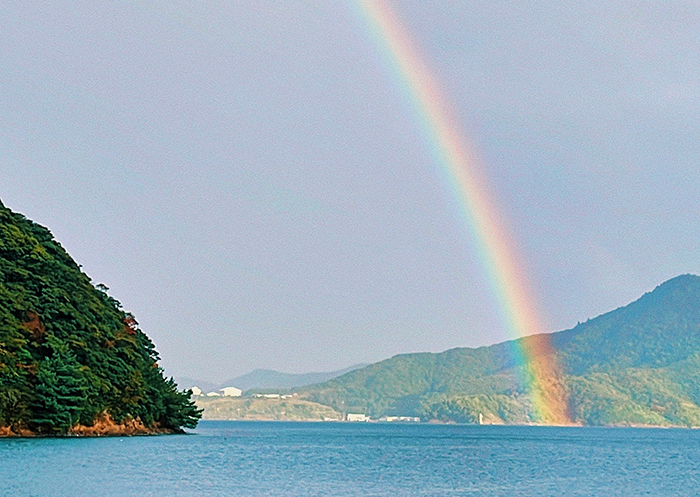
Tsuyu, at first glance, reads as a gloomy season: weeks of continuous rain and gathering humidity. Read the culture built up around it, though, and it turns out to be full of both practical wisdom and a genuine pleasure taken in the rain itself.
For a season this long, there is something to be said for pausing, now and then, to take in the sight of rain falling and the sound it makes — to meet tsuyu with all five senses rather than enduring it with one eye shut. Anyone visiting Japan during these weeks would do well to give the rain itself a chance.
KOTO is a journal of Japanese craftsmanship, culture, and the aesthetic sense behind them.
- SHARE
-


( landscape )