





The Three Sacred Treasures of Japan: The Imperial Regalia Even the Emperor Has Never Seen
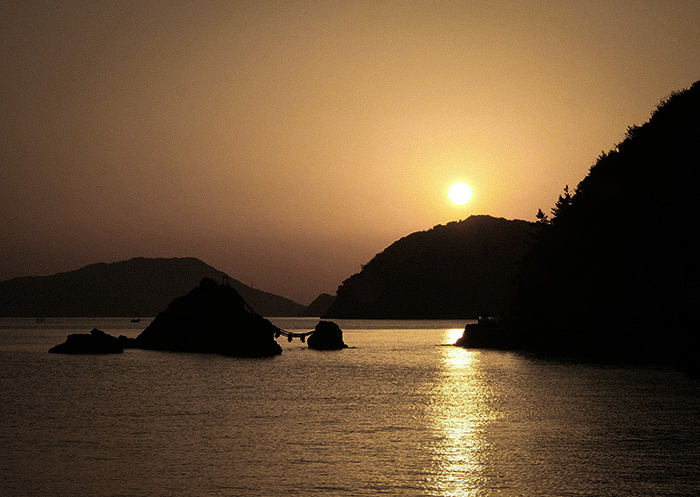
The Japanese imperial family has continued, unbroken, for more than 2,600 years. As of 2026, it is the longest-reigning dynasty on record anywhere in the world.
Three objects are bound up with that record: a mirror, a sword, and a jewel, known together as the 三種の神器 Sanshu no Jingi — the Three Sacred Treasures, or Imperial Regalia. They are said to have been passed down since the age of the gods, and by tradition no one is permitted to see them. Not the public. Not scholars. Not, according to the tradition itself, the emperor.
The three treasures come out of Shinto, the native belief system of Japan, in which mountains, objects, and forces of nature can hold a kami — a spirit or deity — and be treated as sacred accordingly. The Three Sacred Treasures sit at the very top of that framework: they are not relics kept in a museum case, but living instruments of the imperial succession, invoked at each new emperor’s accession even though no one at the ceremony actually sees them.
The World’s Oldest Throne
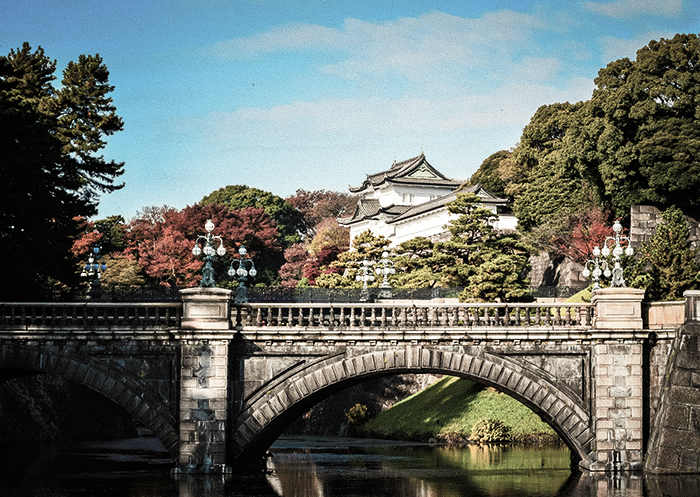
The imperial line begins, by tradition, with 神武天皇 Emperor Jinmu, said to be a descendant of the sun goddess 天照大神 Amaterasu Omikami. Jinmu is recorded as having taken the throne on the 11th day of the second month of 660 BCE. That date is still observed in Japan today, as National Foundation Day, a public holiday held every February 11th.
Jinmu’s great-grandfather, ニニギノミコト Ninigi no Mikoto, grandson of Amaterasu, is said to have brought rice cultivation down from the heavens and descended to 高千穂 Takachiho in Kyushu, in the region then known as 日向 Hyuga — present-day Miyazaki Prefecture. Jinmu is said to have led an eastward campaign from there and established his capital in 大和 Yamato, present-day Nara Prefecture — the campaign known as the 神武東征 Jinmu Togo, Jinmu’s eastern expedition.
It is a mythological account, not a documented one. But it is the founding account, and it is the reason the imperial family is described, in Japan, as a dynasty descended from the sun.
Three Objects No One Has Seen
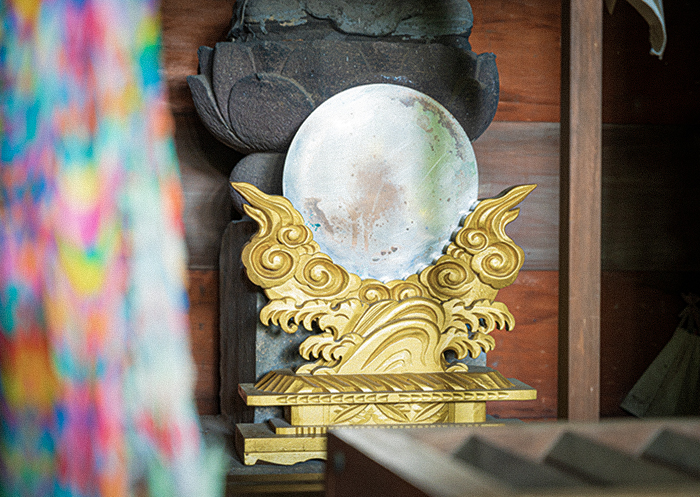
The Three Sacred Treasures are said to have been given by Amaterasu to Ninigi at the moment he descended to earth — the founding gift, passed down the imperial line ever since.
The treasures themselves are held to be so sacred that they may not be removed, and may not be looked upon. Even the reigning emperor does not view them directly. For the ceremonies of imperial succession, where the regalia must formally change hands, 形代 katashiro — sanctioned replicas — are used in place of the originals.
The three objects are kept separately, in three different locations, and each has its own story. Together, they are what a new emperor is formally invoking at accession — not by viewing them, but by having their presence confirmed on his behalf.
八咫鏡 Yata no Kagami — The Mirror
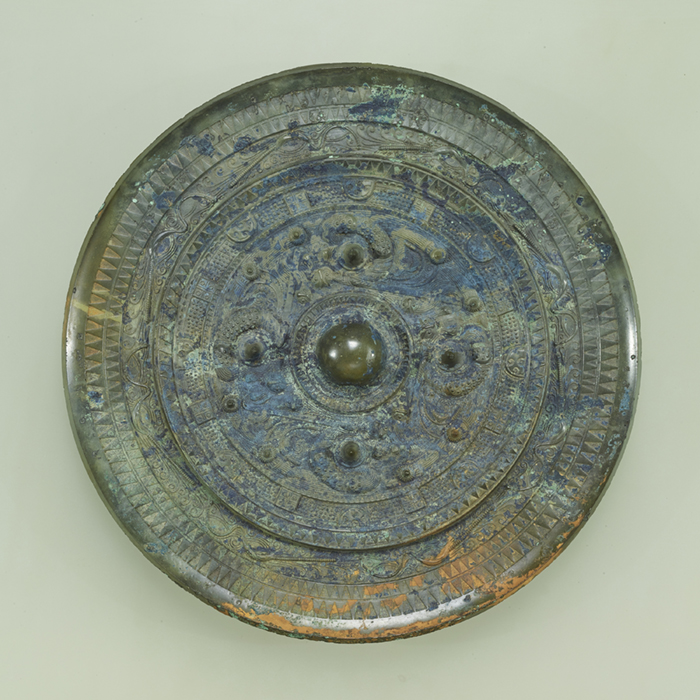
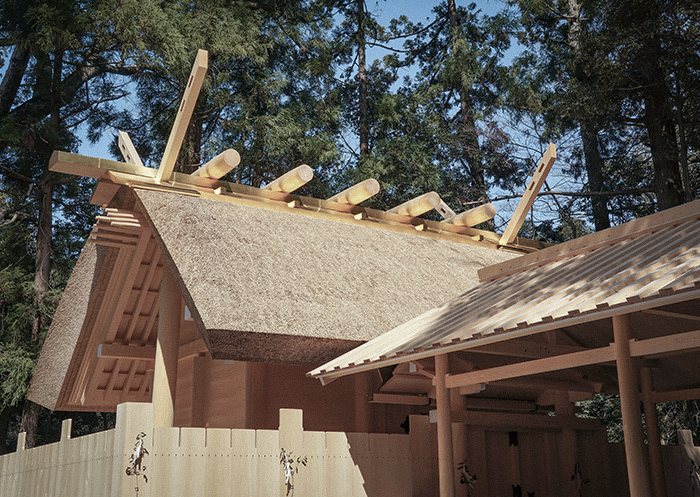
The mirror is kept at 伊勢神宮 Ise Grand Shrine, in Mie Prefecture, the shrine most closely associated with Amaterasu herself.
It is said to have been forged for a specific purpose: to lure Amaterasu out of hiding. In the myth, Amaterasu’s brother 須佐之男命 Susanoo no Mikoto behaved so violently that Amaterasu withdrew into a cave, the 天岩戸 Ama no Iwato, and sealed herself inside. With the sun goddess gone, the world went dark. The people below, at a loss, devised a plan and used a mirror to draw her back out — and that mirror became the Yata no Kagami.
In Japanese belief, a mirror can serve as a 依代 yorishiro, a vessel a kami — a deity or spirit — may occupy. Mirrors used in ritual contexts in Japan have long been treated as instruments for purifying the soul, rather than as mere household objects.
草薙剣 Kusanagi no Tsurugi — The Sword
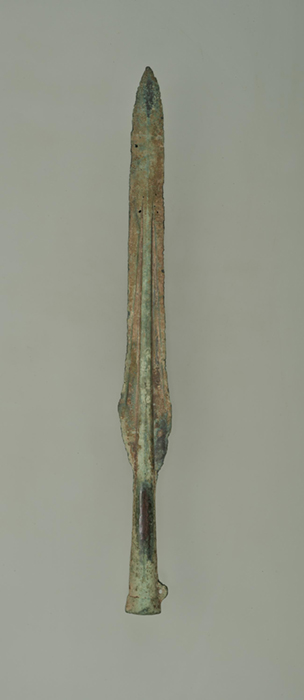
The sword is kept at 熱田神宮 Atsuta Shrine, in Nagoya, Aichi Prefecture. Its original name was 天叢雲剣 Ame no Murakumo no Tsurugi.
By tradition, Susanoo obtained the sword after killing the eight-headed serpent ヤマタノオロチ Yamata no Orochi in 出雲 Izumo — present-day Shimane Prefecture — in order to save a maiden named クシナダヒメ Kushinada-hime whom the serpent had been about to devour.
The sword took its present name centuries later, in the story of 日本武尊 Yamato Takeru, son of 景行天皇 Emperor Keiko, the twelfth emperor. During his campaign into eastern Japan, Yamato Takeru was caught in the province of 相模 Sagami — roughly present-day Kanagawa Prefecture — where enemies set the surrounding grass alight to trap him. The sword moved of its own accord to cut down the burning grass and save him. From that episode, the blade came to be known as 草薙剣, the “grass-mowing sword.”
Yamato Takeru’s wife, 宮簀媛 Miyazu-hime, later enshrined the sword at Atsuta. That act is said to mark the founding of Atsuta Shrine, which has kept the sword ever since.
八尺瓊勾玉 Yasakani no Magatama — The Jewel
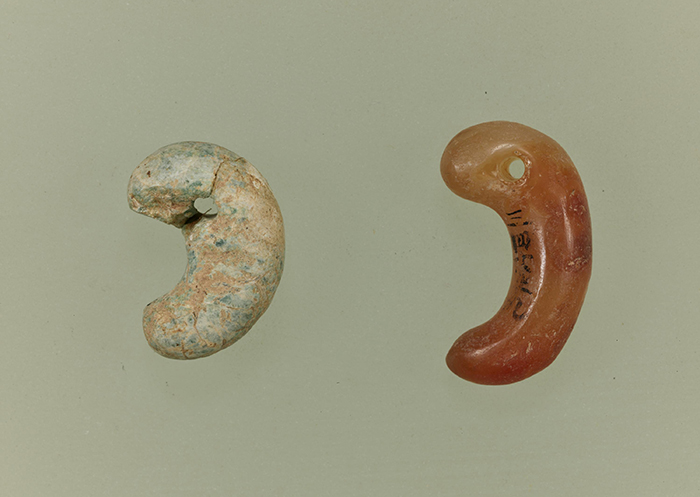
The jewel is the only one of the three treasures kept at the Imperial Palace in Tokyo, rather than at a shrine.
It appears in the same episode as the mirror: when the gods set out to lure Amaterasu from the cave, the jewel was hung, together with the mirror, on the branches of a sacred 榊 sakaki tree as part of the ritual.
The name itself carries meaning. 八尺 yasaka, here, indicates great size, and 瓊 ni refers to red agate. In shape, the magatama is close to the form of the numeral 9, with a hole bored through its center for a cord. That curved, comma-like shape is said to represent the waxing and waning of the moon, the form of a fetus, and the soul itself. The stones used are typically red agate, crystal, or jade.
Where the mirror is tied to purification and the sword to the sword hunt’s later symbolism of authority, the jewel is associated with the emperor’s compassion, and is regarded as a ward against calamity.
Lost at Sea: Dan-no-ura, 1185
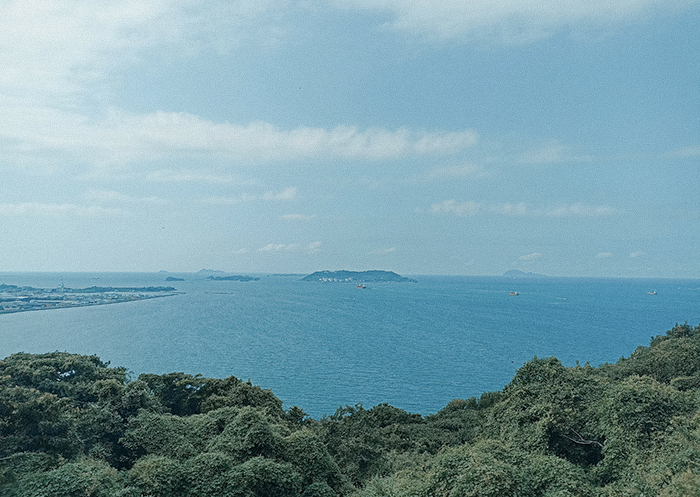
In 1185, the Genji and Heike clans — the warrior houses that had contested control of Japan — fought their final battle at 壇ノ浦 Dan-no-ura, in present-day Yamaguchi Prefecture. Facing defeat, members of the Heike clan threw themselves into the sea rather than surrender.
Among them was 平時子 Taira no Tokiko, grandmother of the child emperor 安徳天皇 Emperor Antoku. She is said to have told him, “there is a capital beneath the waves as well,” before carrying him into the water. The sword and the jewel went into the sea with them.
The jewel was recovered by Genji forces after an intensive search. The sword was not. It was never found. In its place, another blade was designated as the katashiro of the Kusanagi sword, and the succession continued.
A Throne Split in Two
After the fall of the Kamakura shogunate, 後醍醐天皇 Emperor Go-Daigo attempted to restore direct imperial rule, in what is known as the 建武の新政 Kenmu Restoration. 足利尊氏 Ashikaga Takauji opposed him and installed a rival emperor, 光明天皇 Emperor Komyo — splitting the throne into a Southern Court, under Go-Daigo, and a Northern Court, backed by Ashikaga.
The Southern Court is believed to have held the genuine regalia throughout the schism. As a gesture toward reconciliation, Go-Daigo is said to have handed a set of the Three Sacred Treasures to the Northern side — but the set he handed over was fake.
The split lasted roughly sixty years. The courts were reunified in 1392, and at that point the regalia passed to 後小松天皇 Emperor Go-Komatsu, the 100th emperor, on the Northern side. Centuries later, in the Meiji era, the government formally recognized the Southern Court as the legitimate imperial line for that period of history — a ruling based in part on the fact that the Southern Court had been the one in possession of the actual regalia throughout the schism.
What the Emperor Feared Most
On August 15, 1945, Japan accepted the terms of the Potsdam Declaration and the war came to an end. By the account handed down, what 昭和天皇 Emperor Showa — Hirohito — feared most in that moment was not the occupation itself, but the possibility that the Three Sacred Treasures would fall into the hands of the United States, Japan’s former enemy.
He is said to have resolved to keep the mirror, at Ise, and the sword, at Atsuta, close enough that he could protect them personally — and to have stated that if it came to it, he would carry them into the sea himself rather than let them be taken.
When he met with GHQ, he told them that responsibility for the war rested with him alone. General Douglas MacArthur, who had reportedly approached the meeting expecting to deal with someone unrepentant, is said to have been struck by Hirohito’s willingness to stake his own life on the safety of his people. MacArthur did not appear to greet him on arrival, but is recorded as having given a formal salute when he departed.
A Name Borrowed by Consumer Japan

The phrase “Three Sacred Treasures” outlived its religious origin. Through Japan’s postwar 高度経済成長 kodo keizai seicho — the high economic growth era of the 1950s through the 1970s — several successive economic booms were named after episodes from the same mythology: the 神武景気 Jimmu Boom, named for the first emperor; the 天戸景気 Tento Boom, named for the cave of Ama no Iwato where Amaterasu hid; and the いざなぎ景気 Izanagi Boom, named for いざなぎ Izanagi, father of both Amaterasu and Susanoo.
In the middle of that period, three household appliances arrived in ordinary homes and became objects of aspiration: the black-and-white television, the electric washing machine, and the electric refrigerator. People began calling them, half in earnest, the “Three Sacred Treasures” of the household.
The name kept getting reused. The next wave of prosperity brought what were called the “3Cs” — color television, cooler (air conditioning), and car. In the 1980s, the Walkman, roller skates, and the digital watch were named as a youth-culture set of three. By the 2000s, the digital camera, the DVD recorder, and the flat-screen television were being called the “new Three Sacred Treasures,” or the “digital Three Sacred Treasures.”
It is a strange afterlife for a set of unseen imperial objects — proof, if nothing else, of how completely the phrase had entered ordinary Japanese speech, detached from the shrines and the succession rites it originally described.
Still Unseen
The Three Sacred Treasures were born in myth and have been carried, formally, into the present day. Across that span they have been fought over, lost at sea, faked, and fiercely protected — and, in another register entirely, borrowed to sell refrigerators.
No photograph of any of the three exists. That absence is, in its own way, the point. It is precisely because they cannot be seen that they continue to carry the weight they do.
KOTO is a journal of Japanese craftsmanship, culture, and the aesthetic sense behind them.
- SHARE
-


( tales )