






Is Shogun Based on a True Story? The Real History Behind Toranaga, Mariko, and Blackthorne
Shogun, the ten-episode series that began streaming on Disney+ in 2024, is an adaptation of James Clavell’s novel of the same name. It went on to win at both the 82nd Golden Globe Awards and the 76th Primetime Emmy Awards.
What sets it apart from most historical drama is that it does not leave its sources to guesswork. The production’s own materials describe several of the lead characters as “inspired by” specific, named figures from Japanese history. That is an unusual amount of transparency, and it makes for a useful question: where does the show follow the record, and where does it depart from it?
The Real People Behind the Names
Character in Shogun — Historical Model — Known For
|—|—|—|
吉井虎永 Yoshii Toranaga — 徳川家康 Tokugawa Ieyasu — First shogun of the Edo shogunate; head of the Five Great Elders (Go-Tairo); led the eastern army at the Battle of Sekigahara
按針 Anjin — ウィリアム・アダムス William Adams, known in Japan as 三浦按針 Miura Anjin — English navigator and trader who became Ieyasu’s interpreter and diplomatic advisor
戸田鞠子 Toda Mariko — 細川ガラシャ Hosokawa Gracia, born 細川珠 Hosokawa Tama — Daughter of Akechi Mitsuhide; wife of Hosokawa Tadaoki; a convert to Christianity
石堂和成 Ishido Kazunari — 石田三成 Ishida Mitsunari — Retainer to Toyotomi Hideyoshi; one of the Five Commissioners (Go-Bugyo); led the western army at Sekigahara
落葉の方 Lady Ochiba — 淀殿 Yodo-dono — Concubine of Toyotomi Hideyoshi; mother of his heir, Toyotomi Hideyori
Toranaga and the Taiko: Favor, or Rivalry?
The show frames the relationship behind Toranaga’s position as one of favor — a leader trusted and elevated by his late lord. History gives Ieyasu and Hideyoshi a more contested start.
After Oda Nobunaga’s death, Ieyasu and Hideyoshi ended up on opposite sides of the Battle of Komaki-Nagakute. Hideyoshi held the advantage, and Ieyasu made the difficult decision to become his vassal rather than continue the fight. It was only afterward, through years of reliable service, that Ieyasu earned Hideyoshi’s genuine trust — trust substantial enough that Hideyoshi eventually asked him to serve as guardian to his own son and heir, Hideyori.
Shogun does not depict this earlier rivalry. Without it onscreen, the relationship the drama shows between Toranaga and his old lord reads as straightforward favor rather than what it actually was: a rivalry that cooled into an uneasy, earned alliance.
Mariko and Blackthorne: A Meeting History Never Recorded
Mariko’s historical counterpart, Hosokawa Gracia, was the daughter of Akechi Mitsuhide and the wife of Hosokawa Tadaoki. She took the baptismal name Gracia after converting to Christianity. In 1600, when Ishida Mitsunari moved to take the wives of rival daimyo hostage as leverage over their husbands, Gracia refused to be taken. She met her death rather than submit — an act her contemporaries read as a deliberate statement of resistance.
That same year, 1600, is also when William Adams’s ship washed ashore in Bungo — present-day Oita Prefecture. At the time, Gracia was in the Hosokawa family’s residence in Osaka, hundreds of kilometers away. The two never met. Shogun gives Mariko and Blackthorne a relationship that develops over the course of the story; their historical models did not so much as come face to face.
Anjin: From Shipwreck to the Shogun’s Ear
William Adams’s arrival in Japan was not a diplomatic mission — it was a wreck. After his ship reached Bungo, he was taken into custody by the Nagasaki magistrate, Terazawa Hirotaka, along with the weapons aboard: cannon and matchlock guns, all confiscated. Adams himself was eventually handed over to Ieyasu.
From there, the show’s premise holds up well. Adams did go on to serve as Ieyasu’s interpreter and, later, as a diplomatic advisor — a foreigner who ended up with an unusually detailed, firsthand understanding of the political landscape he had washed up in.
Lady Ochiba’s Family Tree
Yodo-dono’s father was Azai Nagamasa, which made Oda Nobunaga — her father’s brother-in-law — her uncle. That places her, like Gracia, within Nobunaga’s extended circle: Gracia’s father, Akechi Mitsuhide, was one of Nobunaga’s own retainers. The two women’s families overlapped at the top of the same political world.
What the record does not support is the childhood friendship Shogun gives Lady Ochiba and Mariko. There is no particular account of Yodo-dono and Gracia having grown up together or maintained the kind of personal bond the drama depicts between their fictional counterparts.
The Cannon That May or May Not Have Fired at Sekigahara
The confiscated weapons from Adams’s wrecked ship — the cannon Terazawa Hirotaka seized in Bungo — passed into Ieyasu’s hands. Separately, a culverin used at the siege of Osaka is recorded as having reached Ieyasu by way of the English trading house.
Whether the specific cannon taken from Adams’s ship was among the artillery used at Sekigahara, in the battle that secured Ieyasu’s eastern army its victory, remains unconfirmed. It is a plausible connection, not an established one — a hypothesis, not a fact the record settles either way.
Why the Story Bends the Facts
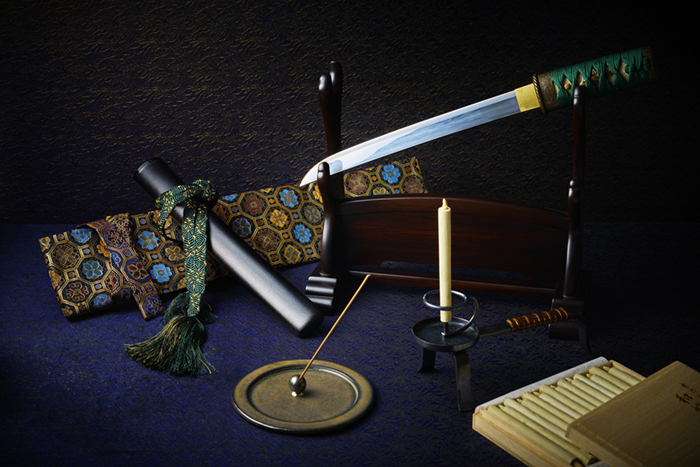
None of this makes Shogun a documentary, and it was never trying to be one. Where the show departs from the record, it does so in the direction of “what if” — imagining a closer bond between Toranaga and his old lord, a meeting between Mariko and Blackthorne that history never gave them, a friendship between two women whose families merely orbited the same court.
Each invention adds a layer of intimacy the historical record itself doesn’t supply. That is not a flaw in the adaptation; it is arguably the point of adapting history into drama at all. The romance of the “if” — of imagining what these documented lives might have touched, had circumstances been slightly different — is part of what makes the story work as a story, distinct from what makes it work as history.
KOTO is a journal of Japanese craftsmanship, culture, and the aesthetic sense behind them.
- SHARE
-


( tales )