





Tsukimi: The Japanese Harvest Moon Festival, the Moon Rabbit, and Why Japan Reveres the Moon
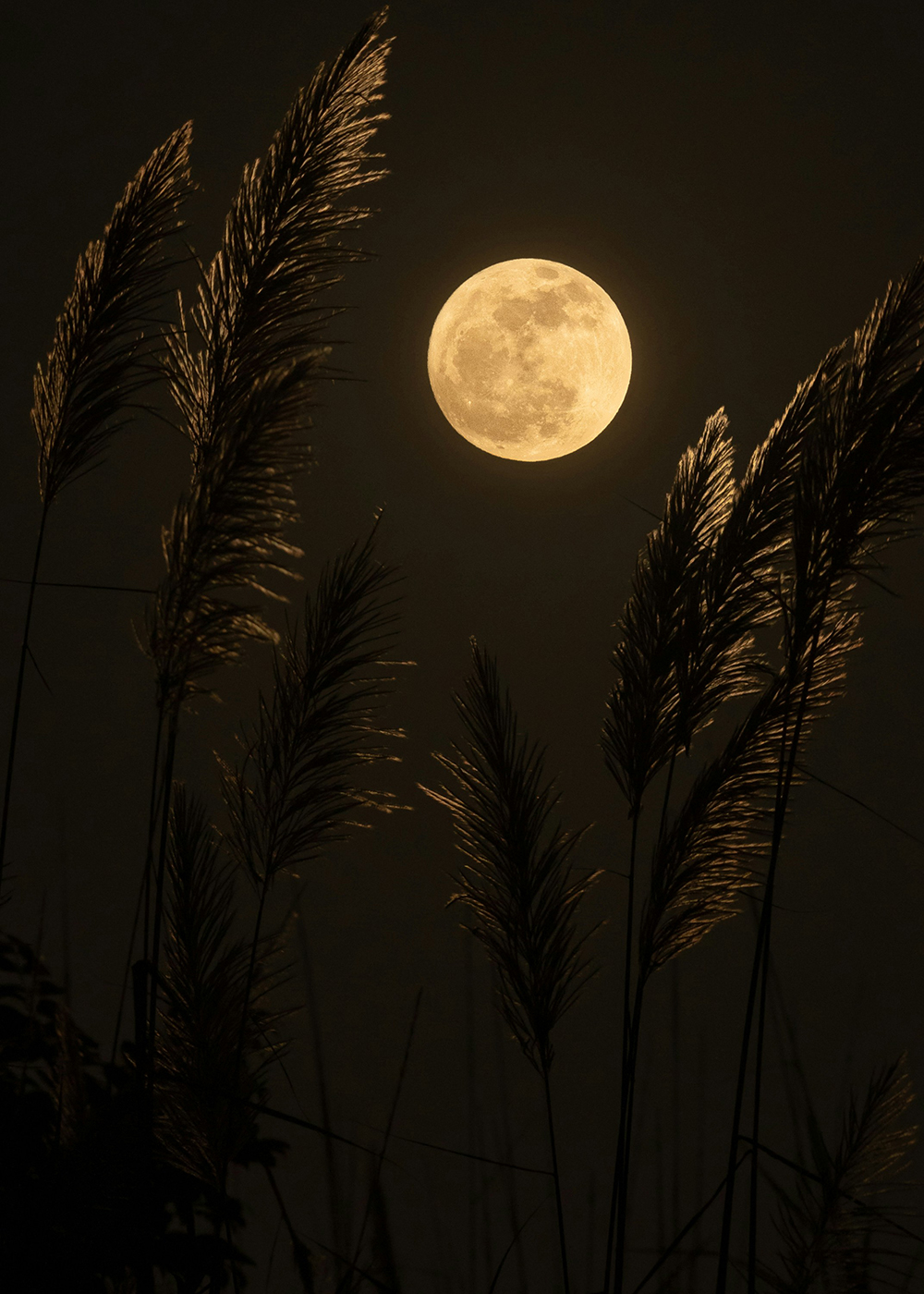
In 2025, Japan’s relationship with the moon played out twice in the sky within a single month. Before dawn on Monday, September 8, a total lunar eclipse crossed the country — the first visible nationwide in three years. Then, on Monday, October 6, came 中秋の名月 Chushu no Meigetsu, the harvest moon, said to be the most beautiful full moon of the year.
Ask most people in Japan about 月 tsuki, the moon, and they will know at least a fragment of the culture built around it. That culture reaches back to antiquity and still shapes how autumn is marked today. This article sets out where it comes from: the old lunar calendar, the harvest moon and the custom of 月見 tsukimi, moon viewing, and the enduring legend of the rabbit on the moon.
Why the Moon Matters in Japan
The moon is also, by a wide margin, the more common subject of classical Japanese poetry and literature. It appears more frequently than the sun.
Japan’s connection to the moon runs deep, and for a long stretch of that history the moon was an object of faith. Japanese mythology gives it a god of its own: 月読 Tsukuyomi, a deity whose motif is the moon. (Tsukuyomi’s fuller story, alongside the sun goddess Amaterasu and the storm god Susanoo, is told in this author’s overview of Japanese mythology.)
In well-known story, 夏目漱石 Natsume Soseki, the author of “坊ちゃん Botchan “ and “吾輩は猫である I Am a Cat“, trancelated “I love you. (English)” to “月が綺麗ですね The moon is beautiful (Japanese)”.
He have rendered this English phrase not literally or declaring, but as the feeling through the moon rather than stating it outright. It considered Saying “I love you” through “the beauty of the moon,” was more elegant way telling to lovers.
The affection runs deeper than romance, though. The long Japanese habit of loving and revering the moon is tied to two ideas: 四季 shiki, the four seasons, and 移ろい utsuroi, transience. Through the moon’s waxing and waning, people felt the seasons turning, and read into its ever-changing shape a kind of mystery — a form forever becoming something else. That habit of mind overlaps closely with Japanese sensibility more broadly.
What follows are the specific customs that grew out of that relationship.
太陰暦 Taiinreki — The Old Lunar Calendar
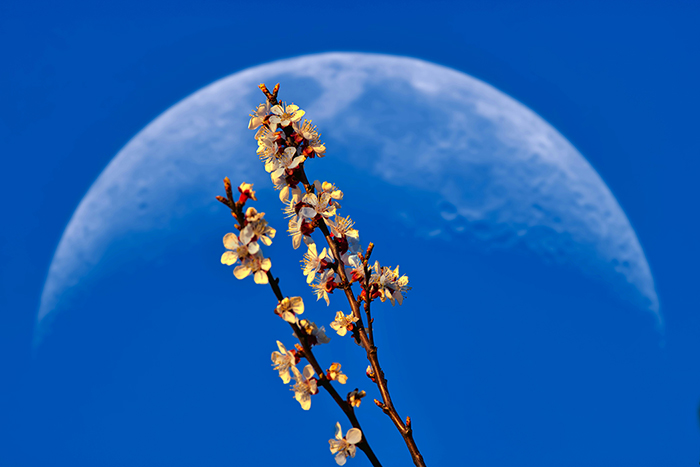
太陰暦 taiinreki is a calendar built on the moon’s phases. Japan used it until 1872, during the Meiji era (1868–1912), which is why it’s now commonly distinguished from the current 太陽暦 taiyoreki, the solar calendar, by being called simply 旧暦 kyureki, “the old calendar.”
Its mechanics were straightforward, if a little unfamiliar to a solar-calendar eye:
– Each new moon marked the first day of a month.
– The interval from one new moon to the next was defined as one month.
– A month ran either 29 or 30 days.
– A year came to 354 days — noticeably shorter than a solar year.
– To keep the calendar from drifting out of step with the actual seasons, an extra 閏月 uru-zuki, a leap month, was inserted every few years. In years with a leap month, the calendar year ran to thirteen months instead of twelve.
The moon’s phases also track the ocean’s tides, so for people living by the sea, the lunar calendar was practical information, not just a way of counting days. Fishermen and farmers used it to plan around fish movements and plant growth, both of which track the same lunar rhythm. Japan’s daily life was built around the four seasons and the surrounding natural world, and the old calendar sat at the center of that — which is part of why the moon and the calendar were so closely bound together.
Readers curious about the calendar’s Japanese-style month names — 和風月名 wafu getsumei — can find a fuller account on koto794’s Japanese-language site.
中秋の名月 Chushu no Meigetsu — The Harvest Moon
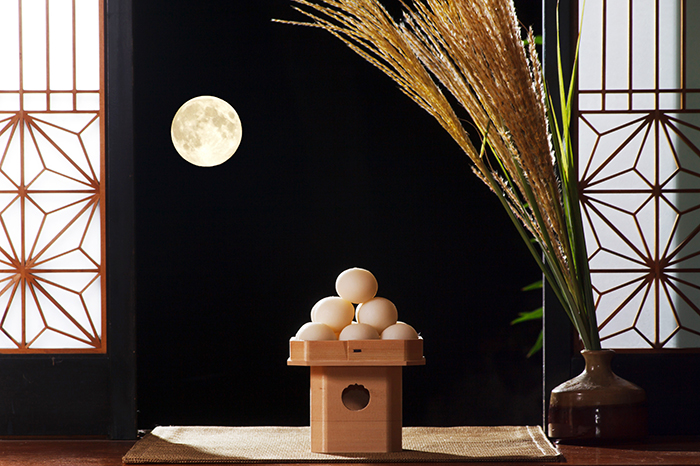
中秋の名月 Chushu no Meigetsu refers to the beautiful full moon seen on 中秋 Chushu, the 15th day of the 8th month of the old lunar calendar. On today’s solar calendar the date moves from year to year, landing somewhere between September 8 and October 7 — in 2025 it fell on October 6. The mismatch is easy to misread: the 8th month of a solar calendar is high summer, but the 8th month of the old lunar calendar was counted as autumn.
Under taiinreki, the months from July through September were classed as autumn, which put the 15th of the 8th month squarely in the middle of the season. That’s where the name comes from: 中 chu, middle, and 秋 shu, autumn.
At Chushu no Meigetsu, people offered round 月見団子 tsukimi dango, moon-viewing dumplings shaped to echo the full moon, as a prayer and a gesture of gratitude for a good harvest. Afterward, the offered dango were eaten, in hopes of health and good fortune. Unlike 十五夜 Jugoya, the “15th night” that recurs every month, Chushu no Meigetsu happens only once a year.
Tsukimi in Modern Japan
Every September in Japan, the season known as 月見 tsukimi prompts many of the major restaurant and fast-food chains to release limited-time menu items built around the moon — most often a fried egg standing in for the full moon, in dishes like 月見焼き tsukimi-yaki, or white rice-flour dumplings, 白玉団子 shiratama dango.
The trend traces to a specific piece of marketing: McDonald’s Japan began selling its “月見バーガー Tsukimi Burger” — a burger topped with a fried egg — in 1991. What started as a promotional campaign has grown into a beloved seasonal specialty that people look forward to every autumn.
The Moon and the Rabbit

Japan has long told a particular story about the moon: that a rabbit is up there pounding mochi. Several explanations for the legend exist, but they fall roughly into two categories.
The Moon’s Markings Look Like a Rabbit
The dark patches on the moon’s surface — regions of cooled magma, known as 月の海 tsuki no umi, “seas of the moon” — read to the eye as shadow and shape. In Japan, and across much of Asia, that shadow is seen as a rabbit.
The shape people see shifts by country and region. In Europe, the same markings are often read as a crab; in America, as a woman’s profile.
An Ancient Indian Legend, Carried Through China
A separate legend traces to ancient India: a rabbit offered up its own life to help a starving deity, and that rabbit was reflected onto the moon. The story reached Japan by way of China.
Along the way, its details shifted. In China, the belief held that the rabbit used a mortar and pestle to make an elixir of immortality. By the time the legend took root in Japan, the elixir had become mochi — rice cake — and a few explanations are offered for why:
– One theory ties it back to the original story: the rabbit pounds mochi so as not to trouble the hungry deity, keeping the tale rooted in food.
– Another is wordplay: the term for a full moon, mochizuki, sits close enough in sound to mochitsuki, “pounding mochi,” that one may have shifted toward the other.
– A third points to daily life: the mortar and pestle used to pound mochi were common household tools in Japan, deeply woven into everyday routine.
A Legend Anime Carried Forward
Pretty Guardian Sailor Moon, a global hit, centers on a warrior sworn to protect the moon: 月野うさぎ Tsukino Usagi. Her given name, 兎 Usagi — rabbit — draws directly on the moon-and-rabbit legend. Building the story around the moon, rather than the sun, as its protagonist’s motif is itself an extension of Japan’s long-standing affection for the moon.
The series has been animated twice, once in the 1990s and again in the 2010s. One detail from the original 1990s version is worth noting: the futon cover in Usagi’s bedroom was drawn in a rabbit pattern — a small, deliberate nod to the legend behind her name.
In Closing
Moon-related culture runs through Japan in more forms than any one article can hold. This one has focused on Chushu no Meigetsu and the customs built around it, but the thread extends much further.
If your travels bring you to Japan, look up. Finding the moon in the night sky is as good a way as any to meet the culture behind it.
KOTO is a journal of Japanese craftsmanship, culture, and the aesthetic sense behind them.
- SHARE
-


( landscape )