






Washi: The History of Japan’s Traditional Paper, from Origins to the Three Great Washi
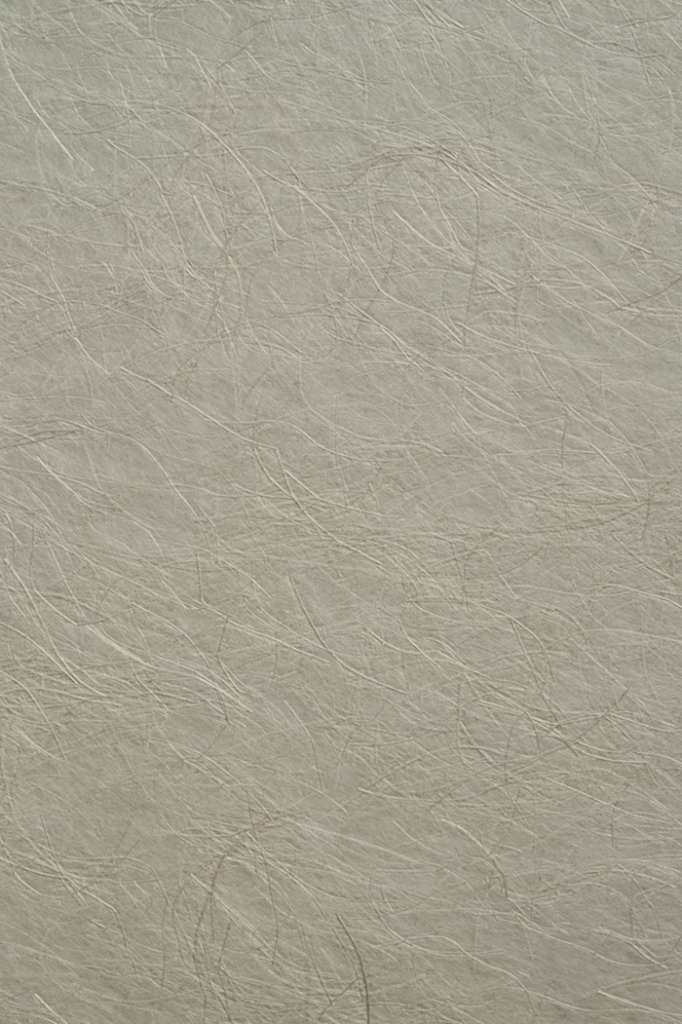
Japan’s papermaking tradition sits inside a single word: 和紙 washi — literally “Japanese paper” — a craft whose roots reach back roughly 1,400 years, carried from China by way of the Korean peninsula and shaped, over the centuries, into something structurally unlike paper made anywhere else: thin enough to let daylight through, and durable enough that documents made well over a thousand years ago still survive today.
Washi moved through Japanese society in stages, from the imperial court to the warrior class to ordinary households, and today it carries a UNESCO listing earned in 2014, along with new attention as a material for space suits and in the fashion industry.
The History of Washi: From Its Arrival to the Present Day

The earliest record of papermaking in Japan appears in the 日本書紀 Nihon Shoki — the Chronicles of Japan, the country’s oldest official history, compiled in 720 — which credits a Buddhist monk from 高句麗 Koguryo, one of the three kingdoms then on the Korean peninsula, with bringing the technique to Japan in the year 610.
Within a generation, Prince Shotoku (574–622), the regent credited with establishing Buddhism in Japan, was already putting the new material to work: in the Asuka period (592–710), washi became the paper of choice for copying Buddhist sutras, a practice that helped spread the religion across the country.
The technique changed decisively in the Heian period (794–1185). To meet demand from the era’s women writers — Murasaki Shikibu, author of The Tale of Genji, chief among them — for a paper that was thin and strong at once, papermakers developed 流し漉き nagashi-zuki, the “flow-casting” method unique to Japan, in which the papermaker rocks a mesh screen back and forth so the fibers interlock in layers rather than simply settling. That technical shift is the point at which washi became decisively different from paper made anywhere else in the world.
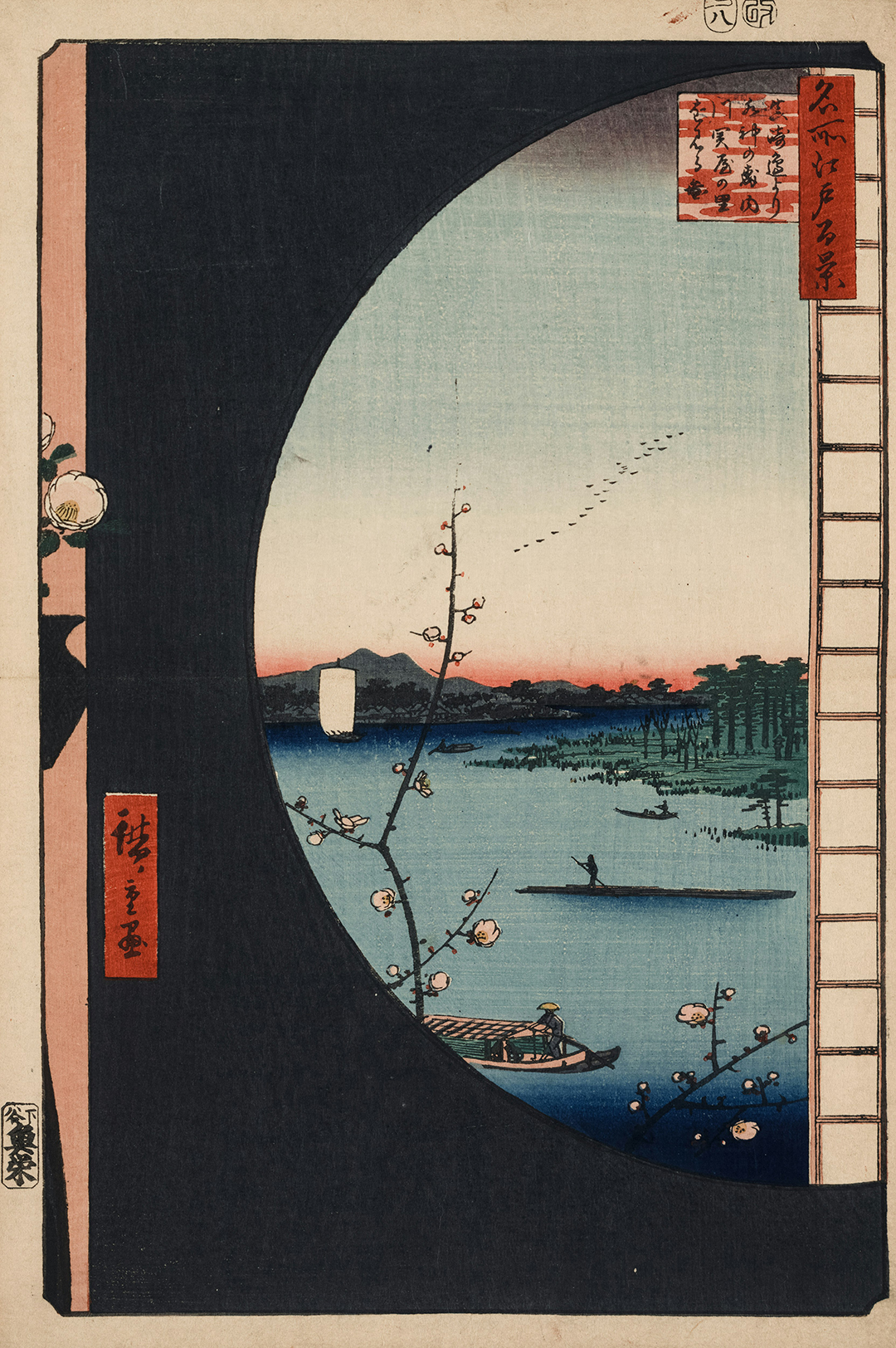
From the Kamakura period (1185–1333) through the Edo period (1603–1868), washi became prized within the warrior class. As Edo’s publishing culture expanded, it also became the material of the woodblock print — 浮世絵 ukiyo-e and the multicolor 錦絵 nishiki-e — carrying images into ordinary households for the first time. The Meiji era (1868–1912) brought Western paper into wide use, and washi production fell into a temporary decline; only in recent years, as traditional craft has been reappraised, has it found new footing again.
How Washi Was Used: Architecture, Everyday Life, and Art
Across those centuries, washi’s uses multiplied well beyond the page.
Architecture
障子 shoji and 襖 fusuma — the sliding paper screens and doors that define a Japanese interior — depend on washi’s particular thinness: thin enough to let daylight through, yet strong enough to hold its shape as a panel. The soft, warm light that results has become one of the defining qualities of Japanese domestic space.
Everyday Life
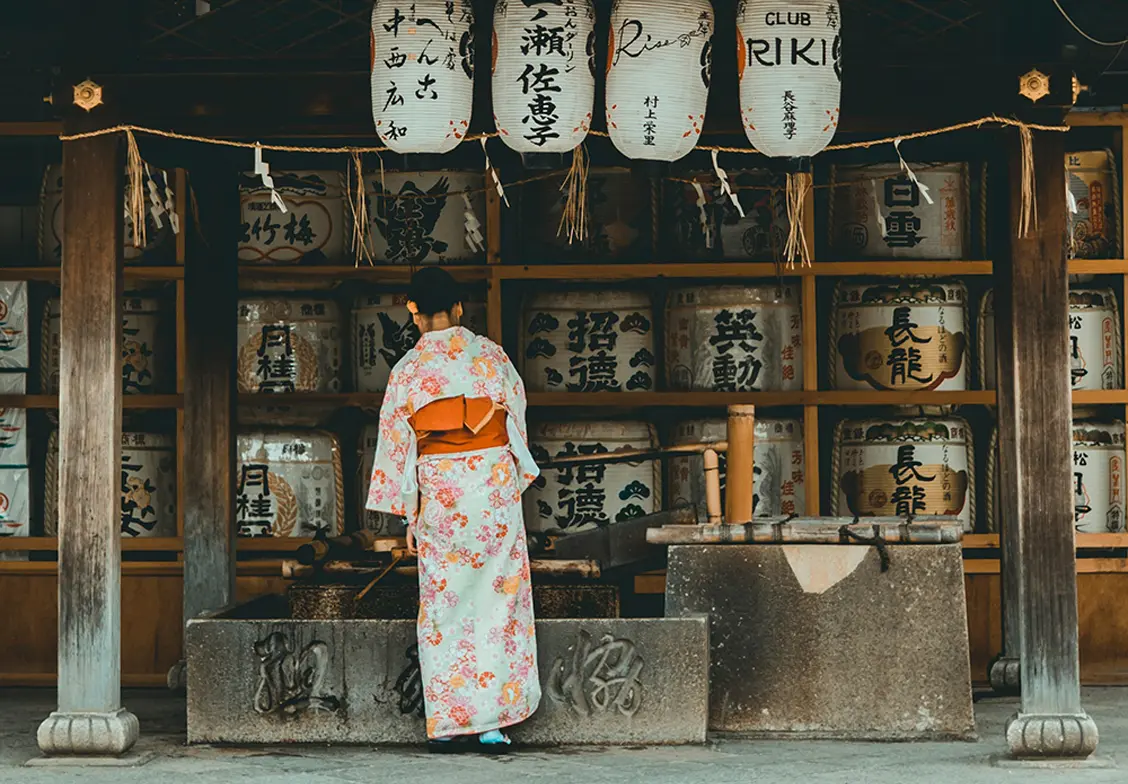
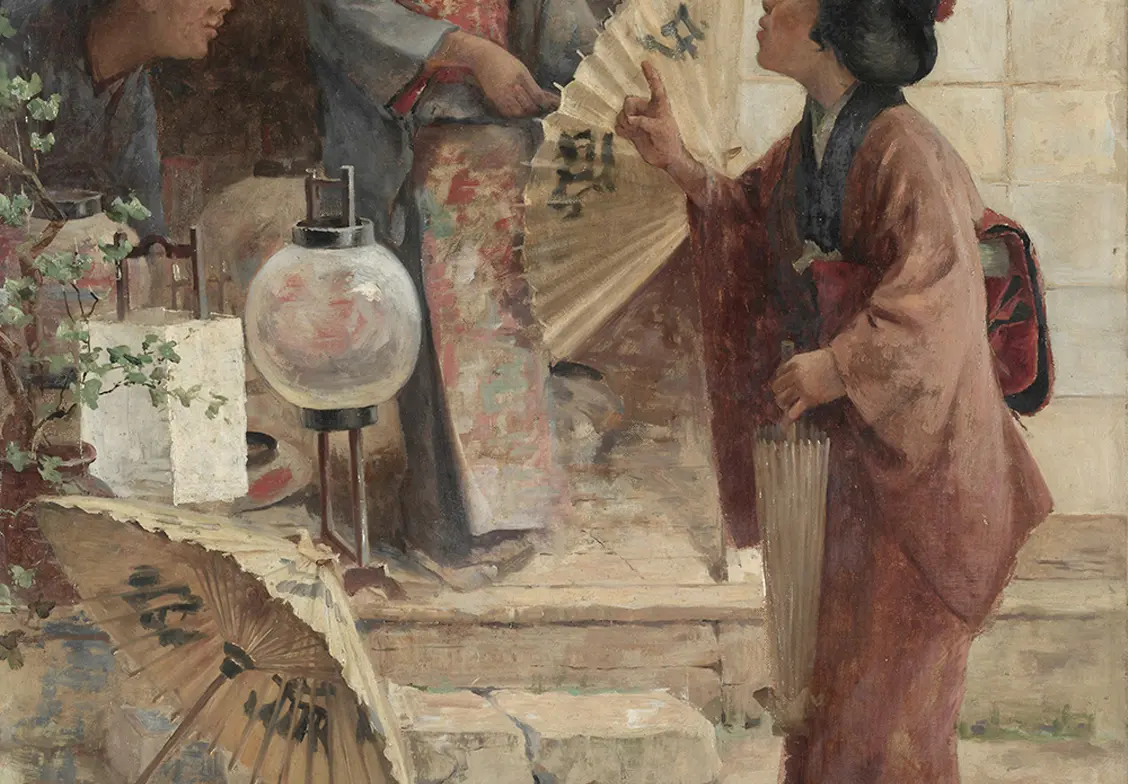
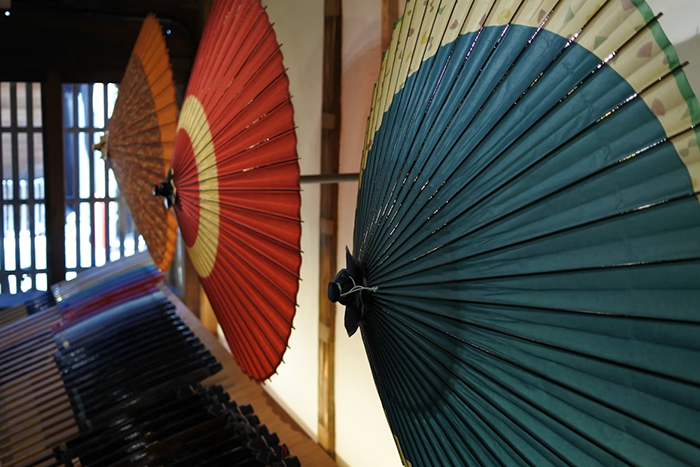
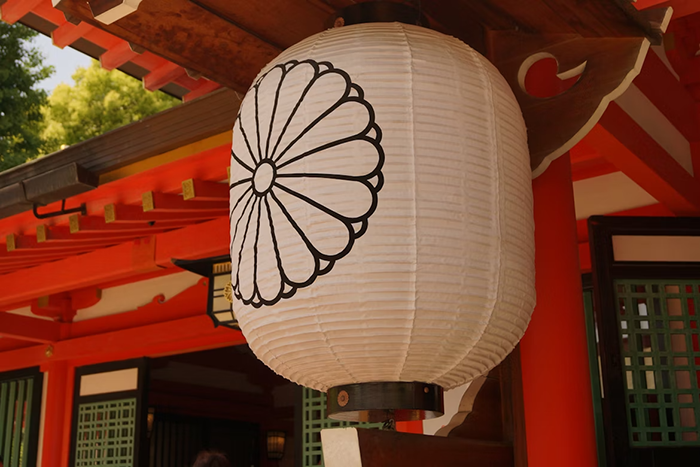
Mino washi, from Gifu, became especially associated with 提灯 chochin — paper lanterns — and 和傘 wagasa, the traditional paper umbrella, both of which call for the same balance: thin enough to glow or to fold, strong enough to shed wind and rain.
Art
In the Edo period, washi was produced in volume as the printing paper for ukiyo-e and nishiki-e. That same durability now serves a different purpose: museums around the world use washi in conservation work, and the Louvre has used Echizen washi to restore pieces in its own collection.
The Three Great Washi
Japan has papermaking towns scattered across the country, but three are singled out as 日本三大和紙 Nihon sandai washi — the three great washi.
Echizen Washi — Fukui Prefecture
Echizen washi carries a history of roughly 1,500 years. Tradition holds that a figure named Kawakami Gozen taught local villagers to make paper sometime before 507, during the years Emperor Keitai — then still known by his given name, Odo — was living in Echizen, ahead of his accession to the throne.
Origins and Features
In the Edo period, Echizen paper earned the seal 御上天下一 Onkami Tenka-ichi, marking it as the finest paper in the country, and its 白黒すかし shirokuro sukashi — black-and-white watermarking — became the basis for the watermark techniques still used in Japanese currency today. In 2010, socks woven from washi fiber were selected as part of an astronaut’s wardrobe for a stay in space.
Washi Today
Paper made by Living National Treasure Iwano Ichibei is used by the Louvre for restoring items in its collection — recognition that places Echizen washi among the finest paper made anywhere.
Tosa Washi — Kochi Prefecture
Tosa’s name appears in the 延喜式 Engishiki, a compilation of governmental and ceremonial regulations completed in 927, among the provinces that submitted paper as tribute to the state — evidence that papermaking in Kochi was already established by the Heian period.
Origins and Features
In the Sengoku period (circa 1467–1615), papermakers in Ino town’s Nariyama district added plant-dyeing techniques to produce 土佐七色紙 Tosa nanairo-gami, the “seven-colored paper of Tosa,” which the Tosa domain protected as a tribute good sent to the shogunate. Tosa washi is known for the range of its varieties and for being thinner and stronger than washi from other regions; 土佐典具帖紙 Tosa tengujoshi is said to be the thinnest paper in the world, at just 0.03 millimeters.
Washi Today
During the Second World War, Tosa washi was put to a starker use, forming the envelopes of Japan’s wartime balloon bombs. Today it has returned to gentler purposes and is used worldwide for cultural-property restoration and as calligraphy paper.
Mino Washi — Gifu Prefecture
Mino washi’s history runs past 1,300 years. The 正倉院 Shosoin, the imperial treasure repository in Nara, holds a household registry document made of Mino washi and dated to 702 — believed to be the oldest surviving paper in Japan.
Origins and Features
Mino paper is prized for being thin and even, with a soft, delicate texture that nonetheless holds up to hard use. In the Edo period it became the standard material for shoji screens, so widely used that “Mino-ban” became the name of a standard paper size in its own right. In 2014, the hand-papermaking technique behind 本美濃紙 Hon-Mino-shi was added to the UNESCO Intangible Cultural Heritage list.
Washi Today
Gifu Prefecture remains Japan’s largest producer of both paper lanterns and paper umbrellas, and Mino washi is the material behind both industries.
New Possibilities for Washi Today
Washi’s traditional uses have not disappeared, but in recent years it has also moved into fields that have nothing to do with shoji screens or woodblock prints.
Space Technology
In 2010, JAXA astronaut Naoko Yamazaki flew into space wearing socks made of washi fiber. The material owes that suitability to the tree bark it comes from: fibers that once protected a trunk from ultraviolet light carry that same protection, along with antibacterial, deodorizing, humidity-regulating, and moisture-retaining properties, into the finished paper.
Fashion
In Tokyo’s Sumida ward, the garment maker Wako produces T-shirts and stoles woven from washi thread. At the world’s largest menswear trade show, held in Florence in 2020, the material was recognized as a next-generation sustainable fiber.
Environmental Technology
Washi made from manila hemp — also known as abaca — draws on a plant that reaches maturity in just three years, and is gaining attention abroad as a low-impact material for that reason. Traditional washi production uses almost no chemicals, which keeps the water and air pollution associated with manufacturing to a minimum.
Everyday Goods
Newer applications include masking tape, interior finishing materials, and “seed paper,” embedded with seeds that can be planted directly and grown into flowers.
In Closing
Washi carries roughly 1,400 years of history inside a single sheet. From the shoji screens and paper lanterns of ordinary households to the socks of an astronaut in orbit, it is a material that has kept finding new work to do without ever losing the hand-craft at its center — reason enough to call it one of Japan’s genuine treasures.
KOTO is a journal of Japanese craftsmanship, culture, and the aesthetic sense behind them.
- SHARE
-


( craft )