







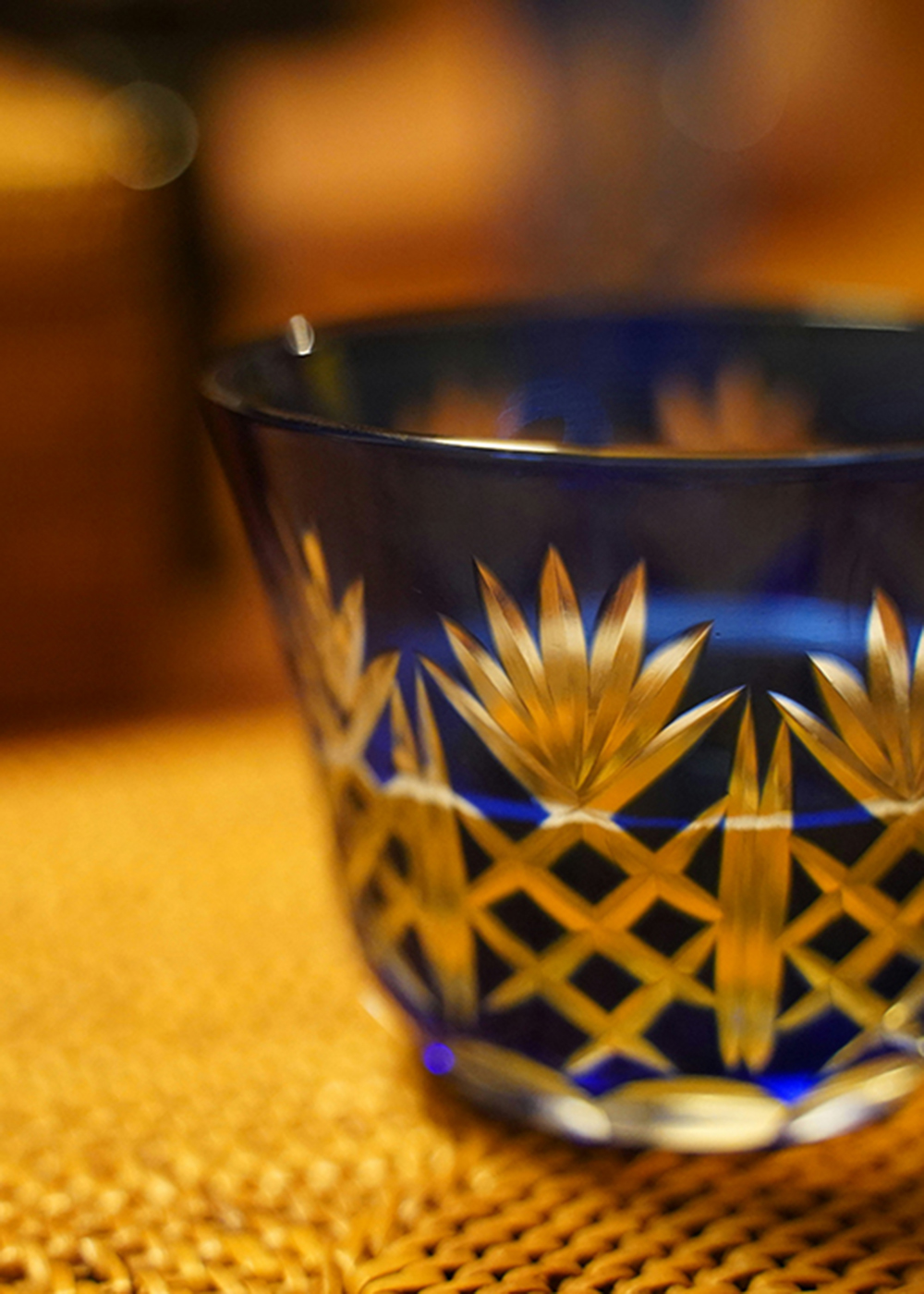
What Is Kiriko? Edo Kiriko, Satsuma Kiriko, and the Art of Cutting Light Into Glass

切子 kiriko — cut glass — is Japan’s tradition of cutting intricate patterns into the surface of clear or colored glass. It is known abroad chiefly through two regional styles, 江戸切子 Edo kiriko and 薩摩切子 Satsuma kiriko, each carrying its own sense of place and its own read on light.
What Is Kiriko?

Kiriko originated in the late Edo period (1603–1868), when glassworking techniques introduced from the West were reworked into a distinctly Japanese vocabulary of pattern and cutting technique.
Its defining quality is the sparkle raised when light strikes a cut surface. Each facet is ground by hand, one at a time, and the angle and depth of every cut catch the light differently — the effect reads less like decorated glass than like light carved directly into it.
The process begins with 被せガラス kisegarasu, cased glass: a layer of colored glass fused over a base of clear glass. A craftsman then cuts the pattern into that outer layer with a rotating grindstone before polishing the surface to bring out its texture and shine. Nearly the entire process is done by hand, and because the pressure and angle of the cut shift slightly from piece to piece, no two examples of even the same pattern turn out quite alike.
Two Traditions: Edo Kiriko and Satsuma Kiriko
江戸切子 Edo kiriko (Tokyo)
Edo kiriko takes its name from Edo, the historical name for present-day Tokyo, and was refined within the city’s merchant culture during the Edo period. It is defined by clarity and sharply defined cuts, with precise patterns cut into cased glass finished in red or indigo.
薩摩切子 Satsuma kiriko (Kagoshima)
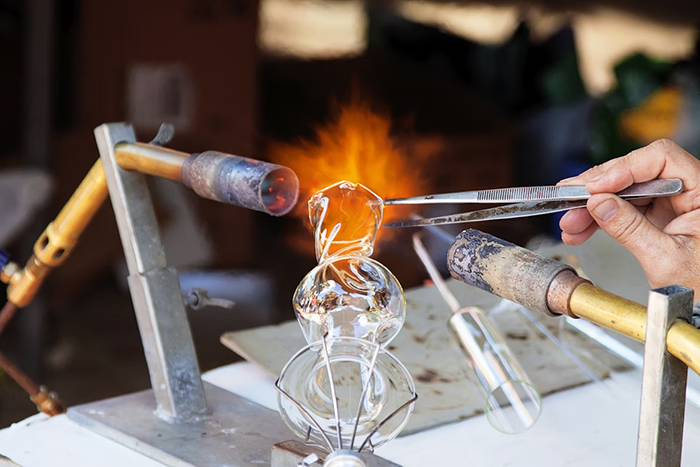
Satsuma kiriko favors softer color and gradation. It was born in the mid-19th century at a kiln maintained under the patronage of the Satsuma domain, in what is now Kagoshima, in southern Kyushu. Its glass is cut thick and deep, producing a heavier, more saturated glow.
What the Patterns Mean
Kiriko’s beauty is not only in the cutting itself. Each recurring pattern carries its own meaning within Japanese culture.
麻の葉 asa-no-ha — hemp leaf
A geometric pattern of interlocking hexagons, associated with growth and protection from evil. It has long been used on children’s kimono, carrying a wish for healthy growth.
菊繋ぎ kiku-tsunagi — linked chrysanthemums
An elegant pattern of continuous chrysanthemum motifs, symbolizing longevity and prosperity. The unbroken chain of flowers is read as an auspicious sign.
市松 ichimatsu — checkered pattern
Alternating squares standing for growth and the flourishing of one’s descendants. The repeating form suggests permanence and a settled, stable beauty.
八角籠目 hakkaku-kagome — eight-pointed basket-weave
A basket-weave pattern radiating in eight directions, associated with warding off evil. Adding an eight-sided structure to the traditional kagome weave gives the pattern extra complexity and force.
亀甲 kikkou — tortoise shell

A hexagonal pattern recalling a tortoise’s shell, symbolizing longevity and good fortune. It has been prized as an auspicious motif since ancient times, combining strength with a sense of calm.
Choosing and Living With Kiriko
Three things are worth weighing when choosing a piece of kiriko: what it is for, which pattern it carries, and its color.
For everyday use, a sturdy tumbler or glass is the practical choice, bringing a small note of brilliance to the table. For special occasions or as a gift, a sake cup or wine glass is a popular choice, and vases, bowls, and lampshades extend the craft into the rest of a room.
Even the same pattern reads differently depending on its color and the depth of its cut. Indigo brings a cool, refreshing note; red glows warmer and more festive. Kiriko also rewards attention at different times of day — held up to catch the light, or left to cast its cut pattern as a shadow across a table.
In Closing

Kiriko is a glasswork built from light and shadow, from meaning carried in pattern, and from the hand of the craftsman who cut it. Edo kiriko and Satsuma kiriko are recognized today both within Japan and abroad, standing among the clearest expressions of Japanese craftsmanship.
A piece that changes character with the light and the angle from which it is seen brings a small, recurring surprise into daily life — as tableware, as an object in a room, or as a gift passed on to someone else.
KOTO is a journal of Japanese craftsmanship, culture, and the aesthetic sense behind them.
- SHARE
-


( craft )