









From The Last Samurai to Shogun: A Century of Japan in Hollywood
For as long as there has been a film industry in America, there has been an appetite in it for Japan.
That appetite goes back further than most people assume, and it has produced some of the most acclaimed television of the last two years alongside some of the most criticized films of the last century. The throughline connecting Sessue Hayakawa’s silent-era stardom to Shogun‘s Emmy sweep is not simply “Hollywood likes Japan.” It is closer to: Hollywood has spent more than a hundred years trying to work out how to depict Japan, and has not always gotten it right.
One Man Started It
Hollywood had already made occasional Japan-themed films from the early 1900s, but the pattern that would define the genre traces back to a single person who arrived in America in 1907.
His name was 早川雪洲 Sessue Hayakawa, born Hayakawa Kintaro. He had originally set his sights on a naval career. When that path closed to him, he crossed paths with the Dakota, a large American steamship that had run aground. More than 300 crew members were rescued, and Hayakawa accompanied the rescue as an interpreter. By some accounts, that encounter is what gave him the new goal of going to America — though the details of exactly how are disputed.
Once in the United States, Hayakawa enrolled at the University of Chicago, but stayed only about a year. He drifted through several jobs over the following years before turning, in 1911, to theater.
An Encounter with a Producer
Hayakawa’s early stage work was aimed at Japanese-American audiences. He wanted more — to perform for American audiences directly — and that ambition led to a scouting offer from the film producer Thomas H. Ince.
Ince was working in American film during its transitional years, as production shifted from New York to Hollywood, and he wanted to make films built around Japan. The reason: white American society at the time regarded Japan and the Japanese as mysterious and worth watching. It is the same fascination that had already swept Europe in the 19th century, when ukiyo-e prints and Japanese aesthetics became fashionable under the name Japonisme.
Ince initially scouted Hayakawa as a screenwriter. He was later signed as an actor instead, and the two worked together as producer and star of Japan-themed pictures until their arrangement ended in 1915.
“The Cheat” Made Him a Star — and a Target
That same year, 1915, the film that made Hayakawa an international star was released: The Cheat. He played a wealthy, exploitative Japanese art dealer whose cruelty toward a female character was central to the plot. It was a supporting role, and it was a sensation. His exoticism and the sheer novelty of his screen presence reportedly captivated large numbers of female moviegoers.
It also caused a backlash. Critics argued the character reinforced discrimination against Japanese people, and the timing made that argument land hard: anti-Japanese sentiment was already rising on the American West Coast. Hayakawa met with the Japanese Association of Los Angeles and ran apology advertisements, but the criticism did not subside. Angry Japanese and Japanese-American communities eventually branded him a “national traitor.”
Fearing for his safety, Hayakawa left the United States, moving between Japan, Paris, and America over the following decades. He did not return to Hollywood until 1949.
The First Hollywood Franchise Built Around Japan
The Hayakawa era established that Japan could sell tickets. The franchise that followed showed how far that idea could be stretched.
The Mr. Moto series, adapted from the novels of John P. Marquand, is generally considered the first Hollywood film franchise built specifically around a Japanese theme. Made in the 1930s, it caught on fast — eight films were produced within two years of the first release.
Its protagonist, I.A. Moto, is a Japanese man who says “I’m sorry” constantly and carries himself with an almost excessive politeness. That politeness is the point: it turns out to be cover. Moto’s real identity is a cold, efficient spy operating directly under the Emperor.
An agent personally answering to the Emperor was never realistic. But the Emperor was, to foreign audiences, a distinctly Japanese figure with a romantic quality no ordinary spy master could match — and that may be exactly what made the premise work.
What Hollywood Reaches for When It Wants “Japan”
Japanese culture is a vast subject. Hollywood has tended to return to the same handful of entry points.
Period Dramas
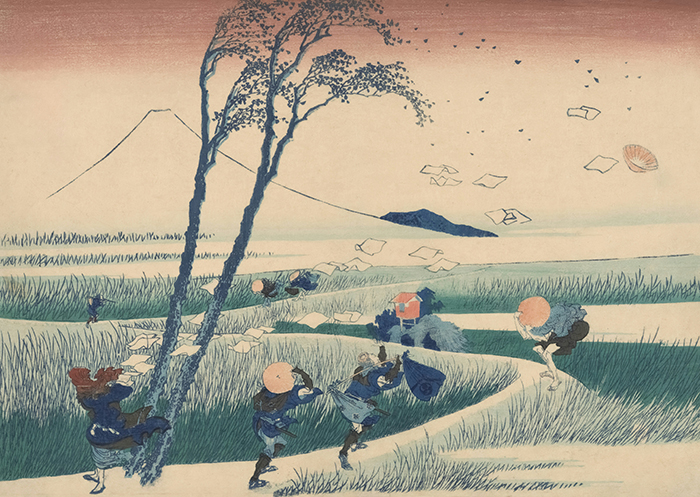
Samurai, warriors, and the Bushido code are usually the first image that comes to mind, and jidaigeki-style films are the most direct route to it — swordfights, the katana, the discipline behind both.
Representative titles: The Last Samurai, 47 Ronin, Memoirs of a Geisha.
Ninjas
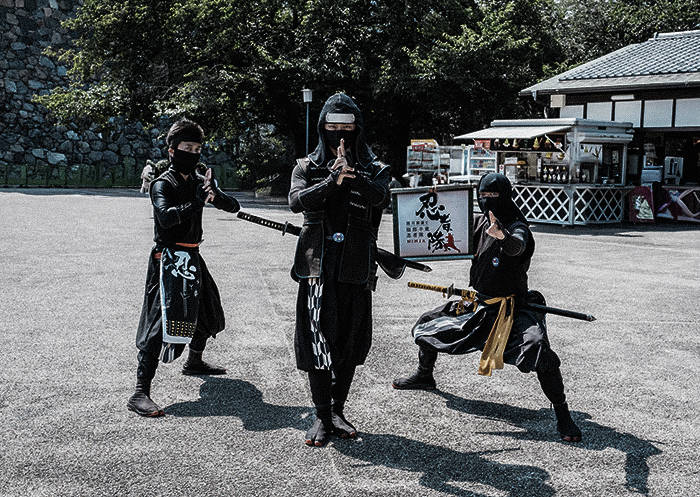
Unbound by any particular era, the ninja shows up in American film again and again. Part of the appeal is the opposite of the action hero: not flash, but a stoic, quiet commitment to the mission.
Representative titles: The Wolverine, Snake Eyes: G.I. Joe Origins.
Live-Action Anime and Manga
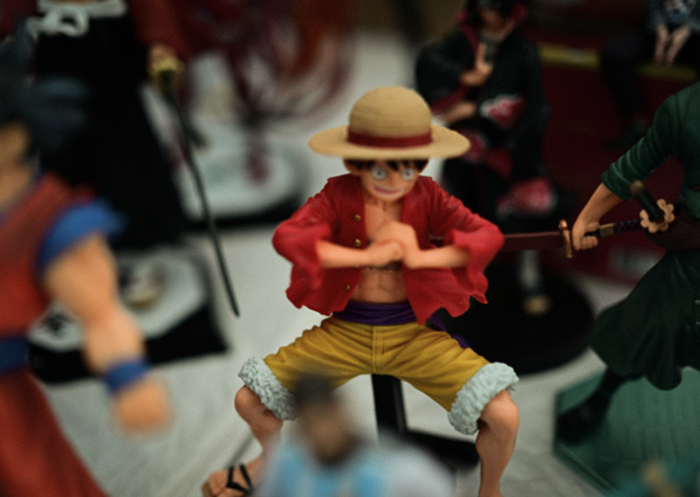
Japanese anime and manga already command a global audience, and Hollywood has repeatedly tried converting that audience into live-action viewers. Netflix’s 2023 live-action One Piece is a recent example, released alongside a manga and anime that remain massively popular worldwide in their own right.
Representative titles: Ghost in the Shell, One Piece (Netflix).
Cityscapes
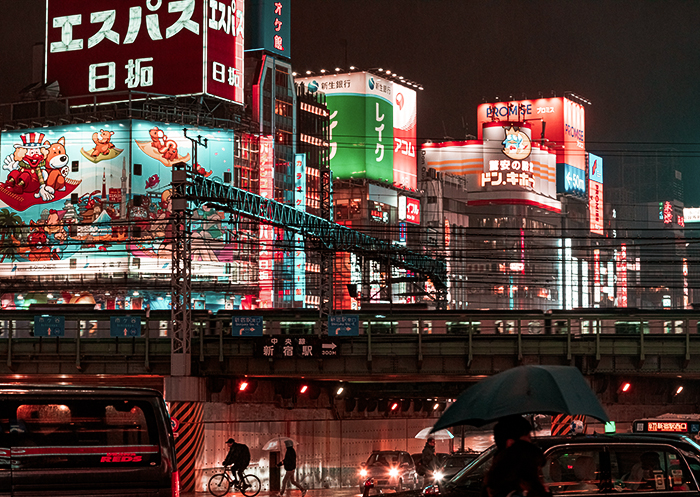
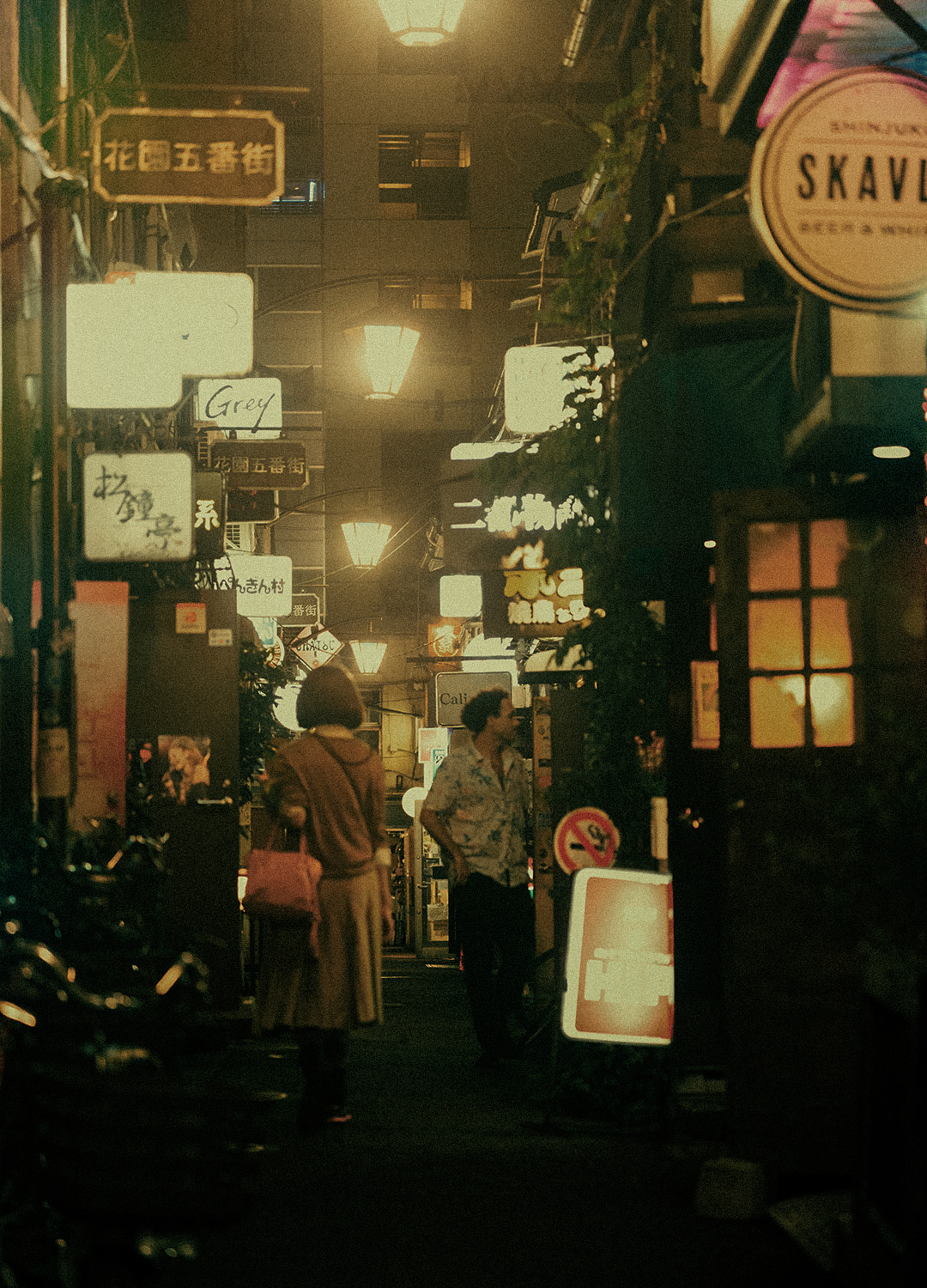
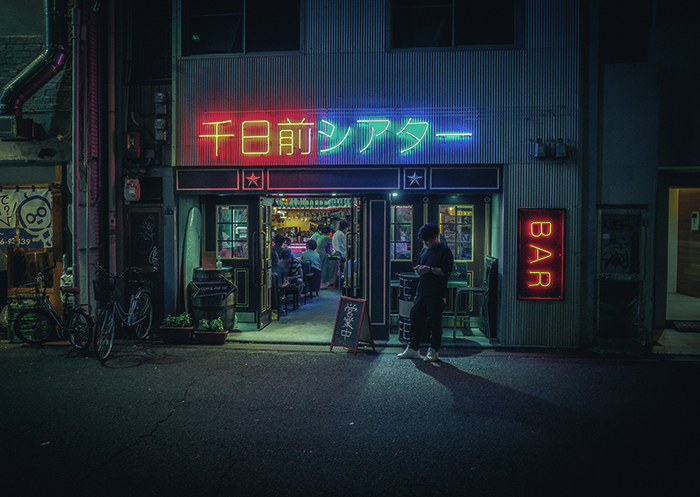
Japanese cities, especially Tokyo and Osaka, appear as settings in their own right. Sometimes the film is actually set in Japan, as in Black Rain. Sometimes only the surface — Kabukicho streets, Japanese-language signage — is borrowed, as in Blade Runner.
Representative titles: Pacific Rim (Tokyo), Blade Runner (a near-future Tokyo), Black Rain (Osaka).
Where the Image Diverges from the Country
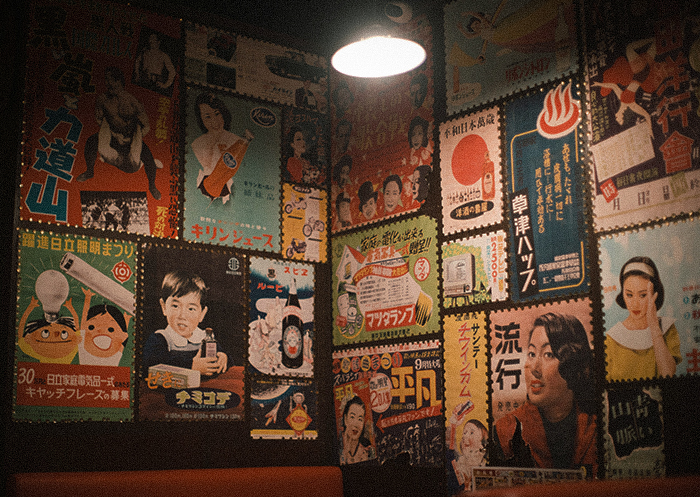
What Hollywood shows is best understood as Japan filtered through a foreign gaze — and that filter sometimes produces a picture strikingly different from the country as it actually is or was. Two recurring gaps illustrate why.
The first is a matter of emphasis. Entertainment favors spectacle: fast cuts, aggressive movement, performers in constant motion. Call it the aesthetic of 動, motion. Japanese aesthetics, by contrast, lean toward 静, stillness — the sensibilities behind mono no aware, mujo (impermanence), yugen, and wabi-sabi. When a film built for spectacle takes on a subject built for restraint, something has to give.
Who Could Enter the Castle
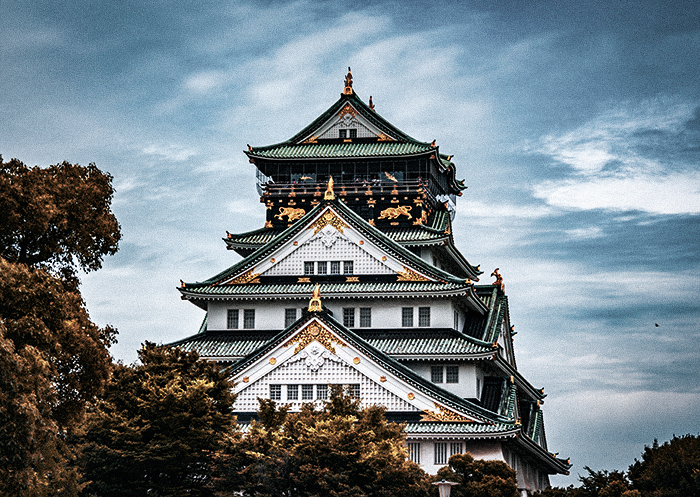
Consider the Sengoku-period castle — Osaka Castle, or Edo Castle, now the site of the Imperial Palace. These were the residences of Sengoku-era warlords and, later, of the Edo period’s shoguns and daimyo. Ordinary people — farmers, merchants — had no access to them.
Film productions have often ignored that boundary for the sake of a livelier frame, populating castle scenes with extras playing farmers and merchants milling around the grounds. It reads well on screen. It is not how the castle worked.
The Ninja Was Not an Action Hero
The ninja’s actual method was the opposite of spectacle: operate at night, stay unseen, complete the mission without being noticed. The kanji 忍 (nin) itself carries that meaning — to act while hidden from view — and, applied to temperament, to suppress one’s feelings and stay composed.
A ninja who fights openly and dramatically, the kind Hollywood favors, is a different kind of character than the one the word originally described.
When the Gap Becomes Controversy
Sometimes the gap between the on-screen image and the historical or cultural reality is simply a stylistic shortcut. Sometimes it becomes a genuine controversy — and Hayakawa’s experience with The Cheat was an early example, one severe enough to get him labeled a traitor by his own community. It is worth remembering that this happened at a time when information about distant countries traveled slowly and rarely. Today, the internet and social media give audiences some ability to check a depiction against the reality. In the early 20th century, that check barely existed.
Two later examples show the same dynamic playing out differently.
A Locomotive That Never Ran Past Mount Fuji
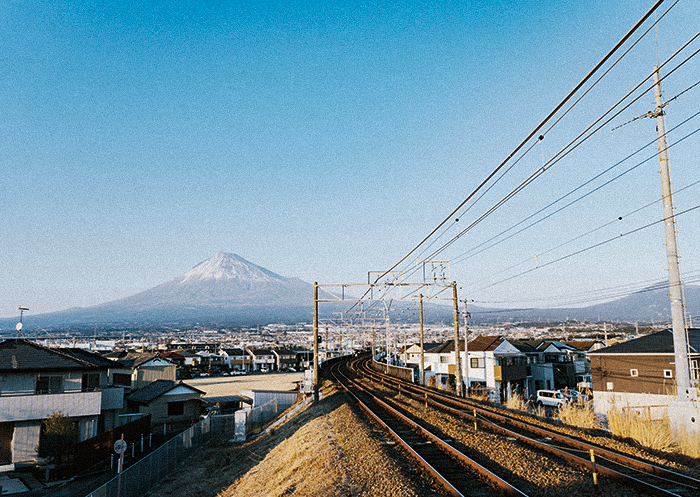
House of Bamboo (1955), which featured a returning Sessue Hayakawa, built its imagery around three stock symbols of Japan at the time: yakuza, geisha, and Mount Fuji. Its opening includes a steam locomotive running with Mount Fuji in the background — a beautiful shot, and one with no basis in actual railway history. No steam line ever ran that route.
To get it, the production suspended the actual railway’s service for three days. The company operating the line initially refused, on the grounds that a public railway could not simply be shut down. It relented only after being persuaded that the shoot served “international goodwill and tourism.” The episode drew its own share of questions at the time: which mattered more, a stereotyped image or the disruption to the people who depended on that train.
How Far a Geisha’s Duty Extended
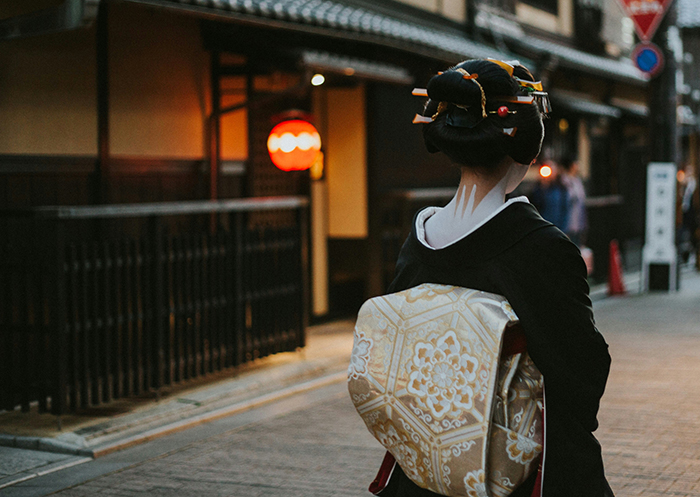
Memoirs of a Geisha (2005) drew praise for its costumes and cinematography and criticism for its handling of geisha culture. A geisha is, properly, someone who has mastered and makes a living from the traditional arts. The film added a sexual dimension that was not part of that definition, and in doing so spread a distorted picture of what the role actually is.
The consequences went beyond critical reviews. A former geiko who had been interviewed by the novel’s author filed a defamation suit, arguing the book was inaccurate and had exposed rules of the hanamachi — the geisha district — that were meant to stay private. The case was later settled.
Both examples point to the same risk: a stereotype, once it takes hold in a widely watched film, can spread a mistaken cultural or historical understanding further than any correction can reach.
The Series That Changed the Pattern: Shogun
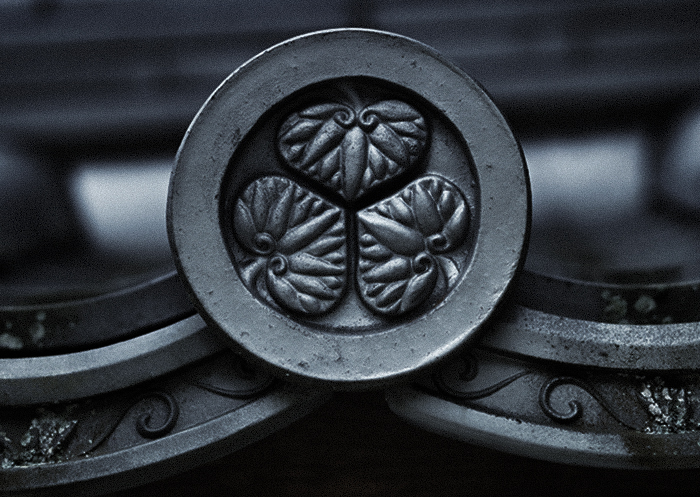
For roughly a century, Hollywood’s depiction of Japan trended toward the version outsiders already expected to see. In 2024, that pattern broke.
Shogun, released on Disney+, became a global hit almost immediately and went on to be honored at the 76th Emmy Awards. What set it apart, by the account given for its production, was a sustained, ongoing dialogue between its star, Hiroyuki Sanada, and the show’s directors. Earlier Japan-themed productions had tended to default to the version of “Japaneseness” that foreign audiences already associated with Japonisme — a version built from expectation rather than from the country itself. That left, as this account has it, a gap where an accurate depiction should have been.
Sanada and the production worked instead toward the Japan that Japanese people themselves recognize from the inside. That commitment to a lived-in accuracy, rather than an imported idea of Japan, is what audiences responded to.
A Century of Trying to Get It Right
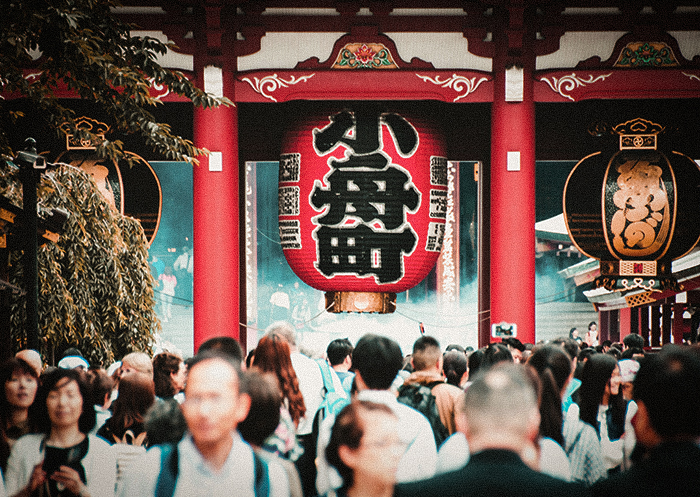
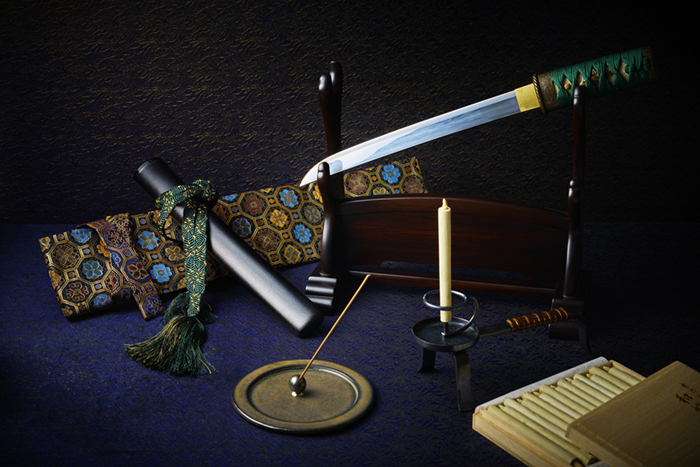
From the early 1900s onward, a long line of people in Hollywood have tried to put Japanese culture on screen — sometimes landing on misunderstanding and stereotype, but rarely without sincere effort behind the attempt. The people making these films, across every decade covered here, appear to have taken the task seriously even when they got it wrong.
The results were shaped as much by the social and political currents of each era as by the filmmakers’ own choices. What stayed constant underneath all of it was the wish to communicate something about Japan at all.
That, more than any single film, is what the relationship between Hollywood and Japan has to say to us now: a century-long case study in how people from different cultures try — and sometimes fail, and occasionally succeed — to understand one another. In a moment when so much is moving this fast, it is worth sitting with.
KOTO is a journal of Japanese craftsmanship, culture, and the aesthetic sense behind them.
- SHARE
-


( tales )