







How to Pray at a Japanese Shrine: A Complete Etiquette Guide
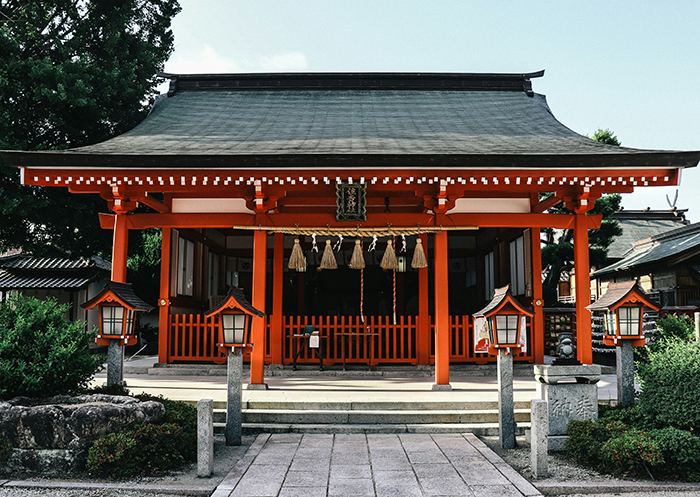
A shrine in Japan is easy to visit and easy to get wrong. Nothing stops a stranger from walking through the gate, and nothing is posted at the entrance explaining what to do once inside. The manners are assumed, learned by every Japanese child through repetition rather than instruction, and largely invisible to a first-time visitor.
That gap has become more noticeable as shrines have drawn a wider international audience through social media. Most of what looks like bad behavior is not disrespect. It is simply a set of steps no one wrote down for the person now standing at the gate. This guide writes them down.
What a Shrine Actually Is
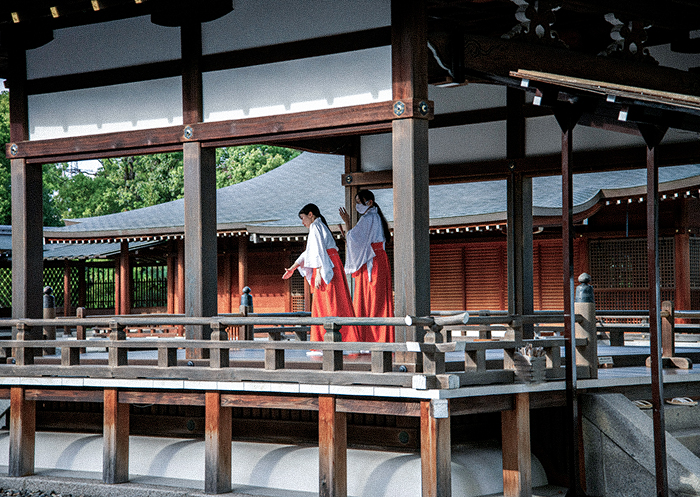
A Japanese 神社 jinja, shrine is defined, formally, as a facility for practicing 神道 Shinto belief. Functionally, it has always been something closer to a meeting point: a place where a community renews its bonds through worship and through festivals, built around the idea that it is also the house of a deity.
Shinto is Japanese native religious tradition, and it departs from what “religion” usually implies. It has no founder and no scripture. Its premise is that divinity inhabits the natural world directly — mountains, rivers, stones — a presence known collectively as 八百万の神 yaoyorozu no kami, the eight million deities. Reverence for nature, and gratitude toward one’s ancestors, sit at its center instead of doctrine. Shrines grew out of that impulse: places built to give thanks and to ask for calm in the year ahead.
Because each deity is understood to preside over a different area of life, visitors tend to choose a shrine to match what they are asking for. The blessings most commonly sought are matchmaking and good relationships (enmusubi), success in business, academic achievement and exam success, protection from misfortune and safety at home, recovery from illness, safe childbirth, and — less often discussed but no less real — the severing of a bad relationship.
Still Part of Daily Life
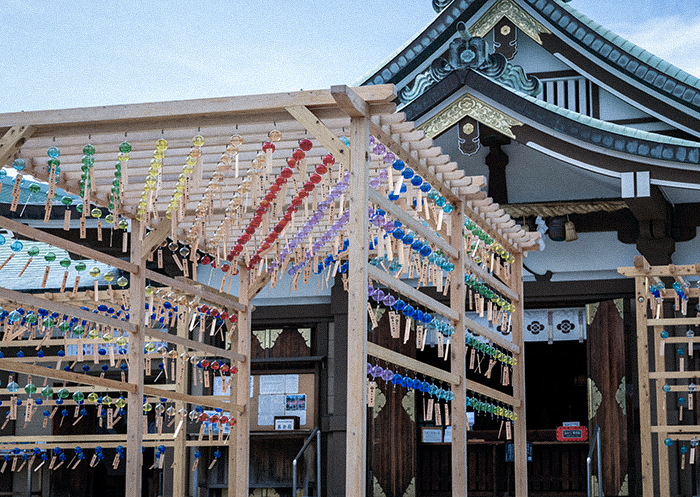
Shrines have not become museum pieces. 初詣 hatsumōde — the first shrine visit of the new year — still draws large crowds every January 1st. People buy amulets and fortune slips throughout the year, and some of these have taken on a second life online: the wind chimes at Kawagoe Hikawa Shrine, north of Tokyo, have become a well-known photo destination, and the same is true in summer at Kameyama Hachimangu, in Shimonoseki, at Japan’s western tip, where visitors gather to see its own display of wind chimes. Some shrines decorate their purification fountains with floating flowers for the same reason. And every February and March, exam season, news coverage regularly turns to Tenmangu shrines, where students go to pray before entrance exams.
This author prayed for success on a high school entrance exam at Kitano Tenmangu, in Kyoto, during a middle-school trip. Years later, before university entrance exams, this author’s grandmother made a visit on their behalf to Yushima Tenjin, a shrine in Tokyo’s Ueno district — evidence, if any is needed, that the habit is not confined to the visitor’s own hands.
The Visit, Step by Step
The sequence below is the standard one, followed with only minor variation at shrines across Japan.
1. Bow at the Torii Gate
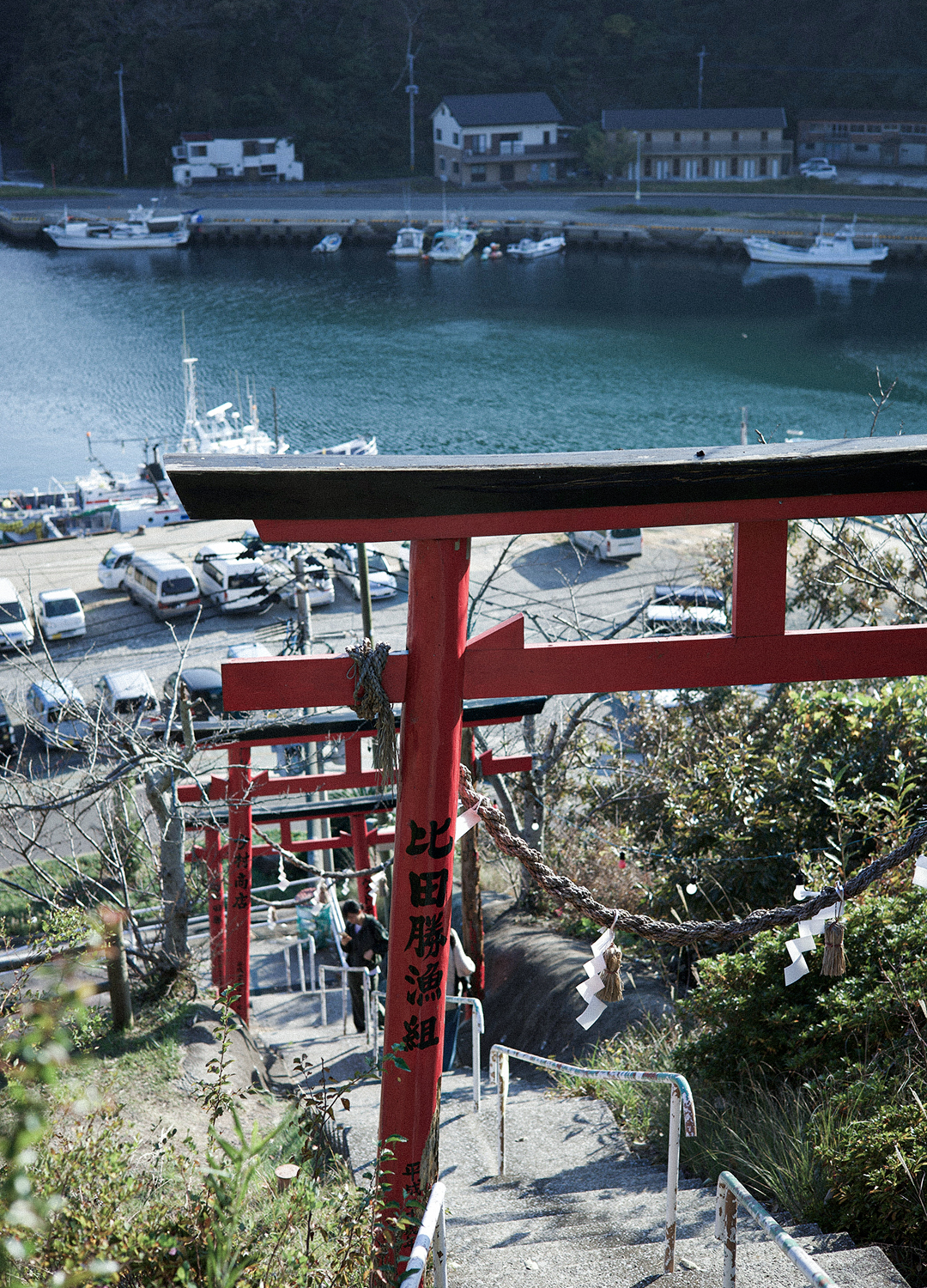
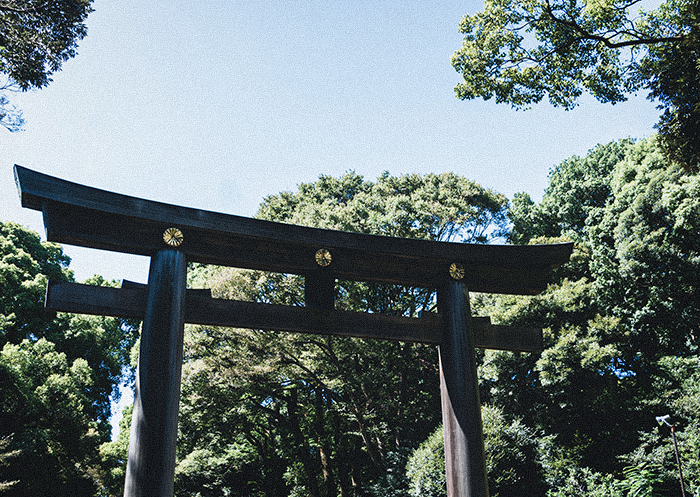
A 鳥居 torii marks a shrine’s entrance. Passing through it means entering a deity’s home, and a single bow beforehand functions as exactly what it looks like: a greeting before you step inside.
2. Purify Yourself at the Temizuya
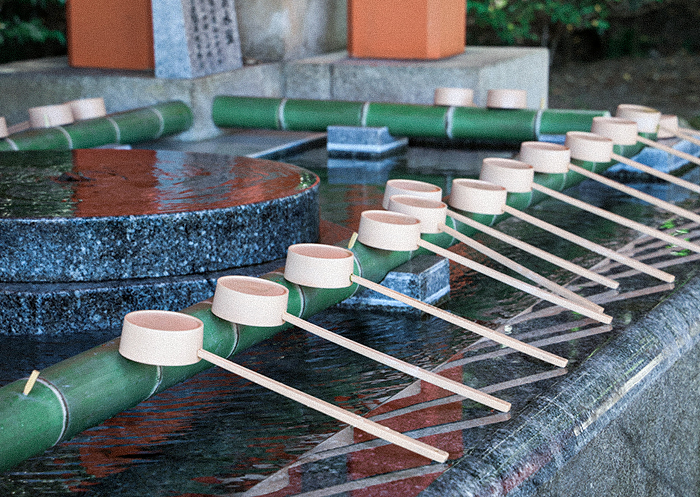
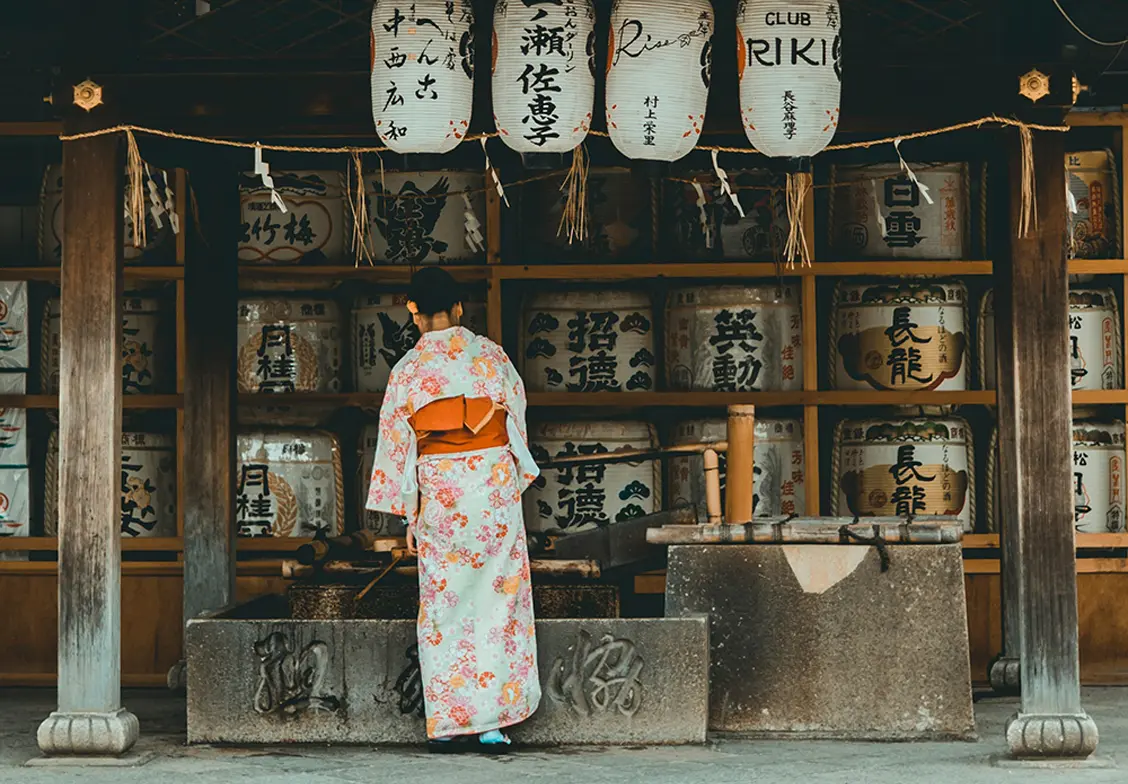
Just past the gate stands the 手水舎 temizuya, a fountain for washing hands and rinsing the mouth before approaching the main hall. The steps, using the wooden ladle — 柄杓 hishaku — provided:
1. Hold the ladle in your right hand and draw a full scoop of water.
2. Pour it over your left hand to purify it — but not all of it; you will need water later for your right hand and your mouth.
3. Switch the ladle to your now-purified left hand and pour water over your right hand.
4. Switch the ladle back to your right hand, pool a little water in your cupped left hand, and rinse your mouth from it. Spit the water out quietly into the drain at your feet — never swallow it.
5. Pour water over your left hand once more, since it has touched your mouth.
6. Tip the ladle upright so the remaining water runs down over the handle, cleaning it for the next person.
7. Return the ladle to where you found it.
Two points are firm rules rather than suggestions. Never put the ladle itself to your mouth. And never spit into the fountain or onto the path — always into the drain provided.
Some shrines have removed their ladles altogether over concerns about hygiene, and where they remain, rinsing the mouth (step 4) has become optional rather than required.
3. Make an Offering: Two Bows, Two Claps, One Bow
At the main hall, place a coin gently into the offering box — 賽銭箱 saisen-bako — and perform the sequence known as 二礼二拍手一礼 nirei nihakushu ichirei, two bows, two claps, one bow:
– Two bows. Bow deeply, twice.
– Two claps. Bring your hands together and clap twice — traditionally with the right hand held slightly lower than the left, said to make the sound carry further. Between the claps and the final bow, hold your hands together and silently offer your thanks or your request.
– One bow. A final, single bow closes the greeting.
4. Draw a Fortune, Buy an Amulet, Write an Ema
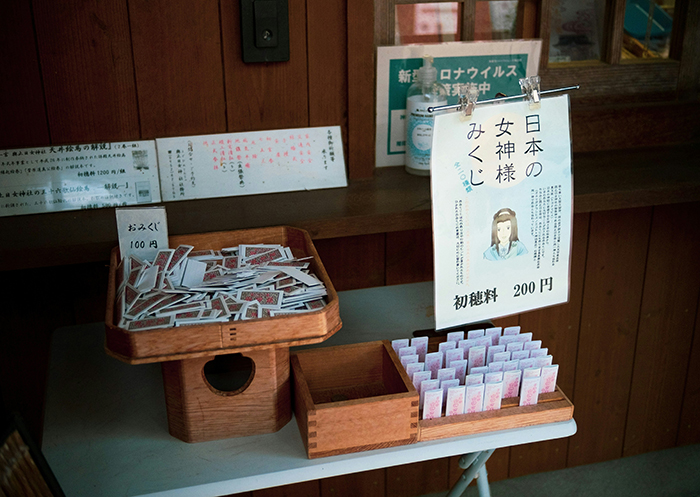
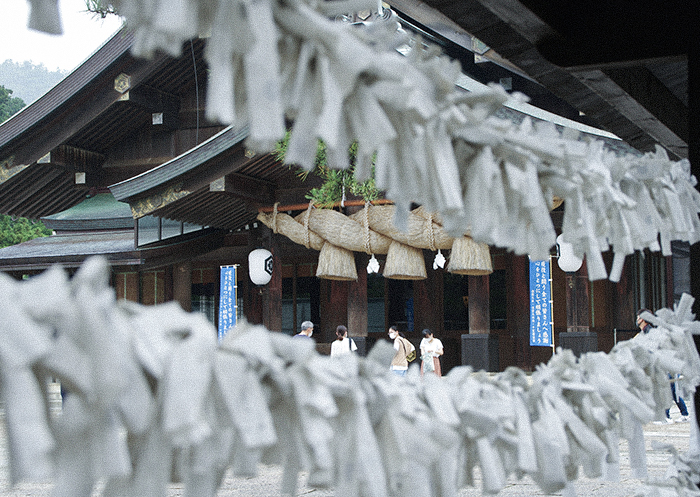
Once you have prayed, many visitors draw an おみくじ omikuji — a paper fortune slip said to carry a message meant for whoever draws it that day. It’s worth reading past the headline result to the individual lines beneath it.
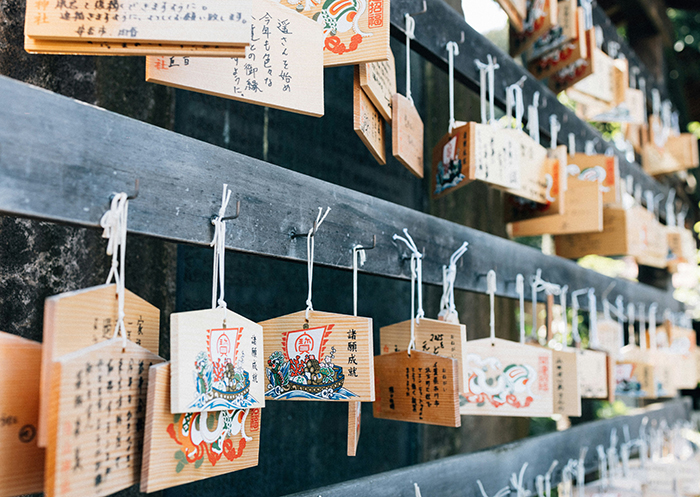
Visitors can also write a wish on a wooden plaque called an 絵馬 ema and leave it hanging at the shrine, or purchase an amulet. The ema itself has a specific origin: shrines once received live horses as offerings, considered the mount of a deity, and the wooden plaque descends from that practice. Writing a wish directly onto a board of this kind became standard sometime between the Muromachi period (1336–1573) and the Edo period (1603–1868); the traditional shape is a horizontal pentagon, though individual shrines now commission their own designs.
What to do with a drawn omikuji is left to the visitor. Keeping it — in a wallet or a notebook, to be reread — is entirely acceptable. If you’d rather leave it behind, the correct place is the 古札納所 kosatsu nōsho, the shrine’s designated collection point for old paper items, and the custom is to do so within a year, or at your next visit. What is not acceptable is leaving it as litter on the grounds, and tying it to a tree branch is discouraged for a more practical reason: it damages the tree. Shrines instead provide a stand built for the purpose.
Tying an omikuji at all is done for one of two reasons. A poor result is sometimes left behind deliberately, a practice called 凶返し kyo-gaeshi — returning the misfortune rather than carrying it home. A good result, by contrast, is sometimes tied for the opposite reason: to bind that good fortune to the shrine, and keep the connection.
5. Bow Toward the Main Hall Before You Leave
On the way out, a final bow toward the main hall closes the visit — a gesture of thanks before departing someone else’s home. During crowded periods, skipping this step to keep the line moving is entirely acceptable.
Manners Worth Knowing Beyond the Five Steps
Ring the Bell Gently
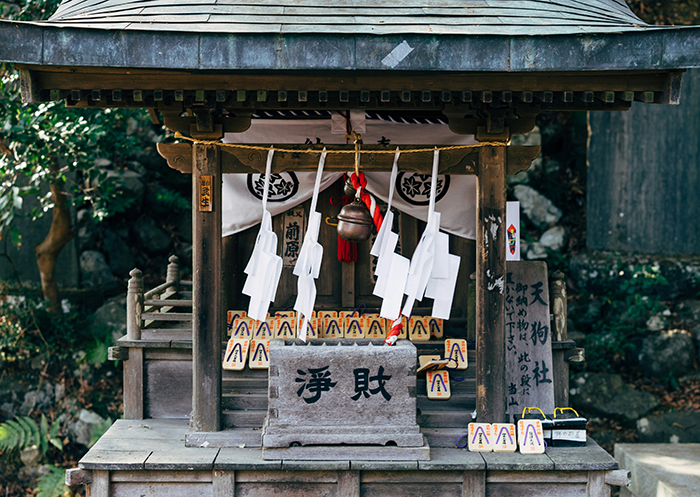
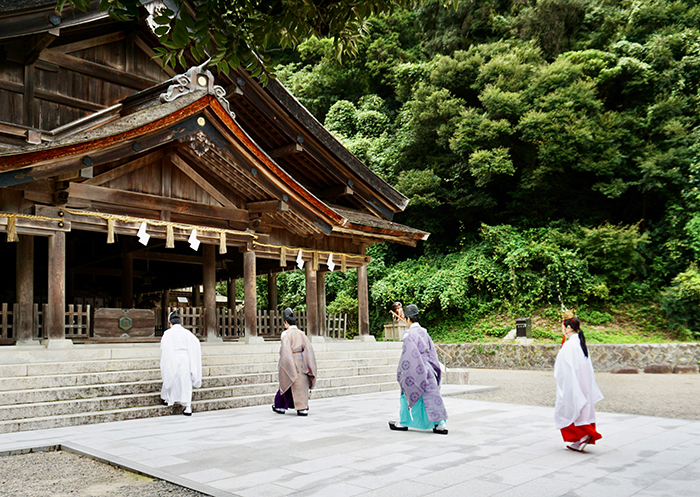
Most shrines have 本坪鈴 hontsubu-suzu, a large bell hung above the offering box, rung by pulling a thick rope called the 鈴緒 suzuo. Its purpose is to purify the space and announce the visitor to the deity — the closest modern equivalent is a doorbell.
That comparison has, at least once, been taken too literally. In 2023, at Yasaka Shrine in Kyoto, visitors ringing the bell loudly at night and pulling the rope with excessive force became enough of a problem to draw public complaints — in one instance, the bell itself came loose and swung down toward a visitor’s head. Yasaka Shrine’s response, reluctantly, was to disable the bell during nighttime hours. A gentle ring performs the same function as a hard one. As of 2026, shrine staff at Yasaka now monitor the area to prevent a recurrence, alongside tighter measures against theft from the offering box.
Follow the Signs and the Staff
Some areas of a shrine are closed to visitors, and some structures are not meant to be touched — both are usually marked. Staff occasionally have to remind a visitor of this directly; the most common reasons are photographing an area marked off-limits, being loud outdoors during a ceremony or at night, and touching something visitors are asked not to touch. None of it is meant punitively — it exists to protect visitors’ safety and the site itself — and the appropriate response, if it happens, is simply to follow the instruction given.
Share the Temizuya Considerately
Because the ladle at the purification fountain is shared by every visitor, the same two rules apply here as before: never let it touch your mouth directly, and rinse the handle before setting it back. The same courtesy extends to popular photo spots — take your picture and move on, rather than holding the position for an extended time.
Keep to the Edges of the Approach Path
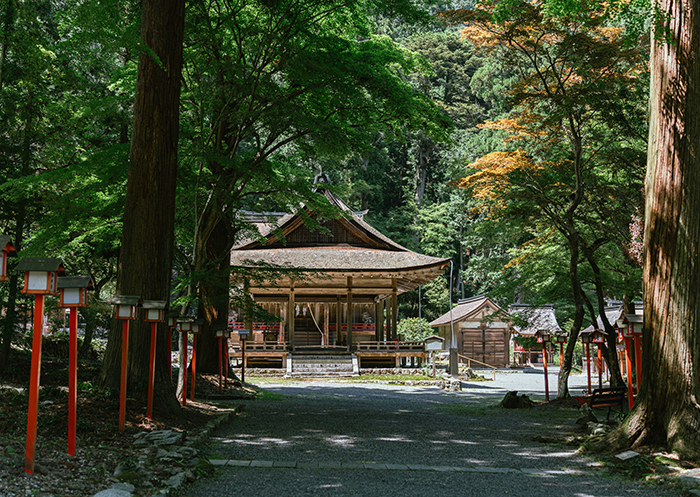
The path leading to 参道 sandō, main hall to shrine has 正中 seichū, a centerline that is considered the deity’s own route, and visitors are expected to walk along either edge instead. If crossing the center is unavoidable, a bow beforehand acknowledges it. There is no fixed rule for which side to take; the one convention that exists is to begin walking with whichever foot is farther from the centerline — the right foot, for instance, if you’re keeping to the right. During crowded periods, such as the New Year, walking down the center is treated as unavoidable and is not considered a breach of manners.
Photograph Carefully
Some areas welcome photography and some explicitly forbid it — the same posted signs mentioned above will say which. In areas where photography is allowed, avoid flash, since it disrupts the atmosphere of a sacred space, and keep shutter sound to a minimum out of consideration for others, even where it isn’t formally banned. Avoid photographing a ceremony in progress. Many shrines publish their own photography policy online, worth checking in advance, and selfie sticks are restricted at a number of sites, largely because of the risk of striking another visitor or overhead power lines.
Carry Cash
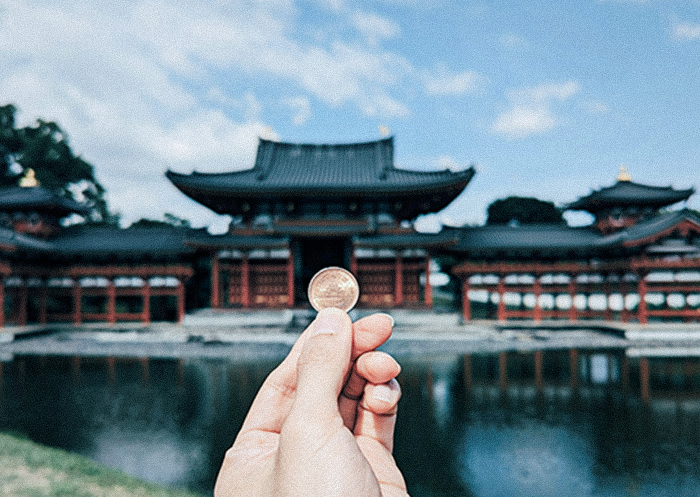
Since 2024, a small number of shrines have begun accepting cashless payment, but the practice remains far from standard. Cash — particularly coins, for the offering box — remains the safer assumption for offerings, fortune slips, and amulets alike. This holds more broadly across Japan as well: a meaningful number of shops still take cash only, so keeping some on hand during a visit is worth the habit regardless of the shrine itself.
Manners as Mutual Respect
Most of what draws attention as a “shrine incident” is not born from bad intent. It is, almost always, a gap in cultural context — a visitor from elsewhere doing something that would be unremarkable anywhere else, at a site where it isn’t.
Understanding that doesn’t erase the need for care. Some of these shrines hold the status of Important Cultural Property or World Heritage Site, and the responsibility for keeping them intact — physically and otherwise — extends to everyone who walks through the gate, resident and visitor alike. The manners described here exist for a simple reason: so that everyone, whoever they are and wherever they’ve come from, can visit comfortably, and so that what has been kept intact for centuries stays that way for the next visitor, too.
KOTO is a journal of Japanese craftsmanship, culture, and the aesthetic sense behind them.
- SHARE
-


( manners )