




Demon Slayer’s Kimono Patterns and Motifs: The Japanese Culture Hidden in Kimetsu no Yaiba
Demon Slayer: 鬼滅の刃 Kimetsu no Yaiba was serialized in 週刊少年ジャンプ Weekly Shonen Jump from 2016 to 2020. When the animation adaptation arrived in 2019, it became the kind of hit that stops being a hit and becomes a social phenomenon, in Japan and abroad.
The 2025 film Demon Slayer: Kimetsu no Yaiba — Infinity Castle, Chapter One: Akaza Returns passed ¥100 billion in worldwide box office receipts in November. No Japanese film had done that before.
One reason the series travels so well, this author would argue, is the Japanese culture scattered through every frame of it. And the more one traces those motifs back to their sources, the more the characters themselves come into focus. A pattern on a haori is rarely only a pattern.
This article walks through the Japanese cultural motifs woven into Demon Slayer and what each one says about the character wearing it.
A Note Before We Begin
Spoiler warning
This article contains spoilers for parts of the story. Read at your own discretion.
Where a detail would spoil the heart of the plot, we have left it deliberately vague rather than name it.
The Story So Far
The setting is Taisho era (1912–1926) in Japan.
竈門 炭治郎 Tanjiro Kamado, the protagonist of this story lives quietly in the mountains with his mother and his younger siblings. While he is away from home, demons attack the house, and almost his entire family is killed.
His younger sister 禰󠄀豆子 Nezuko survives only, but she has been turned into a demon. When 冨岡義勇 Giyu Tomioka, as 柱 Hashira of the 鬼殺隊 Kisatsutai, Demon Slayer Corps, moves to kill her, Tanjiro begs for her life. Giyu is furious at the sight of him — and then spares them both, and points them toward the Corps.
So Tanjiro takes up the sword, to turn his sister human again. What the series calls the kindest demon slaying in Japan begins here.
Reading the Japanese Culture Inside Demon Slayer
The series draws on Japanese culture across an unusually wide span, from antiquity to the modern era. We will take it element by element.
Part One: The 和柄 Wagara — Traditional Patterns the Characters Wear
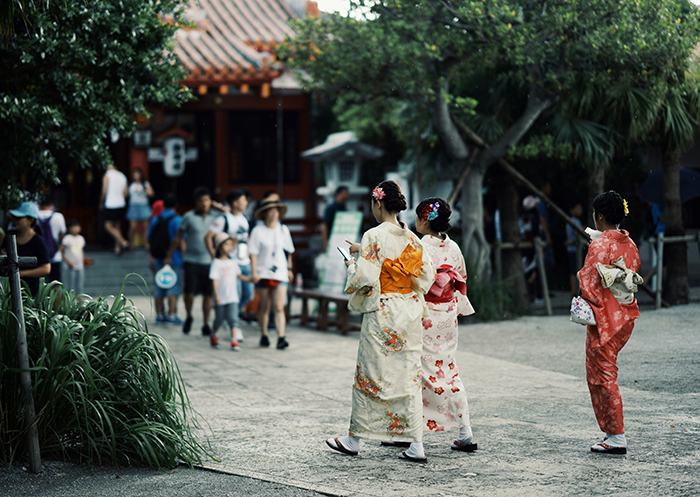
Tanjiro and nearly every major character wear 羽織 haori or 着物 kimono carrying 和柄 wagara — traditional Japanese patterns. Demon Slayers fighting in haori is an image with a real historical echo: the 新撰組 Shinsengumi, the sword police of the final years of the Edo period, who were known by their uniform haori.
As these patterns settled into Japanese life, each one accumulated a wish. Below, we set those meanings against the characters who wear them.
市松模様 Ichimatsu — The Checkered Pattern: Tanjiro Kamado and the Kamado Family
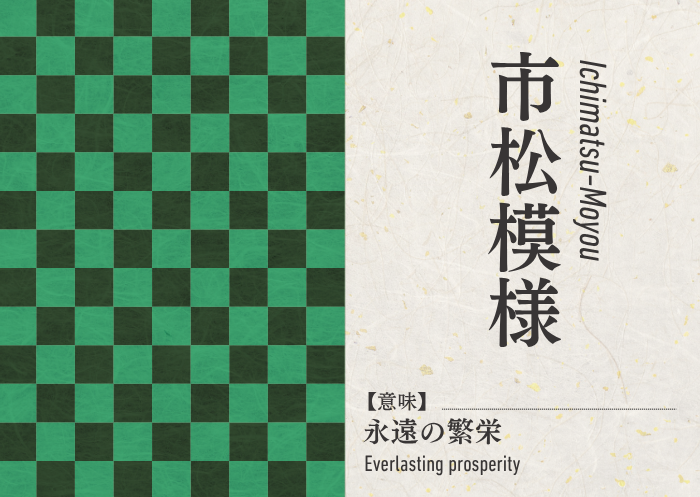
Meaning: eternal prosperity
Squares of two colors alternating in a grid: this is 市松模様 ichimatsu, the checkered pattern. What is easy to miss is that the whole Kamado family wears it — Nezuko, the younger siblings, both parents — in different color combinations.
Because the grid continues without a break in any direction, ichimatsu is used to wish for prosperity without end.
That word — eternity — is the axis the entire story turns on. The demons pursue one kind of eternity: a single life extended forever, at the cost of everyone else’s. The Demon Slayer Corps pursues another: laying down one’s own life so that what matters is carried into the next generation.
Giving the story’s central contrast, in pattern form, to the protagonist’s family is not a small decision. It is the thesis of the series, printed on the hero’s back.
麻の葉模様 Asanoha — The Hemp Leaf Pattern: Nezuko Kamado
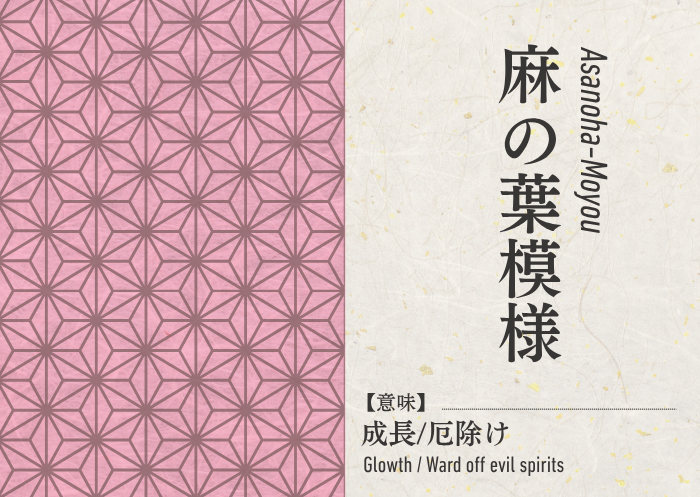
Meaning: growth, protection from misfortune
麻の葉模様 asanoha is a geometric lattice of hexagons resolving into a stylized hemp leaf.
Within the Kamado family, only Nezuko wears it — a detail worth pausing on. The pattern carries two meanings: growth, and protection from misfortune.
Growth first. Hemp was known for shooting up straight and fast without much tending, which is why the pattern was traditionally put on children’s clothing. Nezuko begins as a demon who mostly sleeps. As the story advances she fights alongside her brother, then speaks. And then she overcomes sunlight — the one thing that is supposed to be fatal to every demon without exception. For a demon, that is growth with no precedent.
Protection next. She fights at Tanjiro‘s side whenever he is cornered, turning demon attacks away from him, and late in the story she plays a decisive role in bringing down one particular demon. Shielding her brother and his comrades from an onslaught is, quite literally, what her pattern was made to do.
毘沙門亀甲 Bishamon Kikko — Bishamon Tortoiseshell: Giyu Tomioka
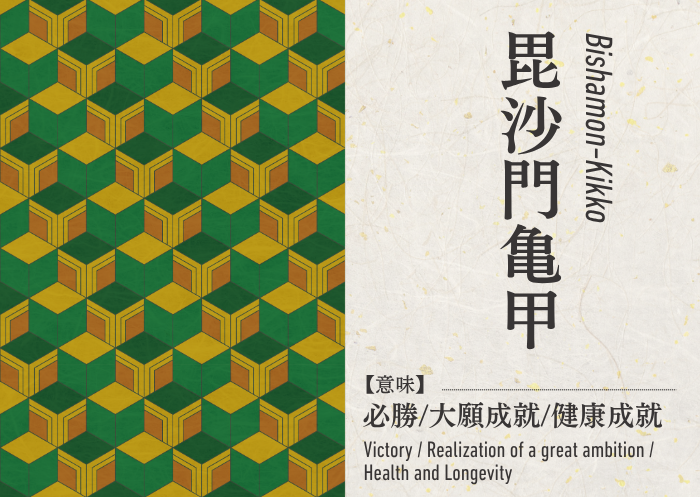
Meaning: certain victory and the granting of a great wish (Bishamon); health and long life (tortoiseshell)
Giyu’s haori is revealed to be a 半々羽織 — a half-and-half haori, one side inherited from his elder sister Tsutako, the other from his friend 錆兎 Sabito. Two people he lost, worn as one garment.
Here we look at the patterned half: 毘沙門亀甲 bishamon kikko.
亀甲 kikko is a hexagon suggesting the plates of a tortoise shell. Bishamon kikko locks three of them together — one above, two below — into a repeating unit. Strictly speaking, the version Giyu wears is a slight modernization of the traditional pattern rather than the pattern itself, which is a fitting choice: the Taisho era was exactly when Japanese design was flowering into that kind of modern reinterpretation.
Two Meanings, Two People’s Wishes
The tortoise carries the first meaning. As a symbol of longevity in Japan, 亀甲 kikko is worn to wish for health and a long life. Tsutako traded her own life for her brother’s, and what she asked of him was that he live long enough for both of them. That wish is sitting in the weave.
The second meaning comes from 毘沙門天 Bishamonten, one of the Buddhist deities, who was depicted in armor patterned this way — which is how the pattern got its name. Bishamonten grants several kinds of blessing, but two stand out: as a god of war he is petitioned for victory in a contest, and for the fulfillment of a great vow.
Certain victory, and a great vow fulfilled. That is the promise Giyu made with Sabito: to join the Corps and destroy demons.
Giyu lost the two people who mattered most to him. Through the haori, both of them stayed with him. Knowing they were beside him to the last battle gives the garment a weight no plot summary conveys.
鱗文様 Uroko — The Scale Pattern: 我妻善逸 Zenitsu Agatsuma
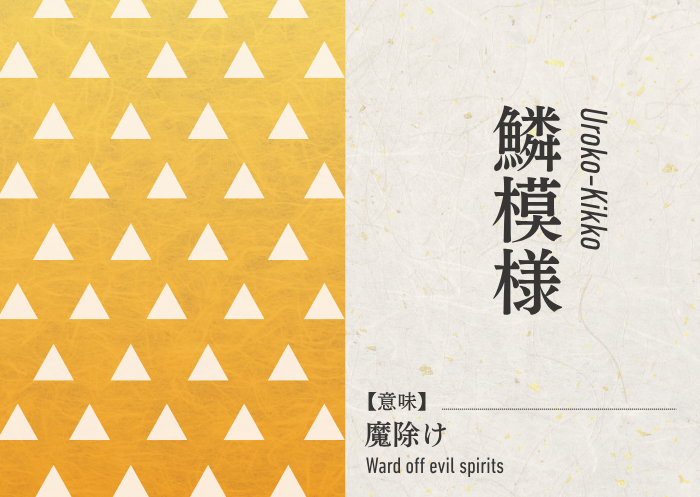
Meaning: warding off evil
鱗文様 uroko is a field of triangles set point to point in an unbroken series — the same logic as ichimatsu, with the square swapped for a triangle. The triangles are either equilateral or isosceles.
The name comes from the resemblance to the scales of a snake or a dragon. And since dragons in Japan are bound up with the thunder deity, the pattern lands neatly on a boy who fights with Thunder Breathing.
Warding Off Evil: Gramps and 獪岳 Kaigaku
Uroko has been used as a protective charm since the Yayoi period (roughly 300 BCE to 300 CE), when it appeared among goods buried with the dead.
That meaning, this author would argue, is written into Zenitsu’s relationship with his fellow disciple Kaigaku and with the master who raised him — the man he calls Gramps.
Kaigaku, the senior disciple, begs for his life and betrays his side to the demons. Held responsible for what his student did, Gramps atones by seppuku.
Zenitsu, in fury and grief, fights Kaigaku — now a demon — to the death. He wins, and is left so badly wounded that he drifts to the edge of dying.
There, at the 三途の川 Sanzu no Kawa, the river that separates this world from the next, he meets Gramps again. His master thanks him, and sends him back to the living.
In life, Gramps wore the same uroko pattern Zenitsu wears. A demon — that is, an evil — is driven back, and the boy’s life is saved by a man in the warding pattern. Zenitsu is alive on both counts. The pattern was never decoration.
As an aside: Nezuko, whom Zenitsu is famously devoted to, wears a pattern whose meaning — protection from misfortune — is a near neighbor of his.
椿 Tsubaki — The Camellia: 珠代 Tamayo
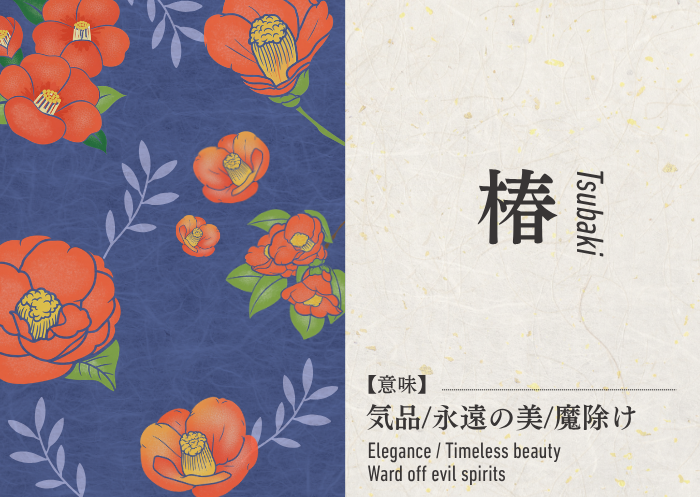
Meaning: refinement, eternal beauty, warding off evil
Tamayo, the demon who broke free of 鬼舞辻無惨 Muzan Kibutsuji‘s control and sided with the Demon Slayer Corps, wears a kimono patterned with 椿 tsubaki, the camellia.
The camellia entered Japanese textiles as a modern, stylish motif and has long been favored on women’s kimono. It remains popular today on 袴 hakama, the pleated garment Japanese students wear to graduation ceremonies.
Eternal beauty and unaging longevity read almost literally on a character who, having become a demon, lives outside time. And there is genuine refinement in how she carries it: cooperating with the Corps as a way of atoning for her own past, standing composed in front of demons, and in front of Muzan himself.
The camellia was also believed to be a sacred tree that drives off malign spirits, which gives it a warding meaning as well. The medicines and tools Tamayo develops over the course of the story are what shield the Corps against the demons’ worst attacks. Support in the work of destroying evil is, in substance, exactly what a ward is.
It is not an overstatement to call the pattern an extension of her character — beautiful and clear-minded at once.
The Other Reading: A Camellia Falls Like a Severed Head
The camellia has a second, darker reputation in Japan, and it comes from the way the flower dies.
A camellia does not scatter petal by petal. The entire bloom detaches at the stem and drops to the ground whole. That fall was read as a head falling — and so the flower was also considered an ill omen.
Demons in this story are killed by having their heads struck off with a 日輪刀 nichirin blade, a sword that appears in the story; its shape resembles a Japanese sword. Tamayo may have escaped Muzan’s curse, but she remains a demon. The second reading is not one we can set aside.
For Those Who Want to Live Inside the World of the Samurai
KOTO makes traditional pieces that let you experience the samurai spirit directly, in objects rather than images. Product details are here.
Part Two: The Small Objects, and the Culture Behind Them
Beyond the haori, the series is full of objects, masks and crafts that carry Japanese culture. What follows is this author’s own selection.
Tanjiro‘s Earrings
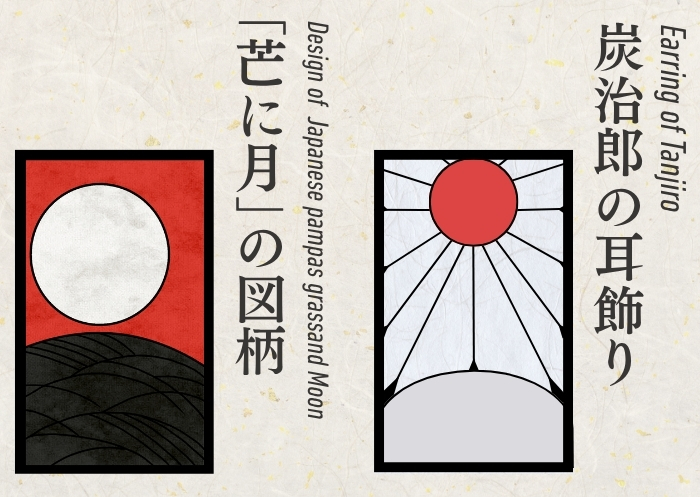
Most viewers recognize Tanjiro‘s earrings as 花札 hanafuda cards.
Hanafuda is a traditional Japanese card game. Its present designs settled into their standard form during the Taisho era — the same period the story is set in — when the game was a national pastime.
The image on Tanjiro’s earrings is striking: a sun rising off the horizon. Here is the detail worth knowing. No sun card exists in a real hanafuda deck. The closest design is 芒に月 susuki ni tsuki, “pampas grass and moon,” which evokes a moonlit night rather than a sunrise.
So the design is almost certainly original to this work.
Look at it again with that in mind, and the impression is of the moment just before dawn. Humans live under the sun; demons cannot move in daylight, because the sun is the one weakness none of them overcome. The dividing line of the entire story is hanging from the hero’s ear.
Later in the series it emerges that the earrings, and the ヒノカミ神楽 Hinokami Kagura dance passed down with them in the Kamado family, both came from a user of Sun Breathing.
The sun runs deeper than that in Japan. It is in the country’s name itself — 日本 Nihon, the origin of the sun. The sun deity 天照大神 Amaterasu-Omikami, Japanese traditional goddess of sun has been worshipped for centuries and is held to be the ancestor of the imperial line.
Two threads of Japanese culture, hanafuda and the sun, tied together in a single ornament. It is one of the series’ most deliberate objects.
The Butterfly Hairpins and Haori
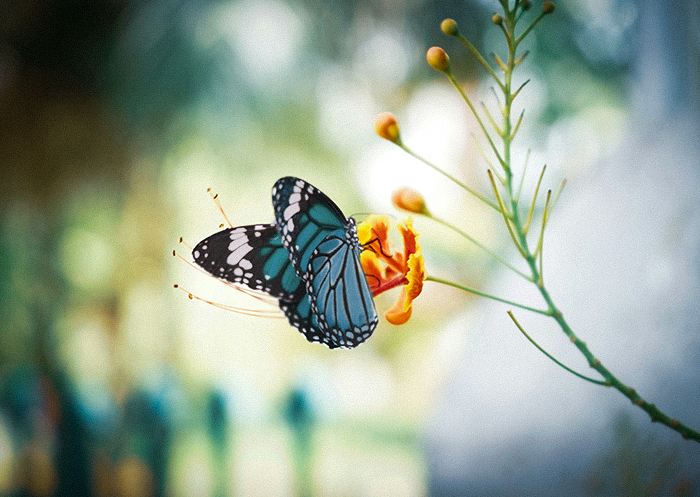
The 胡蝶姉妹 Kocho sisters and the staff of the 蝶屋敷 Cho-yashiki, Butterfly Mansion all carry the butterfly motif.
The shape is delicate, but the meaning is not. The butterfly has long been read in Japan as an emblem of death and rebirth — an idea drawn from the way it transforms from larva to pupa to winged adult.
The message, then: the body may perish, but a person’s will is reborn when someone else carries it forward.
The eldest sister, 胡蝶カナエ Kanae Kocho, held a wish that sounds impossible in a story like this one — that humans and demons might get along. After her life ends, that wish changes shape and passes to her younger sister しのぶ Shinobu, and 栗花落カナヲ Kanao Tsuyuri, their the youngest sister in law.
In the modern-day scenes of the final chapter, this author would say her wish is granted in the best form it could have taken. What form that is, we leave to the series itself.
The Swordsmith Village
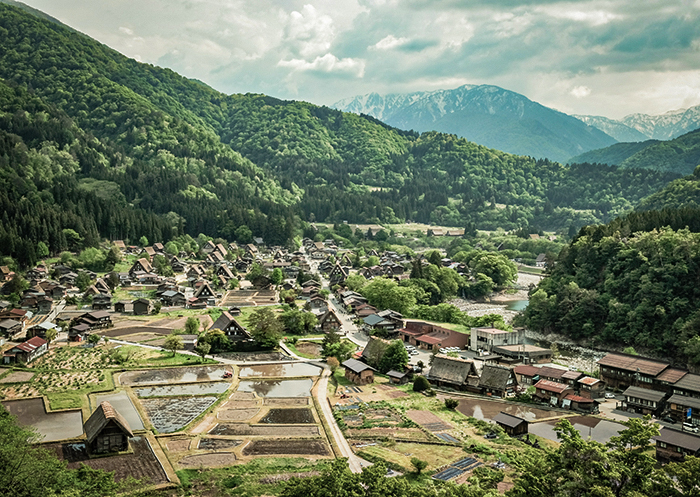
The 刀鍛冶の里 katana-kaji no sato, the village of Swordsmith is dense with Japanese culture: 里山 satoyama landscape where mountain and settlement meet, the workings of a village community, hot springs, and craft technique shown at length.
The most conspicuous element is the mask. Every swordsmith in the village wears a ひょっとこ hyottoko.
Why a Hyottoko Mask
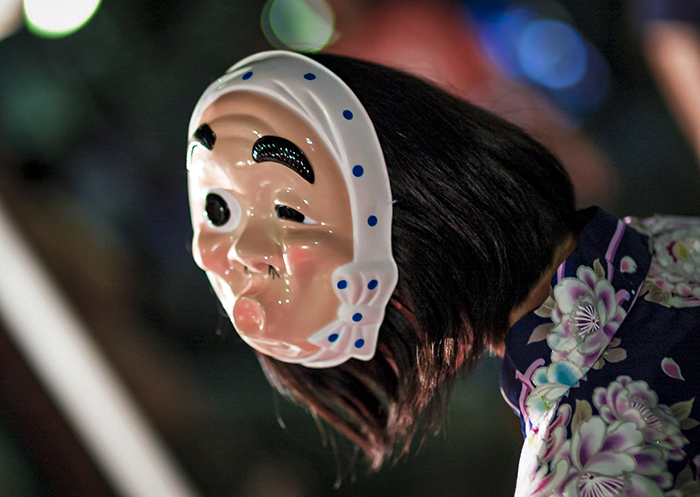
ひょっとこ hyottoko is also written 火男 hiotoko — “fire man.” He began as the figure who tended the fire, mouth pursed to blow air into the coals, and from there became a good-luck figure invoked for safety in the household and prosperity in business.
Swordsmiths work with fire too; the 日輪刀 nichirin blades are born from it. And “safety in the household” reads differently once you notice who the swordsmiths are making those blades for — the Demon Slayers they treat as family, whose safe return is the wish behind every blade.
Sakonji Urokodaki and the Tengu Mask
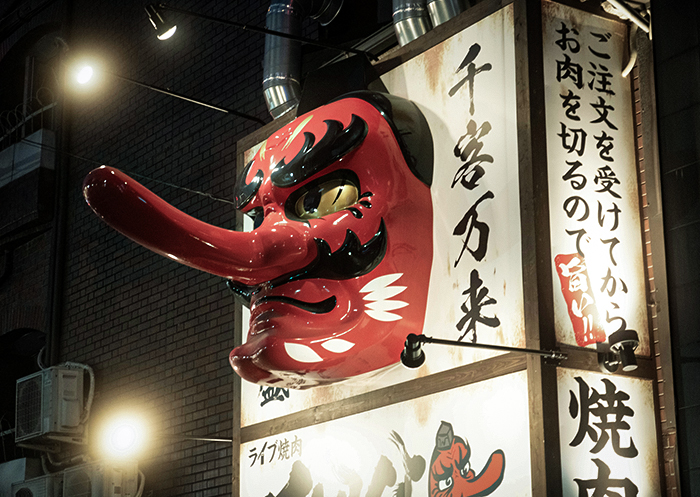
The man who trained both Tanjiro and Giyu into Demon Slayers wears the mask of a 天狗 tengu.
The tengu is a 妖怪 yokai of the deep mountains, with a red face and a long nose, said to fly at will through supernatural power.
It was feared as a monster at first. But in the Edo period (1603–1868), when fire was the constant terror of Japan’s wooden cities, the tengu was elevated into a deity of fire prevention.
鱗滝 Urokodaki trains users of Water Breathing. Water puts out fire — the association is hard to read as accidental.
And Tanjiro’s training takes place deep in the mountains, which is precisely where a tengu is supposed to live.
The Fox Masks
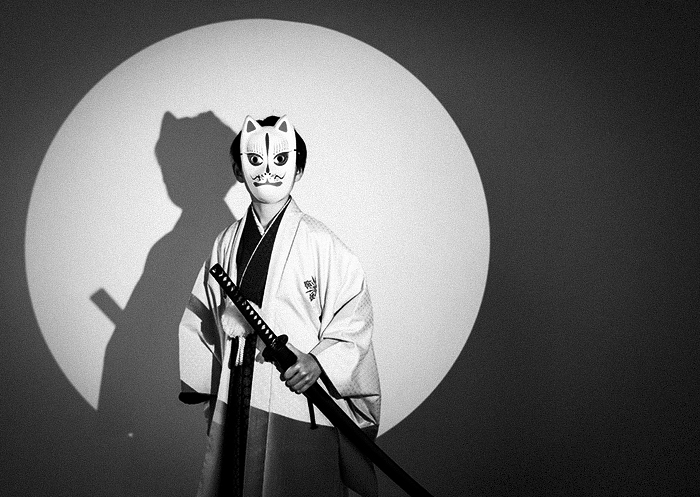
Urokodaki’s students go into the Final Selection wearing fox masks.
Why the fox, an animal whose reputation in Japan is for bewitching and deceiving people? The answer lies in the fox’s other role: it is the messenger of 稲荷神 Inari, the deity of rice and harvest.
Inari has long been petitioned for prosperity in business, protection from misfortune, and the granting of one’s wishes. Read that way, the masks carry two prayers: that the students come back from the Final Selection alive, and that they get what they went there for — to become Demon Slayers.
There is a second layer. In the 日本書紀 Nihon Shoki — the Chronicles of Japan, completed in 720 — the tengu is glossed as あまつきつね amatsu-kitsune, the heavenly fox. And by the Heian period (794–1185), tengu were understood as beings who bewitch people the way foxes do.
The master wears the tengu. The students wear the fox. This author reads the pairing as deliberate.
The Wisteria Flowers
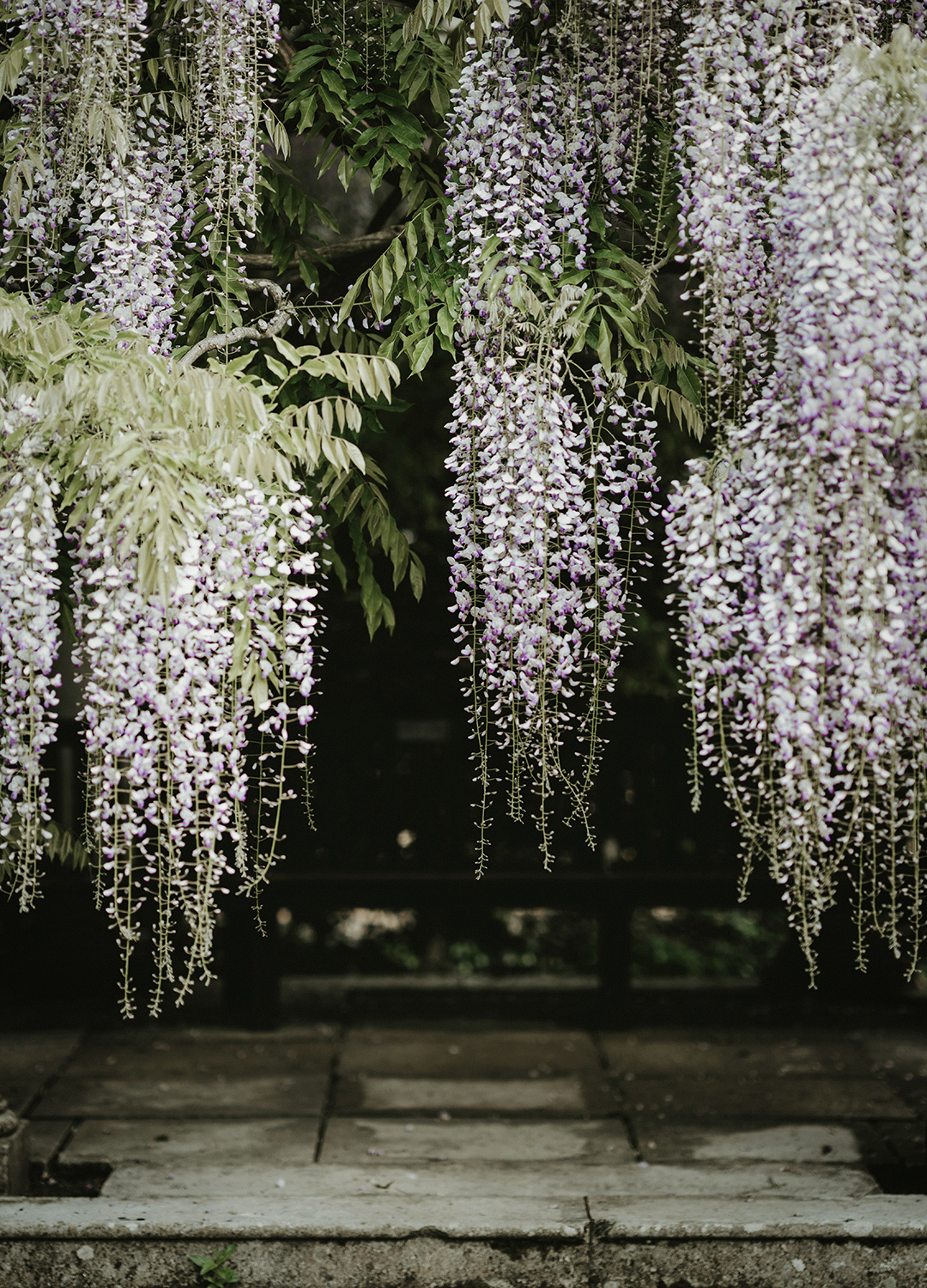
In the story, 藤 fuji — wisteria — is a weakness of demons, as sunlight is. It is planted in quantity around the Final Selection grounds as a ward.
The motif recurs everywhere once you look for it: in the hair ornaments of the Ubuyashiki children, and in the Wisteria Crest houses that shelter and supply the Corps. Shinobu Kocho, a Hashira, fights demons with a poison derived from it.
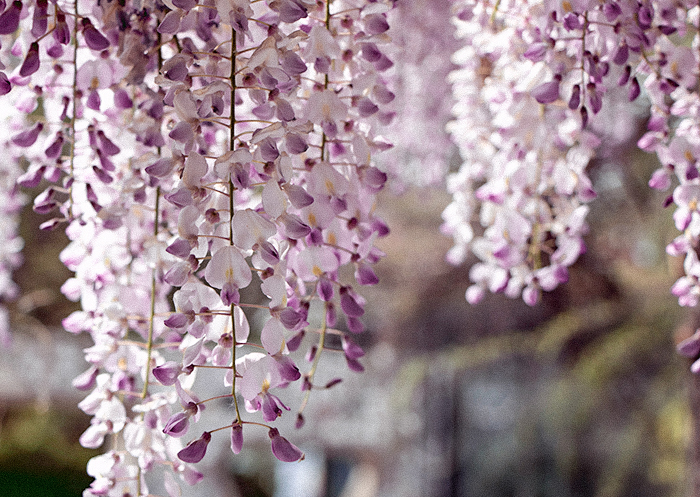
The reason wisteria carries the weight it does comes down to sound. 藤 fuji echoes 不死 fushi — deathlessness. From that resonance, wisteria became an auspicious plant associated with long life, the fortune of a household, and the flourishing of descendants.
Which returns us to the argument at the center of the series. The 産屋敷家 Ubuyashiki family, who lead the Corps, define deathlessness as the will that continues after the body is gone. Muzan Kibutsuji, the progenitor of the demons, defines it as one man never dying. The same flower, two irreconcilable readings of what it means not to die.
In Closing: Demon Slayer Rewards What You Know About Japan
Demon Slayer is worth watching for its craft alone — the fine, hand-drawn line of the art, and the visual and sound work that pulls a viewer in and does not let go.
It is also worth watching for what it argues: that a person continues to live when their will is entrusted to someone else, and that mercy toward the people you love and the people who have been hurt is not weakness. This author suspects those two ideas are the largest single reason for the scale of its success.
And what caught audiences outside Japan, beyond the animation craft the country has spent a century building, was the Japanese culture layered into every corner of it.
If this article helps that layer come into focus the next time you watch, it has done its work.
Pieces Made to Order, for You
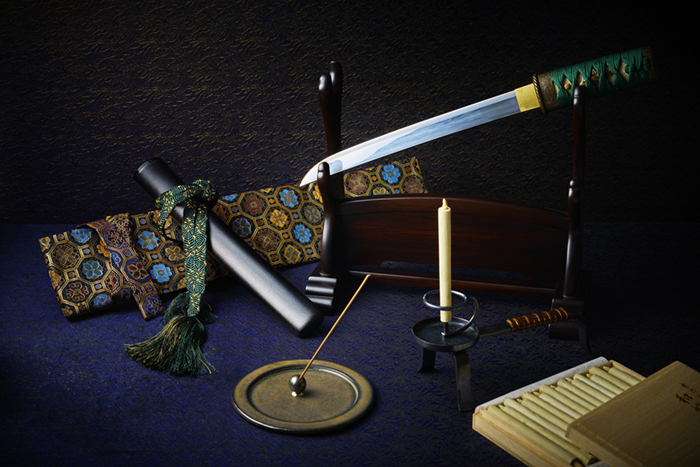
The samurai carried their duty to protect the country as a matter of pride, and fought without flinching from the cost.
The traditional objects they kept close to sharpen body and mind, brought into contemporary form. Made by Japanese craftsmen working within a tradition of manufacture two thousand years old, and finished to the last detail.
Every piece is made to order, so no two are ever the same.
Keeping one at hand is a way of sitting with yourself. Feel the value of your own life through it, and your spirit sharpens of its own accord.
KOTO is a journal of Japanese craftsmanship, culture, and the aesthetic sense behind them.
- SHARE
-


( tales )