








Bushido in Four Characters: The Samurai Idioms Japan Still Lives By
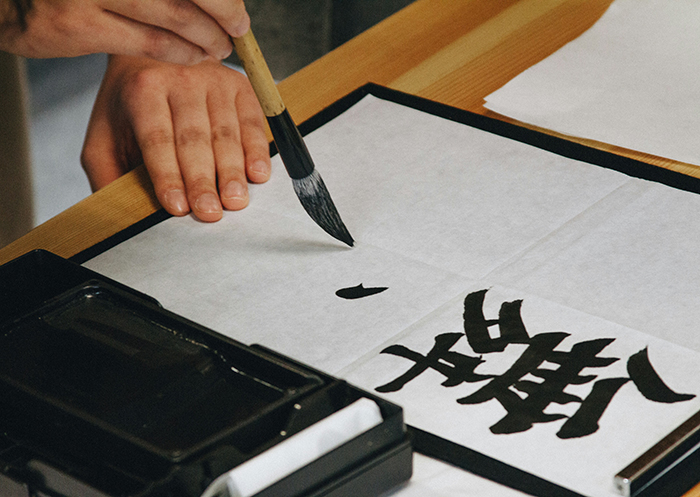
Japanese is written in a rare blend of scripts — kanji, hiragana, katakana, even Japanese-made English. Complex as the combinations are, they can express remarkably subtle shades of feeling.
Here we turn to yojijukugo — four-character idioms — and gather the ones that capture the spirit of Bushido.
How these idioms were selected
The idioms below were chosen by the author, based on their meanings, for how closely they echo the ideals of Bushido. Treat this list as a doorway into yojijukugo and the samurai code — not an academic canon.
What Is a Yojijukugo?

A yojijukugo is a four-kanji compound that condenses a lesson or a historical episode into a single phrase. Their roots reach beyond old chronicles into Buddhist scripture and everyday sayings.
Not every four-kanji string qualifies, though. Yakiniku teishoku (a grilled-meat set meal) is four characters — but no lesson lives inside it. A true yojijukugo carries a teaching or a story in its bones.
(For the record: yakiniku teishoku is a menu item, and 夜露死苦 is how Japanese street gangs once spelled the greeting “yoroshiku.”)
The Bushido Idioms, One by One
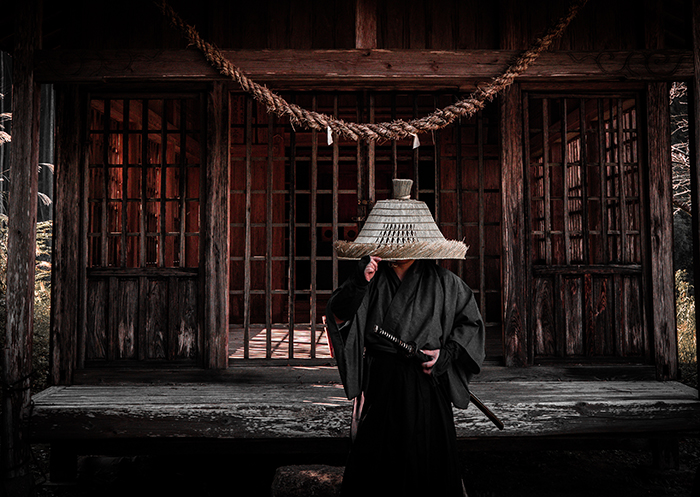
Let’s look at them together.
We explain Bushido itself in this companion article — worth reading side by side.
Idioms Born from Samurai History
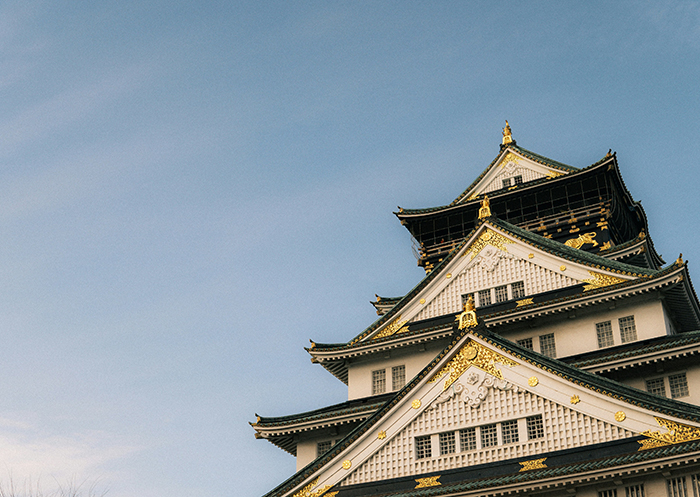
一所懸命 Isshokenmei — One Place, Defended with Your Life
This idiom describes giving everything you have, single-mindedly, to what has been entrusted to you. In the Kamakura period, a samurai’s lord granted him a single estate — issho, one place — and he defended that land with his life.
Over time the sense of “staking one’s life” softened, and today it is usually written 一生懸命 — “with all one’s life.”
(Even NHK, Japan’s public broadcaster, adopted the modern spelling.)
Given that history, the modern spelling is the safe choice. But when you want to say you are pouring yourself into one single thing, the old form — one place, one life — carries the feeling better.
栄枯盛衰 Eiko-Seisui — All Things Flourish and Fade
The rise and fall of all things.
The Tale of the Heike — the chronicle of the Taira clan’s glory and ruin at the end of the Heian period — opens with a near-identical idea: josha hissui, “the prosperous must decline,” born of the Buddhist teaching of impermanence.
Even those who flourish will one day fall. That is precisely why one should live honestly, without arrogance, and give others one’s whole heart. To this author, the idiom teaches that lesson — and the spirit of Bushido with it.
Idioms of the Seven Virtues
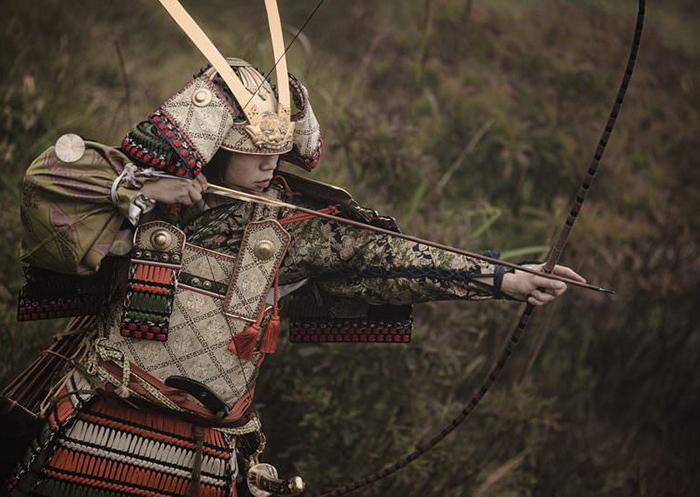
義勇任侠 Giyu-Ninkyo — Courage in the Name of Justice
Standing up bravely for what is right, warm-hearted and true to one’s obligations.
Righteousness (gi) and courage (yu) are two of the virtues that form Bushido itself — this idiom embodies the code almost literally.
公明正大 Komei-Seidai — Fair and Open
Hiding nothing, favoring no one, holding to what is right without thought of personal gain. Righteousness, sincerity, and honor — three of Bushido’s virtues — meet in this one phrase.
正々堂々 Seisei-Dodo — Fair and Square
To act honestly, never by underhanded means. In Japan you will hear it before a showdown — “let’s settle this seisei-dodo” — the stock phrase of rivals about to face each other.
Originally it described an army in high spirits, its ranks drawn up in perfect order.
誠心誠意 Seishin-Seii — With a True Heart
To act without falsehood, guided by a sincere heart. Modern Japanese reaches for it when making a pledge: “I will give this my utmost, seishin-seii.”
It overlaps with isshokenmei, but this one leans on makoto — sincerity, one of the seven virtues. Choose it when your devotion is to a person: a customer, a partner, a guest.
(Isshokenmei, born from defending land, suits objects and goals rather than people.)
勧善懲悪 Kanzen-Choaku — Reward Good, Punish Evil
Encourage what is good; correct what is wrong. The virtue of righteousness, practiced without compromise, in four characters.
Idioms Forged from the Japanese Sword
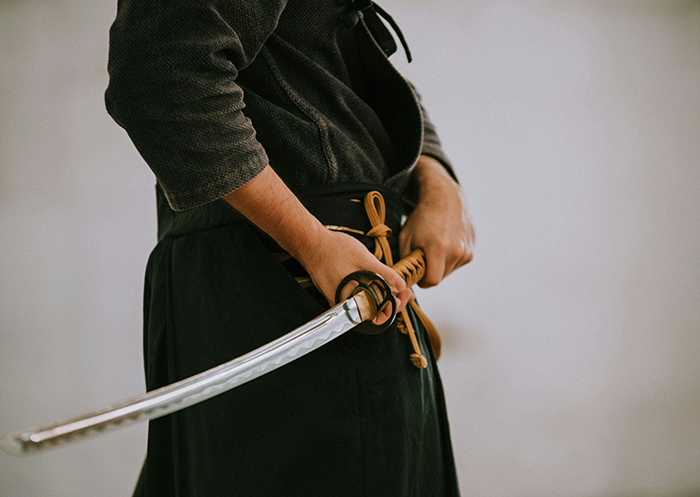
単刀直入 Tanto-Chokunyu — A Single Blade, Straight In
To cut to the heart of the matter with no preamble. There is something clean about facing a person directly, without circling.
A long preamble also steals the other person’s time. Trusting them enough to speak plainly is, in its way, an act of courtesy — the virtue of rei.
The image comes from carrying a blade for self-defense — though note the first character is 単 (single), not 短 (short); the latter spelling is a common mistake.
一刀両断 Itto-Ryodan — One Stroke, Clean in Two
To decide without hesitation and act at once — the image of a sword brought down once, cutting clean through.
琴心剣胆 Kinshin-Kentan — The Heart of a Koto, the Nerve of a Sword
Refinement and martial spirit in one person. In the Heian court the koto was a woman’s accomplishment, so elegance often speaks through it in Japanese — “to touch the koto’s strings” (kinsen ni fureru) still means to be deeply moved.
A cousin is bunbu-ryodo (文武両道) — excelling in both the literary and martial arts.
Strength alone did not make a first-rate samurai; learning and refinement were part of the discipline.
真剣勝負 Shinken-Shobu — A Contest with Live Blades
To face an opponent in deadly earnest.
The shinken here is a real Japanese sword — one cut decides everything. Hence the surviving sense: to meet a challenge head-on, as if your life were staked on it. (Japanese still uses shinken to mean “serious.”)
Bonus: A Samurai Proverb
Proverbs have carried lessons and warnings in Japan since antiquity — most famously as the subjects of karuta, the card game played at New Year.
Here is one that belongs to Bushido.
勝って兜の緒を締めよ — “After Victory, Tighten Your Helmet Cords”
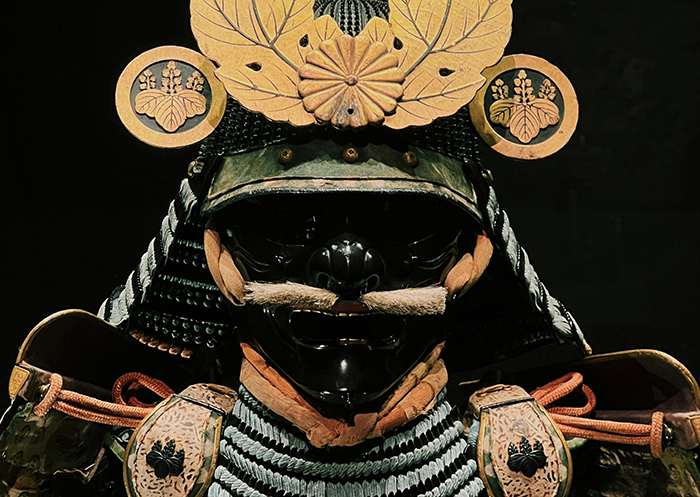
A warning against letting success loosen your guard. The kabuto is the samurai’s helmet.
Relax after winning a battle, let the chin cord slacken, and a surprise attack could cost you your head. Nothing so lethal awaits us today — but carelessness born of success still squanders victories, and arrogance makes enemies of the people around you.
Whatever the success, meet it with humility. The proverb has not aged a day.
In Closing: Four Characters, a Whole Code of Conduct
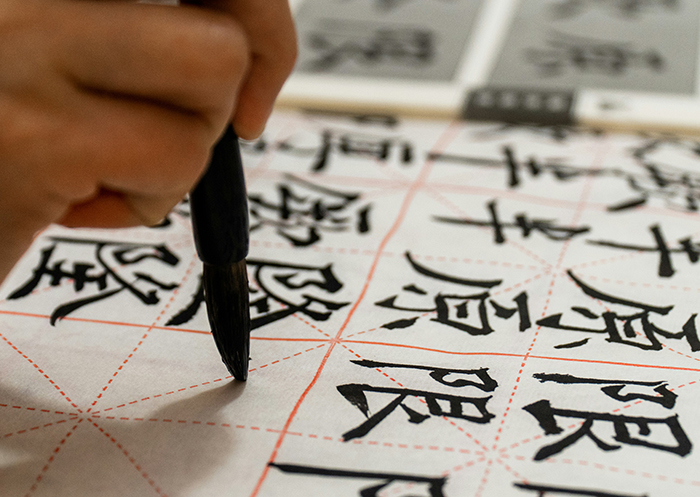
The idioms gathered here have carried moral lessons across centuries into everyday Japanese. Knowing the stories inside them means being able to pass those lessons on when the moment calls for it.
Japan uses many more yojijukugo in daily life beyond the ones above. If this article has sparked your curiosity, follow it — the language rewards the digging.
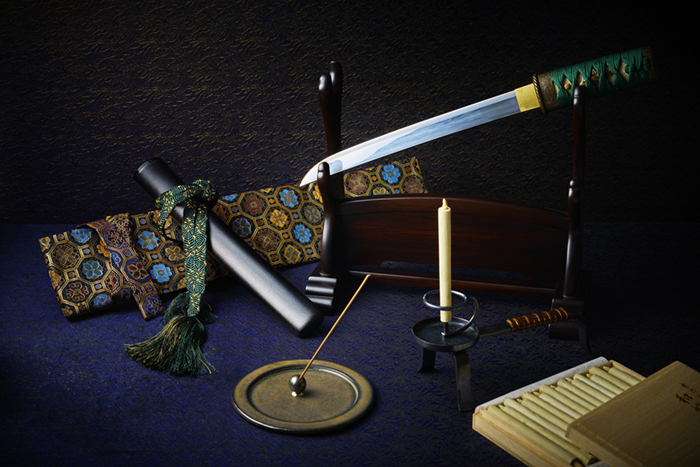
KOTO offers pieces made for those who wish to keep the samurai’s discipline within reach — a Japanese sword and a hand-made candle, produced to order by craftsmen working in traditions two thousand years old. Because each is made individually, no two are ever the same.
- SHARE
-


( language )