





Sento Etiquette: A Visitor’s Guide to Japan’s Public Bathhouses
What Is a Sento?
銭湯 sento is Japanese neighborhood public bathhouse — a facility you pay to enter, filled with ordinary heated tap water. That is the main thing separating it from an 温泉 onsen, a hot spring, which draws on naturally heated mineral water and is usually a destination in itself, a mountain town or a resort. A sento, by contrast, is typically a short walk from home: a piece of everyday city infrastructure built around the practice Japanese bathing is known for, soaking fully in a tub.
This author spent much of this past summer simply showering, the heat too much for a proper soak. Then, as the temperature eased off a little, it seemed worth sinking into a tub again for the first time in a while — and the following day’s difference in body and mind was unmistakable. Bathing appeared to draw out a kind of chill, hie, that air conditioning and cold drinks had been quietly building up without notice.
Wanting to warm up properly in something larger than a home tub, the idea of a sento came to mind. So this article sets out the appeal of the sento, its history, and how to use one.
A History of Bathing in Japan: From Steam to the Soaking Tub
Japanese bathing culture is known for the practice of soaking fully in a tub, and the sento style still in use today took its current form in the Edo period (1603–1868).
Before Edo: Closer to a Sauna
Paying to enter a public bathhouse is a practice that goes back as far as the Kamakura period (1185–1333), but the mainstream style then was closer to a sauna: 蒸し風呂 mushiburo, a steam bath.
Early in the Edo period, a bath called the 戸棚風呂 todana-buro, or “cabinet bath,” appeared. Bathers soaked their lower body up to the knees, like a foot bath, while the upper body sat inside an enclosed, steam-bath-like space. The todana-buro‘s arrival laid the groundwork for what would become the defining feature of the sento: soaking the whole body in a large tub.
Why Sento Spread Through Edo: Fire
The reason sento spread through Edo was fire. Contemporaries had a saying for it — “fires and quarrels are the flowers of Edo” — and with the city’s wooden buildings packed tightly together, a fire was genuinely dangerous. Arson carried the death penalty.
So many households suffered fire damage that, to prevent it, commoners were prohibited from keeping a bath in their own home. In its place, the neighborhood sento, shared among local residents, took on an essential role.
裸の付き合い Hadaka no Tsukiai — Sento as Community
Among the neighbors who gathered at a shared sento, a phrase took hold: 裸の付き合い hadaka no tsukiai, roughly “naked company.” This word means “When you share bathing together, you will be able to talk them without concealment.” People utilized sento for candid conversation and the exchange of information.
This author notices the same thing now: going to a sento with family or friends does seem to loosen conversation more than usual. It is likely a habit of mind still carried forward in Japanese culture today.
From Postwar Necessity to Showa Nostalgia
Until the Showa era (1926–1989), it was ordinary for an apartment not to have its own bathroom. A well-known Showa-era ballad, 『神田川』”Kanda River,” a song by 南こうせつとかぐや姫 Minami Kosetsu and Kaguyahime, captures something of that world — a young couple leaving a neighborhood bathhouse together, hair still damp in the cold night air while they wait. It is a wistful window into what daily life looked like when the sento was not an occasional outing but a necessity.
Today, most homes and apartments have their own bath, so the sento has shifted role: it functions now as a community gathering place, or somewhere to go “when you want to relax a little.” A recent boom in 昭和レトロ “Showa retro“, Japanese nostalgia in Showa era also pairs naturally with the sento, and a fair number of younger visitors now go specifically to enjoy that retro atmosphere.
When a Sento Becomes a Cultural Property
Many surviving sento buildings date from the Meiji (1868–1912) through Taisho (1912–1926) periods, offering a glimpse of the architectural styles of the time, and it is common for one to be designated a 登録有形文化財 Toroku Yukei Bunkazai, a Registered Tangible Cultural Property.
A registered building’s usefulness doesn’t end with bathing, either. In recent years, a number of former sento have been repurposed after closing — into galleries, restaurants, or general stores.
At the Edo-Tokyo Open-Air Architectural Museum (江戸東京たてもの園 Edo-Tokyo Tatemono-en), one such building has been relocated and preserved: 子宝湯 Kodakara-yu, a sento built in 1929 in Tokyo, where visitors can walk through and see the construction of the period firsthand. This author often visited as a student with friends from a university club — it’s a striking building to spend time in for a sense of the era, though note that actual bathing is not possible there, since it’s a museum exhibit. Please follow the museum’s and staff’s instructions when you visit.
The Mural on the Wall: Why So Many Sento Have Mt. Fuji
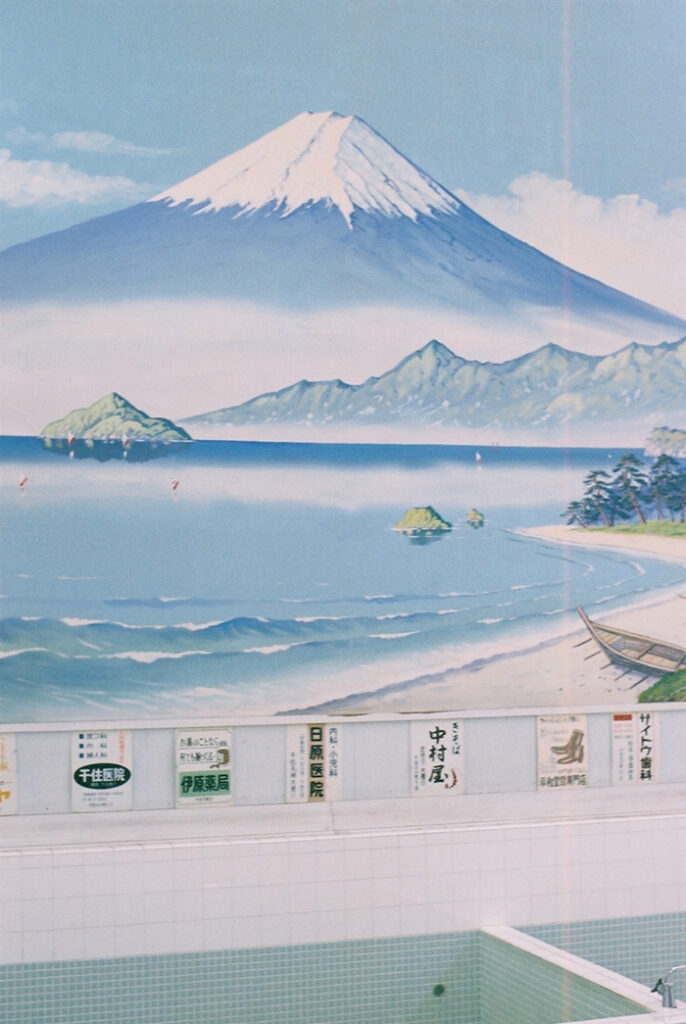
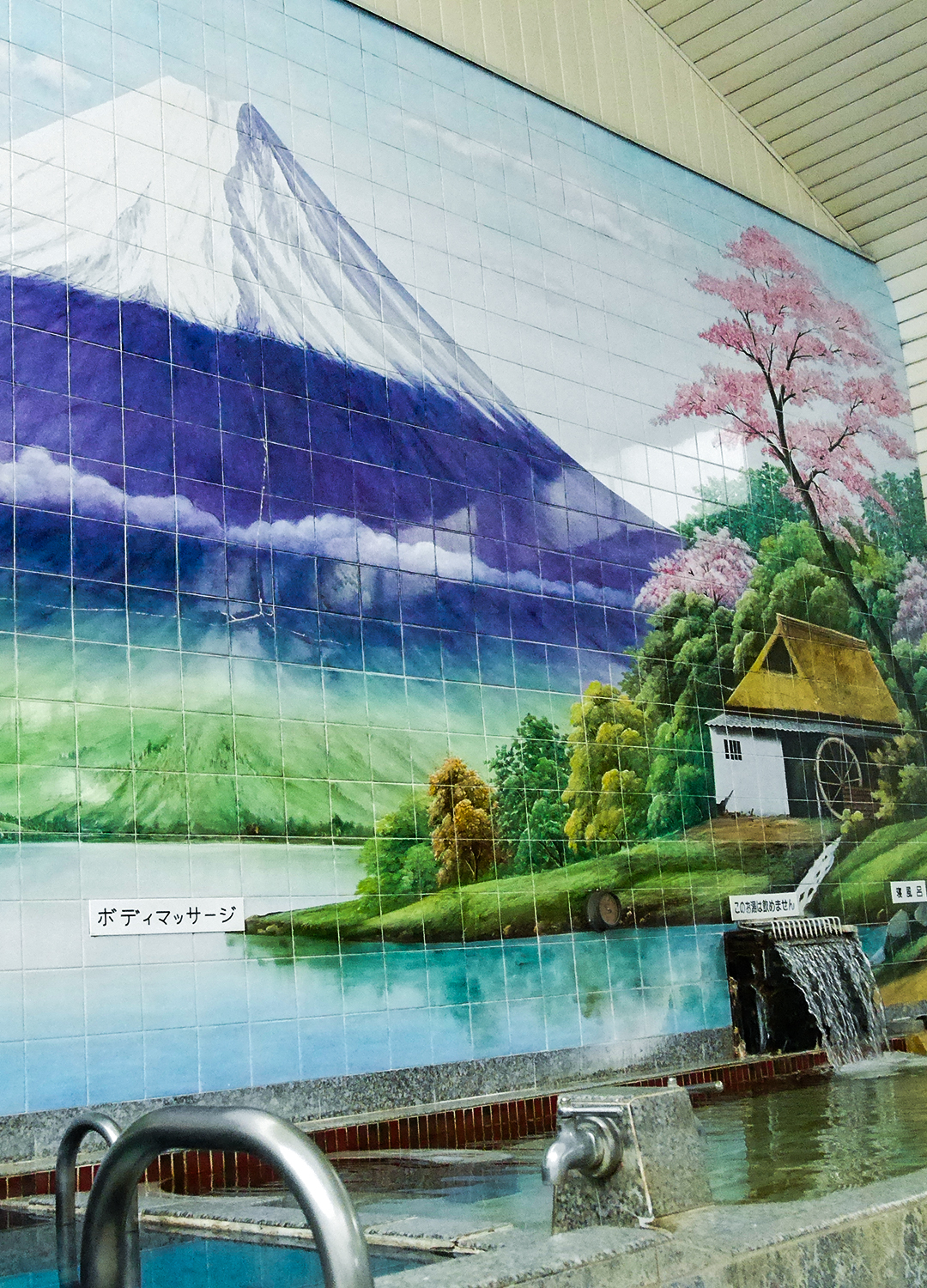
The painting of Mt. Fuji often found on the wall behind a sento’s tub is called ペンキ絵 penki-e, literally “paint picture.” It began in the Taisho era, when a bathhouse commissioned a painter for the wall — and the result drew enough admiration that other sento across the country followed suit, cementing the popular image: sento equals a Mt. Fuji mural.
A Culture Specific to Eastern Japan
Did you know penki-e is a culture specific Eastern Japan? In fact, we can hardly see it in Western Japan.
Penki-e is not a nationwide custom.
The reason comes down to layout.
In western Japanese sento, it is common for the bathtub to be located in the center of the bathing area. On the other hand, the sento in eastern Japan tend to have the bathtub positioned against the back wall. It was precisely the presence of this back wall that gave rise to the culture of penki-e in sento.
(There are other noteworthy differences between the distinct cultures of eastern and western Japan.
We cover these in a separate article, though that article is currently available only in Japanese.)
Other Motif and Material: Trains, Tiles, and Lucky Ships
Mount Fuji is not the only motif used in these painted penki-e. At some sento, trains or cars are sometimes painted in the women’s bath area to entertain children.
Sento with more resources and a larger customer base sometimes use タイル絵 tairu-e, tile pictures, in place of paint — a technique that builds an image out of small tiles rather than a brush. Common motifs include the 宝船 takarabune, a treasure ship, and the 七福神 Shichifukujin, the Seven Lucky Gods — both figures considered auspicious in Japan.
How to Use a Sento: A Visitor’s Guide
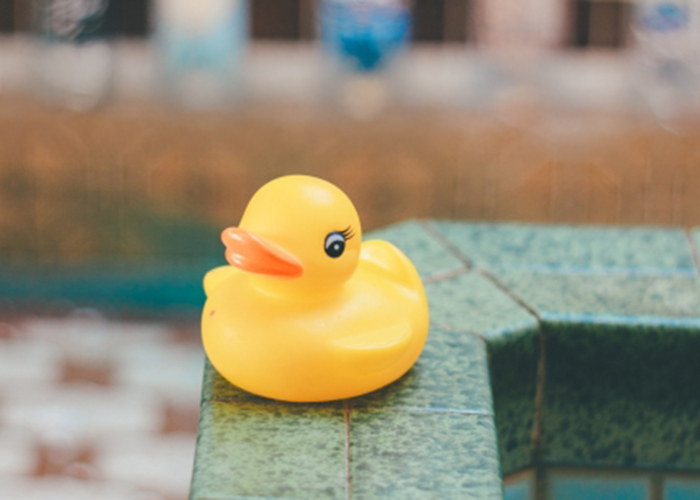
Japanese large communal baths, sento included, are regularly praised by visitors from abroad for how clean and well cared for they are. That reputation owes as much to the bathers as to the staff — a shared understanding that a public space is kept clean by everyone using it. With that in mind, here is how to move through a sento visit while keeping to that standard. There are a number of points that differ from bathing at home, so it’s worth comparing as you go.
Before You Go
Some sento supply shampoo or rent out towels, but it’s worth bringing your own for a smoother visit:
– Shampoo, conditioner, body soap — whatever you’re already used to.
– A hair tie — to keep long hair out of the tub.
– Towels — bring more than one if you can. A face towel, a bath towel, and one for washing each serve a different purpose.
Once you’re a regular, a few further items are worth carrying:
– A plastic basket or tote — for carrying your own toiletries.
– A hair turban — keeps hair well clear of the tub and is handy while washing your face; a towel-like, absorbent material works best.
– A bag for wet items — for used towels or underwear afterward.
Entering and Paying
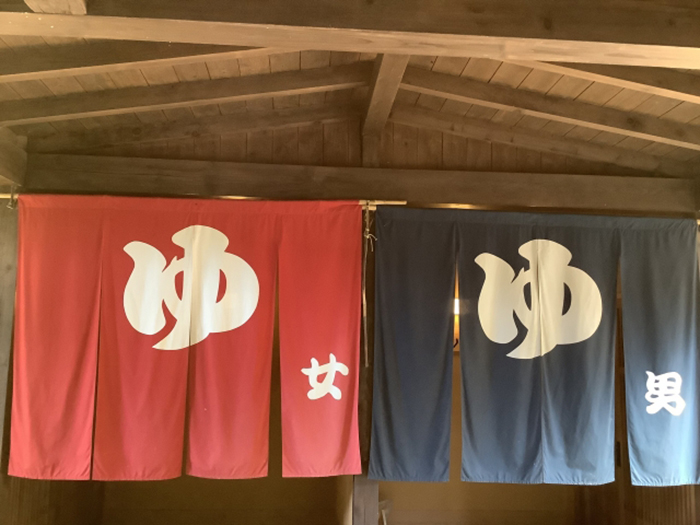
Remove your shoes on entry, then pay the admission fee at the 番台 bandai, the counter near the entrance. Some sento don’t accept credit cards or other cashless payment, so it’s worth having cash ready beforehand.
From there, bathers separate by gender and pass through a curtain, a 暖簾 noren, marked 男湯 otoko-yu (men’s bath) or 女湯 onna-yu (women’s bath).
Which bath should a child use? It’s common to see a young child accompanying a parent into the bath of the opposite gender, and families with small children sometimes aren’t sure where the line is. A 2020 notice from Japan’s Ministry of Health, Labour and Welfare, revising sanitation guidelines under the Public Bathhouse Act, set the general limit for mixed-gender bathing at around age seven. As a rule of thumb, once a child has started elementary school, they should bathe on the side matching their own gender.
The Changing Room
Beyond the noren is the changing room, 脱衣所 datsuijo. Sort your things before you bathe:
– Valuables (wallet, phone) — into a locking locker, to prevent theft. Many run on a 100-yen coin, so keep one on hand.
– Clothes, bath towel, cosmetics — into the basket or locker provided.
– Face towel and bathing items (shampoo, soap) — these come with you into the bathing area.
Once your clothes are in the basket, cover them with your bath towel — a small courtesy so the contents aren’t visible to others. Use the restroom before entering the bath, and if your hair is long, tie it back so it stays clear of your shoulders and the tub.
Washing Before You Soak
Inside, the instinct is to head straight for the big tub — hold off. Wash your body first. Washing beforehand is what keeps the shared tub clean.
Rinse thoroughly so no suds, dirt, or loose hair are left on you, then wipe down once with your face towel. Once your hair is washed, tie it back up again. And don’t forget to rinse the basin and stool you used with water before you leave the washing area.
Into the Tub
Clean at last, it’s time for the tub itself — the reward for the wait. The warmth of the water should relax you thoroughly. Keep your towel out of the water; it’s a shared bath, and the point is to keep it that way.
What if someone starts talking to you? Regulars will sometimes strike up a conversation — a genuine chance to connect with the neighborhood. Even without much Japanese, a smile and some gestures carry a surprising amount. It’s worth engaging as best you can; you may well come away with a recommendation for a nearby spot, or a piece of local culture you wouldn’t otherwise hear about.
Drying Off and What Comes After
Before heading back to the changing room, dry yourself thoroughly with your face towel. Get dressed, then rehydrate.
Sento culture is closely tied to a couple of post-bath drinks — coffee milk and fruit milk, sweetened, flavored milk traditionally downed in one go for the refreshment of it. This author’s own habit is an ice pop after the bath instead; the sharp cold against a body still warm from the tub feels remarkably good. Whichever you choose, eat and drink only in the areas set aside for it, so nothing gets spilled where it shouldn’t be.
Sento Etiquette to Keep in Mind
There are several rules you must follow when using a sento.
Dry off before you leave the bathing area.
Skipping this risks a slip on a wet changing-room floor — this author has nearly gone down on one before. Dry off properly first, for your own safety as much as anyone else’s.
Remember other people are using the same facilities.
Share what’s communal: don’t take more than one basket at a time, for instance — one per person is the rule. Leaving personal items at a washing station is also best avoided, since it keeps someone else from using it.
Be careful with the shower.
The rule is to sit and use it quietly, so it doesn’t spray anyone walking behind you. It can happen without you noticing — this author once sprayed someone as a middle-school student and was called out for it. If it happens, a quick apology is the right move.
Splashing in the tub is worth the same care. It’s a big tub, and the temptation to swim is understandable, but the splashing bothers everyone else using it, so it’s best held back.
Keep your voice down in the sauna or bathing area.
Sound carries further than expected in an enclosed space, and, as a matter of basic infection prevention, loud conversation is best avoided. Voices echo in a large tub room too, so the same restraint applies there.
In Closing
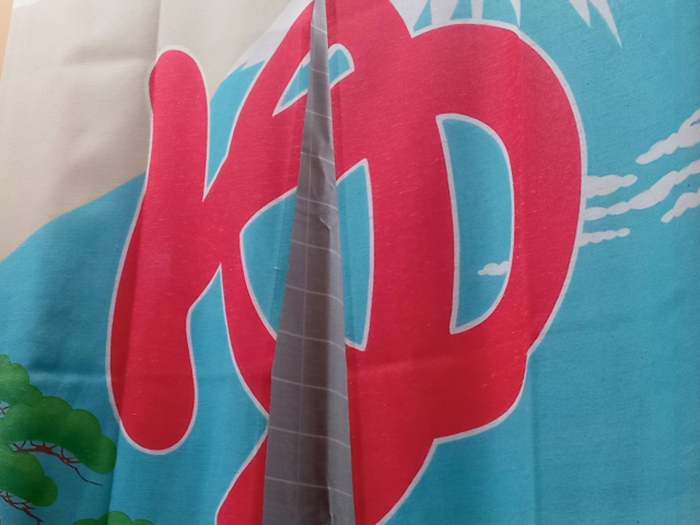
Across its long history, the sento has served as more than a place to bathe — it has been a gathering point for community. Even now, walking into one still turns up smiles and conversation among the regulars and the person minding the counter, warming something beyond just the body. Writing this article alone was enough to make this author want to go. The next time you want to warm both body and mind, a sento is worth the visit.
KOTO is a journal of Japanese craftsmanship, culture, and the aesthetic sense behind them.
- SHARE
-


( daily-life )