







Why Nara Is Full of Deer: The 1,300-Year History Behind Japan’s Sacred Herd
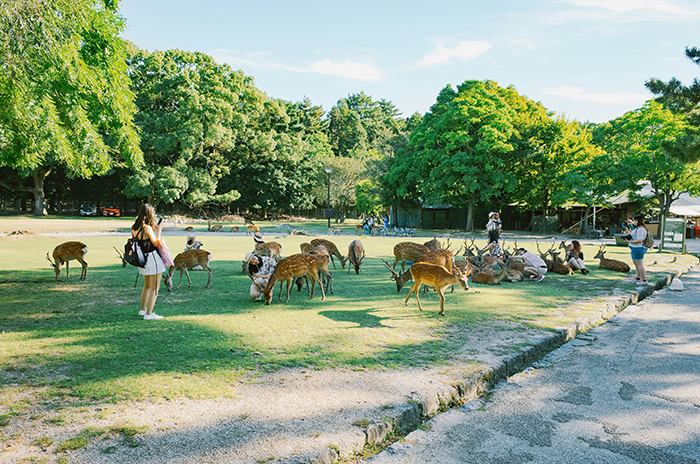
Our office sits in Kyoto Prefecture, about 45 minutes by train from Nara Prefecture. Before the capital moved to Kyoto in 794, Nara had its own time as the political and cultural center of Japan.
Like Kyoto, Nara is dense with temples and other important cultural properties. But it has one sight Kyoto does not: the deer that live in Nara Park. As of 2022, some 1,200 of them are said to make their home there.
Japan has no shortage of famous animals kept behind fences — the pandas at Ueno Zoo in Tokyo, the whale sharks at the Churaumi Aquarium in Okinawa. What is rare is deer roaming freely, unenclosed, around a public park. This article explains the reason why a number of deers live in Nara.
Why Nara Has So Many Deer
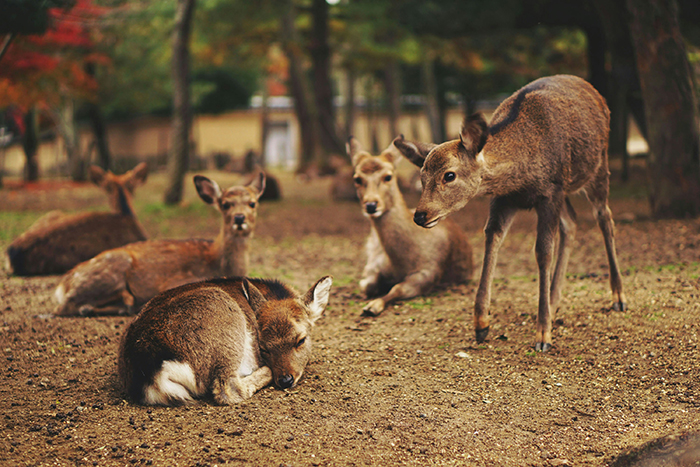
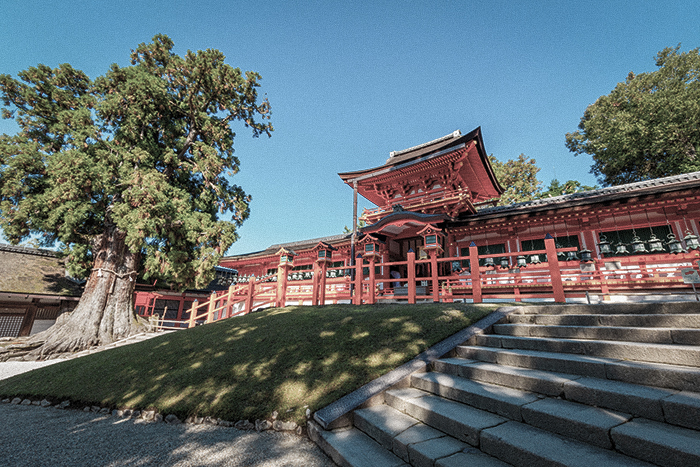
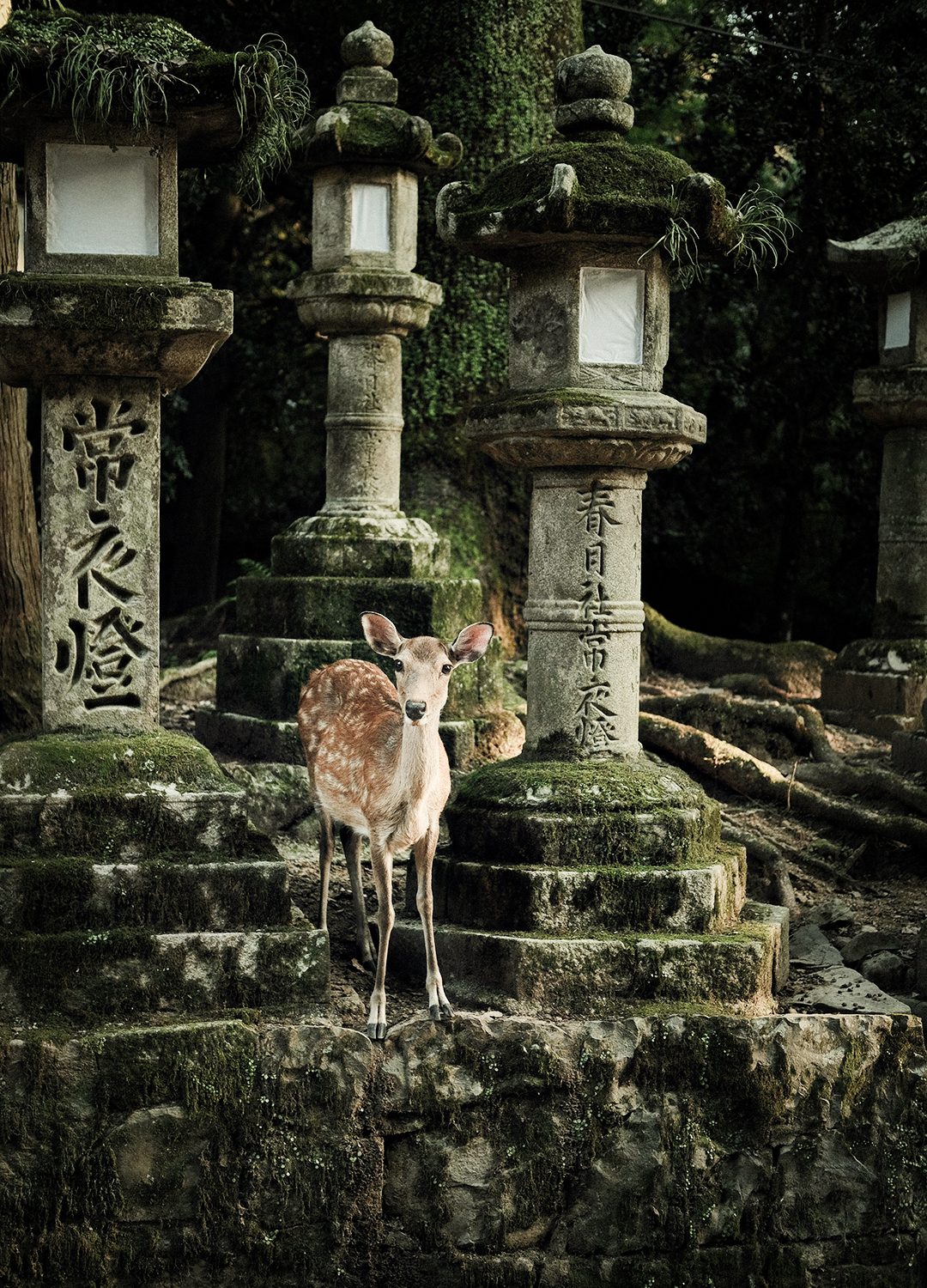
The relationship between Nara and its deer goes back roughly 1,300 years, to the Nara period (710–794). It began when 春日大社 Kasuga Taisha — Kasuga Grand Shrine — was built by the 藤原氏 Fujiwara clan.
The Fujiwara held major political power at the time, and they built Kasuga Taisha to pray for the protection and prosperity of 平城京 Heijokyo, the capital of Nara era, on the site of present-day Nara. Four deities are enshrined at Kasuga Taisha. One of them is 武甕槌命 Takemikazuchi-no-mikoto.
Takemikazuchi-no-mikoto is a deity of martial valor and victory, who took part in the making of the land at Izumo, in what is now Shimane Prefecture. He was also the 氏神 ujigami — clan deity — of the Fujiwara, and is said to have been invited to Nara from 鹿島神宮 Kashima Jingu, in present-day Ibaraki Prefecture.
According to legend, when Takemikazuchi-no-mikoto made that journey from Kashima, he arrived riding a white deer. Because of that story, deer came to be regarded as 神の遣い kami no tsukai — messengers of the gods — and have been carefully protected by the people of Nara ever since.
Kasuga Taisha is the 総本社 sohonsha — head shrine — of roughly 3,000 Kasuga shrines across Japan, the shrine from which all the others derive. In 1998 it was registered, as one of the Historic Monuments of Ancient Nara, as a UNESCO World Heritage Site. Nationwide, branch shrines enshrine the Kasuga deities as a divided spirit carried from the head shrine, which is why a New Year’s visit to Kasuga Taisha itself, rather than to a local branch, is considered especially auspicious.
The Character of Nara’s Deer
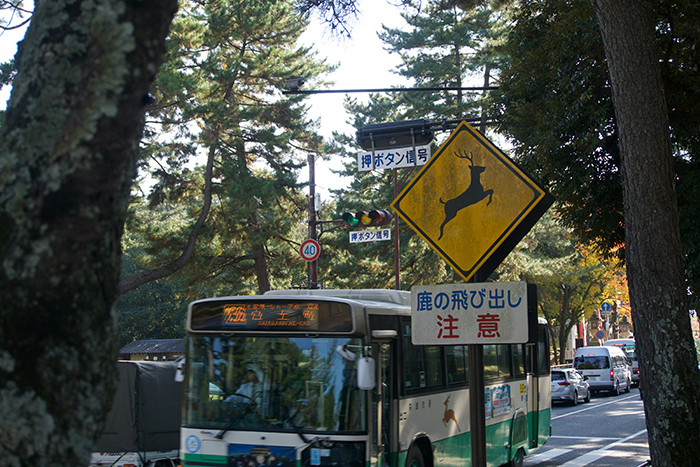
Japan is home to a native species called ニホンジカ Nihonjika — sika deer — found across the country, so deer themselves are nothing unusual here. In areas with large deer populations, it is common to see road signs warning drivers that deer may dart into traffic.
What sets Nara’s deer apart from ordinary sika deer comes down to three things.
– Their role as messengers of the gods –
Protected by people for centuries, as described above.
– Designated as Natural Monuments of Japan –
In 1957, the 奈良の鹿 Nara-no-shika, “Deer of Nara” were designated as a Natural Monuments of Japan.
– A unique gene dating back to ancient times –
Discovery from genetic research — including work carried out at Fukushima University — showing that Nara’s deer carry a genetic lineage distinct from other Nihonjika populations, a lineage that has evidently persisted since ancient times.
The Ownership of the Deer in Nara Park
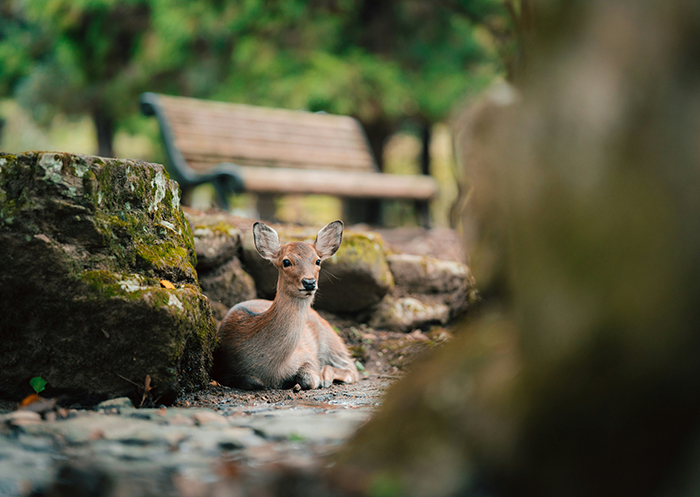
Because the deer move through the park as if someone were looking after them, visitors often wonder who feeds them or who they belong to. In fact, every deer in Nara Park is wild. Being protected as a Natural Monument, however, they live rather more comfortably than deer in the wild ordinarily would.
Day to day, they live around Nara Park eating grass, susuki (Japanese pampas grass), plants of the grass family, and acorns. At sunrise they move to a feeding ground, and at night they return to a resting ground to sleep. Females outnumber males roughly three to one, and the number of births — or deaths — recorded each year runs to somewhere between 200 and 300.
Where Pregnant Deer Give Birth
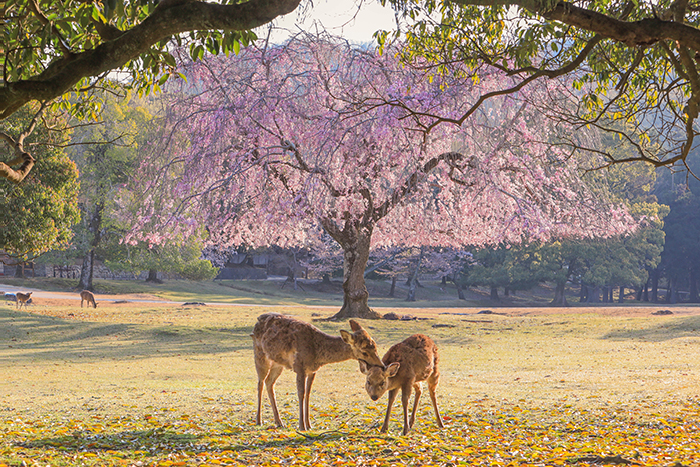
Every spring, pregnant deer are moved into a protected facility on the grounds of Kasuga Taisha called the 鹿苑 Rokuen — literally, the “deer garden.” Once a fawn is old enough to move about with its mother, it is released into Nara Park, typically around July. In the month before, June, visitors can watch mother and fawn together at the Rokuen. Because it is a sight rarely seen in the wild, many people travel to Nara during this window hoping to see the newborns for themselves.
What to Keep in Mind Around the Deer

Nara Park’s deer are not zoo animals, aquarium animals, or ordinary wildlife. As a protected Natural Monument, they call for a particular kind of care in how visitors approach them.
One: Don’t Touch Them or Approach Suddenly
Because the deer are protected, visitors should take care not to startle them — no sudden touching, no closing the distance too quickly. Nara’s deer are accustomed to people and will sometimes approach on their own, but even then, touching their body or antlers is not allowed.
Autumn calls for particular caution. Male deer grow more aggressive during the autumn rutting season, and approaching them carelessly can lead to injury. Nara Prefecture reported 192 deer-related accidents in 2019, including visitors bitten or kicked, and noted that the people involved were more often foreign tourists than Japanese visitors. The urge to get closer to something this appealing is understandable, but for the safety of deer and people alike, it is worth remembering that touching them is against the rules.
Two: Don’t Feed Them Human Food
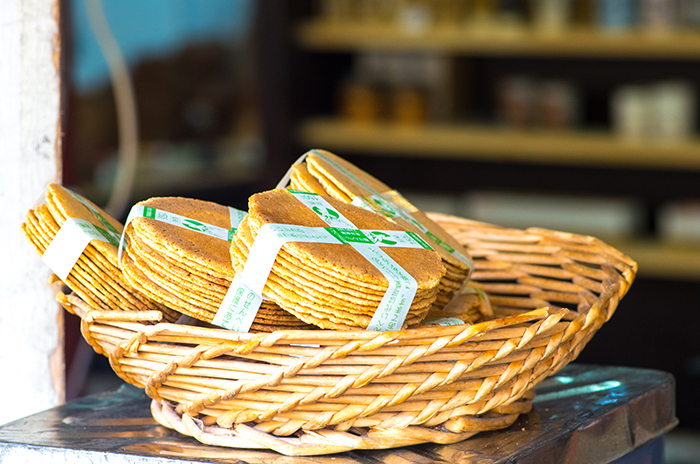
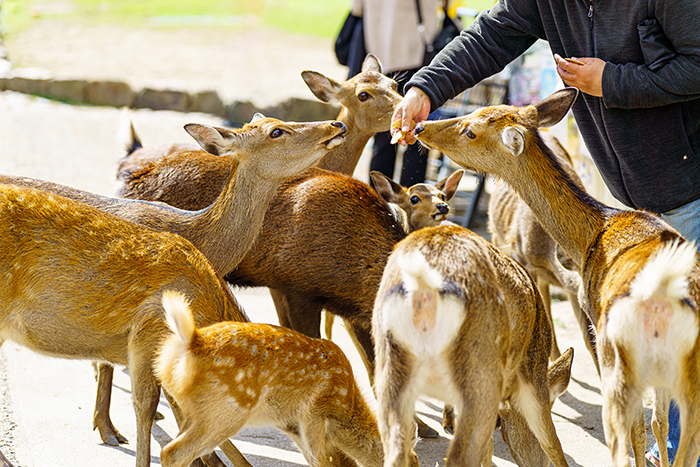
Human food can contain ingredients that are harmful to deer, so visitors should never offer it to them. The one exception is 鹿せんべい shika senbei — deer crackers — sold at shops throughout Nara Park, which are made from ingredients that cause the deer no harm.
Shika senbei are made from rice bran and wheat flour, with no sugar added. They are sold in sets of ten for 200 yen, part of the proceeds going toward the deer’s protection, and are available both at shops and from vending machines around the park. They are harmless to people too, though they are said to be hard to swallow, with an unpleasant aftertaste — and since they contain no preservatives and carry no expiration date, it is best simply to hand them to a deer rather than try one yourself.
When handing over a senbei, don’t tease the deer with it. Once it has taken one, pass the next to the nearest deer without delay, and once the last one is gone, show the deer your empty palms so they understand there are no more.
If several people are sharing a set of senbei, it is worth dividing them up right after buying rather than holding the whole bundle. Deer tend to cluster the moment they spot someone holding crackers, and a crowd can form quickly. This author learned that the hard way on a middle-school trip: surrounded by deer with no room to move, and a friend also wanting to give some out, there was no time left to hand them over politely — the only option was to thrust the bundle at the friend and shout for them to take one themselves. Being mobbed like that risks injury to deer and people both, which is reason enough to plan ahead.
Three: Watch Your Clothes and Belongings
Visitors handing out senbei have reported having their clothes — skirts in particular — or their belongings bitten. This author nearly lost part of a school uniform skirt to a deer while giving out senbei on that same school trip, saved only by finishing the last cracker before any damage was done. Deer eating the brochures or maps visitors carry on school trips or sightseeing outings is also bad for their health. Visitors should keep their clothes and belongings out of reach, and young children should hand senbei to the deer together with a guardian rather than alone.
Living Creatures, and Messengers of the Gods
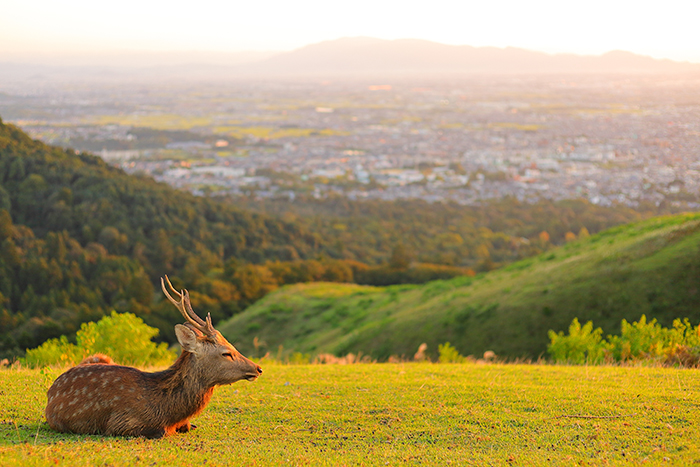
The deer of Nara Park are loved by people from Japan and abroad for their charm. But in 2021, a deer was killed after being attacked, and the case developed into an arrest under Japan’s 文化財保護法 Bunkazai Hogo Ho — the Act on Protection of Cultural Properties. Because Nara’s deer are a Natural Monument, injuring or killing one can carry legal consequences.
The larger point, though, is simpler. Deer are living creatures, just as we are, and in Nara’s culture they also carry the role of messengers of the gods. Harming a messenger of the gods is treated as no small matter — and being suddenly grabbed or poked by a stranger is unpleasant for any creature, sacred status aside. For Nara and its deer to go on living alongside one another for a long time to come, it is worth approaching them, every time, with a little consideration.
KOTO is a journal of Japanese craftsmanship, culture, and the aesthetic sense behind them.
- SHARE
-


( landscape )