








Traditional Japanese Wisdom for Staying Cool: Foods, Clothing, and Living Practices
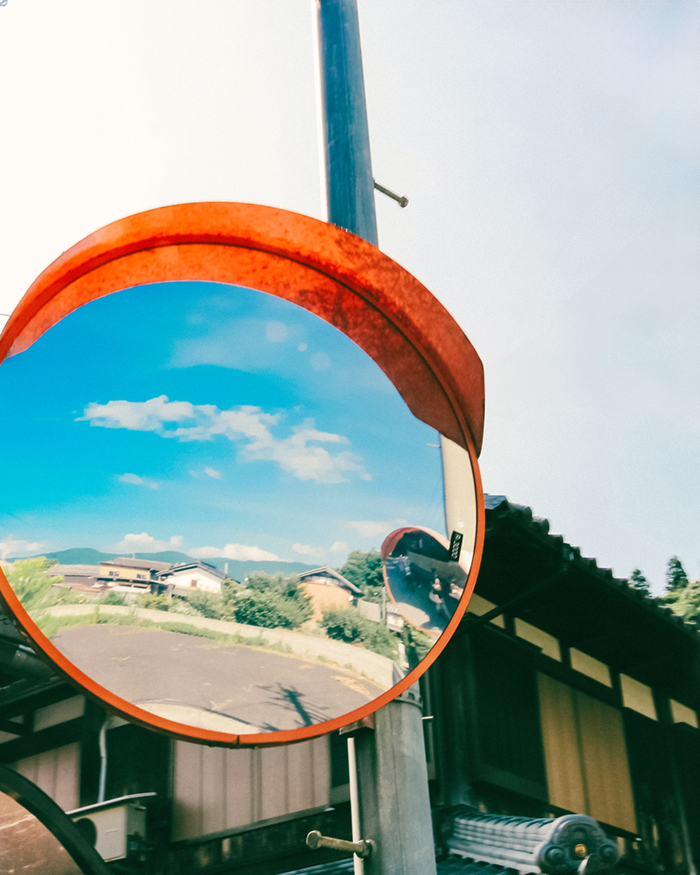
Japan for the most part belongs to a humid subtropical climate region, and throughout history, its people have found ways to coexist with sweltering summers through various thoughtful practices. Long before the invention of air conditioning, cooling was achieved by combining wisdom drawn from food, attire, and everyday life. This article introduces both time-honored traditional practices and contemporary measures developed to navigate the summer heat.
Culinary Culture: Sensing Coolness Through Texture and Taste
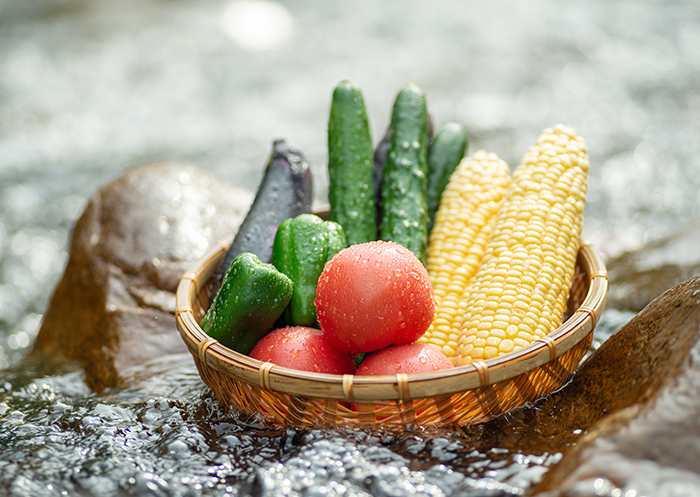
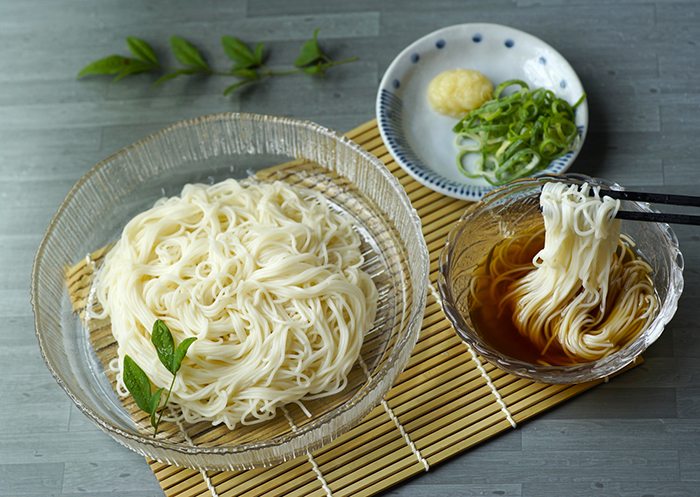

The culinary customs developed to endure the summer heat are rich with the wisdom of ancestors who drew upon seasonal ingredients. Three representative examples illustrate this approach.
夏野菜 Natsu-Yasai, Summer Vegetables
Vegetables such as tomatoes, cucumbers, and corn are defined by their high water and potassium content. Potassium facilitates a diuretic effect, which was traditionally understood to assist in releasing heat from the body. In traditional Oriental medicine, summer vegetables are categorized under “cooling” or “cold” natures, recognized for their ability to clear internal heat. Cucumbers and tomatoes in particular have long been valued for hydrating the body and soothing summer thirst.
While modern nutritional science notes that it is difficult to assert that summer vegetables directly lower body temperature, most consist of over ninety percent water and offer the convenience of being consumed chilled and raw. Consequently, they remain an effective dietary means of seeking relief from the heat.
そうめん Somen
Somen is a dry Japanese noodle crafted from wheat flour, salt, and water. Its origins trace back to 索餅Sakubei, introduced from China during the Nara period(710-794). By the Heian period(794-1185), the custom of eating Somen during the Tanabata festival emerged as a prayer for good health throughout the year. While white is the classic color of the noodles, some makers utilize natural pigments to offer subtle color variations.
Immersing Somen in chilled dipping sauce delivers an immediate sense of coolness. The smooth texture allows it to be enjoyed effortlessly, even on days when summer heat diminishes the appetite. A notable summer pastime involving these noodles is 流しそうめん Nagashi-somen, where water and noodles are sent flowing down split bamboo channels to be caught with chopsticks. This practice originated in 1955, conceived by a newspaper journalist stationed in Takachiho Town, Miyazaki Prefecture.
かき氷 Kakigori
Kakigori is a traditional Japanese dessert consisting of shaved ice topped with syrup. Its history extends back to the Heian period, where it is mentioned in “枕草子 Makura no Soshi (The Pillow Book). “ The author, 清少納言 Sei Shonagon, described ice shaved into a metal bowl and drizzled with a sweet syrup known as 甘葛 Amazura as “あてなるもの Ate naru mono, something refined and elegant.” During that era, ice was a precious commodity stored in 氷室 Himuro, icehouses after being harvested in winter, making Kakigori an exclusive delicacy reserved for nobility.
Clothing: Material and Tailoring Techniques for Comfort
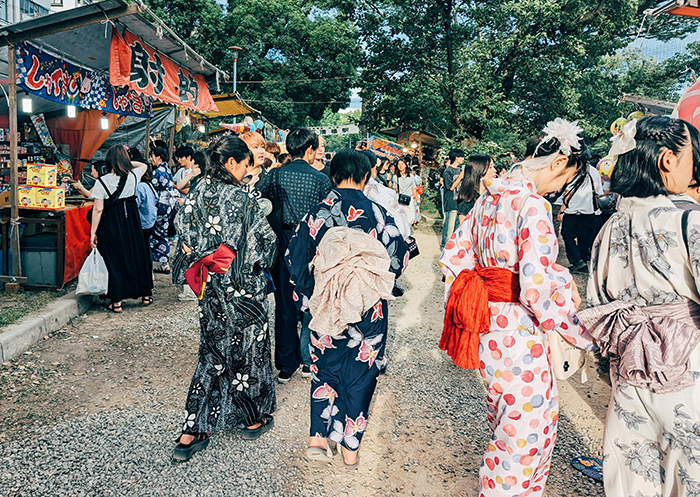
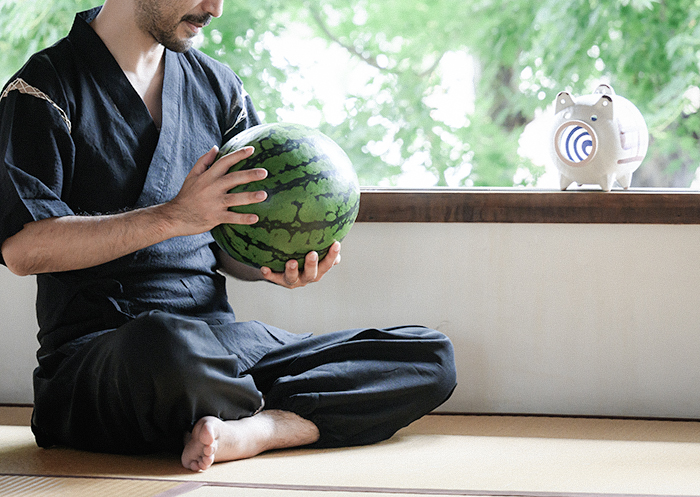
Attire designed for summer comfort reflects deliberate craftsmanship in both material choice and tailoring.
浴衣 Yukata
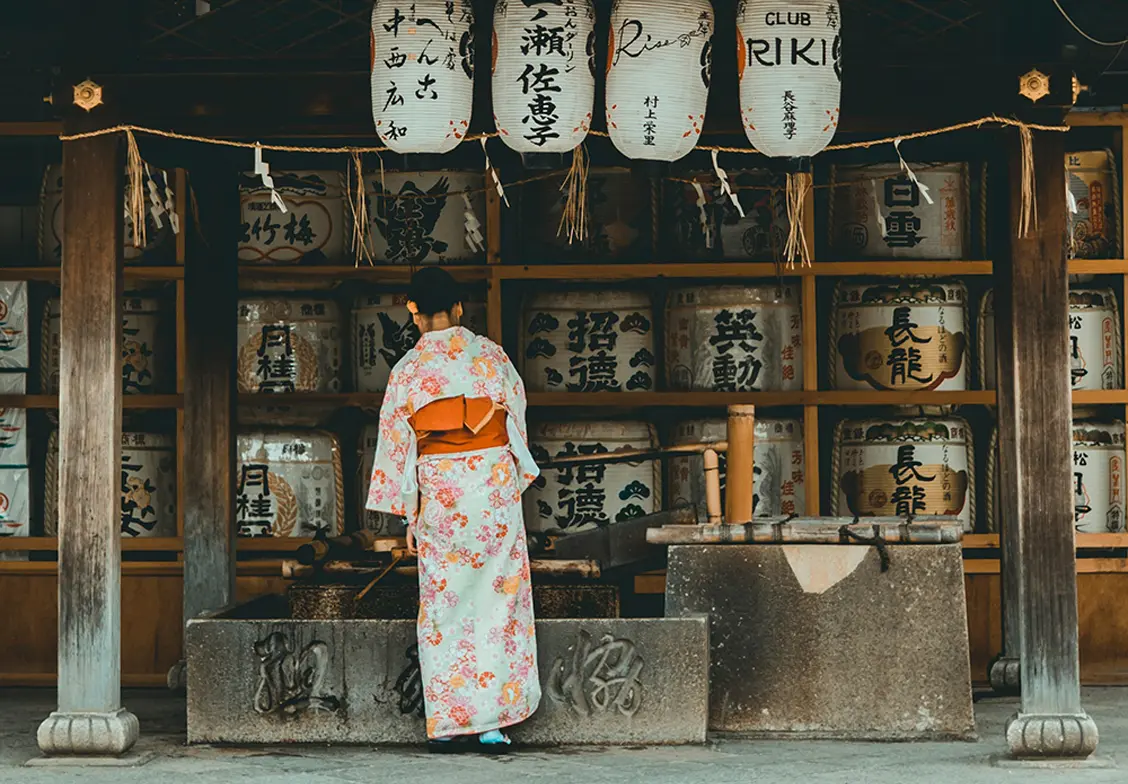
浴衣 Yukata is one of 着物 Kimono for summer wear. The origins of the Yukata can be traced back to the 湯帷子 Yukatabira. This garment was worn by Heian nobility when entering steam baths. Over time, the material shifted from hemp to cotton, becoming established during the Edo period as casual wear among townspeople after visiting public bathhouses.
The Yukata incorporates refined details to promote summer comfort. White-ground Yukata were intended for daytime wear, reflecting sunlight to maintain a sense of coolness indoors. Conversely, navy-ground Yukata were preferred from late afternoon onward, as insects naturally dislike the scent of indigo dye. In the late Edo period(1603–1868), a dyeing technique called 注染 Chusen was developed, allowing for rich colors and patterns that rapidly spread the popularity of Yukata among the public. Today, it remains a favorite garment for summer festivals and fireworks displays, with modern variations including simplified designs and machine-washable fabrics.
甚平 Jinbei
甚平 Jinbei is a type of kimono worn in summer. The Jinbei consists of a top paired with short-style trousers, sharing a structural similarity to yukata and kimono. Its name is derived from the 甚兵衛羽織Jinbei-haori, a sleeveless jacket worn by low-ranking samurai during the Edo period. Among common folk, it became favored as a lightweight, two-piece attire made of cotton or hemp. Today, it is widely worn as casual summer attire, particularly by men attending local festivals.
Textiles and Weaving Methods
Even with traditional Kimono, which often feature heavier fabrics, specialized summer weaves were created to enhance breathability. Representative textiles include lightweight fabrics known as 絽 Ro and 紗 Sha. These are created using a technique called からみ織 Karamiori, leno weave, where the warp threads are twisted around the weft to leave deliberate open spaces in the weave, allowing air to circulate freely. Ro, which emerged during the Edo period, is characterized by its refined sheer quality and suitability as formal summer attire.
Hemp kimono, meanwhile, possess a lineage dating back to the Jomon period. The natural stiffness of hemp fibers prevents the fabric from clinging to the skin, allowing breeze to pass through with movement and disperse trapped heat.
Living Spaces and Daily Practices: Welcoming the Breeze
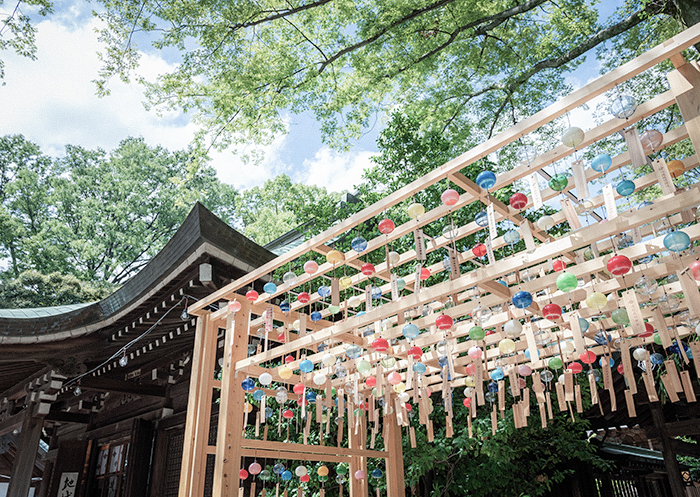
It is recommended to check the official website before visiting because the schedule varies by year.
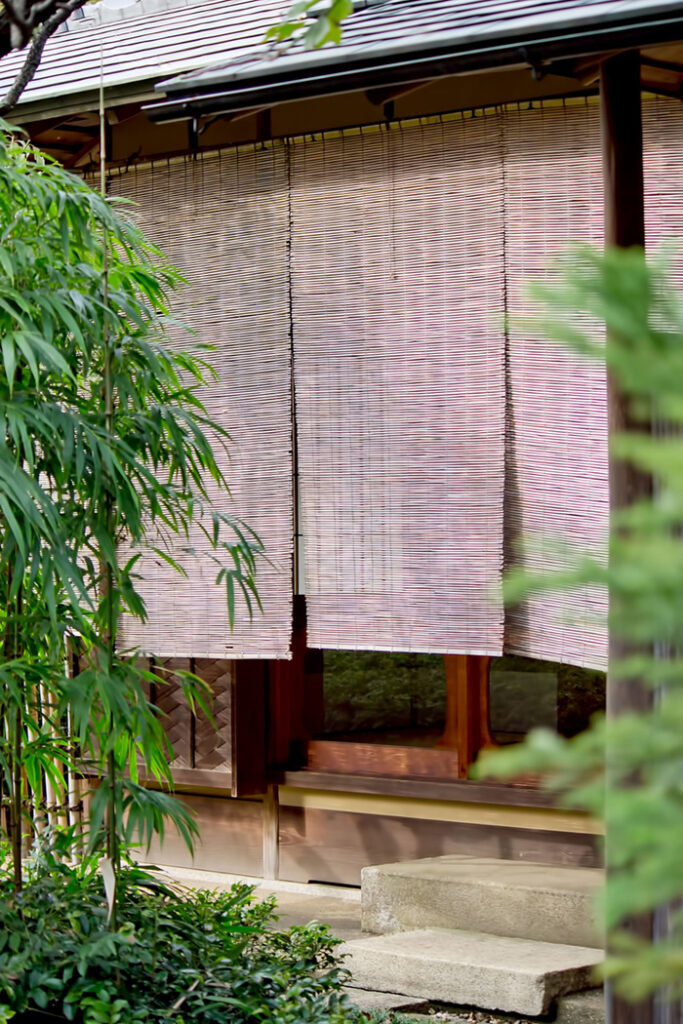
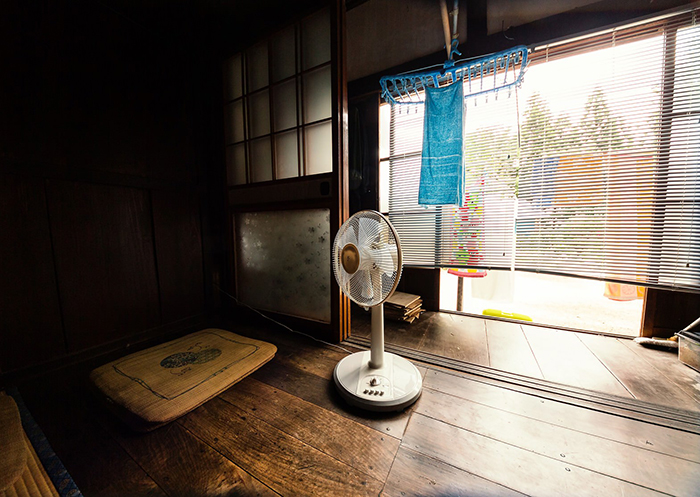
Wisdom focused on inviting coolness is equally present within residential spaces and daily routines.
打ち水 Uchimizu
Uchimizu is the traditional practice of sprinkling water on the ground to foster cool air. Utilizing the principle of evaporative cooling—where evaporating water absorbs heat from its surroundings—it has been practiced daily since the Edo period. According to Ministry of the Environment documentation, Uchimizu can lower perceived temperature by approximately 1.5°C, even if the ambient air temperature remains constant.
The effectiveness of Uchimizu depends on timing. During the intense heat of midday, water evaporates too rapidly to provide sustained relief. Applying water during early morning or late afternoon allows it to remain on the ground longer, thereby maximizing its cooling effect.
風鈴 Furin
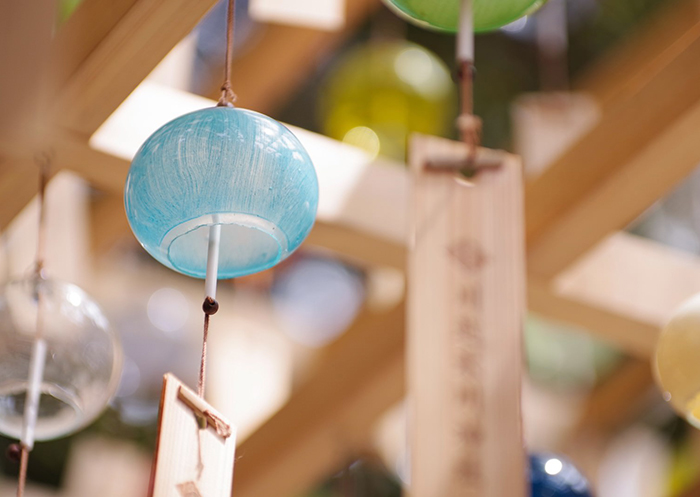
風鈴 Furin is Japanese traditional wind chime crafted from glass or ceramics. Furin produces a delicate sound when moved by the wind. Their origin lies in the 占風鐸 Senfutaku, a divination instrument used in ancient China. Upon arriving in Japan, they were initially employed as talismans against evil; records show that nobility in the Heian and Kamakura periods(1185-1333) hung them at home to ward off misfortune.
By the Edo period, Furin became widespread among townspeople as a tool for enjoying summer coolness. Today, events centered around Furin are held across Japan, such as the 縁結び風鈴 Enmusubi Furin event at Kawagoe Hikawa Shrine in Saitama Prefecture, where approximately 2,000 Edo-style Furin adorn the grounds each summer.
Additional Artifacts and Practices
Numerous other items have been utilized to draw coolness into daily life. Bamboo blinds known as すだれ Sudare, hung outside windows or under eaves, provide shade and privacy while maintaining airflow. Sudare have a long history, appearing as early as the Nara period’s 万葉集 Man’yoshu poetry anthology.
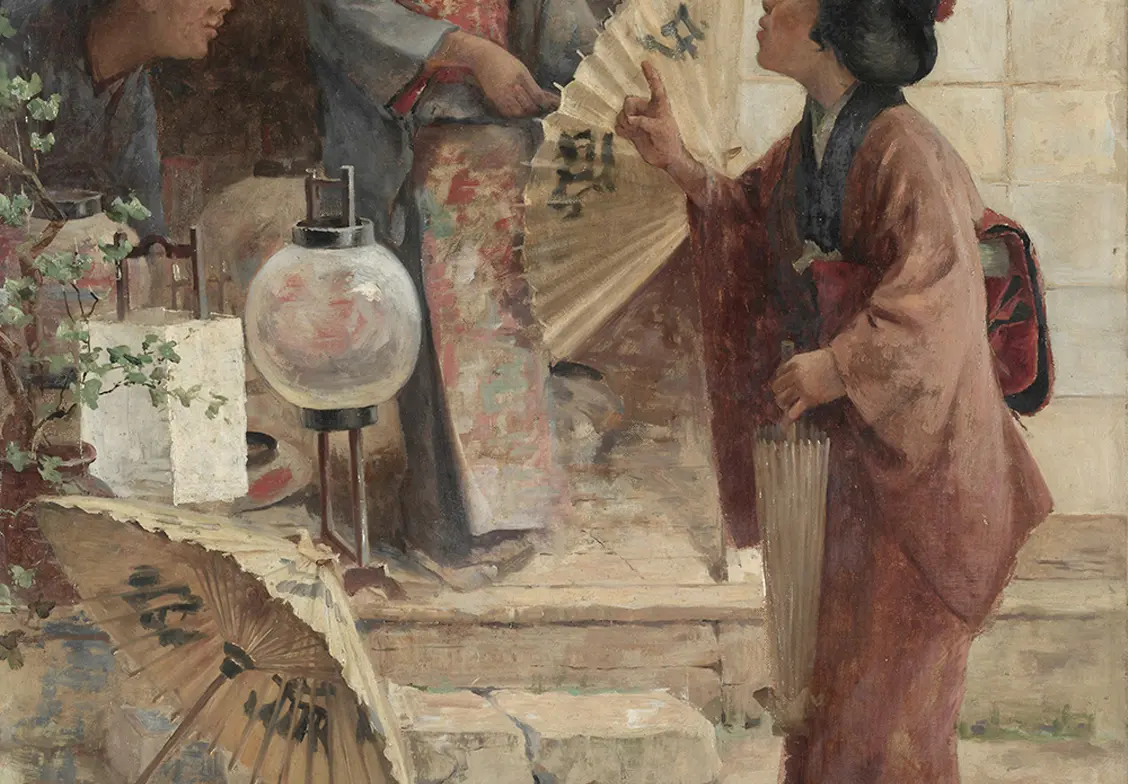
Hand fans such as うちわ Uchiwa, rigid fans and 扇子 Sensu, folding fans remain ubiquitous tools for generating a manual breeze. During the Edo period, illustrated paper Uchiwa became an indispensable accessory for enjoying the evening air. For sleeping, mesh canopy nets known as 蚊帳 Kaya were placed around bedding to block insects while permitting airflow.
Modern Heat Countermeasures: Cooling Shelters and Portable Goods
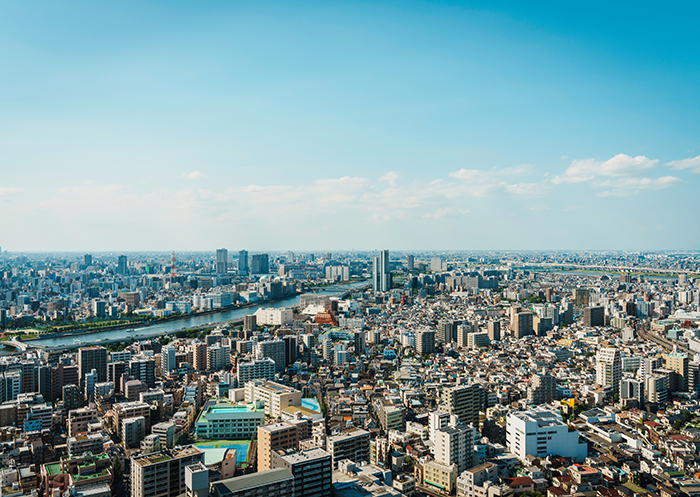
Alongside these traditional methods, modern infrastructure and products have emerged to address rising temperatures.
Cooling Shelters
Cooling Shelters are designated air-conditioned public refuges established by local municipalities under the revised Climate Change Adaptation Act of April 2024. These facilities are open to anyone seeking relief during severe heat conditions, particularly when Special Heatstroke Alerts are issued.
Contemporary Cooling Goods
Manufacturers continually introduce specialized items to endure the heat, ranging from portable hand fans to neck-cooling packs. Scented cooling sprays and perspiration-control products offer immediate sensory relief when applied to the skin. Japanese people call those goods “ひんやりグッズ Hinyari-goods.” These modern items complement traditional practices, reflecting an ongoing evolution in how summer heat is managed in Japan.
Japan’s coping with the heat draw upon the five senses, tradition, and wisdom.
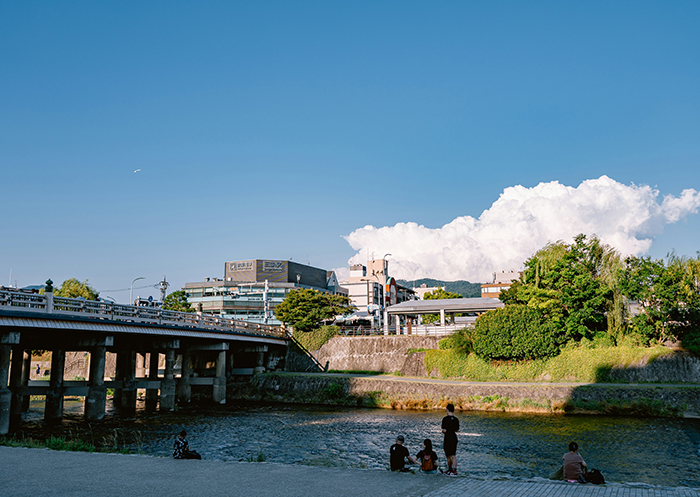
Japan’s approach to summer heat represents a thoughtful synthesis of sensory perception, heritage, and practical wisdom passed down through generations. From culinary practices and traditional garments to spatial design and modern municipal shelters, these measures demonstrate an enduring capability to adapt to changing environments while preserving a refined connection to the seasons.
KOTO is a journal of Japanese craftsmanship, culture, and the aesthetic sense behind them.
- SHARE
-


( daily-life )